Flood of Federal Money Is Not a Free Pass for a Spending Binge

A version of this commentary appeared in the Columbia Daily Tribune.

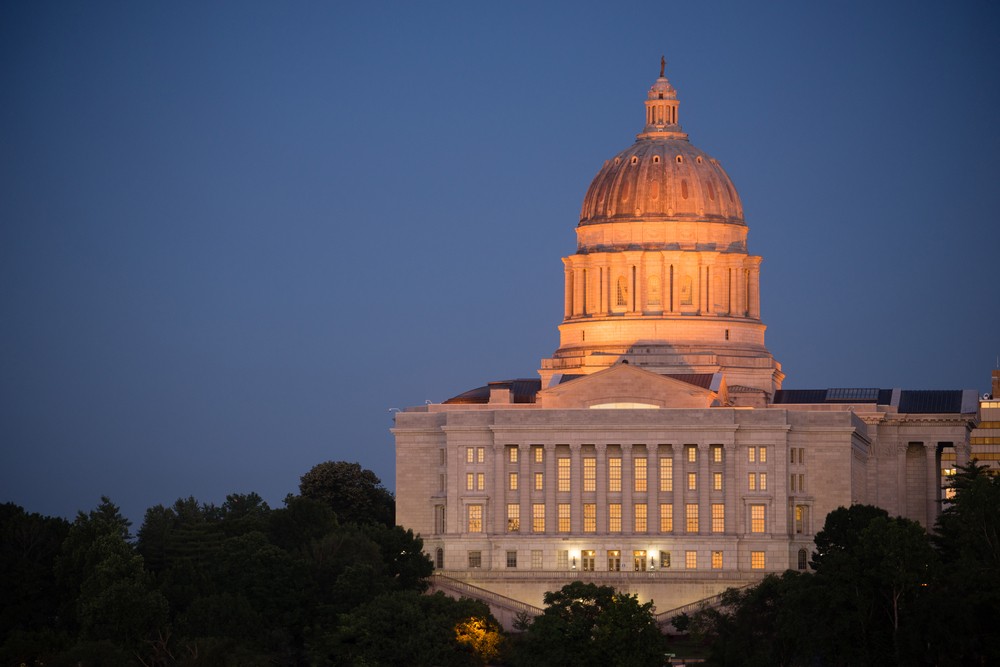
Jefferson City is awash in taxpayer cash. Missouri’s state government is slated to receive $2.7 billion in federal stimulus funds from the American Rescue Plan Act along with $9 billion from the “bipartisan” infrastructure bill. In addition, the state expects to bring in nearly $2 billion more in net revenues compared to just before the pandemic. What is disconcerting is how quickly some lawmakers—including self-proclaimed fiscal conservatives—have shed sound economic principles in their rush to find ways to spend the money, forgetting the wise words of Nobel Prize winning economist Milton Friedman that “there is no such thing as a free lunch.”

The simple, alluring, and false logic is as follows: either Jefferson City spends the money or the funds get sent back to the federal government to misspend on other boondoggles. But Missouri does not have to choose whether Jefferson City or the federal government gets the privilege of misspending taxpayer money. There is another way—one in which state lawmakers apply a strict cost–benefit test to all proposed spending and in which Missouri taxpayers are the beneficiaries of direct fiscal relief from any unused funds that fail to pass such a test.

To begin, it is crucial that lawmakers be aware that misspent money today—even if it has the false appearance of being “free”—can saddle Missouri with fiscal obligations, a weaker economy, or both, in the future. Because the funds are a one-time injection rather than a reliable stream of future revenue, Jefferson City must avoid engaging in spending that creates long-term future commitments (for example, in the form of unfunded maintenance). Lawmakers should also be wary of any government investment that crowds out private-sector investment. Infrastructure spending ought to enhance the private sector, not compete with it.

The other obstacle to sound cost–benefit analysis is the mistaken belief that the cost of the stimulus and infrastructure funds is zero because Washington, D.C., will both supply the money and reclaim any unspent funds. After all, the message to lawmakers has been that states cannot use the money to offset tax cuts. But this is an oversimplification of the options available to state officials. For starters, as long as state revenues stay above their inflation-adjusted 2019 level, the American Rescue Plan Act provides a safe harbor that deems states to be in compliance with the restriction against using stimulus funds for state tax cuts. That inflation-adjusted revenue threshold is likely to be around $10.8 billion in 2023, which is $600 million less than the $11.4 billion in revenues the state is projected to take in. Thus, state lawmakers immediately start out with a cushion of $600 million that they can provide in tax relief without risking stimulus funds.

Second, the American Rescue Plan Act only prohibits state governments—not local governments—from using stimulus funds to offset tax cuts. Moreover, it explicitly allows the state to transfer some of its funds to localities. Nothing in principle stops Jefferson City from distributing money to localities on the condition that they use the money to enact temporary local sales or property tax cuts. When using such transferred funds, localities must abide by any restrictions that apply to the state, but the American Rescue Plan Act does not impose any restrictions on local tax cuts. To create an even more secure legal hedge, Jefferson City could come to an agreement with localities that they use much of their own $1.2 billion in earmarked local stimulus funds for tax cuts, and the state could transfer some of its funds to localities to put toward sound public investments. This way the funds allocated originally to Jefferson City would be used on public investments, while localities would focus on tax relief.

Lastly, the American Rescue Plan Act allows state and local governments to apply stimulus funds toward mitigating the negative economic consequences of the pandemic, chief among which is the decades-high inflation that Americans are suffering through. Seven percent inflation in 2021 caused real wages to drop 2.3 percent, which amounts to an almost $900 “inflation tax” on the average worker. Jefferson City could simply opt to send direct fiscal relief to Missouri workers to offset this tax.

With coffers flush with cash, it is true that state lawmakers have a rare opportunity to make pivotal public investments to improve private-sector productivity. However, they would be wrong to view the money as “free” or the cost of spending the funds as zero. Instead, they should apply the same cost–benefit test that they would use for spending financed from state tax dollars with the knowledge that any unspent money need not go back to Washington, DC—it can end up directly in the pockets of struggling Missouri families.

Watch: Increasing Accountability in Education

Michael Q. McShane, Director of National Research at EdChoice, Susan Pendergrass, Director of Research and Education Policy at Show-Me Institute, and Patricia Levesque, Chief Executive Officer of ExcelinEd discuss the state of accountability in education, why state leadership is critical, and how Missouri and other states can reform their accountability systems.

Accountabilty Matters

Missouri schools are failing to teach the core subjects of reading and math and the most recent test scores show that students are falling further behind. Missouri’s Department of Secondary and Elementary (MO DESE) has not offered the level of transparency regarding student performance that is necessary to create an education system focused on higher standards, reducing achievement gaps, and results-based accountability. The status quo is leaving thousands of students behind without the fundamental skills to pursue higher education or compete in the modern labor market. In response to DESE’s failure to perform one of its most basic functions, we launched The Missouri School Rankings Project and MoSchoolRankings.org.

Listen to the Podcast

Listen on Apple Podcasts 

Listen on Sticher 

Listen on SoundCloud

Tax Credit Bills Are Lurking in the Legislative Session

Two tax credit bills are making their way through the legislature this session. SB 733 would establish a tax credit for the music production industry and SB 732 would reauthorize the film industry tax credit. The evidence against tax credit programs is considerable, so it’s concerning and disappointing to see these bills filed in Missouri.

My colleagues and I submitted testimony for the public hearing for these bills, and our testimony echoes what Show-Me Institute researchers have said for years: Tax credits are often a bad deal for Missouri taxpayers.

Tax credit programs rarely generate enough economic activity to justify their use. Over the past few decades, Missouri has foregone billions in state tax revenue due to a host of narrow incentive programs that have consistently yielded poor results. Targeted economic development programs are just another way for lawmakers to pick winners and losers, a job that is better left to consumers in the market. When tax breaks are given to some, other taxpayers must make up for the lost revenue.

The tax credit programs that would be created through these bills would be bad deals for Missouri taxpayers. Hopefully lawmakers will do right by businesses and taxpayers and stop providing tax benefits to their favored few.

Will a Missouri Parents’ Bill of Rights Be Added to the State Constitution?

When we released our Missouri Parents’ Bill of Rights (MPBR) late last year, we did so because we thought parents (and taxpayers) needed to have their rights reaffirmed with regard to K-12 education in Missouri. In fact, our Show-Me Curricula Project—featuring thousands of records requests to public schools and districts—demonstrated two troubling facts very clearly: that critical race theory was appearing in curricula across the state, and that many, many schools and districts were not being forthcoming about what they were teaching kids and, in my judgment, obstructing necessary transparency.

Parents deserve to see what their kids are learning, and taxpayers deserve to know what they’re paying for. If that’s going to happen, however, at a minimum state law needs to be updated to empower these stakeholders to assert those rights.

It will take champions of reform in the Missouri legislature to carry such bills forward, but fortunately there are already several good proposals circulating at the Capitol, including an especially strong one that I testified on this morning. House Joint Resolution (HJR) 110, introduced by Rep. Phil Christofanelli, would put key language from the MPBR directly into the Missouri Constitution—including curriculum transparency, performance transparency, and a host of other items. As a Constitutional item, Missouri voters would also have their final say on the proposal at the ballot box later this year, and I’m optimistic it would succeed with the public. Accordingly, I felt it was important to testify to the House Elementary and Secondary Education committee (which heard the bill) to share my research.

If passed by the legislature and the public, the Constitutional amendment would be an enormous leap forward for both educational reform and transparency. I hope the entire Legislature and eventually the public will have an opportunity to weigh in on this important proposal.

MetroLink Light Rail is MetroWaste

A version of this commentary appeared in the St. Louis Business Journal.

Between 2014 and 2019, ridership on St. Louis Metro buses and light-rail trains dropped by nearly 25 percent. Thanks to the pandemic, ridership in recent months has only been half what it was in 2019, and thanks to increased numbers of people working at home it may not ever return to 2019 levels.

This suggests that St. Louis doesn’t need to spend hundreds of millions—or billions—of dollars building new light-rail lines. Yet that is exactly what St. Louis Mayor Tishaura Jones wants to do, not because St. Louis needs it, but because federal funding might become available for it. That federal funding would depend on local matching funds, meaning St. Louis taxpayers would have to pay higher taxes for train rides few of them will take.

St. Louis’s light-rail record is unimpressive. In 2001, Metro opened the 17-mile MetroLink College extension, doubling the total number of miles in the system. Metro carried fewer bus and light-rail riders the year after opening this line than it had carried the year before. The same thing happened when it opened the 3.5-mile Shiloh-Scott extension in 2003. The 8-mile Shrewsbury-Lansdowne MetroLink extension gained some new riders, but all of those riders were lost after the 2008 financial crisis, and most never came back.

Overall, light rail has failed to boost the region’s transit ridership. In 1993, before the region’s first light-rail line opened, buses carried 40.3 million riders. Since then, Metro has spent around $2.5 billion building 45 miles of light-rail lines. In 2019, buses and light rail together carried 36.1 million riders, 11 percent fewer than before light rail.

Part of the problem is that light rail is functionally obsolete: just about anything light rail can do, buses can do better for far less money. Counting capital costs, Metro spent $12.80 per light-rail rider but only $8.30 per bus rider in 2019.

The current proposal to expand MetroLink with a new north–south corridor line through downtown fails on two key fronts. First, while transit advocates say spending more money on transit helps low-income people, the fact is that most low-income people do not take transit to work. Census Bureau survey data show that only 4.4 percent of St. Louis–area workers who earned less than $25,000 a year took transit to work in 2019. Meanwhile, the sales taxes used to support Metro buses and light rail are highly regressive, meaning the 95.6 percent of low-income people who aren’t dependent on transit are disproportionately paying taxes to support rides they aren’t taking.

Second, cities that have successful rail transit have a high concentration of jobs in a central business district, and St. Louis is not one of those cities. The percentage of regional jobs in downtown St. Louis has been declining for years. It is currently down to about 60,000 employees downtown, very few of whom take light rail to work. Expanding MetroLink on the proposed north–south route will be a very expensive attempt to take people who don’t use light rail for work to jobs in an area where they don’t work.

The places in downtown St. Louis that benefit from MetroLink (the stadiums, convention center, etc.) already have it. The money Metro wisely spent adding and improving stations at Cortex and Barnes Hospital cost a fraction of the amount of a new line and served an area where people of all incomes actually use MetroLink to go to work. (The Barnes/Central West End stop is the busiest stop in the system.)

Meanwhile, while we debate MetroLink’s further expansion, Metro’s bus system is “disintegrating,” says engineer Richard Bose at the pro-transit NextSTL website, because the agency can’t find enough drivers to keep it operating. Jones and other city and regional officials should devote their efforts toward helping Metro run the system it already has rather than trying to expand it. Federal and local funds spent on an effective bus system offer a better solution to address the needs of the people who live in North St. Louis County. Otherwise, people might get the idea that the real purpose of light-rail transit is not to move people, but to move dollars from taxpayers’ pockets into the hands of light-rail contractors.

Podcast: Parents’ Role in Education with Dr. Matthew Spalding

Matthew Spalding is the Kirby Professor in Constitutional Government at Hillsdale College and the Dean of the Van Andel Graduate School of Government at Hillsdale College’s Washington, D.C., campus. As Vice President for Washington Operations, he also oversees the Allan P. Kirby, Jr. Center for Constitutional Studies and Citizenship and the academic and educational programs of Hillsdale in the nation’s capital.

Listen on Apple Podcasts 

Listen on Sticher 

Listen on SoundCloud

Brody Corners Decision Good for Springfield

Springfield has temporarily abandoned an incentive package plan for the Brody Corners multi-use project. The plan would have resulted in $3.2 million returned to the developer through tax-increment financing (TIF). Regardless of how it came about (there were accusations of the process being rushed and lawmakers who felt uninformed), the demise of this package is good for the city of Springfield.

This TIF incentive package was previously touted as imposing “no financial risk” on the city, but there’s simply no way to guarantee that a TIF agreement will not have negative financial effects on a city. Along with the numerous other problems posed by TIF (as outlined in my new paper), TIF can pose a financial risk to cities, and it has in Missouri on several occasions across several decades.

In the 1990s, the St. Louis Marketplace TIF bonds were backed by the city, meaning that the city was on the hook for the bond payments if the project did not generate enough revenue. Spoiler alert: it didn’t. A similar situation took place in Independence, Missouri, when a TIF project anchored by a Bass Pro shop failed to meet sales-tax revenue projections, so lawmakers used $3.5 million from the general fund to cover the shortfall in the bond payment.

While these situations aren’t a normal occurrence, there’s clearly no guarantee that TIF won’t present a huge financial burden to the city. Apparently, this is a lesson that Missouri municipalities cannot learn. Local lawmakers should be wary of TIF and bold statements like those made about the Brody Corners project. Its good news for Springfield that this plan was dismissed, and hopefully it won’t return in the new year.

New Year, Same Problems with the Loop Trolley

The Loop Trolley is causing trouble for Saint Louis area officials again. The problem this time is possibly having to repay the federal government for all the federal money it took to build the trolley.

The Federal Transit Administration (FTA) is threatening to claw back the $37 million in grant money it gave to get the Loop Trolley up and (briefly) running. According to the FTA, trolley officials must submit a plan by February 1 to restart the trolley by June 1, and the plan must include at least three cars running four days per week.

According to the FTA’s regional director, any potential litigation over the money the FTA wants back would involve the Loop Trolley Transportation Development District (LTTDD) and the East West Gateway Council of Governments. This is because while most federal money the LTTDD received from the federal government came directly from the FTA, some also came via grants distributed by the East West Gateway.

Saint Louis area officials are concerned that failing to get the Loop Trolley running again would make it harder for the Saint Louis region to receive future federal transportation grants.

So what should be done about the trolley?

At this point, the most sensible decision seems to be whichever would cost taxpayers less—either running the trolley to satisfy the FTA’s conditions or paying back the $37 million.

However, it’s not clear how many years the trolley would have to operate to satisfy the FTA’s terms. According to a letter from the FTA’s regional director to the Saint Louis City mayor, grant recipients must operate the project throughout the useful life of the property, which the regional director specified as between 12 and 40 years in the trolley’s case. But with the Loop Trolley’s operating budget of slightly over $1 million to run only two vehicles (and add in any additional costs from maintenance and indirect costs to Loop businesses), there are a number of variables that make it difficult to accurately calculate  whether operating the trolley will cost less than paying back the grant.

Assuming the variables can be nailed down, it is possible to do the math and see which option is better for taxpayers. The problem is that even if, by the numbers, running the trolley is the less expensive option, that does not mean it actually will be. Any effort to restart the trolley would need to avoid the blunders that dogged the construction and past operation of the trolley in the first place.

If only the federal government guarded its (our) money this closely all the time.

Optimism Remains for 2022, Despite Anti-Transparency Forces

Last month, the Show-Me Institute introduced our latest blueprint for Missouri—an annually produced short list of high-priority, high-impact reforms that would make Missouri better. As our call introducing 2022’s blueprint made clear, we were generally optimistic about the prospects of improvements in most policy areas, ranging from taxation to schools. Our initial assessment of the legislature suggested that the 2022 legislative year could be as good as 2021’s.

We continue to have optimism that, among other things, greater transparency will come to education,  unnecessary occupational licensing burdens will continue to lose favor, and health care reform in Missouri will continue to hew in a free-market direction.

But warning signs are starting to show up now that we’ve entered the new year. Stories like this one from The Missouri Independent suggest that rather than promoting transparency, Governor Mike Parson may instead be using state resources to protect state and local governments from the Sunshine Law:

Amending Missouri’s open records law to permit government agencies to withhold more information from the public — and charge more for any records that are turned over — is among Gov. Mike Parson’s priorities for the 2022 legislative session.

The changes, which were outlined in a presentation to Parson’s cabinet that was obtained by The Independent through an open records request, include a proposal to allow government agencies to charge fees for the time attorneys spend reviewing records requested by the public….

The slide on proposed Sunshine Law changes dubbed the proposals as “Good Government” reforms and described the changes as ones that would “benefit political subdivisions, the legislature and state government.”

You know who these changes would not benefit? Taxpayers. And that’s the point.

We talked just last year about how attorney fees are used to boost the cost of Sunshine Law fees, pricing people out of records they’re owed. Reintroducing such a barrier indicates the governor is misreading the times. Springfield officials—Springfield is one of the worst regions in the state for transparency—have also called for Sunshine Law limitations, and that tells you just about all you need to know about the sort of quarters this initiative may be coming from and why it’s being pushed.

In fact, if a solution is “needed” for state and local government to avoid attorney fees, that solution would be radical transparency: ensure practically everything that taxpayers are asking for is already public and online as a matter of government practice. This should include spending, curricula, and administrative correspondence. What’s not a solution is passing on extravagant fees to taxpayers—the people who pay to have these records created and who are owed access to them.

The Missouri House and Senate should not go along with this anti-transparency initiative. That at least one legislator has already put the governor’s anti-transparency priorities into his own legislation is enormously disappointing. Legislators should not let themselves be used simply because the governor asked to use them.

I continue to have high hopes for 2022, but I have concerns now that I didn’t have last year. State representatives and senators need to remind themselves that they represent their taxpayers—not the governor, not their superintendent, not their mayor. And anti-transparency initiatives like the one articulated by the governor’s office are antithetical to the interests of those taxpayers.

Support Us

The work of the Show-Me Institute would not be possible without the generous support of people who are inspired by the vision of liberty and free enterprise. We hope you will join our efforts and become a Show-Me Institute sponsor.

Donate
Man on Horse Charging