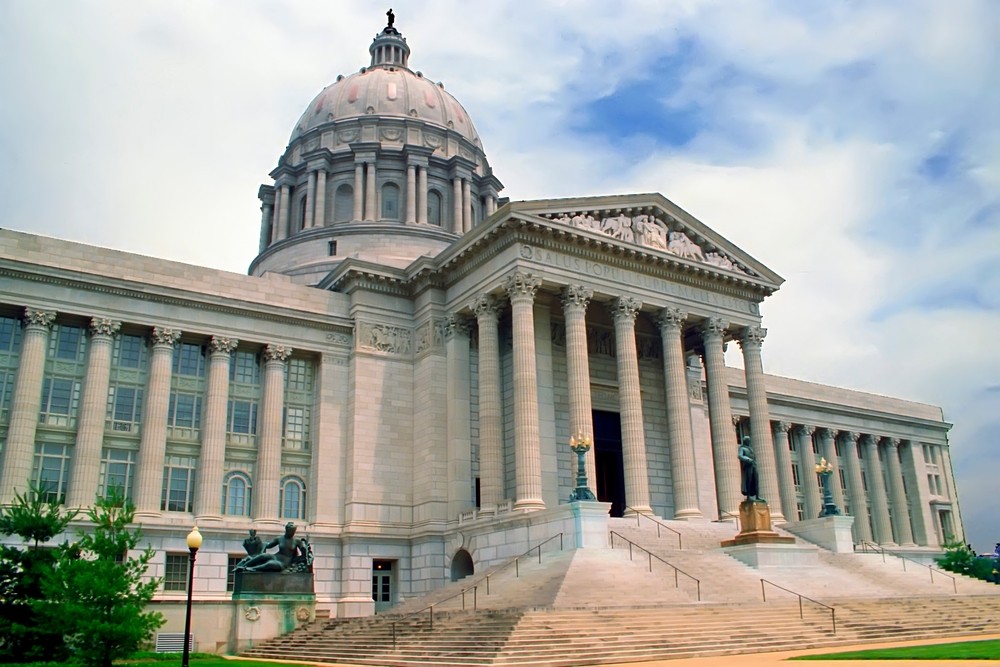
Missouri Needs Better Stewards

Is Missouri’s budget trajectory unsustainable? Yes, but given the discussions in Jefferson City over the past few weeks, you’d think it wasn’t.

As my colleague Patrick Tuohey recently wrote, the rosy budgetary picture painted by Governor Parson during his final State of the State address was, at best, misleading. Missouri’s budget has nearly doubled over the past five years, and the governor’s more than $50 billion recommended spending plan for next year requires dipping into cash reserves to make ends meet.

In other words, it will be up to Missouri’s General Assembly to begin turning the tide on government spending, which will likely be easier said than done for several reasons.

First, the federal government is winding down its COVID-19 and infrastructure spending. This means that unless Missouri begins scaling back the services that have been propped up with federal cash, state taxpayers can expect to soon be on the hook for a higher level of government services than they were just a few short years ago. While the reduced federal funding will impact some parts of state government more than others, the Medicaid program is sure to need hundreds of millions of new state tax dollars.

Second, state tax revenues aren’t expected to grow at the rate they have in recent years. Fortunately, higher revenue collections over the past few years allowed Missouri to accumulate significant cash reserves, but some of those reserves have already been spent and the governor’s budget recommends spending more. There should be no expectation that Missouri’s tax revenue growth or remaining cash reserves will be able to fill the budgetary hole the federal government leaves behind, let alone cover the inflationary cost increases required to continue funding the state’s other spending priorities.

Given the harsh budgetary realities Missouri is facing, it’s especially troubling that Governor Parson and the general assembly are reportedly considering expanding the state government’s role even further. For example, Governor Parson is recommending funding—in a budget that relies on one-time cash reserves to maintain balance—childcare and teacher pay programs that will likely become new long-term spending obligations.

In a perfect world, Missouri taxpayers wouldn’t have to ask their elected officials to be good stewards of the state’s finances. Policymakers would prepare for rainy days and take future spending obligations into account when they craft the yearly budget, ensuring the state’s revenues and spending are on sustainable trajectories. Unfortunately, that doesn’t appear to be happening right now. For now, Missourians are going to be left hoping that something changes between now and the end of the legislative session.


The Connection Between Farmland Assessment and Teacher Pay Increases

How does Missouri farmland being underassessed (for tax purposes) relate to proposed state requirements for higher minimum teacher salaries being a de facto subsidy to rural Missouri?

Well, it does. Stick with me on this.

Last year, Missouri’s budget included an appropriation increasing the minimum Missouri starting teacher salary to $38,000, funded primarily by state tax dollars and not local school taxes. This year, officials are proposing legislation to raise it even higher, with the same primary funding from the state. Where do you think those state tax dollars are going to come from, and where is this new fund to increase starting teacher salaries going to be spent?

It is more difficult for rural school districts to fund themselves with property taxes because of the high percentage of agricultural property in those areas. (I’m not saying it’s impossible, just more difficult.) Whether you like it or not, farmland is underassessed in Missouri(most farmers presumably like it). It is hard to raise the revenue necessary for a small school district with a tax base starting out so low. Since tax rates are the same for various classes of property (except in St. Louis County), setting a rate high enough to raise enough funds from farmland would mean incredibly high taxes on the more accurately assessed homes and businesses in those communities.

Urban and suburban school districts, for the most part, aren’t starting their teachers out at $25,000. At Indeed.com, every job opening I saw for City of St. Louis public schools started at $46,000. In this blog post, James Shuls goes into more detail on this discrepancy. (James goes into even further detail on the problems of funding rural school districts here.)

Where do the taxes that fund much of Missouri government and, by obvious extension, this new state teacher fund, come from? As this map shows, our larger urban counties produce an outsized percentage of Missouri’s economic activities. St. Louis County alone produces over 25% of the state’s GDP. State income and sales tax collections are going to largely align with those totals.

If you were a voter in rural Missouri, and you were told that you could vote for a local tax increase or have the state pay for salary increases for your school district, what would you pick? We would all pick the latter.

This issue will play out similarly to the sheriff salary issue of about 15 years ago. There, the state decided to increase sheriff’s deputy salaries by adding a fee to process service around the state. The problem was that St. Louis County, which has a county police department and a sheriff’s department that is not a law enforcement agency (trust me on this, I used to be a county sheriff), was ineligible for the funds even though it generated more fees from process service than any other county in the state. Yes, lawsuits were filed over it, but they failed (unfortunately).

I like low taxes. If rural Missourians want low taxes, I’m all for it. But we should not establish a system where rural teacher salaries are paid for (mostly) by taxpayers in urban and suburban areas. The combination of low assessed farm values and a desire for low tax rates in rural areas should not be addressed by taking money from urban areas. I recall signs along I-70 years ago on farm fences objecting to using state funds for sports stadiums in St. Louis. Those signs were correct then, and they still are now, but it works both ways.

Let’s Be Honest about the New Stadium Tax in Jackson County

On April 2, 2024, Jackson County voters will be asked to approve a new 3/8 percent sales tax to support improvements to “funding for park improvements consisting of Arrowhead Stadium and its surrounds, and a new Major League Baseball stadium in Jackson County.”

Proponents present this as an extension of that tax and not a new tax.

They are wrong. It is a new tax.

First, think of this logically. If the county legislature did not act—or if the voters reject the measure—the current sales tax would expire on September 30, 2031. The legislature is seeking voter approval exactly because this is a new legislative action to impose a new tax.

Second, let’s examine the original tax approved by voters in 2006. The legislation does not contemplate an extension. It does not set up any mechanism by which the tax could be extended. It simply imposes the tax and states that it will expire after 25 years.

Third, the legislative language Jackson County voters are being asked to approve this time around would sunset the existing tax (the original tax would end—the two taxes would not run concurrently) and explicitly states this is a new tax. Per Section 2: “Subject to the approval of the voters of the County, the new levy will begin upon the date first imposed and continue for a term of 40 years . . . ” (emphasis added)

Even the title of the ordinance confirms that we are being asked to impose a new tax:

AN ORDINANCE submitting to the qualified voters of Jackson County, Missouri, at a special election to be held on April 2, 2024, a question authorizing Jackson County to impose a countywide sales tax of three-eighths of one percent for a period of forty years for the purpose of retaining the Kansas City Royals and Kansas City Chiefs sports teams in Jackson County, Missouri. (emphasis added)

Perhaps supporters of the measure believe that voters are more likely to extend a tax than they are to vote on a new tax. But that is a political concern. Their claim is campaign messaging, not the facts of the measure on the ballot.

Journalists covering this issue should resist parroting talking points and stick to the basic facts: Jackson County residents are being asked to impose a new levy on themselves. It’s that simple.

State of the State: Leading with Intentionality for School Choice

In his final State of the State Address, Governor Parson highlighted a key part of government policy. He said:

A society grows great when old men and women plant trees . . . the shade of which they will never know or sit in.

I think this can be applied to our education system. We need great men and women to plant trees, yes. However, we also need great men and women to tend to them and help them grow. There are a few examples nationwide of this exact scenario happening—particularly in states such as Iowa, Florida, Arkansas, and Tennessee. To help our students flourish through school choice and educational reform, there needs to be a governor with a plan and a commitment to planting trees and cultivating our next generation.

Governor Huckabee Sanders proposed an ambitious education reform plan to the state legislature. Arkansas’ LEARNS ACT pairs teacher salary increases with curriculum protection and the establishment of a universal school voucher program. Passing this bill took a lot of hard work and a lot of horse-trading, but a determined governor was able to get it done.

Governor Reynolds proposed a plan to make “no child limited by their income or zip code” in Iowa. It was a priority of her administration. She sought to educate the public on her proposal and garner support. The end result was a victory for Reynolds—Iowa’s education savings accounts will be expanded to all students statewide. The governor proposed the bill, and she also continued to make it a priority for the state all the way to her final signature.

Governor Lee has gone to bat for his proposed expansion of Tennessee’s statewide school choice program, which would create opportunities for students to attend the school that best suits their needs. He was recently berated at an address advocating for major change to Tennessee’s educational status quo. Nevertheless, the governor has made it his priority to move this legislation across the finish line. Governor Lee has decided that the battle is worth it.

While no guarantee of success, it seems that the trend for getting major education reform passed is a determined governor who is willing to put his or her weight behind school choice. The question is whether we have such a governor.

The Terrible, Horrible, No Good, Very Bad, Teacher Pay Plan

Raising teacher pay is once again a hot topic in Jefferson City, and once again the ideas being floated to address the issue are seriously flawed.

This year’s proposals focus on raising the minimum salary that teachers can be paid. There are several bills in each legislative chamber (see links here, here, and here), but they all take a similar shape. They raise the minimum salary that districts can pay new teachers from $25,000 to $38,000 (some go higher), then raise the minimum higher over several years. To help school districts afford the increase, the bills create a state fund that districts can request reimbursement to pay 70% of the increased salaries. The legislature has already been appropriating this higher minimum salary for teachers via the budget for several years—these bills would enshrine this change into statute, but also increase salaries even more down the road.

As my colleagues have written previously, the discussion surrounding raising Missouri’s “minimum” teacher salary is somewhat misleading. School districts set teacher salaries, not the state— but the state does set a floor for pay that districts must remain above. You often hear people claim that Missouri has one of the lowest teachers’ pay “minimums” in the country, but that is not an accurate representation of how much teachers are actually being paid, as my colleague James Shuls has outlined. For example, the average teacher salary in the district I live in, Affton, is more than $62,000 per year.

My biggest concern is not with the idea of the state raising minimum teacher pay, but the way the proposals go about doing it, and the perverse incentives they would enshrine into state law. By offering to permanently subsidize teacher pay for some school districts, especially at a time when the state’s budgetary outlook is so uncertain, Missouri will begin sending state dollars to cover what have previously been almost entirely local decisions.

The primary way the state funds schools is through what’s called the foundation formula. Though the formula may not be perfect, it offers an equitable method to distribute state funds, adjusted by a variety of agreed-upon criteria. The proposals that our policymakers are now considering seek to create an outside-the-formula funding source for a specific purpose (minimum teacher salaries). The problem is that these funds would not be distributed in an equitable way. If enacted, these proposals will represent a significant redistribution of state funds to school districts whose voters have chosen not to raise their taxes sufficiently to pay their teachers more.

Since state fiscal year 2023 when Missouri began piloting this approach, it’s become clear that many school districts would jump at the chance of additional state funding. Governor Parson’s budget recommendation shows that approximately 65% of the state’s school districts have already taken advantage of the state salary grants. It’s not unrealistic to assume that if this program is made permanent, more districts will begin participating. Of course, it makes sense, because once the state begins offering subsidies for teacher salaries, why wouldn’t districts take advantage? Or, perhaps more importantly, why would districts ever choose to raise salaries with their own money if the state would pay for them instead?

None of this is to say that the way Missouri funds its schools is ideal, or that teachers shouldn’t be paid more. But whatever the general assembly decides to do, it’s important that policymakers think through the unintended consequences. Incentives matter—Missouri’s voters and school districts have demonstrated as much, and it’s time our policymakers started acting like it. There’s no getting around the fact that the proposal to raise minimum teacher pay, as currently drafted, is a bad idea for Missouri.

The National Hybrid Schools Project with Eric Wearne

Susan Pendergrass speaks to Eric Wearne about The National Hybrid Schools Project.

The National Hybrid Schools Project is the national clearinghouse for research, data, practices, and networking for the burgeoning hybrid home school movement.

Register for the February 26 four-day school week panel discussion here.

Listen on Apple Podcasts 

Listen on SoundCloud

Eric Wearne is Associate Professor in the Education Economics Center at Kennesaw State University and Director of the Hybrid Schools Project. He is the author of Defining Hybrid Homeschools in America: Little Platoons (Lexington Books, 2020). His work has been published by the Peabody Journal of Education, the Journal of School Choice, Catholic Social Science Review, City Journal, and Law & Liberty, among others. He was previously Provost at Holy Spirit College, Associate Professor of Education Foundations at Georgia Gwinnett College, Director of Data Analysis and Deputy Director of the Governor’s Office of Student Achievement in Atlanta, and a high school English and Debate teacher. He holds a PhD in Educational Studies from Emory University, a MA in English Education from the University of Georgia, and a BA in English from Florida State University.

Produced by Show-Me Opportunity

State of the State, Source of Income, and Triumphant Returns

David Stokes, Elias Tsapelas, and Patrick Tuohey join Zach Lawhorn to discuss:

– Key takeaways from Governor Parson’s State of the State address
– Does Missouri have a budget surplus?
– A “source of income” ordinance passes in KC
– What’s moving in Jefferson City, and more

Listen on Apple Podcasts 

Listen on SoundCloud

LINKS:
Patrick Tuohey’s blog: showmeinstitute.org/blog/budget-and…budget-surplus/

David Stokes Testimony on Source of Income Rules: showmeinstitute.org/publication/mun…es-for-rentals/

Produced by Show-Me Opportunity

911 Systems Are a Great Opportunity for Local Government Cooperation

Versions of the following commentary appeared in the Southeast Missourian, the Columbia Missourianand the Springfield News-Leader.

There is probably no better opportunity for counties and municipalities to share services and save tax money than in emergency 911 dispatching services. As vital as the service is, if the technology is effective and the operator is properly trained, it makes no difference if the emergency call is answered down the block in New Madrid, Missouri, or across the ocean in old Madrid, Spain.

In southeastern Missouri, Perry County and the City of Perryville reviewed numerous options for upgrading their 911 system. In late 2023, they determined that the best option from a service and cost perspective was to contract with neighboring St. Francois County, which has already implemented the improved technology a modern 911 system requires. Perplexingly, some residents of Perry County have objected to this.

According to news reports, the main objection is the loss of a few 911 system jobs, as if the main role of local government is to keep as many people on the payroll as possible. That’s how political machines function, not quality local government. The objectors have succeeded in putting the consolidation question on the upcoming April election ballot. Hopefully, the voters will value tax savings and improved public safety over government job protections.

Many counties and cities around Missouri share emergency operations dispatching. County sheriff’s departments can do more than simply share service with other county sheriffs; they can operate together with city police departments, fire districts, university police departments, ambulance districts, and more. The economies of scale here allow for implementation of better technology in larger 911 systems, saving taxpayer money. The city of Flint, Michigan, saved over a million dollars a year and was able to eliminate 23 positions by joining the Genesee County 911 system.

To give a Missouri example of savings for taxpayers, Lake Ozark recently contracted with Miller County to handle its 911 system. Lake Ozark will save around $200,000 per year in direct costs while avoiding spending even more to upgrade its own soon-to-be obsolete 911 system.

Closer to Perry County, the Cape Girardeau County sheriff’s 911 dispatch system handles calls not only for the sheriff but also for eight other fire and ambulance districts and police, fire, and ambulance calls for Jackson. Does anyone seriously think the public would be better served with 10 different 911 systems in the county, each one struggling to hire and train employees and regularly upgrade expensive technology?

For one final example, in 2016 the City of New Madrid and New Madrid County partnered to consolidate their 911 systems and upgrade their technology. I hope the citizens of Perry County realize how common and beneficial these types of partnership are in Southeast Missouri.

Saving money by sharing the costs of technological improvements is more important than ever since salaries for 911 dispatchers are increasing substantially in an effort to recruit more people to the job. Currently, staffing shortages are the major problem facing dispatching systems all over the country, and have been partially responsible for recent 911 system problems in Kansas City and St. Louis. Maintaining multiple systems requiring more employees using lesser technology isn’t going to help the people of Perry County.

These are just a few good examples of 911 consolidation around Missouri. While there are many success stories in both urban and rural parts of our state, numerous opportunities for change still exist. Wherever you are in Missouri, enhanced public safety technology and more efficient use of tax dollars through 911 consolidation are two things we can all support. Hopefully, the voters of Perry County will recognize these benefits in April.

No, Missouri Is Not Running a Budget Surplus

Governor Parson, in his final State of the State address, said, “Actually, with the budget we outline today . . . we will leave office with over $1.5 billion dollars on the bottom line, which has never been done before in our state’s history.” He never said the word surplus, but that is how it was reported in one news service.

Earlier in the year, Rudi Keller wrote in the Missouri Independent:

Missouri will enter the new fiscal year Saturday in its best financial shape ever. But there are unmistakable signs that the massive surplus, now approaching $8 billion, has likely peaked.

Really? Is Missouri actually running a huge surplus? Are we taking in more than we owe?

No, no we are not.

In Truth in Accounting’s  (TIA) “Financial State of the States 2023,” Missouri ranked 25th. TIA gave Missouri a “C” grade and concluded: “Missouri would need $700 from each of its taxpayers to pay all of its outstanding bills.” Of particular concern to TIA was Missouri’s highest-ever unfunded debt to the Missouri State Employees’ Plan.

The reason for the disparity is due to how states account for debt. In cash-basis accounting, states merely account for the money they have on hand without considering their debts. If you and I were to budget like this, we’d count loans as income, ignore debt, and put off expenses until next year in order to claim a huge surplus now.

If you think that sounds criminal, you’re not alone. The IRS does not permit businesses with gross receipts exceeding $29 million for three years to use cash-basis accounting—but city and state governments may do so. As a result, according to the International Monetary Fund, “Governments have been tempted to exploit this weakness by deferring cash disbursements or bringing forward cash receipts as a means of artificially inflating their financial balance.” This is exactly what is happening in Missouri.

Governor Parson isn’t alone, sadly. Mayors and governors of both parties and all ideological stripes do the same thing. And journalists on deadline often repeat the claim without checking it. If such claims seem too good to be true, they probably are.

Support Us

The work of the Show-Me Institute would not be possible without the generous support of people who are inspired by the vision of liberty and free enterprise. We hope you will join our efforts and become a Show-Me Institute sponsor.

Donate
Man on Horse Charging