Some Estimates on the Impact of Covid-19 on Small Business

A working paper by the National Bureau of Economic Research (NBER), authored in part by Dr. Ed Glaeser of Harvard University, asks: How Are Small Businesses Adjusting to Covid-19? The report is brief and is worth reading in its entirety, however here are a few key takeaways from the data:

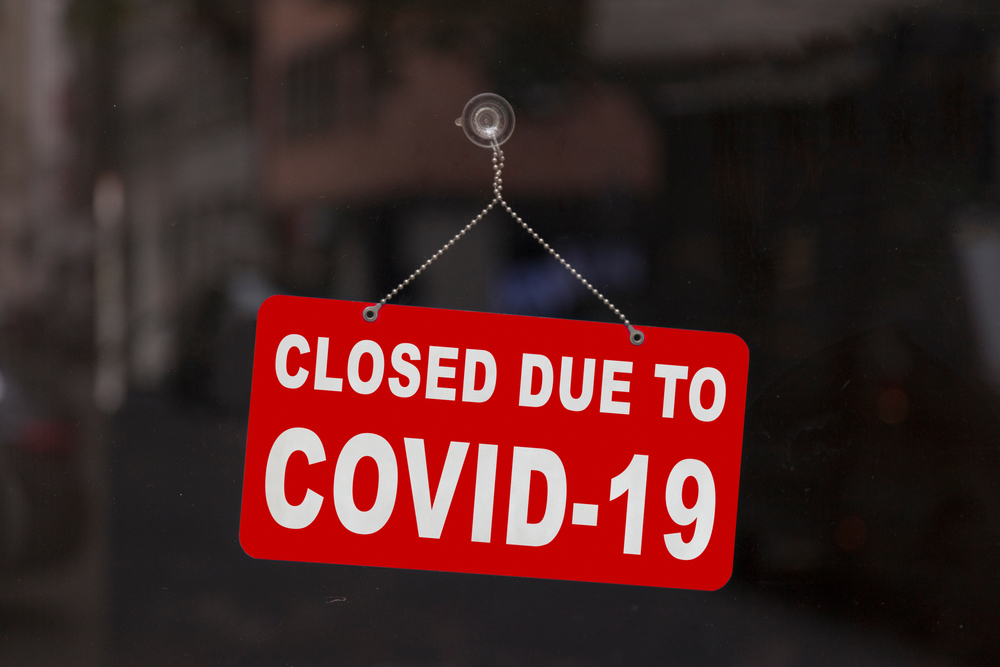
  • 41.4 percent of businesses reported that they were temporarily closed because of COVID-19. A far smaller number—1.8 percent—reported that they were permanently closed because of the pandemic. By contrast, only 1.3 percent reported that they were temporarily closed for other reasons. 55.4 percent reported that they were still operational.
  • Approximately one-fourth of firms have cash on hand totaling less than one month’s worth of expenses. About one-half of firms have enough cash on hand to cover between one and two months of expenses.
  • More than 64 percent reported that it is very or extremely likely that they would be open on December 31, 2020—which is used as a measure of the probability of being open. A growing literature has found entrepreneurs to be overoptimistic about their prospects

It is completely appropriate for policymakers in Missouri and across the country to debate the efficacy and appropriateness of aid to small businesses. As with aid to municipalities, we do not want to reward bad decision-making with public funds. But as Glaeser and his co-authors point out, the impact of the virus and the public response is great and already with us.

While I am often skeptical of government intervention in the economy, it is difficult to argue that there is no role for government here. After all, even the most ardent Objectivists over at The Atlas Society understand that there we are in unprecedented times. For anyone who wants to consider exactly how unprecedented, this NBER paper is a good start.


 

Transparency Needed for Coronavirus Stimulus Spending

St Louis County expects to receive $173.5 million from the federal government in the coming weeks to handle expenses related to the coronavirus. While the influx of cash will likely help the county, there are questions about how the money is being handled.

According to the Post-Dispatch, the “administration was moving quickly and unilaterally—without oversight or public notice—to spend upwards of $173.5 million that it expects the federal government to refund.” Further, the county executive is requesting the county council to grant him the ability to transfer funds without councilmembers’ approval.

For instance, the temporary morgue being built in Earth City in anticipation of more coronavirus deaths was constructed with the sole approval of the county executive. Alerting councilmembers and the public, as well as offering justification for its construction, are all standard procedures that were ignored.

It is understandable that in a crisis moves must be made quickly, but they can still be made publicly. As my colleague Patrick Ishmael said recently, if local governments want stimulus money they should be transparent about how that money will be spent.


Should All Cities Automatically Get Federal Help?

It isn’t surprising that mayors across the country are concerned about the impact a largely shuttered economy will have on their local tax revenue and ability to deliver basic services. According to The Philadelphia Inquirer, the National League of Cities partnered with the U.S. Conference of Mayors to survey local officials across the country. The article stated:

Nearly 9 in 10 cities surveyed — from smaller hubs with populations of fewer than 50,000 to the largest metropolitan areas in the country — signaled they expect a revenue shortfall. Among them, more than 1,100 cities are preparing to scale back their public services, the survey found. Almost 600 cities predicted they may have to lay off some government workers amid the crunch. And local leaders in 1,000 cities said the reductions probably would affect their local police departments and other public safety agencies.

Amid this crisis, cities such as Kansas City and St. Louis need to start picking and choosing their priorities. In the face of revenue shortfalls, are convention and visitors’ bureaus really as important as police departments? Are we really going to continue diverting funds away from schools and libraries in order to fund stadiums, entertainment districts, and luxury accommodations? Do existing municipal contracts include force majeure clauses to help cities reorient priorities in a time of unprecedented crisis?

The sponsors of the survey have called for generous federal support for cities, and the Inquirer story goes on to state:

Lawmakers authorized $150 billion in coronavirus aid for states and large cities as part of the broader $2 trillion package that Trump signed into law in March. But that assistance — half of which, Treasury Secretary Steven Mnuchin announced Monday, is now available — comes with restrictions. Even when combined with additional help offered by the U.S. government, many leaders outside the nation’s capital also see it as insufficient to keep their cities afloat financially.

While such support may be necessary, it should not allow cities to escape the consequences of their own bad behavior. Kansas City and St. Louis are high tax cities that also have high per capita public debt. They divert an ever-growing amount of money to private developers to build things that in some cases are clearly not needed.

If cities are to receive federal aid, one hopes that cities with good financial track records are prioritized. Perhaps aid should be tied to ratings of fiscal responsibility before the pandemic such as debt and deferred maintenance. Public funds should not be used to hide, or even reward, previous bad behavior.


An Opinion of Michigan’s Stay-at-Home Order from Someone Stuck in Michigan

Though I’m a St. Louis resident, I have been social distancing in my hometown in Michigan for the past few weeks. Fortunately, the internet and video calls have allowed me to keep working and stay in touch with Missourians. Unfortunately, Michigan is perhaps one of the worst places I could’ve chosen to ride out this pandemic. Detroit has become a COVID-19 hotspot, and as a result Michigan has instituted some restrictions that I believe may be too heavy-handed.

I want to be very clear that I am not taking this global crisis lightly. Michigan has had thousands of cases in the past few weeks, and I’m extremely worried about my family, friends, and others in Michigan. I think these stay-at-home orders are beneficial in the fight against the coronavirus, but I also think there is a balance between trying to ensure safety and trying to excessively control citizens. It seems fair to question whether Michigan has achieved that balance.

The most recent executive order contains what I think are some unnecessary and seemingly arbitrary restrictions on the everyday lives of Michiganders. For example, all public and private gatherings of any size between people who do not live in the same household are prohibited. If you own two residences, you are not allowed to travel between them.. Stores are not allowed to sell goods from the following categories: carpet or flooring, furniture, garden centers, and paint. Businesses are also to refrain from advertising or promoting items that are not groceries, medical supplies, or essential items. Lottery tickets, however, are fine to purchase. The executive order also prohibits of the use of any boats with a motor, which is especially relevant to both industry and citizens in a state surrounded by the Great Lakes.

Most states have stay-at-home orders in place, but Michigan’s order goes much further. Where do we draw the line? Other states are taking safety precautions without completely banning leisure activities and further disrupting businesses

I’m certainly not the only one with this opinion; others argue that Michigan has become an outlier. For the sake of my co-workers and friends still in the Show-Me state, I hope that Missouri does not follow Michigan’s path.


Missouri is Lessening Regulations, and Hopefully It’ll Stick

Many of us are closely following the actions of state government right now, and an important thing to monitor is the state of business rules and regulations. Lawmakers are loosening rules and regulations to ease the burden on businesses, workers, and consumers in this unprecedented time. Relaxing regulations is great, but it raises an important question: If these regulations aren’t necessary now, were they ever necessary?

The Missouri Division of Professional Registration has provided a list of statutes and regulations that it is requesting to be waived due to the COVID-19 crisis. This twelve-page document contains requests from 17 different professional registration boards. The requests are all related to occupational licensing and require the governor’s approval.

Many requests have already been approved. Several licensed occupations, including optometrists and nursing home administrators, are now able to meet their license renewal requirements online, which was not allowed or limited before. Missouri pharmacies are now allowed to use pharmacists and pharmacy technicians that have out-of-state licenses and can seek assistance from out-of-state pharmacies. There has also been a huge reduction in restrictions on health care professionals, making it easier for them to practice and coordinate with others in the field.

The Division of Professional Registration is not alone in looking to change some rules. A few lawmakers requested that the Department of Public Safety waive the restriction on selling mixed drinks to go, and in an executive order, the governor ordered the “suspension of any prohibition of the sale of un-prepared food by restaurants to the public.”

These regulations make it harder for workers to get and keep jobs. But if lifting some of these regulations is helping consumers and businesses during this crisis, we should wonder if they’re necessary when things go back to normal. One can only hope that many of these changes will stick, and we will continue to have fewer business regulations moving forward.


Fingers Crossed

If a crisis doesn’t create a person’s character, but reveals it, then the same can be said of organizations. An overnight switch to all-virtual education has spurred those with resolve to find innovative ways to educate children. And do you know what the cool thing is? If an idea includes virtual learning, then it’s technically available to anyone with an internet connection.

The Florida Virtual School (FLVS) has been serving public, private, and homeschooled students in the United States and abroad for decades. It recently increased its capacity to 2.7 million students. FLVS is geared up to serve all Florida students and is available to discuss options with out of state districts and schools. Similarly, the Uncommon Schools charter school network in New York quickly created a high-quality online learning option for its students. But it then went a step further and made the online option completely publicly available. That means any student with internet access can fully access a program created by a network with student proficiency rates at or near 100 percent. Sal Khan, creator of the Khan Academy, made his platform open and free as well.

Let’s cross our fingers that parents and students in some of Missouri’s shuttered districts—like Parkway, Joplin and the very low-performing Riverview Gardens—magically find these resources and use them. They will be doing so without their district’s guidance or support. And let’s think about whether Missouri public school students should be able to enroll in top notch programs in other states even after the pandemic. We now know that education can happen outside of public school buildings. The providers of high-quality education should reap the rewards of that effort, not the closest public school building to a child’s address.


More Policies to Fight COVID-19

Missouri is inching closer toward the peak of its coronavirus outbreak, and there is still work to be done to ensure the state is ready when that day comes. The priority for policymakers should be ensuring that the state has the resources to provide care for every Missourian that needs it.

Governor Parson has already taken two important steps to prepare Missouri’s health care supply for the coming surge in demand. A little more than a week ago, he waived multiple regulations that were preventing able providers from caring for Missourians. But as my colleague Patrick Ishmael and I have outlined, more action is needed to respond to COVID-19.

The next step is to allow providers to care for their patients to the full extent of their training. For example, if there were a shortage of doctors, and a nurse, medical student, or pharmacist could capably provide a service that had traditionally been delivered by a physician, the law should allow it. Reforming Missouri’s scope of practice laws would expand the state’s capacity to deliver medical services in a crunch. The governor has made some progress on scope of practice issues already by waiving the 75-mile requirement for APRNs and their collaborating physicians, but further steps, like appropriately allowing pharmacists to prescribe some medications, should be pursued.

Policymakers should also consider reducing the government-imposed barriers that are limiting available health care resources. Specifically, Missouri’s certificate of need (CON)laws (laws that require health care providers obtain government approval before opening health care facilities) hamper the response to COVID-19 by making it more difficult to build new (temporary or permanent) facilities. Missouri should follow the lead of the at least 18 other states that have suspended some portion of their CON laws in response to the coronavirus. Abolishing these barriers permanently would allow hospitals or other providers to build the facilities they believe communities need—not just the ones the government says the community should have.

Finally, the public health crisis and resulting economic downturn have highlighted the need for increased access to affordable health coverage. As many Missourians deal with the loss of their employer-sponsored health coverage and other income, it is essential they have access to a range of insurance options. Reforming state regulations on traditional coverage plans and also extending the duration of short-term medical plans would help ensure that Missourians have access to coverage that meets their needs while helping to mitigate financial risk.

Missouri will likely continue seeing increased need for health care resources over the coming few weeks, and there are policy responses that can help weather the storm. Here’s to hoping Missouri’s elected officials rise to the occasion by making the regulatory and legislative changes needed to help protect our state’s residents during this trying time.


One Fewer Option for School Districts

Missouri school districts are trying to figure out how to support learning amidst school closures due to the coronavirus pandemic. While some districts are transitioning to remote learning, others are not, and the districts that aren’t adopting remote learning will need to figure out how to make up for lost learning time.

Hopefully by late summer, the pandemic will be controlled enough for students to start the next school year normally. One idea for districts attempting to make up the lost time would be to start the next school year earlier. Unfortunately, the mandated start date law from 2019 would make this impossible.

Last year, a law passed limiting when school districts could start the school year in the hopes of advancing tourism with a few extra weeks of summer vacation. Putting tourism ahead of education was a bad idea in the first place, and there were other concerns with the law, such as a later start date perpetuating the academic summer slide. The law is an example of why we should be careful about taking away local control from schools, even for seemingly trivial matters such as school start dates. For districts that are not transitioning to remote learning, they have few options to make up the lost weeks, and this law eliminates one feasible option.

The coronavirus pandemic has highlighted the importance of flexibility in education policy. Local control can give districts the flexibility to properly respond to student needs.


Local Government Wanting a Stimulus Check? Publish Your Checkbook

After state and local government officials across the country abruptly shut down the economy last month to combat the coronavirus pandemic, Congress quickly passed a “stimulus” package. That package included not only money for individuals and small businesses, but also support for state and local government. For the private individuals and businesses who lost their incomes as a result of government action, compensation was appropriate.

But if local governments are going to receive taxpayer money to support their continued operation, they should be required to report all of their spending as a condition of that support. The simplest way to accomplish this would be for Congress to pass a law instituting the requirement, and if rumors hold true the vehicle for such an update may be yet another stimulus package. But the principle is one we’ve articulated again and again: If local government can take your money, it should tell you how it spent the money. We are all Federal taxpayers, and as Federal taxpayers, we have a right to know exactly how our money is being used in our own state and across the country.

Accordingly, local governments receiving this money should be required to report their spending in a machine-readable format. Local governments already keep these accounting records; it is appropriate those records are made public.

Support Us

The work of the Show-Me Institute would not be possible without the generous support of people who are inspired by the vision of liberty and free enterprise. We hope you will join our efforts and become a Show-Me Institute sponsor.

Donate
Man on Horse Charging