Part One: Does Kansas City Have an Affordable Housing Problem?

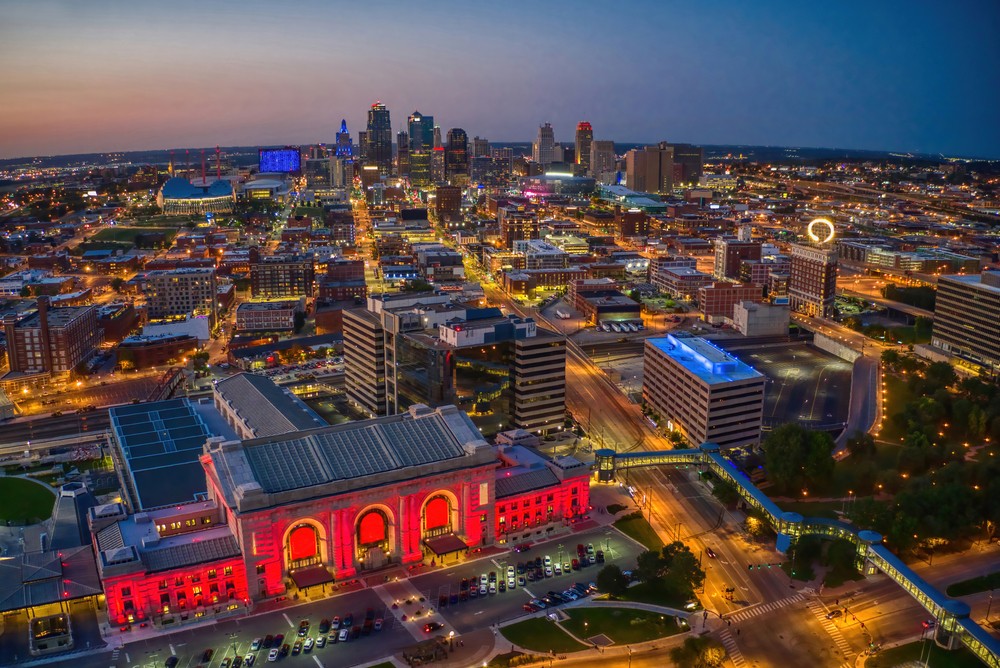
Kansas City has long been the crossroads of the United States. Once a frontier outpost in the 1800s, the region served as the trailhead for the Santa Fe, California, and Oregon Trails and was a robust riverboat shipping port. In modern times, Kansas City is among the most prominent intermodal hubs in the country. It is the largest freight center in the country by tonnage and the country’s third-largest trucking center. It’s far from an ocean or mountain, but its geographic advantages—its location and ample land—are at the heart of what the region is and how it sees itself.

That short description of Kansas City isn’t to imply that the region is some monolithic cow town with roads, and Kansas Citians have a plethora of living options to serve their lifestyle needs. Residents can make their home in a rural area and commute to an office downtown in as little as 15 minutes. Urban living options are plentiful, and the local art scene is vibrant and growing.

Indeed, variety is a hallmark of living in the City of Fountains, and that variety is facilitated by the vast geographic space available to its citizens. The Kansas City Metropolitan Statistical Area, or MSA, is the 31st largest in the country, but in terms of population density, the Kansas City MSA ranks far down the list at 121st. There’s space to live in Kansas City, and for years the living’s been relatively cheap.

With a variety of lifestyle choices and ample land, could Kansas City nonetheless be suffering from an affordability problem? Local reporting on its housing stock and costs has reflected many of the housing affordability journalism trends nationally, with most journalistic conclusions pointing to the Kansas City region being in the middle of some sort of a “housing crisis.” A June 2021 report by KCUR captures this dynamic well, suggesting that a “shortage of affordable housing in Kansas City is not a new problem. But the pandemic exacerbated the crisis and exposed the region’s failure to act (Emphasis mine).

How can a region become “unaffordable” for housing, and what should constitute the region’s “action” to fight this “affordable housing” crisis? Often the solution provided by public officials to solve affordable housing problems is subsidies, typically either for new housing construction or some form of direct rent assistance. But the basis of the underlying claim—that affordable housing in Kansas City isn’t a “new problem”—requires greater evaluation than is typically given in news reports.

We’re told we have an affordable housing problem in Kansas City. But do we? This blog series will explore this question and consider whether the city and the state’s policies are aligned in a way to address the issue if it exists, or protect against its formation if it doesn’t.

Podcast: Canceling Student Debt with Neal McCluskey

Listen on Apple Podcasts 

Listen on Stitcher 

Listen on SoundCloud

Neal McCluskey is the director of Cato’s Center for Educational Freedom. He is the author of the book Feds in the Classroom: How Big Government Corrupts, Cripples, and Compromises American Education and is coeditor of several volumes, including School Choice Myths: Setting the Record Straight on Education Freedom and Unprofitable Schooling: Examining Causes of, and Fixes for, America’s Broken Ivory Tower. McCluskey also maintains Cato’s Public Schooling Battle Map, an interactive database of values and identity‐​based conflicts in public schools, and oversees Cato’s Private Schooling Status Tracker.

Asking Developers to Make “Voluntary Donations” is Troubling

According to the Post-Dispatch, a New Jersey developer—Aptitude Development—will make a $250,000 donation to affordable housing in St. Louis City, explicitly at the request of Alderwoman Tina Pihl. Aptitude is planning to build a 7-story, 177-unit apartment complex in Pihls’ ward. According to the alderwoman, the donation will probably go to the city’s Affordable Housing Trust Fund.

I find this very troubling.

Let’s backtrack a bit. Alderwoman Pihl, and Mayor Jones, have been very explicit about their desire to create more affordable housing in St. Louis. (St. Louis doesn’t actually have an affordable housing problem, and even if it did, government low-income housing programs would not be the way to remedy it; but that is a post for another day.)

In pursuit of that objective, Alderwoman Pihl appears to have a habit of “requesting” donations to affordable housing from developers who have projects in her ward. According to the Post-Dispatch story, Pihl also “requested,” and received, $1.8 million from the Steve Smith City Foundry in return for her support for its development project adjacent to the Aptitude site.

Now, I have made no secret of my distaste for the tax subsidies that municipalities routinely grant to developers that supposedly incentivize them to build certain projects. And I suppose if St. Louis is going to continue that practice, it makes sense to get as much as possible from the developers in return.

Yet, if the Post-Dispatch article is to be believed, Aptitude isn’t requesting any tax subsidies, which suggests that the alderwoman is using her control over development in her ward to exact funds from a private developer—not to pay for public expenses directly associated with the Aptitude project, but as a cost of doing business in the city.

In my opinion, that’s wrong. If the Aptitude project is consistent with previous rezoning requests and similar changes within that area of the city, it ought to be approved without requiring any supposedly voluntary contribution. Most importantly, the project will add housing options to the city, which will lead to an increase in affordable housing, even though the housing being built in this project is on the more expensive side.

I’m not suggesting that the alderwoman is making these requests to feather her own financial nest. I think she’s trying to accomplish a goal consistent with the duties of her office.  But practices like this are characteristic of countries without the rule of law; once they become routine, they lead inevitably to threats and backroom deals and eventually outright corruption.

Here are a few questions for our leaders. Why is it necessary to alternate between bribing private corporations with tax subsidies and extorting “contributions” from them? Why should private development projects, or public goods like affordable housing, turn on the success or failure of deals negotiated by individual lawmakers? Might it instead be possible to improve the city by creating good policies, incorporating them into law, and applying the law consistently for the benefit of the public?

In other words, why not try some good government for a change?

Columbia Repeals Ban on Trash Roll Carts, Repeal of Ban on Dancing and Proms Is Next

Both Prohibition and the classic film Footloose (the original, obviously) teach us the lesson that banning popular things is generally poor policy (there are some exceptions, of course). Well, Footloose must have been entered at the last True-False film festival, because the Columbia City Council decided to heed this lesson and rescind the absurd ban on roll carts within the city of Columbia. Yes, the very same roll carts that are heavily used for trash service all around the nation.

Until the last city council meeting, roll carts were banned in Columbia due to a poorly constructed public referendum on the issue. Thankfully, the council has changed those rules and now can restore sanity to the current system by instituting roll carts at some point in the (hopefully near) future.

The current, byzantine system of using only city-authorized trash bags taken by hand to the curb for personal collection by city employees is as outdated as a police call box. In addition to changing this rule, Columbia should strongly consider privatizing the entire trash system and using roll carts and automated collection trucks. This will, of course, be opposed by those who view local government as a job program first and foremost. From a Columbia Missourian story (emphasis added):

Although privatizing trash collection would relieve the city of its issues, the waste division claims it would eliminate city jobs, involve a difficult transition and likely not improve residents’ fees or quality of service.

City governments exist to serve the public in the most efficient way possible, not to put as many people as possible on the public payroll. My beloved Uncle Leo, who was a Chicago precinct captain for many years, would have hated privatization and roll carts. The jobs were what mattered to Leo and the Chicago machine. But trash privatization and the automated roll cart system (yes, you do have to roll it out once a week, as I do) is the system that best serves Missouri communities. Columbia has taken a key step to get there. Here’s hoping it keeps going forward.


Once More unto the Loop Trolley Breach

Much like the Black Knight in Monty Python and the Holy Grail, the Loop Trolley still clings to life despite a series of unfortunate and seemingly insurmountable setbacks.

The plan is for the trolley to resume services on August 4 under the new leadership of the Bi-State Development Agency, with a few tweaks. The trolley will only operate Thursday through Sunday, and in addition, it won’t run year round. Per the St. Louis Post-Dispatch story linked above:

But in a change, Bi-State CEO Taulby Roach said plans now call for the 2.2-mile line to operate only in warmer-weather months. It will shut down Oct. 15 and probably crank up again next April, he said. “We have made the professional opinion that it will run better on a compressed schedule,” Roach said. “We’ve really tried to make a realistic and nonflinching assessment of these assets.” He said it’s more likely that people will ride the trolley cars, which he described as a tourist attraction, during good weather conditions. Moreover, he said, “the equipment simply doesn’t work well” during colder times of the year.

A ”realistic and nonflinching assessment of these assets” is certainly long overdue—it remains to be seen if that’s actually what’s happening here. It is disconcerting to read that this equipment doesn’t work well in the colder months. The original plan was for the trolley to run all the time.

Projects of this size are complicated, and we should be understanding when things that can’t be controlled or predicted cause problems. But “cold winter months in St. Louis” does not qualify as an unpredictable obstacle, and the lack of foresight here is a perfect distillation of the lack of care or seriousness with which this entire process has unfolded.

While describing the Loop Trolley an ill-conceived boondoggle seems like an understatement, it is possible that resurrecting the trolley might be the least bad solution right now. The federal government is threatening to claw back $37 million in grant money (as a reminder, the total price tag so far is $51 million) if the trolley doesn’t operate again. But there are still more questions than answers at this point.

Even with a new schedule, can the trolley function without repeated breakdowns? Will the projected August 4 re-opening date actually happen, or will it be delayed, as so often happens with trolley-related matters? How long does the trolley need to operate going forward to satisfy the federal grant requirements and avoid any financial claw backs? And what happens if East-West Council of Governments declines to give the $1.26 million in grant money that trolley leaders are requesting and claiming they need in order to keep the lights on?

There’s only thing we can say for sure right now: Given the track record of this project, nobody involved should be given the benefit of the doubt.

Are $500 Tax Rebates on the Way?

One of the few bright spots of this year’s otherwise underwhelming legislative session was the legislature’s decision to send Missourians back some of their hard-earned tax dollars via income tax rebate. Now that the bill(s) have been sent to the governor for his signature, many taxpayers likely have questions about how the rebates will work.

What are they? Approved in House Bill (HB) 2090 with funding included in the budget, the rebates are being issued as non-refundable income tax credits for the 2021 tax year. Individual filers are eligible to receive a credit of up to $500, and couples who file jointly can receive up to $1,000.

Who will get them? There are two major criteria for determining who will receive the income tax rebate. First, the rebate is a non-refundable credit, which means recipients must have paid income taxes in 2021 to qualify to receive any rebate. Second, the legislature placed an income cap on the rebate. For individuals, the cap is $150,000, and for those filing jointly, the cap is $300,000. If you earned more than the cap in 2021, you will not qualify for the rebate.

How much will they be? Perhaps the most confusing part of the legislature’s plan is determining how much each taxpayer will receive. Since it’s a non-refundable credit, a recipient can only receive up to the amount they paid in state income taxes in 2021, and no more. So, if you paid $50 in state income taxes, your rebate would only be $50. But for individuals who paid around $800 in state income tax, the maximum they could receive is $500.

One complicating factor here is that the legislature set aside exactly $500 million to pay for these rebates. While that sounds like a lot of money, the spending plan is structured in such a way that if Missouri’s Department of Revenue (DOR) determines that more people will qualify for the $500/$1,000 credit than can be paid for with $500 million, the department is authorized to lower the rebate payments to accommodate paying all those who qualify for the maximum rebate the same amount. Preliminary estimates suggest that this downward adjustment in rebates is extremely likely and may result in maximum rebates as low as somewhere in the $300 range, but we won’t know the exact number until DOR completes its analysis of the state’s 2021 tax filings.

When will we get them? While the ultimate date remains uncertain, I’d recommend taxpayers start checking their bank accounts and/or mailboxes in late 2022 for the money. Because of the provision allowing the size of the rebates to be lowered, the DOR will need to finish processing all 2021 filings, which can’t occur until after the tax filing extension deadline of October 17th. During debate on the bill, one legislator expressed wishful thinking that the department would be able to complete the process by the end of the calendar year. The money in the budget for the rebates is approved through June 30, 2023, so the rebates will at least be distributed by then.

Taxpayers are always going to be better spenders of their tax dollars than the government, and I’m glad the legislature decided to give some money back this year. But as is often the case with the government and rebates, the process of getting your money back can be quite complicated. For now, when someone asks if they’ll be receiving $500 in tax rebates, the best I can do is answer “Maybe.”

End of the Legislative Session, Fines for Home Renovations, and The Loop Trolley Returns

David Stokes, Patrick Ishmael, and Susan Pendergrass join Zach Lawhorn to recap the 2022 legislative session, discuss newly introduced legislation that aims to make it more difficult for rehabbers in many St. Louis neighborhoods, and the return of The Loop Trolley.

Listen on Apple Podcasts 

Listen on Sticher 

Listen on SoundCloud

Legislative Results for Licensing Compact

In a legislative session that lacked legislative action, there was a small piece of good news tucked into a large bill concerning occupational licensing.

House Bill 2149 passed the Missouri Legislature this session and, among other things, the bill establishes Missouri as part of the Speech-Language Pathology Interstate Compact. I discussed this idea multiple times while it moved through the legislature as a part of various bills. Luckily, an early problem that I pointed out in the bill text (that the language seemed to override licensing reciprocity) was corrected in the final version that awaits the governor’s consideration.

If signed by the governor, Missourians will be able to benefit from licensing reciprocity and this license compact, expanding options for consumers and workers. Occupational licensing often creates arbitrary barriers for workers and raises prices for consumers, so it’s encouraging to see the legislature reducing these negative effects. Perhaps next year we will see even larger movement in the form of a sunset provision for other occupational licenses and reforms allowing greater use of telemedicine in Missouri.

Support Us

The work of the Show-Me Institute would not be possible without the generous support of people who are inspired by the vision of liberty and free enterprise. We hope you will join our efforts and become a Show-Me Institute sponsor.

Donate
Man on Horse Charging