Sunshine Law Applies to Government Journalists, Too

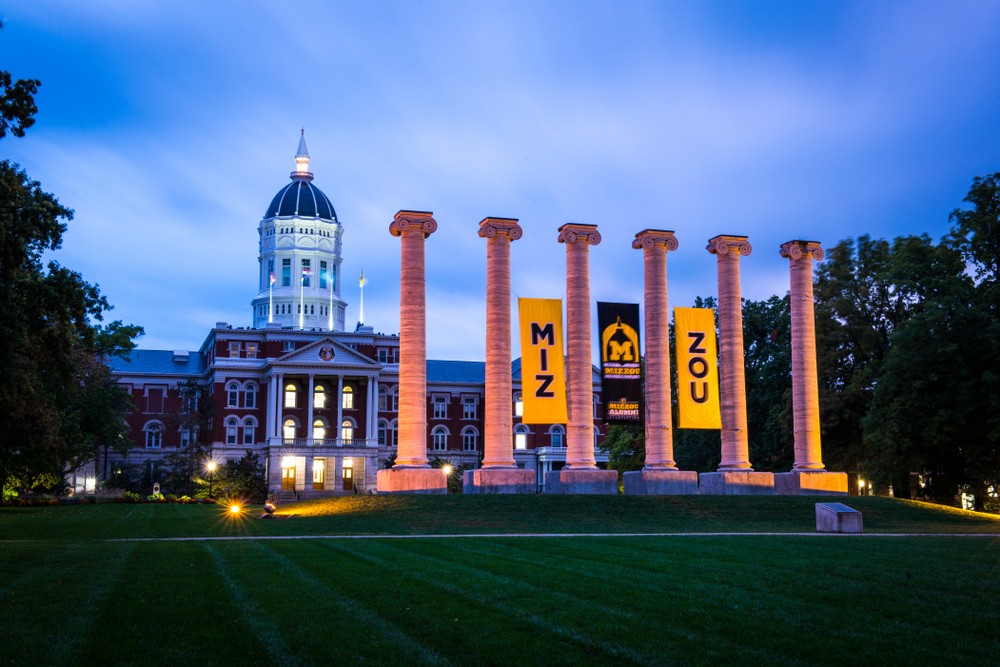
The Foundation for Individual Rights in Education, or FIRE, is a national group that broadly speaking defends the speech rights of faculty and students in the education setting. In general I’m quite supportive of that mission, but recently FIRE’s agenda has come into conflict with another policy priority, government transparency. FIRE has been surprisingly critical of outgoing Missouri Attorney General Eric Schmitt, who has been seeking emails sent to and from journalism professors at the University of Missouri, a public institution subject to the Sunshine Law. It’s an open-and-shut case of government transparency, but FIRE appears to be putting the interests of government employees over those of the public.

A push by the attorney general’s office for the emails of professors and staff at the University of Missouri has academic freedom advocates concerned the office is being weaponized to stifle free speech and deter researchers’ work.

In June, Missouri Attorney General Eric Schmitt’s office sent two records requests to the university….

“When I see these requests, it really makes me worried about how this kind of request for faculty information can be used to burden faculty or hassle them where they’re engaging in research or scholarship that state actors might disagree with,” said Anne Marie Tamburro, program officer for student press and campus rights advocacy at the Foundation for Individual Rights and Expression, known as FIRE.

Your mileage will vary on the utility of the Attorney General’s undertaking. Indeed, the vast majority of the public has little interest in the behind-the-scenes decision-making of Mizzou journalism professors. But that has zero bearing on the facts of this case, namely that (1) the people of Missouri fund their public universities through their tax dollars; (2) the people have the right to be informed about the activities of their public employees insofar as they relate to their public functions; and (3)  the Attorney General has the same right to use the Sunshine Law as anyone else, and a greater responsibility to do so where he deems the public interest requires it.

Academic freedom is an important principle, but all it means is that professors at public universities should have the discretion to research and discuss their ideas within the limits of the policies set by those constituted in authority over them. It doesn’t mean that they are exempt from the rules of transparency that apply to all those who work for the taxpayer. If their work would be “deterred” (to use FIRE’s word) unless they can conduct it in secret, maybe it’s work that shouldn’t be done, at least on the public’s dime.

FIRE should be considering the full public policy picture here rather than acting as an apologist for secrecy against the clear interests of transparency under an otherwise unambiguous law.

Curbing Forced EV Expansion

Back in October, the Biden administration rolled out the National Electric Vehicle Infrastructure Deployment Plan (NEVI), an enormous initiative to dramatically expand the number of electric vehicle (EV) charging stations in each state.

In response, I weighed in on the details of this policy. In particular, I noted the lack of trust in free-market innovation, even though the EV industry was kickstarted and fueled by market forces and ingenuity.

The Missouri legislature appears to be fearful of NEVI opening a Pandora’s Box of EV expansion mandates and is considering ways to curtail it in the upcoming session. House Bill (HB) 184  was recently pre-filed and would create protections for small-business owners subject to onerous local government mandates like the NEVI Deployment Plan. Under this bill, any political subdivision that adopts a rule requiring the installation of charging stations at any non-fueling business would be required to pay all costs associated with the installation, maintenance, and operation.

While I appreciate this pre-filed bill defending the rights of some small business owners, why are fueling-businesses excluded from its protection? If a fueling business does not have charging stations, that probably signals it does not have market demand for that service. Only 1% of cars on the road are electric, and in many rural counties you could probably count the number of EV’s in the community on one hand. When it makes economic sense for fueling businesses to install charging stations, they will, and they shouldn’t be forced to do so prematurely.

Unfortunately, a law protecting against overreaching EV mandates only treats a symptom of the disease—the mandates shouldn’t be happening in the first place. The EV market has been rapidly innovating through fierce competition and expanding due to increased consumer interest. As it grows, restaurants, hotels, fueling-stations, landlords, and other businesses will face economic decisions about whether to add charging stations to their premises to attract consumers. A barbershop with limited parking may not want to build an EV station, but for a landlord, an EV station could be beneficial for luring tenants. Why is the government getting involved when market forces are driving progress on their own? By the time government-mandated projects like NEVI are actually completed, who’s to say that those charging stations will even be up to date?

These inefficient mandates are unlikely even to significantly increase the convenience and allure of EVs. In a study published by Plug-in America, only 9% of all EV owners said charging stations being too far apart was a major difficulty, and 7% said that there were not enough charging stations at each location. In addition, 60% of EV owners charge their vehicle at home daily. What problem is the government trying to solve if current EV owners are comfortable with the availability of chargers and most of them charge their cars at home?

Hopefully, protections can be put in place for business owners when inefficient EV expansion projects are implemented, but I hope HB 184 will not even need to be invoked.

A Reminder: Missouri Still Needs Transparency in Education

With the new state legislative session on the horizon, it’s clear that there are a lot of policy priorities competing for legislator attention right out of the gate. As I told our friend Vic Porcelli earlier this month, a wide array of tax issues appear to be in the queue for at least some attention, including debates around the corporate income tax and personal property tax. But as was the case in the 2022 legislative session and as I shared with Vic, education is emerging as one of the most prominent priorities of policymakers, with school choice’s policy sidecar—education transparency—positioned to make a splash.

The kinds of education transparency that the legislature will grapple with are likely threefold.

  • Transparency in spending: Previous Show-Me Checkbook projects have mainly looked at how local governments spend money, but districts and schools also should be transparent and accountable for how they spend taxpayer money. Especially in an environment where teacher pay is a hot topic, seeing exactly where tax money is going today will be illuminating about where tax money should be going tomorrow. My colleague, our director of education Susan Pendergrass, will have much more on this soon.
  • Transparency in curriculum: It is no secret that we sent thousands of Sunshine Law requests to schools and districts around the state over the last couple years asking what they’re teaching kids and telling teachers about a host of hot-button education topics, the responses to which (when there have been responses) have been mostly incomplete. At this point, I believe the state needs to mandate transparency of these institutions. Taxpayers can debate whether it’s appropriate to teach critical race theory in the classroom or to instruct teachers that Christians oppress all other religions, but that debate can only happen if taxpayers are aware of the content.
  • Transparency in performance: When true school choice is widely available in the state, parents will have some decisions to make about where to send their kids. How good each educational option is will play a major role in those decisions. Unfortunately, the Department of Elementary and Secondary Education (DESE) has done an abysmal job ensuring parents have tools to easily distinguish between failing and succeeding schools and districts. The law must change to make that information more widely available and to ensure failure is administratively corrected, not administratively protected. Susan’s MoSchoolRankings.org is a valuable bridge of information as we wait for the state to take action.

These reform ideas are showing up individually in a lot of pieces of education legislation, but the legislation they’re most often appearing in are “parents’ bill of rights” proposals. We’ve talked about those kinds of laws in the past, and whether legislators pass all these reforms at once with a parents’ bill of rights or separately, these reforms would be a significant advance in parent-empowering policy. Parents need school choice, and better still, they need informed school choice.

Taxpayers Getting Burned

As I have discussed many times before, some of the worst public policy ideas in Missouri have come from the various firefighter’s unions. Whether it was the tax grab in the Robertson Fire District (dominated by union interests) or the truly terrible idea to close the municipal fire departments in Mid-St. Louis County in favor of one giant (and union dominated) fire district, there are plenty of bad policies. But the continuing effort to replace the new fireman’s pension system in the City of St. Louis by reverting to the old system may be the worst.

This isn’t that complicated. The new St. Louis city fireman’s pension board was created because the old one was dominated by union interests who made it incredibly generous for firemen and civilian employees of the department. One of those civilian employees received a half-million-dollar (!!!) cash payout upon her retirement, on top of her generous pension. As this recent Post-Dispatch story explains, the union trustees on the new board have implemented draconian changes to the pension funds, things such as cancelling the annual pension board training trip to Key West. Cue the outrage; from the Post story:

Paul Payne, the city’s budget director, said going to an industry conference in South Florida looked less like education than vacation. And he told Kenny Mitchell, a firefighter trustee who wanted to go, just that.

Meeting minutes relay what happened next: “Trustee Mitchell responded to Trustee Payne with a profane remark.”

I’ve been to Key West many times. It is uniquely wonderful for many things. Pension board training is not one of them.

The St. Louis Board of Aldermen just passed, once again, a bill to return the pension plan to the control of the fireman’s union instead of the new city board that runs it for the benefit of both firemen and taxpayers. That means having a pension system that pays fireman what they deserve, but also considers the interests of the taxpayers at the same time. It doesn’t mean pension training trip to Key West, nor does it mean half-million-dollar cash payouts on top of the pensions. What does St. Louis City’s budget director think it means?

The [proposed] move will consolidate pension oversight under a firefighter-run board that spent double what a city-run panel paid for administration last year. And Budget Director Paul Payne says it would be a first step toward taking the pension system back to where it was a decade ago, when years of rubber-stamping benefit increases led to a budget crisis and forced painful cuts.

“Their history,” Payne said of the firefighters, “is not one of saving money.”

Mayor Jones has vetoed the legislation, just as Mayor Krewson vetoed it previously, and as Mayor Slay would likely recommend after having spent considerable time, effort, and political capital during his term making these necessary reforms in the first place. Good for Mayor Jones. Pension funds should be run for the benefit of those government employees promised good benefits in accordance with the overall fiscal health of the city and its taxpayers, not just one of them.

Podcast: What to Expect from the 2023 Legislative Session

James Shuls, David Stokes and Patrick Ishmael join Zach Lawhorn to discuss which pre filed bills they are tracking before the start of the 2023 legislative session, another school district’s decision to move to a four day school week, and the massive TIF approved in Chesterfield.

Listen on Apple Podcasts 

Listen on Stitcher 

Listen on SoundCloud

Produced by Show-Me Opportunity

Springfield Should Eliminate Its Economic Development Agencies

A version of this commentary appeared in the Springfield News-Leader.

In July 2010, Missouri politicians joined the state’s economic development agency to announce the awarding of $17 million in state tax incentives, along with $39 million in local tax subsidies, to the Mamtek project in Moberly. The project called for making artificial sweetener using a process that would start in China and finish at a new plant in Moberly, creating 600 local jobs here. There was just one problem—it was all a scam.

It may seem unfair of me to criticize a government agency for falling victim to a criminal conspiracy, albeit one that really wasn’t that sophisticated, but government economic development agencies are a Catch-22 for taxpayers. When they do a bad job—as they did in Mamtek—they waste our tax money. As with the Bass Pro Shop in Independence and the Jamestown Development near Springfield, we can list plenty of private business projects government had no reason to get involved in but did to the detriment of taxpayers. But we can only wish they always did a bad job. It’s when they do their jobs right that taxpayers and average citizens really get burned.

When economic development officials do their jobs right, all they are really doing is subsidizing economic activity that likely would have happened anyway for the benefit of politically connected companies. As the old joke goes, economic development officials are great at creating jobs for other economic development officials. For everyone else, not so much. For all their skillful use of political buzzwords and claiming credit when none is deserved, it remains true that “government is a bad venture capitalist,” to quote President Obama’s economic advisor, Larry Summers. Summers was being polite. Government, in the form of local, state, and federal economic development agencies, is a terrible venture capitalist. It’s not that government officials don’t get their bets right often enough; it’s that they actively get them wrong because economic development officials are heavily influenced by the political incentives to reward supporters of the politicians who employ them. A short-term political payoff is more important than long-term success.

Late to the subsidy game but catching up fast, Springfield—having seen how St. Louis and Kansas City have operated their own subsidies and failed by every measure—has decided to follow in their footsteps. The trucking industry has long been important in Southwest Missouri, and there are numerous companies, stations, and stores in Springfield to service the various fleets. But not enough for the City of Springfield’s Department of Economic Vitality (that’s its actual name), which decided to use over $4 million in taxpayer funds (along with other subsidies) to entice an enormous new gas station company, Buc-ee’s, to locate in town.

The head of another local convenience store company, Rapid Robert’s, rightfully took issue with the plan. He didn’t object to the competition, but rather the use of tax subsidies in a field full of local companies that had grown without them. His objections fell on deaf ears, and likely would have been meaningless to the members of the city’s “economic vitality” department. They, like economic development officials everywhere, care nothing about history, propriety, or capitalist theory. They care about getting the forms marked up, the tax money spent, and the deal done so that they can claim credit, add it to their resume, and start searching for the next job.

Economist Dick Netzer mocked the exaggerated claims of success made by economic development officials when he wrote, “Who needs oil wells, when a state can be another Kuwait just by increasing the budget of a tiny agency?” Claims of subsidy successes often border on the absurd. The author once heard a Clay County economic development official claim that “All of the growth” in the town of Liberty—a fast growing, exurban community north of Kansas City, the likes of which have been growing across the nation for decades—was due to a tax-increment financing (TIF) package they passed. As if suburbanization hadn’t existed until Missouri’s TIF law was passed in the late 1980s.

Economists Alan Peters and Peter Fisher studied tax incentives closely and concluded that they work about 10 percent of the time and are simply a waste of money the other 90 percent. They added that, like the Clay County officials mentioned above, economic development officials often credit all new employment and growth to tax subsidies.

As Christmas approaches, Springfield residents could get no better Christmas gift than the elimination of state and local economic development agencies. They are a blight on capitalism and an actively harmful influence on the civic and economic life of our state.

Does the Independence School District Have a Teacher Shortage Problem?

The Independence School District (ISD) school board recently voted to move to a four-day school week. One of the stated purposes of the move is to increase teacher retention. This fits within the Department of Elementary and Secondary Education’s (DESE) narrative that Missouri is in the midst of a devastating teacher shortage and that COVID-19 greatly exacerbated the shortage. (Never mind that some evidence suggests teachers’ rates of exiting the profession are in line with previous years.)

I believe that the topic of teacher shortages is an important policy issue that deserves careful attention, especially when the solutions to the supposed crisis may cost state taxpayers hundreds of millions of dollars.

To better understand the shortages, Show-Me Institute Research Assistant Avery Frank and I requested the data DESE uses to determine the level of shortages in Missouri. Each year, school districts report the number of full-time equivalent (FTE) vacancies they had in each certification area. They also report the number of applications for positions and whether the position was filled or left unfilled. Additionally, each school district rates its level of shortage in each area on a 1 to 5 scale. On this scale, a “1” is “considerable surplus” and “5” is “considerable shortage.”

We have begun to analyze these data and plan to release a more detailed state report. Given the move by the ISD, we believe it is important for parents and policymakers to have a better understanding of what a “shortage” of teachers looks like in Independence.

The data we received span from 2018 to 2021. Unfortunately, Independence is only present in the data in 2018 and 2020.

In Table 1, I present the number of FTE vacancies in 2018 and 2020 and the total number of applications. As you can see, the district received an average of 15.3 applications per vacancy in 2018 and 13.6 in 2020. This ranges from a low of one application for one school psychologist position (not a teaching position) in 2020 to a high of 172 applications for one secondary social studies position in 2018.

Table 1

In Table 2, we present the number of certification areas rated 1–5 in each year. As you can see, a total of 10 areas were suggested to have some degree of shortage in each year.

Table 2

When we asked DESE for a clarification on these rankings, this is what it provided:

Degree of Shortage–Perception of the supply of available teachers as compared with number of positions vacant. Valid entries are the numbers 1 through 5 using the descriptions below:

  1. Considerable Surplus–Many applicants available, inquiries received frequently.
  2. Some Surplus–More applicants than jobs, applicants easy to locate, inquiries received often.
  3. Balanced Supply–Adequate number of available applicants.
  4. Some Shortage–Fewer applicants than positions available.
  5. Considerable Shortage–Applicants very difficult to locate for available positions

Based on these definitions, it does not appear that ISD is reporting its shortages in a manner consistent with the DESE definitions (see Tables 3 and 4). In both years, ISD reported level 4 or 5 shortages in ten areas. Based on the DESE definition, “fewer applicants than positions available,” not one of these certification areas in the table below would qualify as a level 4 rating, let alone a level 5 rating.

Table 3

Table 4

In each year, just one position was left vacant. In 2018, the district did not fill one speech- language specialist position (not a classroom teaching position). In 2020, the district did not fill one secondary mathematics position. Given that the district had 42 applications for four openings, it is likely the position was not filled due to a purposeful decision on the part of administrators.

In total, the district had 76 vacancies over the course of these two years in areas deemed shortage areas. The district received a total of 463 applications for these positions, an average of 6.1 applications per vacancy.

Our data are of course limited, and we can only report on the data DESE provided to us. Of course, these are the data DESE uses to determine shortages. Nevertheless, it is possible the district has more data available, and we would be pleased to present those numbers as well.

Based on these numbers, what do you think? Does the ISD have a teacher shortage? And is that shortage severe enough to justify a move to a four-day school week?

12/21/22–Correction: The data we received from DESE contained information for the years 2018 to 2022. The Independence School District application and vacancy data were present the following years: 2018, 2020, and 2022. Once we received the data, we merged the vacancy data with district demographic data from DESE. Because we did not have 2022 district demographic data, the 2022 observations were dropped from the data set. We have now recovered those data and will post an update that includes the most recent numbers.

Public Schools Without Boundaries With Jude Schwalbach

Susan Pendergrass speaks with Jude Schwalbach about his new report PUBLIC SCHOOLS WITHOUT BOUNDARIES: A 50 STATE RANKING OF K-12 OPEN ENROLLMENT .

Jude Schwalbach is a policy analyst at Reason Foundation. He previously worked at The Heritage Foundation’s Center for Education Policy where his research focused on expanding educational opportunities for K-12 students and reducing the federal footprint in education. Before joining Heritage Foundation, Schwalbach taught high school in Phoenix, Arizona.

Listen on Apple Podcasts 

Listen on Stitcher 

Listen on SoundCloud


WATCH: The Red Vs Blue Myth and the Real Threat to American Stability

Recorded on December 1, 2022 at the World Chess Hall of Fame in St. Louis, Missouri

Tony Woodlief is Executive Vice President at the State Policy Network. He helps oversee SPN operations, supports SPN’s president in her guidance of the leadership team, and helps ensure the organization’s projects and programs measure success, evolve as SPN grows, and maintain alignment with our vision and mission.

Tony previously served as president of the Bill of Rights Institute, and before that the Market-Based Management Institute. He has also served as president of the Mercatus Center at George Mason University. An alumnus of the University of North Carolina, he has a Ph.D. in political science from the University of Michigan, and an MFA from Wichita State University. Tony has appeared in media outlets including Fox News, The Wall Street Journal, The New York Post, National Review, and C-SPAN’s Washington Journal.

Tony is also the author of I, Citizen: A Blueprint for Reclaiming American Self-Governance. In writing I, Citizen, Tony conducted extensive research on American public opinion to find out what Americans believe and uncover the source of their political animosities. Through his research, Tony discovered that America is more united than divided, despite what the pundits tell us, and traced the source of our perceived animosity to a small minority of dedicated partisans within the political establishment of Washington, DC. I, Citizen tells the story of how these partisans have created the myth of a divided America and how they’ve concentrated power in the hands of unelected bureaucrats and partisan elites, and offers practical solutions for how we can reclaim our right to self-governance by focusing on solutions and commonalities closer to home.

Support Us

The work of the Show-Me Institute would not be possible without the generous support of people who are inspired by the vision of liberty and free enterprise. We hope you will join our efforts and become a Show-Me Institute sponsor.

Donate
Man on Horse Charging