A New Ballpark Could Cost KC Taxpayers Billions with Patrick Tuohey

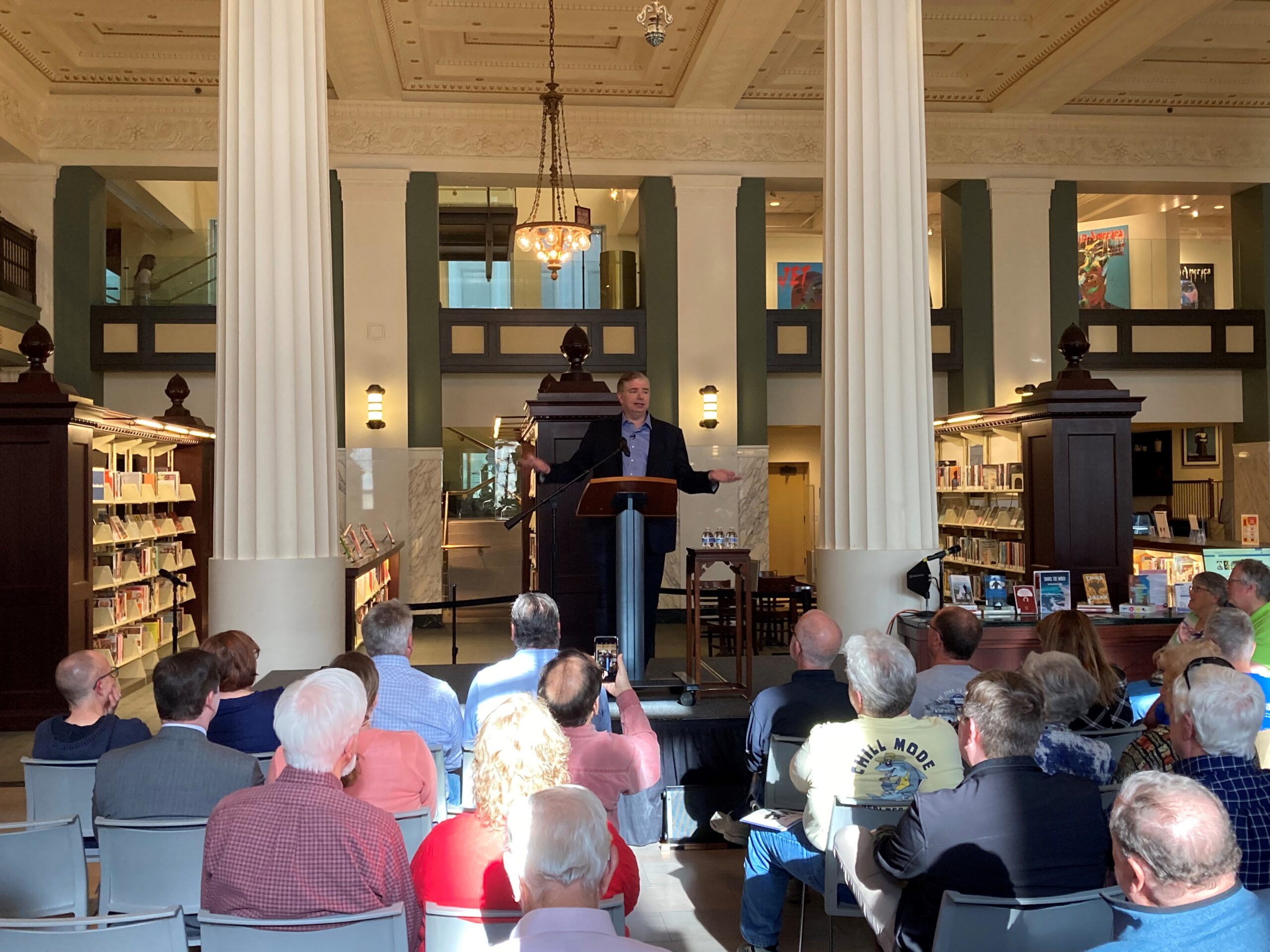
Susan Pendergrass speaks with Patrick Tuohey about the stadium funding debate in Kansas City. The Royals want a sales tax extension to pay for their new ballpark, potentially costing taxpayers between $4.4 billion and $6.4 billion. The Chiefs are also seeking tax dollars for upgrades to Arrowhead.

Listen on Apple Podcasts 

Listen on SoundCloud

Patrick Tuohey is senior fellow at the Show-Me Institute and co-founder and policy director of the Better Cities Project. Both organizations aim to deliver the best in public policy research from around the country to local leaders, communities and voters. He works to foster understanding of the consequences — often unintended — of policies regarding economic development, taxation, education, policing, and transportation. In 2021, Patrick served as a fellow of the Robert J. Dole Institute of Politics at the University of Kansas. He is currently a visiting fellow at the Yorktown Foundation for Public Policy in Virginia and also a regular opinion columnist for The Kansas City Star.

Produced by Show-Me Opportunity

John Sherman’s Proposed Entertainment District Is Bad for Everyone Else

John Sherman, the owner of the Kansas City Royals, said in an announcement the other day:

I believe in my gut that the timing is right for the Royals to become residents of the Crossroads and neighbors to Power & Light, 18th & Vine and Hospital Hill, helping to further connect the cultural center for our great city.

What’s important to note is that Sherman plans to include an entertainment district in the construction. Mike Hendricks of The Kansas City Star adds: “The imagined $1 billion-plus ballpark would be bordered on the east by office, retail and residential development, which would be a potential source of revenue for the team.”

No one should doubt that this publicly funded stadium with all the additional accouterments would be good for John Sherman. But will it be good for his neighbors?

Remember that all sorts of research and many economists make it clear that sports stadiums “are really poor public investments.” Part of the reason that the economic impact studies released by proponents of such efforts are flawed is that they count only the new spending at the new location—not the reduction of spending elsewhere. In a 2017 report, the Federal Reserve Bank of St. Louis concluded: “economists generally oppose such subsidies. They often stress that estimations of the economic impact of sports stadiums are exaggerated because they fail to recognize opportunity costs.”

Consider the Power & Light District. According to the Regulated Industries Division of Kansas City, Missouri, the number of liquor licenses (a gauge of how many restaurants and bars are operating) and employee health cards (a proxy for the number of people employed at bars and in food service) remained flat citywide for a decade after subsidies were awarded.

The Power & Light District didn’t create new jobs or businesses. It merely moved them from elsewhere in the city to downtown. And it moved them from places where the city, county, and school districts were collecting property, sales, and income tax revenue to a place where those taxes are diverted back to the developer to offset the cost of construction.

Even if you consider the Power & Light District on its own merits, it has failed to be successful. Thomas Friestad reported last year in the Kansas City Business Journal that Kansas City has had to meet multimillion-dollar debt-service obligations because the district does not generate enough revenue to pay its own debts. Those payments have ranged from $6 million to $17 million, amounting to over $160 million since 2006.

Just as with the Power & Light District, John Sherman’s entertainment district will not create new economic activity. It will only move it from elsewhere in the city. On game day, fans who now stop at grocery and liquor stores on their way to tailgate may instead go to bars at the stadium. That is not new activity—just different activity. Fans who might have gone to Power & Light, or to other places in the Crossroads District, may now go to the bars that Sherman owns. That is not new spending—just different spending. This is exactly what happened when Ballpark Village opened in St. Louis; it cannibalized other existing businesses.

The economic impact studies that will inevitably be produced to tout this new entertainment district will likely only count the new spending in the new location—not the loss of spending elsewhere.

To the degree that the Royals’ new entertainment district leeches spending away from Power & Light—which seems like it may be the intent of Sherman’s gambit—Kansas City taxpayers will face even higher annual debt obligations than now.

A publicly funded downtown stadium and entertainment district will be good for John Sherman. It won’t be good for anyone else.

Beware the Medicaid Hole

All signs are pointing toward Medicaid blowing an enormous hole in Missouri’s next budget unless state lawmakers take action now to avoid the financial ditch.

For years, I’ve written about how big of a problem the Medicaid program is for Missouri’s budget. More recently, I’ve discussed our state’s broader budgetary troubles. Medicaid has long been Missouri’s single largest budget item, and the size of the program continues to only increase. Since 2020, program enrollment has increased by more than 40%, with more than 1.4 million Missourians now on the rolls. Additionally, Medicaid’s total cost has grown by nearly 80% in just four years, from approximately $10.8 billion to $19 billion.

One saving grace over this period of skyrocketing growth is that state taxpayers have been spared from the brunt of the cost increases due to an enormous injection of federal funds. This doesn’t mean that state taxpayers aren’t paying more for Medicaid today than ever before. In fact, state spending on the program has increased by more than 70% since 2020. But during that time, Missouri also experienced a tremendous run of state revenue growth, which, taken together with the increased federal funding, has meant that Missouri’s lawmakers have staved off addressing the long-running Medicaid cost problem. Going into next year, things are going to change drastically.

The federal government has ended its “enhanced” pandemic-era match for Medicaid funding. Typically, the federal government pays roughly 65% of Medicaid enrollee’s healthcare bills, but from 2021 until very recently, Missouri has received an additional 5% for adopting Medicaid expansion, and an additional 6.2% to help cover the increased program costs from the pandemic. Missouri lawmakers will have to replace the extra federal funds with state tax dollars.

This means that, without action, state lawmakers should expect the general revenue cost of the Medicaid program to increase significantly next year, likely by at least several hundred million dollars. And given that recent reports suggest that state tax revenue growth is expected to remain relatively flat, it’s possible the cost of Medicaid might even increase by more than the state’s tax collections. If that were to happen, unless reforms were made to the Medicaid program, significant budget cuts to other state spending priorities such as education, roads, or public safety would be needed to finance Medicaid’s cost growth.

Unlike the COVID-19 pandemic, the coming budgetary shortfall is entirely predictable. The federal government gave states more than a year’s warning for when it would be reducing Medicaid payments, but Missouri’s elected officials have thus far chosen not to prepare for that reality. Successfully reforming Medicaid will take months to implement, which means that time is running out if policymakers want to make the changes necessary to steer our state clear of the budgetary shortfall that’s ahead. Let’s hope state lawmakers realize this sobering truth before it’s too late.

Missouri Needs Better Stewards

Is Missouri’s budget trajectory unsustainable? Yes, but given the discussions in Jefferson City over the past few weeks, you’d think it wasn’t.

As my colleague Patrick Tuohey recently wrote, the rosy budgetary picture painted by Governor Parson during his final State of the State address was, at best, misleading. Missouri’s budget has nearly doubled over the past five years, and the governor’s more than $50 billion recommended spending plan for next year requires dipping into cash reserves to make ends meet.

In other words, it will be up to Missouri’s General Assembly to begin turning the tide on government spending, which will likely be easier said than done for several reasons.

First, the federal government is winding down its COVID-19 and infrastructure spending. This means that unless Missouri begins scaling back the services that have been propped up with federal cash, state taxpayers can expect to soon be on the hook for a higher level of government services than they were just a few short years ago. While the reduced federal funding will impact some parts of state government more than others, the Medicaid program is sure to need hundreds of millions of new state tax dollars.

Second, state tax revenues aren’t expected to grow at the rate they have in recent years. Fortunately, higher revenue collections over the past few years allowed Missouri to accumulate significant cash reserves, but some of those reserves have already been spent and the governor’s budget recommends spending more. There should be no expectation that Missouri’s tax revenue growth or remaining cash reserves will be able to fill the budgetary hole the federal government leaves behind, let alone cover the inflationary cost increases required to continue funding the state’s other spending priorities.

Given the harsh budgetary realities Missouri is facing, it’s especially troubling that Governor Parson and the general assembly are reportedly considering expanding the state government’s role even further. For example, Governor Parson is recommending funding—in a budget that relies on one-time cash reserves to maintain balance—childcare and teacher pay programs that will likely become new long-term spending obligations.

In a perfect world, Missouri taxpayers wouldn’t have to ask their elected officials to be good stewards of the state’s finances. Policymakers would prepare for rainy days and take future spending obligations into account when they craft the yearly budget, ensuring the state’s revenues and spending are on sustainable trajectories. Unfortunately, that doesn’t appear to be happening right now. For now, Missourians are going to be left hoping that something changes between now and the end of the legislative session.

The Connection Between Farmland Assessment and Teacher Pay Increases

How does Missouri farmland being underassessed (for tax purposes) relate to proposed state requirements for higher minimum teacher salaries being a de facto subsidy to rural Missouri?

Well, it does. Stick with me on this.

Last year, Missouri’s budget included an appropriation increasing the minimum Missouri starting teacher salary to $38,000, funded primarily by state tax dollars and not local school taxes. This year, officials are proposing legislation to raise it even higher, with the same primary funding from the state. Where do you think those state tax dollars are going to come from, and where is this new fund to increase starting teacher salaries going to be spent?

It is more difficult for rural school districts to fund themselves with property taxes because of the high percentage of agricultural property in those areas. (I’m not saying it’s impossible, just more difficult.) Whether you like it or not, farmland is underassessed in Missouri(most farmers presumably like it). It is hard to raise the revenue necessary for a small school district with a tax base starting out so low. Since tax rates are the same for various classes of property (except in St. Louis County), setting a rate high enough to raise enough funds from farmland would mean incredibly high taxes on the more accurately assessed homes and businesses in those communities.

Urban and suburban school districts, for the most part, aren’t starting their teachers out at $25,000. At Indeed.com, every job opening I saw for City of St. Louis public schools started at $46,000. In this blog post, James Shuls goes into more detail on this discrepancy. (James goes into even further detail on the problems of funding rural school districts here.)

Where do the taxes that fund much of Missouri government and, by obvious extension, this new state teacher fund, come from? As this map shows, our larger urban counties produce an outsized percentage of Missouri’s economic activities. St. Louis County alone produces over 25% of the state’s GDP. State income and sales tax collections are going to largely align with those totals.

If you were a voter in rural Missouri, and you were told that you could vote for a local tax increase or have the state pay for salary increases for your school district, what would you pick? We would all pick the latter.

This issue will play out similarly to the sheriff salary issue of about 15 years ago. There, the state decided to increase sheriff’s deputy salaries by adding a fee to process service around the state. The problem was that St. Louis County, which has a county police department and a sheriff’s department that is not a law enforcement agency (trust me on this, I used to be a county sheriff), was ineligible for the funds even though it generated more fees from process service than any other county in the state. Yes, lawsuits were filed over it, but they failed (unfortunately).

I like low taxes. If rural Missourians want low taxes, I’m all for it. But we should not establish a system where rural teacher salaries are paid for (mostly) by taxpayers in urban and suburban areas. The combination of low assessed farm values and a desire for low tax rates in rural areas should not be addressed by taking money from urban areas. I recall signs along I-70 years ago on farm fences objecting to using state funds for sports stadiums in St. Louis. Those signs were correct then, and they still are now, but it works both ways.

Let’s Be Honest about the New Stadium Tax in Jackson County

On April 2, 2024, Jackson County voters will be asked to approve a new 3/8 percent sales tax to support improvements to “funding for park improvements consisting of Arrowhead Stadium and its surrounds, and a new Major League Baseball stadium in Jackson County.”

Proponents present this as an extension of that tax and not a new tax.

They are wrong. It is a new tax.

First, think of this logically. If the county legislature did not act—or if the voters reject the measure—the current sales tax would expire on September 30, 2031. The legislature is seeking voter approval exactly because this is a new legislative action to impose a new tax.

Second, let’s examine the original tax approved by voters in 2006. The legislation does not contemplate an extension. It does not set up any mechanism by which the tax could be extended. It simply imposes the tax and states that it will expire after 25 years.

Third, the legislative language Jackson County voters are being asked to approve this time around would sunset the existing tax (the original tax would end—the two taxes would not run concurrently) and explicitly states this is a new tax. Per Section 2: “Subject to the approval of the voters of the County, the new levy will begin upon the date first imposed and continue for a term of 40 years . . . ” (emphasis added)

Even the title of the ordinance confirms that we are being asked to impose a new tax:

AN ORDINANCE submitting to the qualified voters of Jackson County, Missouri, at a special election to be held on April 2, 2024, a question authorizing Jackson County to impose a countywide sales tax of three-eighths of one percent for a period of forty years for the purpose of retaining the Kansas City Royals and Kansas City Chiefs sports teams in Jackson County, Missouri. (emphasis added)

Perhaps supporters of the measure believe that voters are more likely to extend a tax than they are to vote on a new tax. But that is a political concern. Their claim is campaign messaging, not the facts of the measure on the ballot.

Journalists covering this issue should resist parroting talking points and stick to the basic facts: Jackson County residents are being asked to impose a new levy on themselves. It’s that simple.

State of the State: Leading with Intentionality for School Choice

In his final State of the State Address, Governor Parson highlighted a key part of government policy. He said:

A society grows great when old men and women plant trees . . . the shade of which they will never know or sit in.

I think this can be applied to our education system. We need great men and women to plant trees, yes. However, we also need great men and women to tend to them and help them grow. There are a few examples nationwide of this exact scenario happening—particularly in states such as Iowa, Florida, Arkansas, and Tennessee. To help our students flourish through school choice and educational reform, there needs to be a governor with a plan and a commitment to planting trees and cultivating our next generation.

Governor Huckabee Sanders proposed an ambitious education reform plan to the state legislature. Arkansas’ LEARNS ACT pairs teacher salary increases with curriculum protection and the establishment of a universal school voucher program. Passing this bill took a lot of hard work and a lot of horse-trading, but a determined governor was able to get it done.

Governor Reynolds proposed a plan to make “no child limited by their income or zip code” in Iowa. It was a priority of her administration. She sought to educate the public on her proposal and garner support. The end result was a victory for Reynolds—Iowa’s education savings accounts will be expanded to all students statewide. The governor proposed the bill, and she also continued to make it a priority for the state all the way to her final signature.

Governor Lee has gone to bat for his proposed expansion of Tennessee’s statewide school choice program, which would create opportunities for students to attend the school that best suits their needs. He was recently berated at an address advocating for major change to Tennessee’s educational status quo. Nevertheless, the governor has made it his priority to move this legislation across the finish line. Governor Lee has decided that the battle is worth it.

While no guarantee of success, it seems that the trend for getting major education reform passed is a determined governor who is willing to put his or her weight behind school choice. The question is whether we have such a governor.

The Terrible, Horrible, No Good, Very Bad, Teacher Pay Plan

Raising teacher pay is once again a hot topic in Jefferson City, and once again the ideas being floated to address the issue are seriously flawed.

This year’s proposals focus on raising the minimum salary that teachers can be paid. There are several bills in each legislative chamber (see links here, here, and here), but they all take a similar shape. They raise the minimum salary that districts can pay new teachers from $25,000 to $38,000 (some go higher), then raise the minimum higher over several years. To help school districts afford the increase, the bills create a state fund that districts can request reimbursement to pay 70% of the increased salaries. The legislature has already been appropriating this higher minimum salary for teachers via the budget for several years—these bills would enshrine this change into statute, but also increase salaries even more down the road.

As my colleagues have written previously, the discussion surrounding raising Missouri’s “minimum” teacher salary is somewhat misleading. School districts set teacher salaries, not the state— but the state does set a floor for pay that districts must remain above. You often hear people claim that Missouri has one of the lowest teachers’ pay “minimums” in the country, but that is not an accurate representation of how much teachers are actually being paid, as my colleague James Shuls has outlined. For example, the average teacher salary in the district I live in, Affton, is more than $62,000 per year.

My biggest concern is not with the idea of the state raising minimum teacher pay, but the way the proposals go about doing it, and the perverse incentives they would enshrine into state law. By offering to permanently subsidize teacher pay for some school districts, especially at a time when the state’s budgetary outlook is so uncertain, Missouri will begin sending state dollars to cover what have previously been almost entirely local decisions.

The primary way the state funds schools is through what’s called the foundation formula. Though the formula may not be perfect, it offers an equitable method to distribute state funds, adjusted by a variety of agreed-upon criteria. The proposals that our policymakers are now considering seek to create an outside-the-formula funding source for a specific purpose (minimum teacher salaries). The problem is that these funds would not be distributed in an equitable way. If enacted, these proposals will represent a significant redistribution of state funds to school districts whose voters have chosen not to raise their taxes sufficiently to pay their teachers more.

Since state fiscal year 2023 when Missouri began piloting this approach, it’s become clear that many school districts would jump at the chance of additional state funding. Governor Parson’s budget recommendation shows that approximately 65% of the state’s school districts have already taken advantage of the state salary grants. It’s not unrealistic to assume that if this program is made permanent, more districts will begin participating. Of course, it makes sense, because once the state begins offering subsidies for teacher salaries, why wouldn’t districts take advantage? Or, perhaps more importantly, why would districts ever choose to raise salaries with their own money if the state would pay for them instead?

None of this is to say that the way Missouri funds its schools is ideal, or that teachers shouldn’t be paid more. But whatever the general assembly decides to do, it’s important that policymakers think through the unintended consequences. Incentives matter—Missouri’s voters and school districts have demonstrated as much, and it’s time our policymakers started acting like it. There’s no getting around the fact that the proposal to raise minimum teacher pay, as currently drafted, is a bad idea for Missouri.

The National Hybrid Schools Project with Eric Wearne

Susan Pendergrass speaks to Eric Wearne about The National Hybrid Schools Project.

The National Hybrid Schools Project is the national clearinghouse for research, data, practices, and networking for the burgeoning hybrid home school movement.

Register for the February 26 four-day school week panel discussion here.

Listen on Apple Podcasts 

Listen on SoundCloud

Eric Wearne is Associate Professor in the Education Economics Center at Kennesaw State University and Director of the Hybrid Schools Project. He is the author of Defining Hybrid Homeschools in America: Little Platoons (Lexington Books, 2020). His work has been published by the Peabody Journal of Education, the Journal of School Choice, Catholic Social Science Review, City Journal, and Law & Liberty, among others. He was previously Provost at Holy Spirit College, Associate Professor of Education Foundations at Georgia Gwinnett College, Director of Data Analysis and Deputy Director of the Governor’s Office of Student Achievement in Atlanta, and a high school English and Debate teacher. He holds a PhD in Educational Studies from Emory University, a MA in English Education from the University of Georgia, and a BA in English from Florida State University.

Produced by Show-Me Opportunity

Support Us

The work of the Show-Me Institute would not be possible without the generous support of people who are inspired by the vision of liberty and free enterprise. We hope you will join our efforts and become a Show-Me Institute sponsor.

Donate
Man on Horse Charging