New Study of COVID-19 In Schools Shows Good News

If you’re a new parent and also a nerd, there is a good chance that you were gifted Expecting Better sometime shortly after you or your spouse announced the pregnancy. It’s a great book. In it, Brown University economist Emily Oster breaks down the studies that much of parenting advice are based on and gives practical, data-informed advice on what to do and not do. (For new parents, her follow up book Cribsheet, is great too.)

The general message of both books is that there are a small number of things that parents should be very concerned about, but that the risks of many other things are overstated, often because people let emotion take precedence over empirical evidence.

It shouldn’t surprise us that when the coronavirus hit, Emily Oster would try to cut through the noise and the fear and get to the data. She partnered with the nation’s school administrator organizations to create an anonymous survey and then distributed it to school principals so they could report how many of their students and their staff have been infected by the coronavirus.

The first round of data has been released, and the numbers are promising. As of September 25, administrators report a confirmed infection rate of 75 cases per 100,000 students and 140 per 100,000 staff members. Expressed as a percentage, that is 0.075 percent of children and 0.14 percent of staff.

As an associate professor of pediatrics at Johns Hopkins is quoted as saying in the Washington Post’s coverage of the survey, “We’re not seeing schools as crucibles for onward transmission. It’s reasonable to say that it looks promising at this point.”

It is early days, of course, and Oster will be continuously updating the data dashboard. It is also worth nothing that the first round of data is only from administrators responsible for around 200,000 of the nation’s 55 million schoolchildren. But, in a time of seemingly nothing but bad news, its good to see that least something is going well. Hopefully these trends continue and we can get our kids back in school and back on track.


Fall 2020 Educational Resources for Missouri Parents

Read the latest from Susan Pendergrass

Parents are angry and confused right now. Many are receiving mixed messages from school districts. Critical information arrives late in the process and changes frequently. It’s up to school districts and the Missouri Department of Secondary and Elementary Education to fix this. But that doesn’t seem likely to happen before school starts this fall—and parents need help right now. So we’ve created a resource page designed to help parents figure out what their options are and what sort of questions they ought to be asking. Of course, this is only a small subset of what is out there, but we hope you find the below information useful. Please feel free to share this with anyone you think might benefit.

Questions parents should be asking superintendents, school board members and legislators:
  1. Can I have a portion of my child’s state funding to purchase in-person learning if my district isn’t offering it?
  2. Will the district make teachers available for micro-schools for those who want and need them?
  3. Could the district open some school buildings for students to do their virtual learning with an on-site teacher assisting?
  4. What if I don’t have high-speed internet access? Hot spots were insufficient last spring.
  5. I don’t like my school’s virtual education programming. Can I switch to MOCAP after the school year starts?
  6. Why hasn’t the state waived the requirement for receiving district permission to enroll in MOCAP this year?
  7. My child can’t attend school in person. Can I have state funds to enroll them in a high-quality virtual provider of my choice?
  8. If I decide to have my child stay virtual, do I need to register as a homeschooler?

Options that may or may not be available for this school year:

Missouri Course Access Program (MOCAP) – MOCAP has 11 providers of full-time virtual education that have been vetted and approved by the Missouri Department of Elementary and Secondary Education (DESE). A law passed in 2018 gives all Missouri students the right to request enrollment in any of the providers. Currently, districts are required to assess the request and determine if virtual education is a good fit for the student or not. Parents can appeal a denial of permission. Districts have an unlimited amount of time to respond to MOCAP enrollment requests.

UPDATE September 22, 2020 – 10 Day Deadline for MOCAP Review

Missouri Virtual Ed

Letter: Missouri online program virtual lifesaver for students

Missouri committee may propose changes to virtual education program

Missouri panel to request temporary removal of districts serving as MOCAP gatekeeper

Free virtual resources:

Khan Academy

NoRedInk

Virtual resources that cost money:

Virtual Stream tutors

Florida Virtual School

Micro-schools – A group of 10-15 multi-age students with one teacher. There are several national networks, but parents would have to work fast to create a micro-school at this point. Any that aren’t charter schools charge tuition.

What Is a Micro School? And Where Can You Find One? (edweek)

Acton Academies:

Acton Academy

Lighthouse International 

Prenda network:

Prenda

More on the Micro-school Movement (Forbes)

What are “micro-schools” and “pandemic pods”? (Today)

Why and How to Open a Microschool (gettingsmarter)

PODs – Groups of families that agree to have their children learn in-person together while limiting their access to anyone outside the group. These are being formed in Missouri, but with no public assistance.

Parents turn to “pods” as a schooling solution

YMCA of Metropolitan Columbus offering learning pods

College Station Taekwondo business offering learning pods

Kansas City YMCA

At least one parent has started a POD business

Watch: How to Start an Education Pod

“Little Pod Platoons” Are Education’s Answer to Lockdowns This Fall

“Pandemic Pods” Are Fundamentally Reshaping K-12 Education

Microschools on the rise in Arizona, with COVID providing added boost (AZ Mirror)

Parents Turn to “Pods” for School During Pandemic (WebMD)

Scholarships – Giving state money directly to parents to pay for tuition or tutoring. These are not available in Missouri, but could be. Each governor received flexible stimulus money under the Governor’s Emergency Education Relief Fund (GEERs) program. Governor Parson has received $54 million. So far, Governor Parson has allocated $24 million to higher education. The allocation of the remaining $30 million is unknown. Other governors have used portions of their GEERs funds to create scholarships for low-income students.

Oklahoma used GEER funding to create a scholarship that will help low-income families purchase curriculum content, tutoring services, and technology 

South Carolina used GEER funding to create SAFE Scholarships

Governors Direct Federal COVID-19 Aid to Private School Scholarships (EDweek)

SMI Podcast: The Case For Choice In Health Care

Listen on Apple Podcasts: https://apple.co/2G3INVh

Grace-Marie Turner is president of the Galen Institute, a public policy research organization that she founded in 1995 to promote an informed debate over free-market ideas for health reform.

She has been instrumental in developing and promoting ideas for reform to transfer power over health care decisions to doctors and patients. She speaks and writes extensively about incentives to promote a more competitive, patient-centered marketplace in the health sector.

Medicaid Enrollment Continues to Climb

Over the past six months, Missouri’s Medicaid rolls have grown by 15 percent. There are now more than 975,000 Missourians on the program, which is the highest enrollment has been since the beginning of 2018. Given the COVID-19 pandemic and associated economic downturn, an uptick in the size of Missouri’s Medicaid program is not necessarily surprising. The question is whether there is more to the story.

Prior to the coronavirus making its way to Missouri, our state had experienced nearly two years of steady Medicaid enrollment decline. As I wrote back in March, there was widespread concern about the drop-off. There was also fundamental disagreement in Jefferson City regarding what was driving the decline. One of the suspected causes was improved efforts on the part of Missouri’s Medicaid agency to ensure that each recipient was truly eligible to receive Medicaid-covered services.

By March, the downward trend had turned the other direction. In response to COVID-19, the federal government passed multiple relief packages that sent aid to states. One of the bills, the Families First Coronavirus Response Act, increased the share of Medicaid expenses covered by the federal government. But that funding came with strings attached. In fact, in order to receive the Medicaid relief funds, states had to agree not to terminate eligibility for any Medicaid participant unless the individual died, requested a voluntary termination of their eligibility, or moved to another state.

This guidance was contrary to prior federal requirements, which had stipulated that states verify the income of their Medicaid enrollees at least once per year to ensure continued eligibility. It should be no surprise that removing such a check would lead to a spike in enrollment. If someone loses their job and enrolls in Medicaid, they will no longer be removed from the program once they’re employed again (and no longer qualify) unless they go out of their way to inform the state they would like to terminate their coverage.

What began with the laudable goal of making it easier for Medicaid recipients to maintain health coverage during an unprecedented pandemic is now likely to make it harder to balance Missouri’s already cash-strapped budget. Instead of Medicaid enrollment rising and falling with the unemployment rate, the program will continue to grow even as more Missourians head back to work. For example, Missouri’s unemployment rate has dropped more than 3% since May, yet Medicaid enrollment is more than fifty thousand higher.

Make no mistake, even with the federal government agreeing to pay a higher share of Medicaid expenses, there is still a cost to Missourians. As state agencies prepare to release their budget requests on October 1, and the federal government debates further relief packages, it will be important to keep track of how the cost of responding to COVID-19 will impact Missourians for years to come.

St. Louis Is Shrinking. Let’s Reverse the Trend

The headline “St. Louis is America’s fastest-shrinking city” should set off alarm bells for St. Louis lawmakers and citizens. It’s true that St. Louis City has struggled to attract and keep residents for some time, but that shouldn’t numb us to the reality of this pressing issue. The city needs to be a more attractive option for businesses and citizens if we want to reverse this trend.

A recent report from business resource AdvisorSmith analyzes population data of cities with more than 250,000 residents. With a compound annual growth rate of −1.1 percent, St. Louis tops the list as the fastest-shrinking city. This means that St. Louis City’s population fell by an average of 1.1 percent each year from 2014 to 2019. That’s a huge difference from the fastest-growing cities; Henderson, Nevada, and Irvine, California, both grew by an average of 3.1 percent each year over the same period.

So why is St. Louis shrinking?

It’s probably a combination of many things. High crime   and poor school performance certainly play a part, but there are other problems. Policies that place onerous burdens on businesses and residents can prevent both economic and population growth. The city’s earnings tax means that city residents and workers lose an additional 1 percent of their income to taxes. Numerous special-taxing districts make sales taxes as high as 11.679 percent in some areas of the city. Stringent business regulations make it harder for businesses to operate and hire workers. Does this sound like an attractive place to live, work, or start your business?

Our city continues to make headlines for losing population. If we want to stop this trend and attract residents and businesses to St. Louis, action is needed. Addressing the crime rate and poor schools will be challenging, but other cities such as Indianapolis (with a strong school choice environment, some crime rates trending down, and a growing population) have done so. With respect to taxes and regulatory policy, repeal the earnings tax, cut red tape, and rein in special-taxing districts. With a focused effort on doing the basics well and getting government out of the way of business, St. Louis City might start to grow again.

A Win for Parents

Change can be hard. After many years of trying, in 2018 Missouri students finally got the legal right to access online public education through the Missouri Course Access Program (MOCAP), provided that they get permission from their district to do so. Pressure from legislators and those of us who believe this type of school choice can be critical for students with limited educational options prevailed over the status quo of school boards and superintendents who didn’t want to relinquish any of their power. Even after the law took effect, however, parents’ requests were denied without sufficient evidence, and lawyers had to be hired.

But those of us who pushed for this didn’t give up. Last summer the State Board of Education met and considered a proposed rule change to the MOCAP law. Instead of giving districts unlimited time to respond to parent requests to enroll their child in MOCAP, a 30-day time limit should be set. The proposed rule change was then posted for public comments that the Board could consider before they voted on it at their next meeting.

In the meantime, the Joint Committee on Education met and suggested that the need to get district permission to enroll in MOCAP should be waived altogether—particularly given the unique educational challenges presented by the pandemic. Again, those of us who support parental choice did our best to inform parents and the public that this obstacle needed to go. Parents across Missouri are figuring out what to do for their children this school year, and accessing the approved virtual education programs in MOCAP needs to be simple.

When the Board of Education convened in September, they had hundreds of comments to consider—including, according to the minutes, “numerous comments regarding the enrollment response time.” Ultimately, the Board voted unanimously to insert a decision time limit into the law and to make it 10 business days from receipt of a request to enroll in MOCAP. Parents not provided a decision within this timeframe get default approval. Further, if a district denies enrollment and a parent appeals, the district now has 72 hours to provide the full documentation used to make the decision.

To be clear: This is a win for Missouri parents. Many districts don’t like the MOCAP program, and some had previously indicated that they wouldn’t implement the law as written. Fortunately, the Board of Education did the right thing and shifted some power from district administration to parents, where it belongs. Did they feel some pressure from the persistent drumbeat of groups like the Show-Me Institute? Maybe. Did the shutdown of every school in the state make them realize that they need to work with parents and not against them? Probably. Is this a harbinger of a move away from the monopoly model of public education firmly established in the last century? I hope so.

Should Drivers Fear Privately Operated Toll Roads?

Are privately operated toll roads bad for drivers?

Not according to a new study from the Reason Foundation. The study highlights how residents can benefit from their state leasing a toll road and addresses many common concerns. As tolling is a potential solution to Missouri’s transportation funding woes, it is worth exploring this report.

How could Missourians benefit from a privately operated toll road? States usually sell toll road leases for several billions of dollars, and that money can be reinvested in other transportation projects. For instance, Indiana received $3.85 billion for its toll road lease, which was more than enough to fully fund a 10-year transportation improvement program to improve road quality. For a state like Missouri, with hundreds of millions of dollars in unfunded transportation priorities each year, granting a company a lease to operate a toll road could provide some of the revenue needed to maintain Missouri’s roads.

While this may be good for state revenues, individual drivers may have some concerns. For instance, couldn’t a private toll road company just keep raising rates? And who will guarantee that the road will stay in good condition? Both concerns are addressed during contract negotiations.

Lease agreements typically tie rate increases to an inflation index, and terms of potential increases are agreed to in the contract. Similarly, lease agreements usually include performance indicators that the operating company must achieve, such as meeting pavement quality and bridge condition standards, with a financial penalty for non-compliance. Many contracts also specify minimum levels of maintenance expenditures the leasing company must meet. There is typically a clause for the state to terminate the agreement and resume operations if such provisions are not met.

And what happens if the company operating the toll road goes bankrupt? This has happened before, with non-dramatic results. The road does not close, as the state still owns the road. For instance, the company operating the aforementioned Indiana toll road went bankrupt, and it simply sold the lease to another company that took over operations. A toll road company going bankrupt is hardly a foregone conclusion, though, as many toll roads have been privately operated by the same company for years.

While tolling is not yet a reality in Missouri, several bills have been introduced in the past few years to allow private companies to operate toll roads. The Reason Foundation study should help Missourians see the upsides of such a possibility.

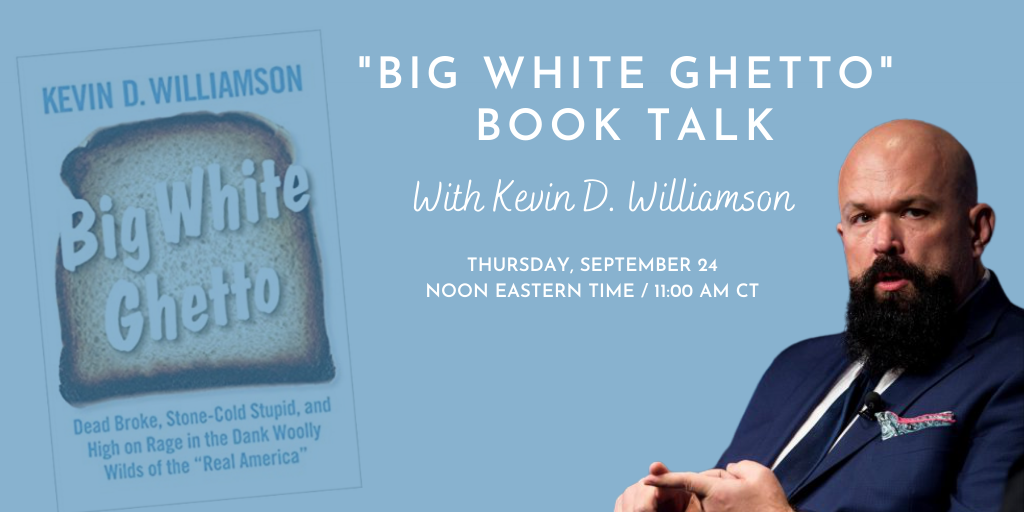
Join us this Thursday for a Book Talk with Kevin D. Williamson

Join us on Thursday, September 24 at 11:00 AM for a special virtual presentation by National Review’s Kevin D. Williamson.

Kevin will be discussing his forthcoming book, “Big White Ghetto,” a collection of long-form reporting and essays on poverty, addiction, despair, and their influence on American culture and American politics.

Register here

Kevin D. Williamson is National Review’s roving correspondent and director of the National Review Institute’s William F. Buckley Jr Fellowship Program in Political Journalism.

He is the author of The End Is Near and It’s Going To Be Awesome: How Going Broke Will Leave America Richer, Happier, and More Secure, The Dependency Agenda, and The Politically Incorrect Guide to Socialism. He contributed chapters to The New Leviathan: The State Vs. the Individual in the 21st Century and Future Tense: Lessons of Culture in an Age of Upheaval. When he is not sounding the alarm about Fiscal Armageddon, he is the theater critic at The New Criterion.
This event is sponsored by the Show-Me Institute and National Review Institute
Support Us

The work of the Show-Me Institute would not be possible without the generous support of people who are inspired by the vision of liberty and free enterprise. We hope you will join our efforts and become a Show-Me Institute sponsor.

Donate
Man on Horse Charging