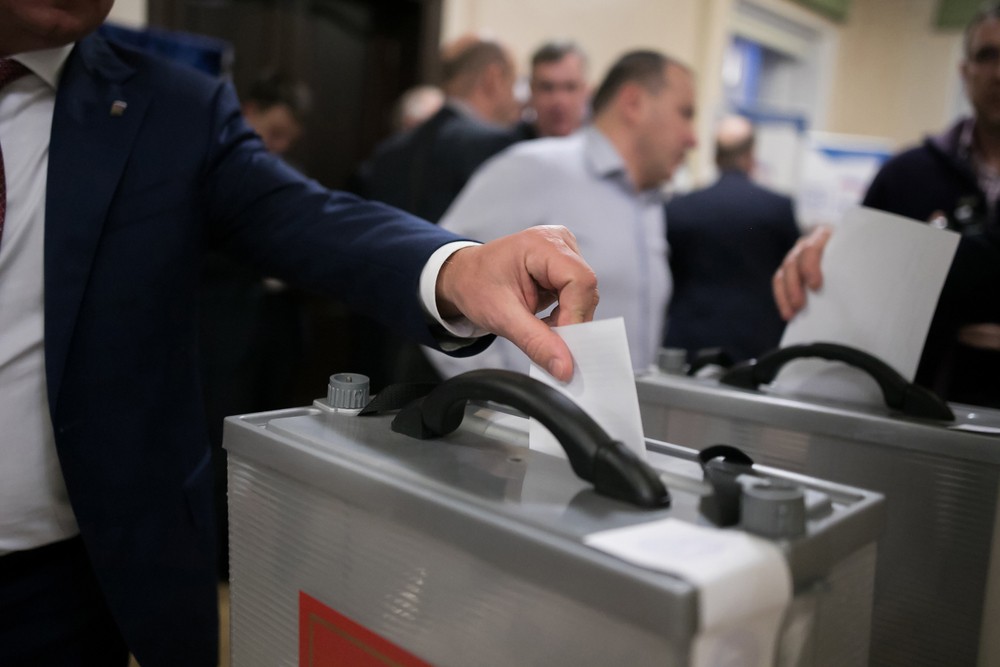
Douglas Murray joined Colombo and Katie on NewsTalkSTL to discuss what we can learn from some of the elections held this week, his November 10 event in St. Louis, and more.
Save your spot for November 10

Douglas Murray joined Colombo and Katie on NewsTalkSTL to discuss what we can learn from some of the elections held this week, his November 10 event in St. Louis, and more.
There is a proposal in St. Louis County to make the county-level offices (and campaigns) nonpartisan. The sponsor argues that because much of what local government does is generally not partisan (he is right about that), we should remove the party labels from local offices.
I think this is a very bad idea. In this specific example, St. Louis County Council districts are large (roughly 140,000 people) and the party label, like it or not, gives voters a significant cue as to which candidate suits their preferences. The idea behind nonpartisan elections seems to be that without a party label, voters will do additional research to determine their votes. This study convincingly argues that that idea is incorrect.
I didn’t agree with Proposition D in the City of St. Louis for the very same reasons.
I am not calling for every suburban city council or school board to suddenly become partisan. However, I think taking currently partisan races and making them nonpartisan (especially for races with many voters) is going to reduce voter information, not enhance it. Nonpartisan campaigns can be captured by special interests just as easily as partisan races—perhaps even more so—as has frequently happened with fire districts in Missouri.
I understand the desire behind the suggestion here, but taking partisan races and making them nonpartisan will, in this instance and many others, make choices more difficult for the average voter. I believe that is the wrong direction to go in.
The East-West Gateway Council of Governments rejected the Loop Trolley Company’s request for a $1.26 million grant last Wednesday. Trolley backers claimed the federal grant money was needed to get the cash-strapped trolley running again.
While members of the council had different reasons for rejecting the proposal, one question from the head of the council board summarized the objections nicely:
“Why is it always other people’s money?”
Other local officials were fine with the trolley receiving the grant, as long as no taxpayer money from their respective municipalities would be dedicated to the trolley and Bi-State Development assumed its operation. Others objected to the idea of Bi-State operating the trolley, arguing that its responsibility is to provide public transportation, not manage tourism projects.
Show-Me Institute analysts have argued for years that the Loop Trolly should not be subsidized by public tax dollars. It’s good to see regional leaders taking the same approach.
It’s unknown what comes next for the trolley. Trolley backers could seek out private funding, either from investors or from Loop businesses who see a benefit to having the trolley run. Whatever the trolley’s future, hopefully the next ask will be to private sector investors, not taxpayers.
Please join the Show-Me Institute for a Virtual Town Hall on Wednesday, December 8 at 2 p.m. The presentation will outline our 2022 Blueprint for Missouri, which consists of free-market policy solutions to the challenges facing our state. You will hear from our expert policy directors and analysts about a broad range of issues including education, healthcare, tax policy, transportation, and government accountability. Register through Zoom to receive the event link. We hope you can join us.
This event is sponsored by Show-Me Institute and Show-Me Opportunity.
Kirkwood officials have placed a citywide transportation development district (TDD) on the ballot to raise money for road, sidewalk, gutter, and parking lot repair. The proposed TDD is funded by a 1 percent sales tax. This proposal appears to be better than most TDDs in Missouri, as it is subject to a citywide vote and was proposed by the city rather than a developer. Of course, Kirkwood residents should keep in mind all their transportation funding options.
There are ways to fund local road maintenance other than sales taxes. As the National Surface Transportation Infrastructure Financing Commission has noted, paying for road maintenance with taxes largely unrelated to road usage creates problems. If people aren’t charged for using roads directly, people will drive more, which in turn leads to higher road maintenance costs.
A local fuel tax is a good solution to the problem of paying for road maintenance—a fuel tax is directly related to driving. Additionally, local fuel tax revenue is constitutionally required to be spent on local road maintenance, decreasing the risk of financial misuse.
Seven Missouri cities already have local fuel taxes; none are higher than 2 cents per gallon. According to my calculations, Kirkwood could raise over $266,000 per year from a 2 cent per gallon local fuel tax on gasoline and diesel fuel. A downside of a local fuel tax is that you don’t collect any revenue from large trucks that may not stop to buy gas in Kirkwood, but still damage the roads when passing through.
No matter how Kirkwood residents and officials decide to raise money for local road maintenance, the city should carefully manage the money raised and ensure that all proper reporting, transparency, and auditing rules are observed. The proposed TDD has redeeming qualities and could be a viable option for funding needs. Nontheless, Kirkwood officials and residents should also consider other transportation policy options.
Corianna Baier, Jakob Puckett, and David Stokes join Zach Lawhorn to discuss the East-West Gateway Council of Governments’ decision to reject a federal grant to fund The Loop Trolley, the food truck debate in Ladue, preview next week’s elections, and more.
Halloween and horror movies have given us reason to fear everything from chainsaws to dolls to empty houses. But with some of these things, like the space under your bed, that fear isn’t warranted. I think market competition generally falls into this unwarranted fear category—people are mistakenly afraid of businesses competing. The limits that many cities place on food trucks are good examples of this.
Most who fight to limit opportunities for food trucks are afraid that food trucks will compete with, and potentially harm, existing brick-and-mortar businesses. My family owns restaurants, so I’m supportive of brick-and-mortar restaurants and I’m sympathetic to this line of thinking. The reality is that food trucks will definitely increase competition, but that is not something that should be feared. Competition among businesses should be expected and encouraged. In the same way that brick-and-mortar businesses compete with one another, food trucks should compete with existing businesses—and may the best food and dining experience win!
Market competition encourages entrepreneurship and leads to the best options for consumers. Food trucks will only do “harm” if consumers overwhelmingly decide that they prefer the food trucks over the existing businesses. And harm is in quotation marks because creative destruction is how we make progress. If food trucks were to overtake brick-and-mortar restaurants in the market (which I think is unlikely), it would mean we are moving forward in a direction chosen by consumers.
Misplaced fear of this process often leads to unnecessary and burdensome regulations. For example, many cities have extremely strict regulations that hinder their operations—and some cities simply don’t allow them at all. (These are, of course, different from regulations that reasonably deal with traffic and public safety concerns.) In cases of overregulation, lawmakers are picking the winners (brick-and-mortar restaurants) and losers (food trucks) instead of allowing consumers to decide. We need to stop being afraid of food trucks (and competition) and give them the freedom to operate.
The Florida Tax Credit Scholarship Program is one of the oldest and largest private school choice programs in America. Started nearly 20 years ago, it now enrolls more than 100,000 students.
One of the most common concerns with private school choice programs is the impact that they might have on traditional public schools. It’s all well and good for the students who get to use a voucher/scholarship/ESA, but what about those children left behind in public schools?
Well, a team of economists from Northwestern, UC-Davis, and Emory University set out to answer that very question. Using detailed records from 1.2 million students from the 2002–03 school year to the 2016–17 school year, the researchers were able to link school attendance to standardized test scores, student behavior, and absenteeism. They used a variety of measures of competition to determine how much “pressure” the Florida school choice program put on public schools as it grew and matured. They have written up the findings in a very user-friendly way in the magazine Education Next.
What did they find? I’ll let the authors say it themselves.
We find broad and growing benefits for students at local public schools as the school-choice program scales up. In particular, students who attend neighborhood schools with higher levels of market competition have lower rates of suspensions and absences and higher test scores in reading and math. And while our analysis reveals gains for virtually all students, we find that those most positively affected are students with the greatest barriers to school success, including those with low family incomes and less-educated mothers.
You just love to see it.
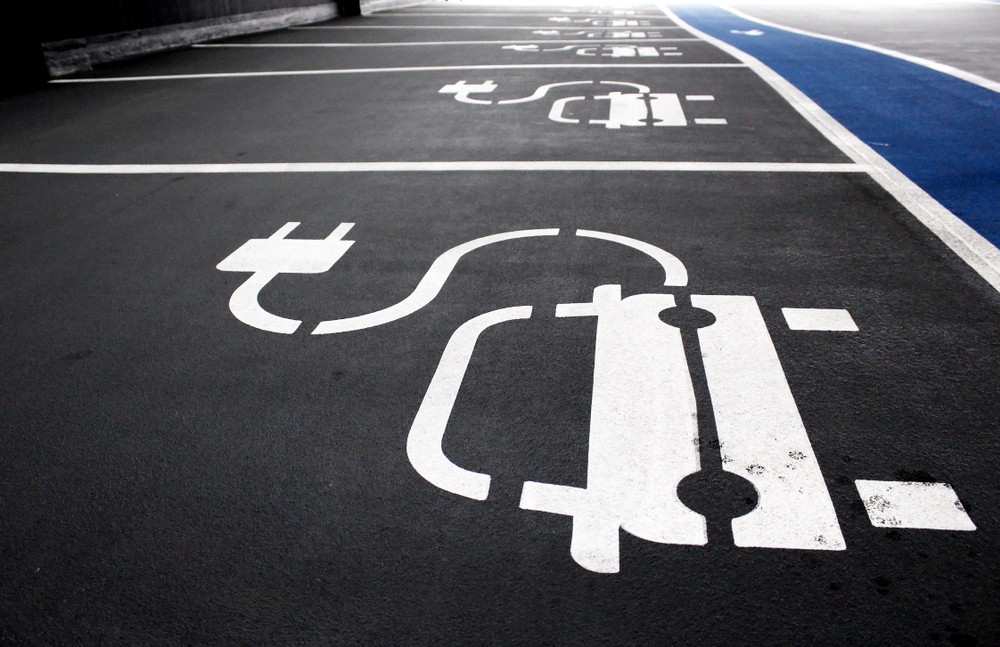
The Saint Louis County Council recently passed a law that would require businesses and landowners in unincorporated Saint Louis County who renovate their properties to add electric vehicle charging stations to their parking lots. It remains to be seen if the county executive will sign it.
The new order affects new constructions, major remodels, parking lot reconstruction and overlay projects, and changes in use or occupancy classification. The changes apply to properties zoned for commercial, industrial, institutional, recreational, cultural, or municipal and park land uses. These properties must equip 2 percent of their parking spaces with electric vehicle (EV) chargers and have the electric wiring ready for another 10 percent of spaces on standby.
Not every property will be affected by this decision. But why should any?
The bill’s sponsor stated that its purpose is to incentivize more Missourians to drive EVs. However, EV ownership in Missouri, while small, is already increasing. Why not let property owners add EV charging spaces on their own and compete for EV drivers rather than force every renovating business to do so?
In addition to the bill’s warped incentives, it reeks of what economists call rent seeking, which is when companies use the political process to pad their bottom lines rather than providing a better service to customers. In this case, a prime beneficiary of the new requirements is local monopoly utility Ameren (which according to one councilmember lobbied heavily in the bill’s favor), which gets to make more money from captive customers simply by governmental order.
Another major problem is that installing EV charging stations is not cheap (they cost roughly $5,000 per unit). But the bill makes no mention of how property owners will pay for this. This is a government mandate that will squeeze business and property owners while only benefiting the existing electricity monopoly.
EV ownership is a personal preference. If more Missourians purchase EVs, businesses can make their own decisions about installing EV charging stations and competing for customers’ business. Shouldn’t competitive markets decide these kinds of things instead of government bureaucrats?