A Policy Scare Story: Don’t Be Afraid of Food Trucks (or Competition)

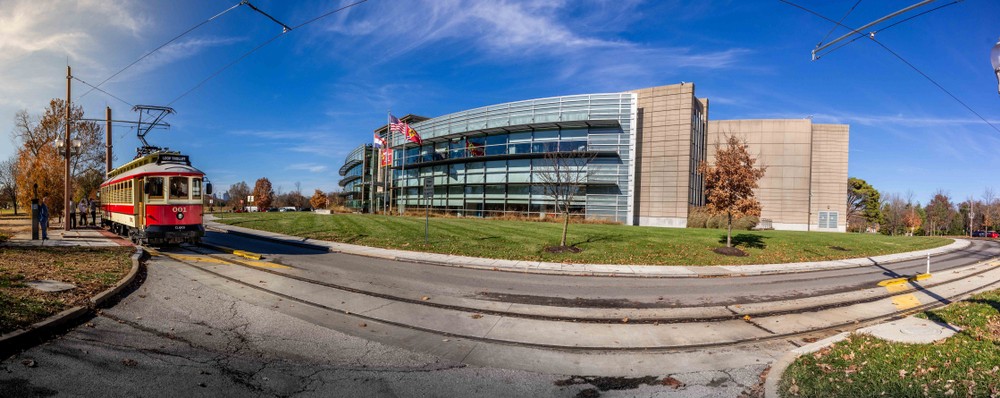
Halloween and horror movies have given us reason to fear everything from chainsaws to dolls to empty houses. But with some of these things, like the space under your bed, that fear isn’t warranted. I think market competition generally falls into this unwarranted fear category—people are mistakenly afraid of businesses competing. The limits that many cities place on food trucks are good examples of this.

Most who fight to limit opportunities for food trucks are afraid that food trucks will compete with, and potentially harm, existing brick-and-mortar businesses. My family owns restaurants, so I’m supportive of brick-and-mortar restaurants and I’m sympathetic to this line of thinking. The reality is that food trucks will definitely increase competition, but that is not something that should be feared. Competition among businesses should be expected and encouraged. In the same way that brick-and-mortar businesses compete with one another, food trucks should compete with existing businesses—and may the best food and dining experience win!

Market competition encourages entrepreneurship and leads to the best options for consumers. Food trucks will only do “harm” if consumers overwhelmingly decide that they prefer the food trucks over the existing businesses. And harm is in quotation marks because creative destruction is how we make progress. If food trucks were to overtake brick-and-mortar restaurants in the market (which I think is unlikely), it would mean we are moving forward in a direction chosen by consumers.

Misplaced fear of this process often leads to unnecessary and burdensome regulations. For example, many cities have extremely strict regulations that hinder their operations—and some cities simply don’t allow them at all. (These are, of course, different from regulations that reasonably deal with traffic and public safety concerns.) In cases of overregulation, lawmakers are picking the winners (brick-and-mortar restaurants) and losers (food trucks) instead of allowing consumers to decide. We need to stop being afraid of food trucks (and competition) and give them the freedom to operate.

School Choice Shines in Florida

The Florida Tax Credit Scholarship Program is one of the oldest and largest private school choice programs in America. Started nearly 20 years ago, it now enrolls more than 100,000 students.

One of the most common concerns with private school choice programs is the impact that they might have on traditional public schools. It’s all well and good for the students who get to use a voucher/scholarship/ESA, but what about those children left behind in public schools?

Well, a team of economists from Northwestern, UC-Davis, and Emory University set out to answer that very question. Using detailed records from 1.2 million students from the 2002–03 school year to the 2016–17 school year, the researchers were able to link school attendance to standardized test scores, student behavior, and absenteeism. They used a variety of measures of competition to determine how much “pressure” the Florida school choice program put on public schools as it grew and matured. They have written up the findings in a very user-friendly way in the magazine Education Next.

What did they find? I’ll let the authors say it themselves.

We find broad and growing benefits for students at local public schools as the school-choice program scales up. In particular, students who attend neighborhood schools with higher levels of market competition have lower rates of suspensions and absences and higher test scores in reading and math. And while our analysis reveals gains for virtually all students, we find that those most positively affected are students with the greatest barriers to school success, including those with low family incomes and less-educated mothers.

You just love to see it.

St Louis County Council Mandates Businesses Install EV Charging Stations

The Saint Louis County Council recently passed a law that would require businesses and landowners in unincorporated Saint Louis County who renovate their properties to add electric vehicle charging stations to their parking lots. It remains to be seen if the county executive will sign it.

The new order affects new constructions, major remodels, parking lot reconstruction and overlay projects, and changes in use or occupancy classification. The changes apply to properties zoned for commercial, industrial, institutional, recreational, cultural, or municipal and park land uses. These properties must equip 2 percent of their parking spaces with electric vehicle (EV) chargers and have the electric wiring ready for another 10 percent of spaces on standby.

Not every property will be affected by this decision. But why should any?

The bill’s sponsor stated that its purpose is to incentivize more Missourians to drive EVs. However, EV ownership in Missouri, while small, is already increasing. Why not let property owners add EV charging spaces on their own and compete for EV drivers rather than force every renovating business to do so?

In addition to the bill’s warped incentives, it reeks of what economists call rent seeking, which is when companies use the political process to pad their bottom lines rather than providing a better service to customers. In this case, a prime beneficiary of the new requirements is local monopoly utility Ameren (which according to one councilmember lobbied heavily in the bill’s favor), which gets to make more money from captive customers simply by governmental order.

Another major problem is that installing EV charging stations is not cheap (they cost roughly $5,000 per unit). But the bill makes no mention of how property owners will pay for this. This is a government mandate that will squeeze business and property owners while only benefiting the existing electricity monopoly.

EV ownership is a personal preference. If more Missourians purchase EVs, businesses can make their own decisions about installing  EV charging stations and competing for customers’ business. Shouldn’t competitive markets decide these kinds of things instead of government bureaucrats?

Policy Presentation: Missouri School Rankings (Springfield)

Missouri schools are failing to teach the core subjects of reading and math, and the most recent test scores show that students are falling further behind. In response to the Missouri Department of Elementary and Secondary Education’s (DESE) failure to perform one of its most basic functions, the Show-Me Institute, in conjunction with Show-Me Opportunity, launched The Missouri School Rankings Project and MoSchoolRankings.org.

On December 1, Susan Pendergrass, director of research and education policy, will present her findings from the Missouri School Rankings Project and give an overview of how to use the website.

Register


Sponsored by Show-Me Institute and Show-Me Opportunity

Want Better Electricity Prices? Be More Like Illinois

One of the benefits of a cross-border rivalry is the ability to learn from your competitor (with Missouri sometimes learning the right lesson). Missouri could learn a thing or two from our neighbors to the east about lowering electricity prices.

Once upon a time (in 2008), Missouri had the lowest electricity prices in the Midwest at 6.84 cents per kilowatt hour, while our friends in Illinois paid the highest electricity prices in the region at 9.26 cents per kilowatt hour. (The Midwest is defined as Illinois, Indiana, Michigan, Ohio, Wisconsin, Iowa, Kansas, Minnesota, and Missouri.) Now, as of data from 2019 (the most recent data available), Illinoisans pay less than Missourians do (9.56 cents versus 9.68 cents) and have the second-lowest electricity prices in the Midwest, while Missouri’s electricity prices rose to the middle of the pack in the Midwest.

Moreover, when taking inflation into account, Illinois’ real electric prices decreased 13 percent, while Missouri’s increased by 19 percent—the third-fastest increase in the country between 2008 and 2019.

What gives?

The largest difference between electricity markets in Missouri and Illinois is that Illinois allows customers to choose between competing electric service providers, whereas Missouri still operates on a century-old monopoly model. In Illinois, customers have more than 150 electric service providers to choose from. Options for plans include fixed-rate, variable pricing, prepaid, or green energy plans. The pressures of competition ensure that electric providers operate more efficiently and are more responsive to customers.

In contrast, Missourians, wherever they live, have only one choice for an electric service provider—their government-sanctioned and regulated monopoly. Because there’s no competition, monopoly utilities don’t have an incentive to increase efficiency and don’t fear losing any business.

As the electricity price data above show, one of these systems has been working better, and it’s not Missouri’s. Lower electric prices mean households have more money left over for other needs. It also creates a more attractive environment for businesses. Missouri lawmakers can learn something from Illinois—pursuing competitive reforms to Missouri’s electricity market could be worthwhile.

Missouri’s New Gas Tax Hassle

If you’ve ever bought something that came with a mail-in rebate, the story of Missouri’s new gas tax refund should not sound too surprising. Missouri’s gas tax increased by 2.5 cents on October 1, but Missourians are being told they won’t have to pay the additional taxes as long as they file for a refund. The question is whether claiming the refund is ultimately worth the hassle.

Missourians interested in getting a gas tax refund should start saving their receipts immediately. Then, sometime between July 1 and September 30 of 2022, those seeking a refund will need to use the Missouri Department of Revenue (DOR) website to start the refund claiming process. Each claim will require:

  • The vehicle identification number of the vehicle into which the fuel was delivered;
  • The date of the fuel sale;
  • Names and addresses of the purchaser and seller;
  • The number of gallons purchased; and
  • The number of gallons purchased and charged Missouri fuel tax.

As of now, Missouri’s DOR hopes to have a new online system ready to allow taxpayers to file their refund claims electronically, but if it’s not ready, refund seekers will likely need to complete a slew of paper forms. Refund seekers who have their claims accepted should expect to receive their refund within 45 days. And while the claims will not initially require the submission of receipts, DOR may ask for them. In addition, the DOR stated receipts should be kept for three years for good measure.

Keep in mind that only the new 2.5 cent gas tax will be eligible for a refund. So, if for example, you purchase 100 gallons of fuel before next July, you would need to keep all your receipts until then (then another three years after), submit the required information in the prescribed three-month claim window, and then hopefully receive a check for $2.50 a month and a half later.

It remains to be seen how many Missourians will decide to take the state up on its offer, but the amount of effort required for such a meager return makes me skeptical many will follow through. Of course, if the state really wanted to make it easy for Missourians to claim refunds, it would have created an app to allow taxpayers to file claims immediately after purchase. But just like many mail-in rebate schemes, the program doesn’t seem designed to encourage people to actually claim the refund.

MoSchoolRankings.org launch, Sam Page Requests More Money and Who Will Pay for Flowers?

Find your school at MoSchoolRankings.org

Susan Pendergrass, David Stokes, and Corianna Baier join Zach Lawhorn to discuss the launch of The Missouri School Rankings Project and MoSchoolRankings.org, a report that Sam Page is asking the St. Louis County Council to use federal stimulus money to avoid budget cuts and the future of the downtown St. Louis Community Improvement District.

Listen on Apple Podcasts 

Listen on Sticher 

Listen on SoundCloud

LIHTC Pilot Finds Permanence

Missouri’s low-income housing tax credit (LIHTC) program is bad, but is it getting better? Earlier this year I wrote about a proposed pilot program that aimed to improve the program’s return on investment. After some apparent success, the Missouri Housing Development Commission (MHDC) recently decided to expand the pilot program and make it a permanent feature. Don’t get me wrong, I still think LIHTCs are a bad use of state tax dollars. But if Missouri’s elected officials are going to continue investing in the program, serious reform efforts cannot come soon enough.

As I’ve written before, the LIHTC program awards tax credits to housing developers to offset construction costs. In exchange, the developers are required to rent a fraction of their units to low-income tenants. Missouri’s program is a supplement to the federal LIHTC and has a long history of poor returns on investment. When Missouri’s version of LIHTC was revived last year after a three-year hiatus, LIHTC boosters promised reforms to address some of the program’s much-discussed shortcomings. This pilot program was one of those reforms.

The purpose of the pilot program is to increase the sales price of LIHTCs by allowing housing developers to claim them more quickly. One of the biggest problems with these credits is that they’re awarded to developers over ten years—but upon being rewarded, developers often immediately sell the credits to investors to raise the capital necessary to fund the project’s construction. When something is sold today that can’t be claimed for a decade, it has to be sold at a discount, in part because of the time value of money. In many cases, Missouri’s LIHTCs have sold for as little as forty cents on the dollar. This means is state taxpayers are basically guaranteed a bad return on investment, because the thing they’re paying $1 for is being immediately sold for less.

The new pilot program allowed 20 percent of the state’s approved projects to claim their credits more quickly over the first five years, and more slowly the final five. The total cost to state taxpayers remains the same, the value of the credits for investors is increased because of the time value of money. Initial reports suggest this change worked and increased the market value of each credit by roughly $0.10. However, if credits were previously selling for $0.40 and now are selling for $0.50, that still means taxpayers are still losing half of their investment immediately.

Going into next year, the number of projects eligible for this pilot will be bumped up to 50 percent. And with more projects receiving accelerated redemptions, that should mean more credits are sold for higher prices, which in turn could slightly improve the dismal return on investment for state taxpayers. Supporters of the pilot also say that higher sales prices will allow the MHDC to subsidize more projects, because each developer will request fewer credits. It remains to be seen whether these claims will hold true with additional years of data.

Make no mistake, I still think the LIHTC program is a bad deal for Missouri. It is truly remarkable that such a meager improvement in credit sale price is being celebrated as a big win for the troubled program, when taxpayers are still expected to lose so much of each credit sold.  Much more needs to be done before LIHTC even comes close to being considered a worthwhile investment for our state.

Support Us

The work of the Show-Me Institute would not be possible without the generous support of people who are inspired by the vision of liberty and free enterprise. We hope you will join our efforts and become a Show-Me Institute sponsor.

Donate
Man on Horse Charging