Widening I-70, Education Bills, and How Much is Your House Worth

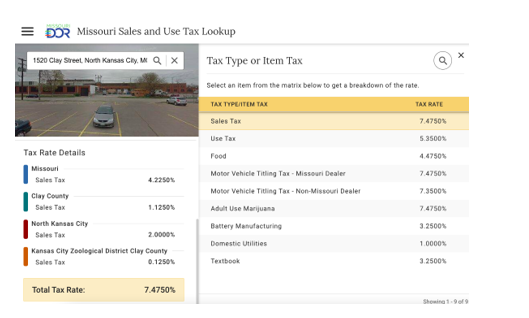
James Shuls, Elias Tsapelas, and David Stokes join Zach Lawhorn to discuss the latest on the Missouri budget process, get an update on education legislation, why some Missourians are going to be surprised by the increase in their property tax bills, and more.

Listen on Apple Podcasts 

Listen on Stitcher 

Listen on SoundCloud

Produced by Show-Me Opportunity

Prudent Pundit Ponders Independence Power Privatization Proposal

The Kansas City suburb of Independence—although it is weird to call the fifth-largest city in Missouri a ”suburb”—is considering privatizing its municipal electric utility. Municipal utilities are an archaic system, and privatizing the utility would be an excellent move by city leaders. Independence is open about the long-term outlook for its utility. From the Kansas City Star article on the topic:

Independence has struggled to maintain its own power generation as the environmental and financial costs of coal plants has [sic] pushed many other energy firms into renewables. While many say IPL provides exceptional service and reliability, city officials note that their customers pay higher electricity rates than those served by for-profit companies in other parts of the region.

The utility is also facing financial headwinds: Its cash reserves will drop below the utility’s target of $25 million by 2025, officials said. And those reserves will drop to a negative $97 million by June 2032 as the costs to maintain the utility’s infrastructure mount.

“The problem we have, as we sit here today is that IPL is on a course to a financial train wreck, due to what I believe to be questionable decisions in the past,” said Councilman Jared Fears. “So clearly something has to change.”

It bears repeating that Independence utility customers pay more than those using for-profit utilities in the region. This is despite the advantages in taxation and regulation that municipal utilities have over private utilities. There have been several water utility privatizations in Missouri in recent years, but not many electrical utility privatizations. The case for electrical privatization is probably even stronger, as one does not have to deal with the typical “how do you privatize something that falls from the sky?” argument. Unless you make extensive use of your home lightning rod, someone is artificially generating the electricity you use. Eureka and Arnold are just two of the larger cities that have privatized their water or sewer systems in recent years. From the Post-Dispatch story:

Arnold sold its sewer system to Missouri American in 2015 for $21 million. “The system was not in good shape. It was not well maintained,” said City Administrator Bryan Richison. “And city council members were running on not raising rates, so it put us in a bad position.”

As electric vehicles ramp up the electrical power needs of our communities, it is time for Independence, Columbia, Kirkwood, and (most of all) Springfield to get out of the utility business. Private, regulated utilities are much better positioned to provide the necessary services to these communities. These cities should privatize their assets via an open, transparent process and use both the sale price and the future tax revenues to provide better overall public services for their communities.

WATCH: Jason L. Riley on the Life of Thomas Sowell

On April 19, 2023 the Show-Me Institute hosted Jason L. Riley, senior fellow at the Manhattan Institute and columnist for the Wall Street Journal, at the Saint Louis University Richard A. Chaifetz School of Business to discuss his book Maverick: A Biography of Thomas Sowell.


Jason L. Riley is an opinion columnist at The Wall Street Journal, where his column, Upward Mobility, has run since 2016. He is also a senior fellow at the Manhattan Institute and provides television commentary for various news outlets. Mr. Riley, a 2018 Bradley Prize recipient, is the author of four books: “Let Them In: The Case for Open Borders” (2008); “Please Stop Helping Us: How Liberals Make It Harder for Blacks to Succeed” (2014); “False Black Power?” (2017); and “Maverick: A Biography of Thomas Sowell” (2021). Mr. Riley joined the paper in 1994 as a copy reader on the national news desk in New York. He moved to the editorial page in 1995, was named a senior editorial page writer in 2000, and became a member of the Editorial Board in 2005. He joined the Manhattan Institute in 2015. Born in Buffalo, New York, Mr. Riley earned a bachelor’s degree in English from the State University of New York at Buffalo.

About the Book:

Maverick: A biography of Thomas Sowell, one of America’s most influential conservative thinkers. Thomas Sowell is one of the great social theorists of our age. In a career spanning more than a half century, he has written over thirty books, covering topics from economic history and social inequality to political theory, race, and culture. His bold and unsentimental assaults on liberal orthodoxy have endeared him to many readers but have also enraged fellow intellectuals, the civil-rights establishment, and much of the mainstream media. The result has been a lack of acknowledgment of his scholarship among critics who prioritize political correctness. In the first-ever biography of Sowell, Jason L. Riley gives this iconic thinker his due and responds to the detractors. Maverick showcases Sowell’s most significant writings and traces the life events that shaped his ideas and resulted in a Black orphan from the Jim Crow South becoming one of our foremost public intellectuals.

Event sponsored by: Show-Me Institute, the Sinquefield Center for Applied Economic Research, the Sinquefield charitable trust, and Show-Me Opportunity

Optimism and Concern on the Future of Parents’ Bill of Rights Legislation

For those unfamiliar with it, a “Parents’ Bill of Rights” is a law that helps to ensure parents have transparent access to their children’s instruction, spending, and performance materials, and ultimately helps to secure the rights of parents to have the primary say in how their children are educated. Paired with enhanced school choice, a Parents’ Bill of Rights gives parents the ammunition to judge how the government is educating their kids—and the ability to adjust their educational plans and options accordingly.

The good news in Missouri is that we’ve seen legislative progress toward both goals this year, especially with the Parents’ Bill of Rights. On Wednesday, news came from the Missouri Legislature that Senate Bill (SB) 4 had passed out of committee. As our readers may know, SB 4 represents the most likely vehicle for a Parents’ Bill of Rights to pass into law, so its (relatively) expeditious approval in the Senate and in a House committee is heartening.

What’s less heartening is that the House added a Committee Substitute to the bill, which changes its contents and, thus, would require another vote from the Senate if it passes on the House floor, which it seems likely to do. Why is the substitute a problem? Because if the bill survived unamended, the Senate would not have to see the bill again; given the dysfunction in the upper chamber this year, there’s no telling whether the Senate would take up SB 4 a second time with the House’s amended language. Factor in threats from the House that it may stop considering Senate bills altogether, and yeah, the circumstances here aren’t great.

Unless the House knows the Senate can and will pass its revised SB 4 late in the session, I hope the House will consider removing the Committee Substitute, as it did with its special session bill last year, and pass it as drafted by the Senate. I appreciate the inside-baseball reason for rejecting Senate bills in an environment when the Senate is an AWOL partner in policymaking, but that doesn’t change that SB 4 achieves one of the core objectives the House had set out at the beginning of the session: putting parents back in charge of their kids’ education. Four weeks remain between now and the end of this year’s legislative work; we’ll keep you posted if SB 4 makes it across the finish line.

Jay Nordlinger: Live in St. Louis and Kansas City on May 9 and May 10

St. Louis Event

Cost: Free
When: Tuesday, May 9
Reception: 5:30 pm
Program: 6:00 pm
Where: Lindenwood University (Harmon Hall Auditorium) 209 South Kingshighway Street, Saint Charles, MO, 63301

Register Here for the St. Louis Event

Kansas City Event

Cost: Free
When: Wednesday, May 10
Reception: 5:30 pm
Program: 6:00 pm
Where: Kansas City Central Library (14 W 10th St, Kansas City, MO 64105)

Register Here for the Kansas City Event

About the Program and Speaker

Jay Nordlinger surveys today’s media landscape with what has become frequent dismay.
“We’ve never had so much journalism and so many outlets, which is great,” the National Review senior editor says. “But politics and journalism have merged, and … I’ve seen a lot of journalists begin to act like politicians with political calculations. That’s crippling to a writer.”
“You’ve got to be free at the keyboard,” he says, “to pursue the truth as you find it.”
Nordlinger himself has gained a reputation for open-mindedness in writing about politics, foreign affairs, and the arts, among other subjects, for National Review. In an event co-presented by the Show-Me Institute, National Review Institute, the John W. Hammond Institute for Free Enterprise, The Kansas City Public Library, the Sinquefield Charitable Foundation, and Show-Me Opportunity, he looks at journalists’ roles – from reporters to columnists, critics, and editors – and the practice of straight vs. opinion journalism. And he takes stock of his profession today. What’s good, and what’s bad? How does one navigate the current media environment? Is everyone siloed?
Nordlinger, who lives in New York, writes the column “Impromptus” for NationalReview.com and is a book fellow of the National Review Institute. He’s the author of two books: Peace, They Say: A History of the Nobel Peace Prize, the Most Famous and Controversial Prize in the World and Children of Monsters: An Inquiry into the Sons and Daughters of Dictators. Selections of his work have been republished in two anthologies.
He also is a music critic for The New Criterion and the host of two podcasts, Q&A and Music for a While.

Banning Books? Everyone Is a Censor

A version of this commentary appeared in the Columbia Daily Tribune.

How do you feel about book-banning? This question was recently posed at a meeting of about 50 educators. When the question went out to the audience, you could hear the groans rising. The questioner, a librarian, was considering putting a “Banned Books” display in the library. As you can imagine, the educators were all for this. Then something curious happened. In a matter of seconds, the very educators who had voiced strong opposition to the banning of books themselves became book-banners.

Hearing the response to her question, the librarian was heartened. She shared her thoughts on the display and mentioned an example—Skippyjon Jones. Released in 2003, Skippyjon Jones was an immediate hit. It featured a loveable Siamese cat who thought he was a Chihuahua. In 2004, the book won the E.B. White Read Aloud Award from The Association of Booksellers for Children. I began teaching first grade shortly after Skippyjon Jones was released. My students loved it. They would often repeat the refrain from the book, “Yip, yippee, yippito! My name is Skippy Skippito!”

Fast-forward to 2018 and the book was listed as the eighth-most-challenged book by the American Library Association. Finding the book’s portrayal of Hispanics and stereotypes of Latinos objectionable, many have sought to remove the book from public school classrooms.

When that librarian mentioned the book to her audience of educators, I don’t think she expected what happened. The mood turned. The groans of disapproval of “bans” turned to voices saying, “Well . . . that book is problematic.”

You have heard that everyone is a critic. What you may not realize is that everyone is also a censor. Every person believes objectionable or problematic materials should not be given to unsuspecting youth in our public school classrooms. We just define what is objectionable or problematic in different ways.

In recent years, conservatives have been labeled as “book banners” for attempting to keep books that display sexual acts or that teach children about gender ideology from the classroom. The use of the phrase “book banning” is effective rhetorically, but it is not really accurate. The individuals organizing at school board meetings or in state houses are hardly seeking to ban books. Rather, they are seeking to keep some books from being purchased by government organizations for consumption in public institutions. They are seeking to censor what is being presented to children.

This notion of censorship is not a right or left issue and it is not new. Americans have long fought over the content that would be taught and the books that would be presented to children. We’ve fought over these issues for many reasons. Chief among them are that some materials are simply not appropriate for children, and that education has the ability to shape a child’s mind.

Censoring is a rational human response to objectionable material. It is something we do for ourselves, and it is something we do for our own children on a daily basis. Censoring becomes an issue in the public sphere because of how we have chosen to organize our public education system. We compel parents to send their children to school and we condition their receipt of government funding upon them sending their children to public schools. We place parents in a winner-take-all system to determine whose values and whose books are presented in the classroom. As long as we continue to organize our school system in this way, “book banning” will continue to be an issue.

Of course, the system does not have to be organized this way. We could create a system of public education in which parents are empowered to send their children to the school of their choice. We could choose to create a system where parents in the same school district could choose to send their children to different schools based on the quality of education and the alignment of the curricula to each family’s values. Strangely, the very people opposed to “banning books” are often the very people who stand in the way of proposals for educational freedom.

Sections of “Banned Books” may make great library displays or they may help drive sales at bookstores, but the fact is censoring books is emblematic of our public education system. It is not a flaw of the system; it is the design. As the educators I witnessed demonstrated, we are all censors. The question is, are we ready to do something about it? Are we ready to change the system?

The Urban Doom Loop with Daniel DiSalvo

Susan Pendergrass speaks with Daniel DiSalvo about his new report Big City Pensions and the Urban Doom Loop.

Daniel DiSalvo is a senior fellow at the Manhattan Institute and a professor of political science in the Colin Powell School at the City College of New York–CUNY.

Read Big City Pensions and the Urban Doom Loop here.

Listen on Apple Podcasts 

Listen on Stitcher 

Listen on SoundCloud

Produced By Show-Me Opportunity

How to Lose a City of St. Louis Guy in 10 Days

The U.S. Census Bureau recently released new population estimates for cities around the country, and the City of St. Louis continued its trend of steady population decline in 2022. The city was estimated to have shrunk from 293,562 residents in July 2021 to 286,578 residents in July 2022 (a 2.4% decrease). Dr. Ness Sandoval of St. Louis University has rigorously studied demographic changes in Missouri and has emphasized that more people are dying in the City of St. Louis than being born. However, other parts of the St. Louis Metropolitan Area are estimated to be growing—St. Charles, Jefferson, Franklin, and Warren Counties all gained residents in 2022, with Lincoln showing the largest growth at 2.43 percent. There are numerous factors that I believe are contributing to the exodus of residents from the city. However, I believe public safety is a significant contributing factor.

Many people simply do not feel safe in St. Louis. As a city resident, I have incorporated several different habits while living in the city. To name two, I look both ways at every single green light and I ensure nothing of value is visible in my car. Auto thefts have been on the rise, and in particular, thefts of two brands (Hyundai and Kia) have soared from 273 to 3,958 in the past year in the City of St. Louis.

While there is a specific design flaw that has led to Kia and Hyundai thefts skyrocketing, the lack of punishment and deterrence might be contributing to rising vehicle crime in the city. From August 1 to August 13 in 2022, 462 cars were stolen or attempted stolen in the City of St. Louis. Yet despite the surge in auto thefts, only 1 person was charged in city courts for a crime related to auto theft during the same two week period. Whether this is due to lack of punishment or lack of law enforcement capacity to find the culprits, city residents are suffering all the same.

The lack of regard for traffic rules visible on a daily basis. For example, the day I wrote this piece, my coworker and I saw someone drive into oncoming traffic on Kingshighway Blvd, veer in front of someone turning left from the adjacent street, and blatantly run a red light. These everyday close calls can turn into fatal crashes. Despite a declining population, 230 people were killed in traffic crashes in the City of St. Louis City from 2020–2022 (with a 20 year record high of 81 in 2020) as compared to 128 from 2008–2010.

While there has been a national increase in traffic fatalities in recent years, it seems fair to wonder if local policy in St. Louis has exacerbated that trend. Even as reckless driving has seemed to increase, vehicle stops in the city have declined from their peak of 85,622 in 2009 to 45,124 in 2021. Similarly, traffic citations have decreased from 34,833 in 2009 to 17,763 in 2021. Again, whether this is due to a decision to not punish this type of crime or a lack of capacity to effectively patrol the streets, City of St. Louis residents suffer the consequences all the same.

The decline of a proud and historic city like St. Louis is a sad thing to witness. We are known as the Gateway to the West, yet sadly our streets right now more closely resemble the Wild West. If city leaders want to attract new residents and prevent current residents from leaving, they need to get a serious handle on the public safety issue, and they need to do it quickly.

Open Enrollment in St. Louis Schools: 55 Years in the Making

A version of this commentary appeared in the St. Louis Post-Dispatch.

When the Spainhower Commission issued its final report in 1968, St. Louis County had 25 school districts (plus the Special School District). Those schools served 186,428 students. Asked to develop “a plan to provide equal access to educational opportunity for all children,” the commission recommended a consolidation of all St. Louis–area school districts into a single district. That call was taken up again in 2014 following the shooting of Michael Brown. Then, as in 1968, the solution proposed was to tear down those dividing district lines in the sake of unity. The St. Louis Post-Dispatch editorial board endorsed this plan in their piece, “One school district. One focus. One future: Unify St. Louis schools.”

Fifty-five years after the Spainhower report, the number of students enrolled in St. Louis County school districts has decreased by more than 53,000, but almost all district lines remain. Just three school districts have closed. At the time of their mergers, all three served mostly African American schoolchildren. In the 1970s, the Kinloch and Berkeley School Districts were forced by the courts to consolidate into the Ferguson-Florissant School District. In 2010, the Missouri State Board of Education consolidated the Wellston School District into the Normandy School District.

From then to now we have known that arbitrary boundaries drawn around school districts create haves and have-nots. We have known that assigning students to attend schools based on where they live has perpetuated inequities among students and limited access to quality educational options. And yet, the problem has been almost intractable. Why? According to James Spainhower, as reported by the Post-Dispatch’s Tony Messenger, “The only place where the report was weak, was in the thought that people could get over their biases.” I think this analysis is correct, but not in the way that Messenger implied.

According to Messenger, parents in predominantly white school districts did not want to merge with predominantly African American school districts. As we saw when students from the predominantly African American Normandy school district attempted to transfer to predominantly white school districts a few years ago, race can still be an issue. But race wasn’t the only obstacle for those Normandy students—remember, their own school district didn’t want them to leave, either—nor am I convinced that race is the primary motivating factor for those who oppose school district consolidation. People take pride in their local schools, and they do not want to see them changed. Moreover, people instinctively react when anyone attempts to force their school district to be consolidated. It is a loss of identity.

This is the problem. If we leave school districts to make this change themselves, nothing will get done. If we attempt to force consolidation on them, they will resist. This is why attempts at consolidation, except in those rare cases mentioned above, have failed in the St. Louis region. People are loathe to voluntarily consolidate their own school district unless they see a significant benefit, and they strongly resist top-down directives from the state to consolidate their schools.

It is time to change the strategy. Rather than rely on district leaders to take action or attempt to obliterate school district lines, we need to make those boundaries porous. We need to allow students to begin moving across those lines to attend schools in other school districts. We need school choice. We need open enrollment. The Post-Dispatch editorial board once championed this idea. In their call for unifying St. Louis schools they wrote, “The fastest way to move toward such unity would be for the school districts in the St. Louis region to adopt an open enrollment policy.”

Now there is an open enrollment proposal before the Missouri legislature. Yet, as Blythe Bernhard and Jack Suntrup have reported, “Missouri educators vow to fight as open enrollment plan gains steam.” This opposition was to be expected. What was not expected was the complete silence from those who previously advocated for unity among St. Louis schools.

If we continue to look for top-down solutions to this problem, in another 55 years we’ll likely be exactly where we are today—where a student’s educational opportunities are dictated by his or her zip code.

Support Us

The work of the Show-Me Institute would not be possible without the generous support of people who are inspired by the vision of liberty and free enterprise. We hope you will join our efforts and become a Show-Me Institute sponsor.

Donate
Man on Horse Charging