Taking Stock of Inflation and the Recent Fed Pause

The Federal Reserve announced last week that it was pausing its campaign of inflation-fighting interest rate hikes, leaving the target for the federal funds rate in the 5–5.25% range. Does the pause mean mission accomplished and that is time to celebrate? Not so fast.

The good news: progress has been made. According to data released last week, the May consumer price index (CPI) inflation rate came in at 4%, which is far less than the 9% peak from mid-2022. However, now is not the time to move the goalposts. For years, the Federal Reserve has said its inflation target is 2%, and the economy is running at twice that rate. By contrast, before passage of the American Rescue Plan Act stimulus bill in early 2021, the economy had consistently remained at or below 2% inflation for the better part of a decade and had not hit 9% in over four decades. It turns out that former Treasury Secretary and National Economic Council Director Larry Summers was spot on in spring 2021 when he warned that “I think this is the least responsible macroeconomic policy we’ve had in the last 40 years.”

What is the reason for falling inflation? One explanation can immediately be ruled out. No, the Inflation Reduction Act (a misnomer if there ever was one) did not defeat inflation. For one thing, inflation was already falling before the bill passed in August 2022. Secondly, many of the provisions of the law have yet to go into effect. In fact, the treasury department and IRS just released guidance on some of the significant provisions of the Inflation Reduction Act just last week—nearly a full year after the bill’s passage.

The idea that the Inflation Reduction Act was going to reduce inflation has always been implausible, seeing as its tax hike provisions constrain supply, and its supposed deficit reduction does not begin to take place until 2028. The law increases deficits in the years 2024–2027. More artificially stimulated demand and constrained supply is not a recipe for bringing down inflation. If anything, the Congressional Budget Office is likely taking an overly sanguine view by saying that the law will have a negligible effect on inflation.

Instead, the Federal Reserve’s interest rate hikes and the expiration of American Rescue Plan Act provisions are likely the key factors behind the decline in inflation. Broadly speaking, there are essentially two ways to bring down inflation: reduce spending demand or expand the supply of goods and services. The second approach is preferable in that it simultaneously allows for lower inflation and higher economic growth, but the types of regulatory and tax policy changes needed to expand supply would require consensus in Congress and the White House abandoning the anti-growth policy agenda pushed by many progressives.

The first approach (reducing demand) is what the Federal Reserve has pursued. As the Fed raises rates, borrowing becomes costlier, which makes it less attractive for consumers to purchase things like houses, vehicles, and appliances using credit. Higher interest rates also make saving more attractive. The result: consumers pull back demand. Similarly, the expiration of stimulus from the American Rescue Plan Act reduces overheated demand while the expiration of anti-work provisions removes part of the straitjacket imposed on supply.

Is the falling inflation a surprise? Prognosticators have been all over the map with their inflation forecasts during the past two years, but it ought not to be surprising that inflation would come down once the Federal Reserve finally began to take action and hike rates. At the beginning of the year, soon after the release of the December 2022 inflation data, I published a blog post with a forecast of where inflation might be headed in the first half of 2023. In the spirit of accountability, the figure above shows my inflation projection through May 2023 compared to how inflation has actually played out in reality.

The red (projection) and blue (actual) curves track each other remarkably well in 2023. In fact, my earlier blog post stated “topline year-over-year inflation readings are set to fall rapidly over the next several months—possibly even falling below 4% by early summer.” As a reminder: the May inflation rate came in at exactly 4%. Although my projections were mildly on the optimistic side, they have mostly held up.

Does that mean inflation is no longer a problem? Quite the contrary. The figure below shows that higher prices have essentially been locked in. The Federal Reserve is not even attempting to bring prices down. It is just trying to moderate the future pace of price increases to historic norms. Unfortunately, purchasing power is still more than 3% lower than it was at the beginning of 2021, as shown in the figure below. Until wages start to consistently outpace prices, workers will continue to suffer from the lingering effects of the inflation surge. Here, too, the economy faces serious headwinds, considering that labor productivity is on the decline. But addressing the low productivity crisis is a topic for another day.

Where do we go from here? There is no such thing as almost landing an airplane. You either land it, or you crash. In this case, the Federal Reserve has one task: to land inflation at 2% sooner rather than later. The longer it takes to achieve the 2% target, the less inflation-fighting credibility the Fed will have as people start to accept a persistently higher inflation rate as normal, which will make the Fed’s job even more difficult.

While the headline inflation number is moving rapidly in the right direction (and will likely continue to do so at least for one more month), some of the components of inflation are still concerning. In particular, core inflation (which excludes food and energy) is falling much more slowly. The latest core inflation rate from the CPI report is 5.3%, which is only modest progress from the 5.6% rate from the start of the year. One glimmer of hope is that housing costs have been a significant recent driver of inflation, but the data are lagging. Because most people who rent sign one-year leases, large rent increases from several months ago when conditions were different in the rental market still affect current inflation readings. As tenants begin to roll over into new leases, the data should adjust and likely show a slowdown in rent increases.

The bottom line is that the inflation picture has improved, but we are arguably entering a murkier phase over the next several months. The Federal Reserve made clear in its statement regarding pausing rates that it was likely not done raising rates. Rather, the pause is an opportunity for more data to come in to guide future actions. But one thing is clear: the mission is not yet accomplished.

Building a Better Future with Trish Flanagan

Susan Pendergrass speaks with Trish Flanagan. Trish is the executive director of Building Futures: Design and Build Workshop in St. Louis.

Founded in 2012, by Gay Lorberbaum, Paul Krautmann, and Frank Lorberbaum, Building Futures: Design and Build Workshop began as a year-round Saturday workshop focused on supplementing the education of the under-served young people in the St. Louis metropolitan area.

Listen on Apple Podcasts 

Listen on Stitcher 

Listen on SoundCloud

Produced by Show-Me Opportunity

Show-Me Testifies Before Civil Rights Commission on Curriculum Transparency and CRT

Last week I testified before the Missouri Advisory Committee to the United States Commission on Civil Rights on the topic of transparency and racial issues in education. The full text of the testimony is here. I was delighted to be invited to testify alongside a variety of peers from a variety of prominent national organizations, including the Manhattan Institute and National Association of Scholars, and a number of other state and national experts.

For those who have followed our work on critical race theory (CRT) and government transparency, my jaundiced view of the former and sanguine view of the latter will come as no surprise. If the government can take your money, it has to tell you where it went, especially if that money is being spent to tell the children of taxpayers that their parents are “oppressors.” As I concluded my remarks:

For both government and the taxpayers themselves, transparency is critical to ensuring tax dollars are being used appropriately so that the public can have confidence in its government. As we seek to form a more perfect union, state and local leaders must be far more transparent about how they handle taxpayer money in all its forms and for all of its purposes, including and especially in our K-12 institutions. I think the future of our country depends on it.

If video of the hearing goes online, I’ll be sure to append a link to this post.

Missouri’s Refusal to Lead

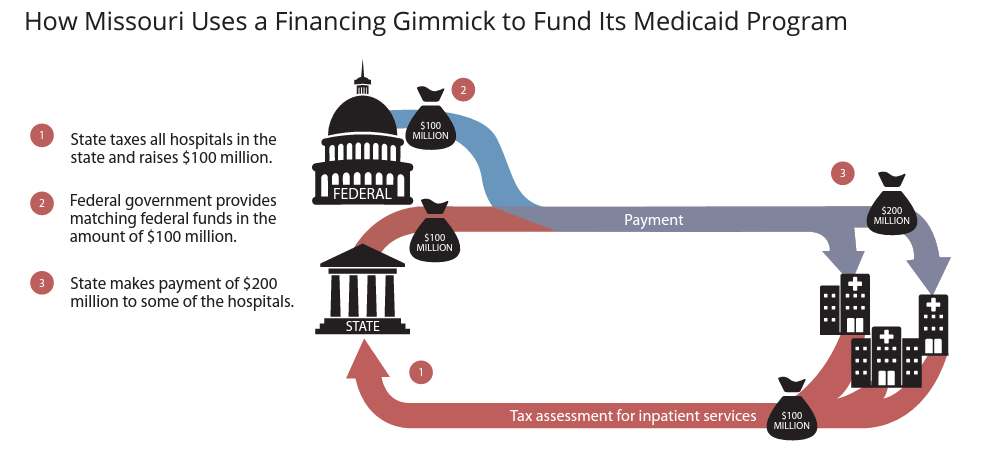
Missouri’s Medicaid program is out of control, and state lawmakers don’t seem to care. Enrollment in the state’s program keeps setting new record highs every month, with more than 1.5 million Missourians now enrolled. But new estimates suggest that more than 20% of enrollees shouldn’t be on Medicaid at all, as they no longer meet the program qualifications.

Over the past two months, many states across the country—but not Missouri—have started deflating their bloated Medicaid rolls. (Reminder: enrollment got to be this high because prior to April of this year, the federal government barred states from checking eligibility or removing anyone from the program since March of 2020, as part of the response to COVID-19.)

Unfortunately, the Centers for Medicare and Medicaid Services reports that Missouri is waiting until July before removing any ineligible enrollees. If true, Missouri stands in stark contrast to states such as Florida or Arizona that started checking their Medicaid enrollees’ eligibility as soon as the federal prohibition was lifted. Recent articles suggest that Florida has already identified upwards of 250,000 ineligible enrollees, which translates to significant savings for taxpayers.

In theory, removing ineligible recipients from government-sponsored health coverage shouldn’t be a controversial topic. Prior to COVID-19, states were required by federal law to check whether their Medicaid enrollees were still eligible for the program at least once every year but could check as frequently as every six months.

Regular redeterminations (eligibility checks) are important because people’s circumstances change frequently, and they may not always go out of their way to inform the government of any changes. In Missouri, like many other states, the government pays health plans monthly to provide health coverage to Medicaid recipients, regardless of whether they receive any services. Given how expensive health coverage is, this means that there are likely billions of tax dollars being spent improperly on the program every single month.

With hundreds of thousands of eligibility checks needed, the potential for significant reductions in wasteful government spending is why states are rushing to clean their Medicaid rolls. It’s also why I suggested Missouri consider hiring outside help for processing redeterminations, given how difficult an administrative task it would be.

Though it’s just another thing to add to the list of this year’s legislative failures, it’s telling that our elected officials couldn’t even get out ahead of something as long choreographed as the resumption of Medicaid eligibility checks. If spending is all about priorities, it’s clear Missouri’s elected officials don’t consider reducing government waste to be one of them.

Cooling Inflation, Unwinding Medicaid, and Breaking Water Mains

Aaron Hedlund, David Stokes and Elias Tsapelas join Zach Lawhorn to discuss the most recent report on inflation in the U.S., the daunting task of updating Missouri’s Medicaid enrollment data, and the intriguing idea of privatizing the water utility in the City of St. Louis following a string of over a dozen water main breaks over the weekend.

Listen on Apple Podcasts 

Listen on Stitcher 

Listen on SoundCloud

Produced by Show-Me Opportunity

Missouri’s Teachers Union Makes School Choice Stance?

Recently, a Hazelwood preschool teacher had her teacher’s license suspended due to her abrupt resignation, (on September 2nd a month into the school year) which would have left a classroom teacherless. Quitting without sufficient notice often violates the contract teachers sign with a district, and teachers in Missouri are facing increasingly severe punishments for contract violations. What was most interesting in this case was the defense of the teacher by Mark Jones of Missouri National Education Association (MNEA). Jones said:

This [policy] does not incentivize (teachers) to try and find a new school or situation that is a better fit for them when they can basically lose their livelihood because months after signing a contract, they realize maybe they need to make a different decision to work in a different setting.

That point sounds vaguely familiar.

Jones is arguing that teachers should be able to break their teaching contract in order to find a school “that is a better fit for them.” Show-Me Institute analysts have been arguing for years that students should be able to find a school “that is a better fit for them” via school choice programs.

I understand the union’s goal is to protect teachers’ rights, but this is an interesting stance to take. In Jones’s view, teachers—grown adults who have made a contractual agreement to teach students for a school year—should be allowed to break their contract and leave their school and students in a lurch. Meanwhile, the MNEA thinks that students who want better educational opportunities should be forced to stay in the schools they are assigned to for up to 12 years.

Teachers should seek to find the best situation for them. Teachers who are not satisfied with their job will not be as effective. However, the Hazelwood teacher had obligations to meet, children to teach, and a contract to fulfill. Breaching your contract and leaving your students and school in the lurch is not an appropriate response to being unhappy with the school.

Teachers are adults who can apply to teach at any school they choose. The vast majority of Missouri children are forced to attend their neighborhood public school with no alternative choices at all. Groups like the MNEA that want as much flexibility as possible for teachers but oppose any flexibility at all for students ought to reflect on the incoherence of that position.

Missouri Charter School Students Win

Missouri’s two flagship cities—St. Louis and Kansas City—face myriad challenges, such as declining population in St. Louis and high rates of poverty and crime in both cities. The public school system in each city has struggled to educate students who often bring many challenges with them to the classroom. One bright spot has been the dozens of charter schools that have opened in the last twenty years. More than half of the students in Kansas City have left Kansas City Public Schools (KCPS) for charters, and many of those charters have become some of the highest-performing schools in the state. Similarly, nearly 40 percent of St. Louis students have chosen charters over St. Louis Public Schools (SLPS).

It seems those families have made the right choice. The highest-quality research on the academic impact of charter schools consistently comes from the Stanford Center for Research on Education, also known as CREDO. Because charter schools are independently run, they often cater to unique populations of students, which makes them difficult to compare to traditional public schools. Further, some argue that charter schools “skim the cream”—only taking the best students— giving them an unfair advantage. CREDO overcomes this by creating a “virtual twin” for each charter school student. This twin is a student (or combination of students) with identical traits and prior year test scores who attended the same traditional public school that the charter school student would have attended. CREDO’s most recent study matched 1.9 million charter school students with 6.5 million traditional public school students.

Then, to make the studies user friendly, the complex results are translated into days of learning. Imagine a 4th grader performing at exactly the state average on the state’s math or reading test. Then imagine that same student doing that again in 5th grade. That student would then have exactly average academic growth in one year, or 180 days of growth, based on the typical school year.

CREDO’s most recent report found that Missouri charter school students gained 39 more days of growth in reading and 56 more days of growth in math than their matched twins in KCPS and SLPS. Those results are staggering. Students in charter schools gained one quarter to one third of a year of learning more than their traditional public school peers.

So, should Missouri open more charter schools? Or should districts sign moratoriums to prevent expansion? Should families in Springfield or Columbia be able to access these schools that have an incentive to perform? Or should they remain stuck in their declining public schools? Critics continue to say that charter schools are an unproven fad. The CREDO research should cause them to think twice about that claim.

Missouri Becomes an Education Island

A version of this commentary appeared in the Columbia Missourian.

How would your family feel if your entire neighborhood had 5G internet access and you were still using dial-up? I’m guessing the kids might complain. After all, 5G is simply better, and sticking with an obsolete system seems like a stubborn refusal to change. That’s the situation Missouri families with school-aged children face. Just about all our neighbors wrapped up their legislative sessions by finally giving up address-based school assignments and letting parents choose where to send their children to school. We’re the last one in the neighborhood sticking with the outdated system.

  • Early in their session, Iowa Governor Kim Reynolds signed the Students First Act, which will allow families to receive up to $7,600 per year to use toward private-school tuition. The law is phased in, but by 2025, every family in the state will be able to use the program.
  • Heading west, Nebraska’s Governor Jim Pillen signed the Opportunity Scholarships Act. Although similar to Missouri’s Empowerment Scholarships program, this bill commits twice as much money and the scholarships are available to children statewide, not just in the largest cities as in Missouri.
  • Over in Kansas, a robust public school choice bill passed last year will go into effect in fall 2024. No longer will Kansas school districts be able to opt out of accepting transfer students from other districts. Previously, each district set their own policies regarding whether or not to accept students. As of this fall, Kansas families can apply to transfer to a school of their choice.
  • Oklahoma took an innovative approach to school choice in its session. All families in the state can now take a dollar-for-dollar credit against their state tax bill for up to $7,500 in private-school tuition. Homeschoolers can receive up to $1,000 off their state tax bill. And the tax credit is refundable, meaning that the state will pay families back if the tax credit is more than they owed in state taxes.
  • Arkansas passed one of the most significant education reform acts this year. The Arkansas LEARNS Act, signed by Governor Sanders, gives families the option of having 90 percent of their state education funding deposited into an Education Freedom Account for private-school tuition and other education expenses. By 2025–26, all Arkansas families will be able to participate.

So, there you have it. School choice is not just happening in the far-flung states of Florida, West Virginia, and Arizona.  It is literally all around us. Our neighbors have figured out what Missouri hasn’t. School assignment by address is antiquated, it isn’t what families want, and it doesn’t work.

Imagine a school district as an ice cream shop that can only stock one flavor. They’re required to do their best to satisfy every student, so if most families want vanilla, vanilla it is. If some kids show up wanting pistachio, those can be tossed in. A couple of kids want chocolate? Add a chocolate ribbon. But now some kids want bubble gum in their ice cream. Does it really make sense to insist on offering a single flavor that turns out to be vanilla-pistachio-chocolate-bubble gum? No one wants that. There is no single, secret flavor that’s everyone’s favorite.

What our neighbors seem to understand is that it is better for the kids who need pistachio ice cream to get the very best pistachio out there. Parents are in the best position to know. And they may have a pistachio kid and a bubble gum kid in the same family. Try to please everyone at once, and you end up satisfying no one.

Over half of the 50 states now have mandatory open enrollment programs that allow families to choose any public school in the state. The number of states that include private schools among the options offered is growing fast. Missouri has neither. We allow charters only as interventions in our worst performing districts, rather than opportunities for districts to expand their portfolios. We have a scholarship program that addresses the needs of children in larger communities, but not rural children. Our legislature did not have the courage or determination to overcome their differences this year to bring even voluntary open enrollment to Missouri families.

Change can’t have been easy for policymakers in neighboring states, either. But they did it. Maybe it was out of a sense of fairness to children stuck in poor-performing schools, or maybe it was because they wanted their states to be attractive to growing companies and young families. It sure would be nice if such considerations would motivate lawmakers here.

Support Us

The work of the Show-Me Institute would not be possible without the generous support of people who are inspired by the vision of liberty and free enterprise. We hope you will join our efforts and become a Show-Me Institute sponsor.

Donate
Man on Horse Charging