Well, that Was Fast

Recently, the commissioner of the Missouri Department of Elementary and Secondary Education (DESE) announced that she would be departing her post next summer. For context, DESE is an organization with a $10 billion annual budget and 1,500 employees. It is currently facing the rough waters of declining test scores and declining enrollment, both of which began long before the global pandemic. However, since the pandemic, the crisis of chronic absenteeism and a looming “fiscal cliff” (due to expiring federal stimulus cash flows) have been added to the list of DESE’s challenges.

One would guess that the state board of education would spend the time between the commissioner’s retirement announcement and her June departure looking for a strong leader—ideally one with management skills honed in a similar-sized organization. This leader could bring a fresh perspective and take a hard look at what is going wrong and what is going right in Missouri public education. Perhaps this person would even question the board’s meaningless accreditation this week of all 523 school districts in the state, with the exception of six—even those with fewer than 1 in 10 students able to do grade-level reading or math. Finding this leader should entail a thorough search for and vetting of candidates.

Did the board do that? It did not. Without any public discussion that is readily available on the internet, it seemingly tapped a new commissioner with little to no search in behind-closed-doors meetings. The new commissioner is a former DESE assistant commissioner and a current state Senator. She served as superintendent of two rural districts in Missouri. Regardless of flaws in the search process, she deserves a chance to demonstrate if she can be the leader we need, or not.

The Missouri Board of Education had an opportunity to build public support for its commissioner choice. The board had an opportunity to signal that it would at least consider a potential change agent or someone from outside of the Missouri public education establishment. It could have avoided the questions regarding whether a sitting state Senator should vote on bills or budgets that impact her future role as leader of a department in the executive branch. Time, due diligence, and transparency could have worked in the board’s favor. Why were those elements ignored?

Looking at the Tape on the Clayton/Brentwood Football Merger

The Missouri high-school football playoffs have me feeling sentimental about the “good ole days” of Friday night lights. While we never could get over the state semi-final hump, the memories and lessons from my time on the team will last a lifetime. With the state football championships taking place this weekend, I pray for high-quality games, protection from injuries, and that the remaining teams will be proud of all they have accomplished this year. These playoffs have been filled with many ups and downs for students across the state, but for one particular team (which was recently eliminated), the path to the playoffs itself was remarkable.

This year with declining enrollment, Brentwood did not have enough participation to field a football team on their own, meaning that would-be players and their supporters would miss out on a beloved experience. When I saw Brentwood and Clayton were going to merge their football teams, I was excited that these students would be able to play this great sport.

Missouri is seeing population and enrollment declines, which can mean fewer sports teams, fewer elective classes, and other missed opportunities. What Brentwood and Clayton did is admirable. Clayton did not have to share its resources, and Brentwood could have just told everyone there would be no football team this year. However, these two districts came together with the interests of the students in mind, and hopefully more useful collaborations like this will take root in our state.

Building on this example, here are some ways districts can share with each other:

  • Sharing facilities and/or fields
  • Sharing individual classes
    • For example, a district with a physics department could offer spots for students who may not have that option in their home districts.
    • Even further, if two districts are tight on resources, one could agree to hire a chemistry teacher, while another could hire a physics teacher—pooling and sharing resources to create a stronger science program for the region.
  • Merging sports teams/clubs like Clayton and Brentwood
    • Sometimes a district’s constraints aren’t financial, but rather have to do with the actual number of students who want to participate in a team or activity.
    • If a district does not have enough participation in a football team, robotics team, band, debate club, etc.; forming a shared program can provide an opportunity for students to make new friends and do something they love in their formative years.
  • Sharing students through open enrollment
    • Perhaps a student wants to transfer to a smaller school to receive more one-on-one time with his teachers, or more playing time on the football field.
    • Or perhaps a student wants to learn from a state-renowned coach, or he or she is drawn to more bustling school environments.

A happier student body can build a stronger community. All students deserve the chance to thrive, and parents should have the choice to send their children to the school which will best serve their needs.

The Clayton-Brentwood football team is inspiring. The team made a solid run into the playoffs, winning two games before falling to Lutheran North in the third round. Two programs that were struggling in different ways put their reservations aside and came together for the betterment of their students. Clayton coach Doug Verby put it like this, “We joked that as long as the adults don’t mess it up, the kids will do just fine. That’s pretty much the way it’s gone. The players just want to play football.”

As adults, we must always remember that education policy should revolve around the betterment of our students. A Clayton student summed up his new experience nicely, “We didn’t know each other, and we’d never played together before. It took a while, but we’ve formed a brotherhood and we’re starting to play like a real football team.”

Policies like open enrollment, sharing classes/programs, or merging teams are needed—especially in a time where enrollment and participation is shrinking, and families want more opportunities. There may even be times when districts should merge and share a superintendent. Let Clayton and Brentwood’s football team serve as an example of what putting students first can do in a community.

Jackson County Taxpayers Have Had Enough

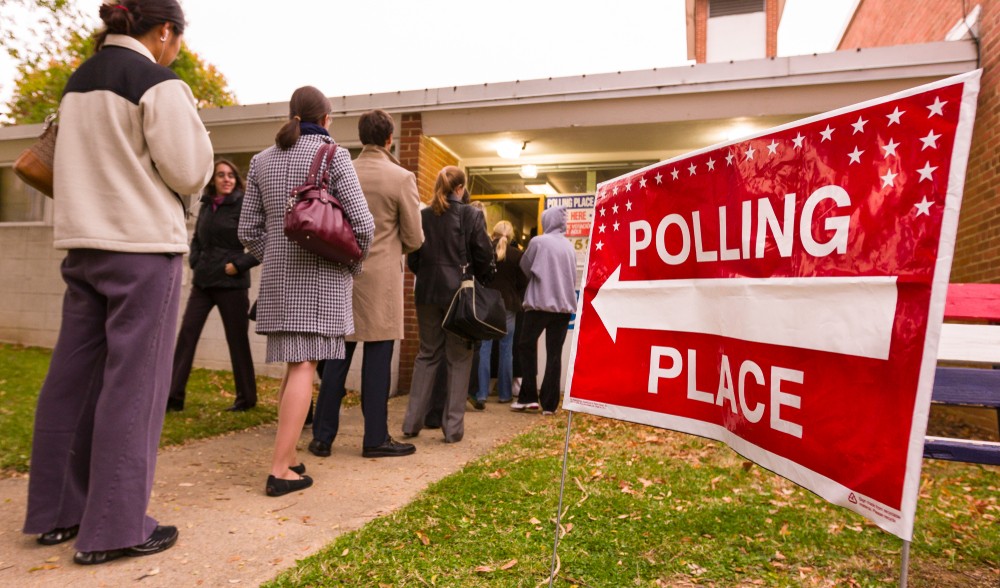
Jackson County residents voted on adopting a “use” tax last week. Use taxes are simply sales taxes on goods you have delivered to your house. I am not opposed to use taxes, but I have long argued they should be adopted—at least in part—to lower other, more economically harmful taxes instead of just being a way to raise more tax revenue.

Jackson County residents have been through the taxation wringer this year with reassessment. Once again, they were hammered with a poorly managed process, high assessment increases, and insufficient tax rollbacks to offset it. I would guess many voters had just received their property tax bills before they voted on this use tax proposal.

Did those bills have any effect? They almost certainly did, as the use tax was defeated in Jackson County. It actually passed in the Kansas City portion, but the eastern suburbs overwhelmingly voted against it and it failed.

So this means that neither of the two largest counties in Missouri (Jackson and St. Louis) have a use tax. While most of the cities within those two counties do have use taxes, if you live in the unincorporated areas of those counties the sales tax you pay on goods delivered to your home should be just the state rate of 4.225%. (I would bet some stores or delivery companies are incorrectly charging more. Check your receipts.)

The next time Jackson County asks for a use tax, which they should not do for a while out of respect for the voter’s decision, they might have better luck if they promise an offsetting tax cut at the same time.

Cry, the Beloved Unincorporated Area

An interesting vote took place last week in St. Louis County. A large unincorporated area in the southwest part of the county had a vote on whether or not they wished to be annexed by the city of Manchester. The overall question was fairly straightforward. Did the residents of the area want to receive local public services from Manchester instead of St. Louis County, and, if so, were they willing to pay the slightly higher taxes for it?

The answer by the residents of the area was a resounding “no.” The proposal was overwhelmingly defeated in the area to be annexed, and considering they had over fifty percent voter turnout (incredible for an off-year election day like this), the desire to remain unincorporated has been made abundantly clear.

Living in an unincorporated area is an overlooked aspect of suburban life. Obviously, in rural areas many people live outside of cities, towns, or villages. But in the suburbs, I think we assume people live within municipalities, albeit sometimes very small ones. However, particularly in St. Louis County, many people live in unincorporated areas and enjoy, generally speaking, the lower taxes that can come with it. In rural counties, the unincorporated areas often genuinely have less government involvement in residents’ lives, (e.g., no zoning, less licensing, and reduced code requirements). St. Louis County has zoning and codes for its unincorporated areas, but at least the licensing requirements are indeed less (e.g., no general businesses license is required).

St. Louis County has by far the largest unincorporated population of any county, around 300,000. I would wager a lot of money that it is the only county with an unincorporated population of more than 100,000 people. By comparison, the other truly large Missouri county, Jackson, has a small unincorporated population of just around 25,000 or so. Jackson County is the most heavily incorporated county in the state, with 97% of the residents living in municipalities such as Kansas City.

Some people just want to live with one less unit of government over their lives. I can understand that. Clearly, the people of the unincorporated area around Manchester understand it, too.

Desperate Measures for Desperate Times

In the spring 2022 assessments, just 13.4 percent of the students in St. Louis’s traditional public schools scored on grade level in math, and 20 percent did so in reading. The average St. Louis Public Schools (SLPS) ACT scores have fallen from 16.3 in 2019 to just 15.7 in 2022. Enrollment is dropping and chronic absenteeism is on the rise. The district is failing its high school students.

There is some good news, though, for high school students in St. Louis. Believe STL Academy, a charter school, is set to open next fall. Believe STL is modeled after the Believe Circle City (BCC) high school in Indianapolis. BCC works with “historically underestimated youth” and helps them become successful adults. BCC has achieved dramatic results, such as having 30 percent of its students pass a college-level Advanced Placement exam, spurring dramatic growth in the SAT scores of its students, and having extremely high (92 percent) average daily attendance.

Sadly, SLPS is suing to prevent this school from opening. The case rests on an administrative matter—SLPS claims it wasn’t informed that the school would be opening. The charter school’s application was approved by both the Missouri Public Charter School Commission and the state board of education. Yet, the SLPS Board wants to derail it. The board president said, “There are too many schools in St. Louis right now.”

The number of schools, filled or nearly empty, has nothing to do with the quality of those schools when students are assigned to them. When students get to choose, it does. Only those schools that can attract and keep students will stay open. Blocking charter schools, especially those with proven track records, is akin to trapping children on a sinking ship. Shouldn’t we instead be building a system of schools that best serves as many students as possible?

Some States Making Large Reading Gains Post-Pandemic

The hit game Wordle is something I look forward to doing every day. While the prestigious and crowning achievement of completing it on my first guess still eludes me, I have learned how much the game is rooted in the science of reading. The English language is comprised of 44 word sounds (phonemes), and understanding how sounds and words are connected (phonics) can help you minimize your guesses. For example (no, I am not spoiling today’s puzzle), if the fourth letter of a five-letter word is “p,” this can help you eliminate some letters for the last spot without having to guess—such as “w,” “m,” and “j.”

In a few states around the nation—particularly South Carolina, Tennessee, and Mississippi—dedication to the science of reading (explicit phonics instruction) has done more than solve Wordle puzzles. It has helped English/language arts (ELA) scores in these states surge past their pre-pandemic levels.

If you’re wondering if other states are experiencing a similar surge in scores, the answer is no. Researchers at Brown University have examined scores from nearly 30 states (data are not available for all states yet) and only Iowa, Mississippi, South Carolina, and Tennessee have exceeded pre-pandemic performances in reading.

With Missouri’s ELA scores continuing to decline post-pandemic (29% of Missouri 3rd graders had a below basic understanding of ELA), I believe that our new science of reading program, LETRS, will help our students, and I am happy that DESE is using it. However, I also think there is reason and opportunity to further commit to the science of reading.

For background, Missouri’s new LETRS program provides optional training opportunities for teachers in “evidence-based reading” and requires comprehensive reading examinations for K-3 students. Any student who is diagnosed or at risk for dyslexia must be provided evidence-based reading instruction. While this in itself is a good program, there is a key lesson from South Carolina, Tennessee, and Mississippi that we could adopt: Fully commit to the science of reading—for all students.

As I have discussed in previous posts, commitment to explicit phonics instruction could be key to making Missouri a leader in reading. Phonics instruction has a proven track record in independent research, in other states, and even in our own backyard. Back in 2019, the Greenville School District in South Carolina, with 77,000 students (largest in the state), failed to meet state literacy standards. Due to this, teachers in the district had to receive two years of training in the “science of reading” and use a new curriculum rooted in explicit phonics instruction. However, this “punishment” actually turned into a blessing: district scores on the SC READY state assessment have risen past pre-pandemic levels.

All three of these states have committed to the science of reading being the core of literacy instruction, while Missouri appears to emphasize it only after a struggling student is identified. When breaking out the scores by demographics, the data show that the science of reading was useful to all groups. While data were not available for Mississippi, ELA scores for every ethnic group improved at a near-equivalent rate in Tennessee and South Carolina.

In Tennessee, school districts with poverty levels between 0–10 percent and 15–25 percent saw the largest gains. In Mississippi, districts with poverty levels between 10–15 percent and more than 25 percent saw the largest gains. In South Carolina, districts with poverty levels between 15–25 percent saw the most improvement. These numbers demonstrate that students of all different backgrounds benefit from the science of reading, and it should not be compartmentalized into one particular group.

These states understand that our institutions of higher education are not adequately instructing our teachers how to teach reading. Mississippi requires that all prospective elementary school teachers pass a test in the foundations of reading (which largely includes phonics). Tennessee requires that all K-5 teachers complete at least one approved foundational literacy skills course. South Carolina requires classroom teachers to use evidence-based reading instruction that includes phonics. These states have also tied the science of reading to their third-grade retention strategy, which may be valuable for Missouri to evaluate. Missouri should strengthen LETRS by creating a requirement for all elementary teachers to participate in the program, and further commit by targeting science of reading instruction to all students, not just the ones struggling.


Why Family-friendly Metros Matter with Robert VerBruggen

Susan Pendergrass speaks with Robert VerBruggen about his latest report Making Metros Family-Friendly: Rankings and Suggestions.

Read the full report here: bit.ly/3QoHgcQ

Listen on Apple Podcasts 

Listen on SoundCloud

Robert VerBruggen is a fellow at the Manhattan Institute where he provides policy research, writes for City Journal, and contributes to special projects and initiatives in the President’s office. Having held roles as Deputy Managing Editor of National Review, Managing Editor of The American Conservative, Editor at RealClearPolicy, and Assistant Book Editor at The Washington Times, VerBruggen writes on a wide array of issues including economic policy, public finance, health care, education, family policy, cancel culture, and public safety. VerBruggen was a Phillips Foundation Journalism Fellow in 2009 and a 2005 winner of the Chicago Headline Club Peter Lisagor Award. He holds a B.A. in journalism and political science from Northwestern University.

Produced by Show-Me Opportunity

A Thin Veneer of Protectionism

Across the country, people are starting to realize that occupational licensing has gone too far. Slowly but surely, we are recognizing that far too often, government has been making decisions about who can do what in areas where customers and employers should be the ones making that choice.

Occupational licensing increases costs to consumers and people entering the workforce, favors politically influential groups, and serves, in most cases, as a protectionist measure designed to benefit incumbent practitioners of the licensed occupation at the expense of future practitioners and the public. Show-Me Institute analysts have long written about the harms of occupational licensing in Missouri.

While we may finally be moving in the proper direction of less licensing, there remains a bureaucratic minefield of licensing apparatchiks who have to justify their positions on the public payroll. They do so by filing absurd cases like this one involving dentistry in Bridgeton. (For the record, one study found that dentists’ incomes and dental prices were 12 to 15 percent higher in states with more restrictive dental licensing rules.)

In Bridgeton, we have someone replacing rubber bands on braces—which many people simply do themselves. My son does it with his braces every day. You don’t need a dentist to replace a rubber band any more than you need an orthopedic surgeon to autograph an arm cast.

The second part of the case is, I admit, more complex. This person being sued has also apparently been applying cosmetic veneers to teeth.  They are, as the link describes, entirely cosmetic procedures. Why can’t this person apply veneer to a willing customer? Provided that her customers are fully informed that she is not a dentist, I see no problem with any of this. The article gives zero indication that anyone has been harmed. It simply appears that someone—possibly a dentist with nothing better to do—came across the ads and filed a complaint.

There could also be a middle ground here. Perhaps a basic license similar to those required for nail salon technicians could be required for cosmetic veneer sales instead of a full dentist license. That is another thing about occupational licensing: even in cases where it may be beneficial, the government goes way beyond what it needs to do in order to get the other aspects (usually protectionism), into the mix. Taxi cab licensing is a perfect example of this.

This lawsuit seems to me to be another overreach of licensing boards in Missouri. I hope the lawsuit gets tossed, but I also hope this goes the way of hair braiding laws and the legislature fixes the licensing rules here.

Support Us

The work of the Show-Me Institute would not be possible without the generous support of people who are inspired by the vision of liberty and free enterprise. We hope you will join our efforts and become a Show-Me Institute sponsor.

Donate
Man on Horse Charging