Maybe the Adults Need a Math Test

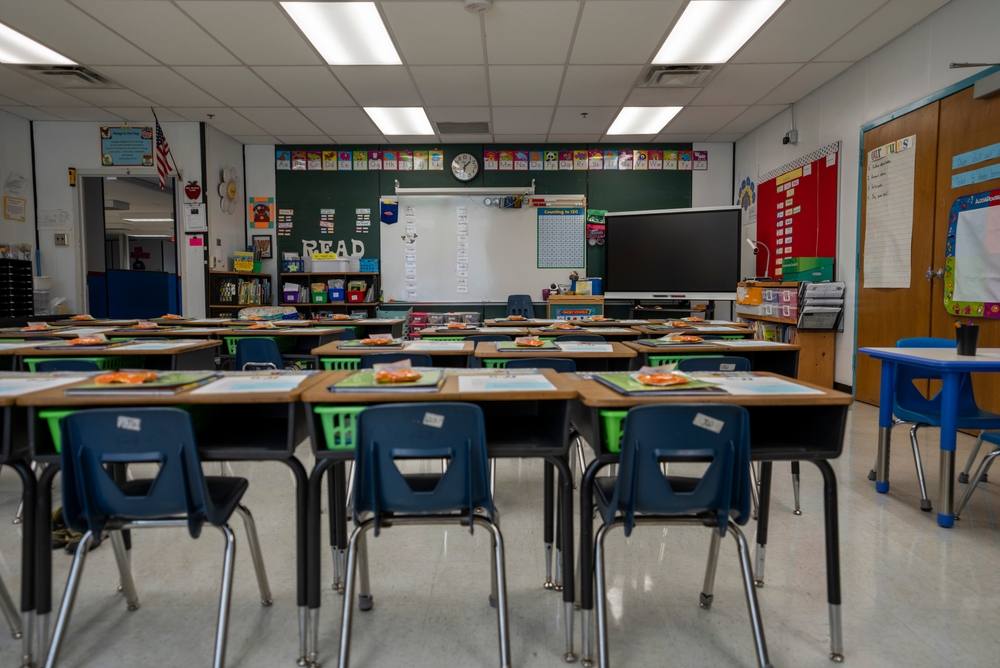
The media is finally catching on to a trend I’ve discussed often here. The number of elementary and secondary students is declining and has been declining since well before the pandemic. Meanwhile, the number of elementary and secondary teachers only grows. This trend is alive and well in Missouri, as seen in the graph below:

Missouri Elementary and Secondary Enrollment and Teachers: 2014–15 through 2021–22

Source: U.S. Department of Education, National Center for Education Statistics (NCES), Common Core of Data, Nonfiscal Survey, multiple years, nces.ed.gov/ccd

Missouri enrollment fell from 920,000 students in 2015 to 910,000 in 2019—before the pandemic. Even with the post-pandemic recovery, enrollment is still down over 30,000 students from six years ago. Interestingly, we now have over 3,000 more teachers to serve the smaller student body.

According to Dr. Marguerite Roza of Georgetown University, there have been three waves contributing to the growing teaching staff. The first was the post-recession hiring back of laid off teachers. Then there were seven boom years of growth in education funding (though not in enrollment). Finally, there has been the enormous influx of pandemic stimulus funds from the federal government.

Stimulus money is drying up, though. So, what happens next? The Department of Elementary and Secondary Education (DESE) has just submitted a budget request that has a $300 million increase. In a logic-defying move, DESE claims that fewer students means we need a higher dollar amount per student in the foundation formula. Why? Because hiring when enrollment goes down because you’ve got the money doesn’t mean you can simply fire excess teachers when the funds dry up. Public education employment contracts don’t work that way. The system needs total funding to stay the same or increase, regardless of enrollment trends. Here’s hoping the state legislature looks at the math before agreeing to this request for no accountability.

The Future of Public Transit in St. Louis with Randal O’Toole

Susan Pendergrass speaks with Randal O’ Toole about his new report “Is St. Louis Transit Built for the 2020s or the 1910s?”

Listen on Apple Podcasts 

Listen on SoundCloud

Randal O’Toole is a Research Fellow at the Independent Institute and Director of the American Dream Coalition, and Senior Economist at the Thoreau Institute. He has been Visiting Scholar at the College of Natural Resources at the University of California at Berkeley, McCluskey Conservation Fellow at the Yale School of Forestry and Environmental Studies, and Merrill Visiting Professor of Political Science at Utah State University.

Produced by Show-Me Opportunity

St. Louis City Proposes Adding Additional Rules to Short-Term Rental Bill

This past June, my colleague David Stokes and I testified before the City of St. Louis Transportation and Commerce Committee regarding Board Bills 33 and 34, which would create regulations for short-term rental (STR) in the city. You can read our past testimony here.

Based on complaints (and a few horror stories), residents and officials alike have been pushing for some sort of reform in the “wild west” of STRs. I thought the original bills created a satisfactory regulatory compromise between those who enjoy the benefits of STRs and those who are subjected to the negative effects of this industry.

However, members of the Transportation and Commerce Committee are now seeking to attach additional rules that would make STR regulation even stricter. There are three key new proposed rules that would turn this proposal into an overly burdensome set of regulations.

  1. No STR in the City of St. Louis can allow customers to stay fewer than two nights.

The concern is people renting an STR for one night in order to throw a “rager” (I apologize for my former fraternity brother lingo). This “two-night minimum rule” is meant to curb this practice, but it still wouldn’t prevent partiers from simply renting an STR for two nights. This rule would also have negative effects for others. To illustrate one example, let’s say a student is graduating from St. Louis University and his entire extended family wants to attend. The family would be barred from renting a house for Saturday night, cheering on their graduate Sunday morning, and then leaving that afternoon (a common practice).

  1. The STR agent must be able to be physically present at the address within one hour if required.

An STR agent is a person or organization who operates the STR. In the original bill, the agent only had to be contactable at all times. Now, that agent must be able to show up to the STR within an hour—failure to do so can result in revocation of the permit. This rule ties the hands of any potential STR operators. This would make owning and operating an STR in St. Louis City extremely burdensome, and also nearly impossible for anyone who is traveling outside the St. Louis area.

  1. An owner can only operate one STR per multi-family structure (such as an apartment complex).

This was proposed in order to prevent conglomerates from buying up a large number of units in apartment complexes and creating “ghost hotels,” where residents essentially have no neighbors due to many units being converted to STRs. While this argument has some validity, as community relationships are important, the original bill already included a four-property maximum for STR owners.

Lawmakers in St. Louis City should reconsider adding these new rules to the STR reform bills. The additional rules have moved this legislation from a reasonable regulatory compromise to a burden for visitors and owners.

Common Arguments for and Against the Four-Day School Week

The number of four-day school weeks (4dsw) in Missouri has risen considerably in the past few years: from 34 in the 2017–2018 school year to 152 in the 2022–2023 school year. Based on my own compilation of district calendars, there appears to be around 170 for the 2023–2024 school year—although those numbers are not final at this time.

While typically a 4dsw district is a small, rural district, that could be changing in Missouri. The Independence School District in Kansas City just began its first semester using a 4dsw this year. The district had over 13,000 students in 2021–2022, which is over 10,000 more students than the second-biggest 4dsw district, Warren County R-III. It will be interesting to see if more suburban and urban districts follow Independence’s example.

Along with James Shuls, I am currently working on a systematic literature review of the best evidence on the effects of the 4dsw. We’ll get into those findings at a later date. Here, I think it is important to discuss the most common arguments for and against the 4dsw. Specifically in this post, I will list the different arguments regarding how the 4dsw could impact academic achievement.

Pros: How This Could Bolster Academic Achievement

  • With a longer weekend, students can recharge more and be more attentive in class—leading to instruction hours being more productive.
  • Chronic absenteeism could decrease; as kids would have more built-in days to go on hunting trips, weekend getaways, or athletic events.
  • Fewer kids would be late to class for doctor’s appointments, driver’s tests, and other necessary errands as families could schedule it on the weekday that school is off.
  • Teachers would have more opportunities to improve their lesson plans and collaborate with their colleagues.
    • While there is ample time to discuss these things during school breaks, having built-in professional development days could lead to improvement for some teachers—generating higher academic achievement.
  • Teacher retention could increase. With a longer weekend and more days to prepare for class, teachers may have greater job satisfaction.
    • With greater job satisfaction, teachers could be more motivated and help boost students’
  • Potentially cutting costs from transportation, energy, or food services on the fifth day could allow districts to divert more funds to instructional costs.
  • Longer class times with a 4dsw means that teachers can more easily use different teaching methods like small-group discussions as opposed to mainly lectures—potentially leading to more active participation and academic growth.
  • Fewer substitute teachers are needed, as teachers can schedule appointments or recover from sickness on off days.

Cons: How This Could Decrease Academic Achievement

  • One fewer day per week means less structure and less time a student is thinking about school.
    • A longer weekend means less repetitions per week of material, which may make it harder for it to “stick.”
    • 50% of schools that use a 4dsw report being completely closed on the fifth day, while 30% offer some sort of remedial or enrichment activity on that day.
    • We all saw what happened to students’ scores when they were not routinely in-person at school.
  • It is harder to stay focused over the course of a longer day.
    • Many claim that attention spans have shortened in society. If a 4dsw involves longer school days, there may be more hours where students are not paying attention.
  • Many times, 4dsw have about 3-4 less hours in school per week—harming academic achievement.
  • A day is relatively more important in a 4dsw schedule than a 5dsw schedule.
  • Test schedules become more tightly packed together with one fewer day, along with more homework and longer days of school.
    • This can serve to increase stress on students.
  • Teacher retention could decrease. One fewer day of school, that is one fewer day to earn additional income from after- and before-school programs.
  • Studies show a 4dsw could be linked to increased, as older students can have an unsupervised dayoff, leading to students focusing less on school or not being in school at all.
  • Students with a tough home life may face struggles being home an extra day, increasing mental health issues.
    • For students with little at-home support, less time in school is more harmful to them than others.

Research should be able to give us a better idea the average effect of the 4dsw on student achievement. Whether the overall effects are positive or negative, it seems clear that the 4dsw will not impact all students in the same way. These issues are important to consider when evaluating the 4dsw, and James and I are excited to present our findings in the near future.

The Wide World of Charter Schools with Jamison White

In this episode, Susan Pendergrass speaks with Jamison White. 

Jamison White is the director of data and research for the National Alliance for Public Charter Schools. Before joining the National Alliance, Jamison worked as a data analyst and freelance consultant in Boston and the greater New York area.

Listen on Apple Podcasts 

Listen on SoundCloud

Produced by Show-Me Opportunity

MetroLink Expansions, Airbnb Rules, and $550K Limits

David Stokes, and Avery Frank join Zach Lawhorn to discuss Show-Me Institute’s latest report “Is St. Louis Transit Built for the 2020s or the 1910s?”, short-term rental regulations in St. Louis City, property tax freezes for seniors, and more.

Read the full study here.

Listen on Apple Podcasts 

Listen on SoundCloud


Produced by Show-Me Opportunity

Shopping by Phone?

Can a fifteen-minute call really save you 15% or more on your car insurance? I’m not sure, but it might significantly lower the cost of your next hospital bill.

It’s been a little more than two years since the federal government began requiring that hospitals disclose their prices in a consumer-friendly format. As of a few months ago, compliance was reportedly still incredibly low. The Centers for Medicare and Medicaid Services (CMS) and the American Hospital Association (AMA) claim that around 70% of hospitals were complying, which is much higher than the numbers we found in our investigation into Missouri’s hospitals.

A recent study in the Journal of the American Medical Association throws some cold water on the supposed success thus far for hospital price transparency. The problem isn’t simply that so many hospitals seem uninterested in complying with the federal rule, or at least complying in spirit. Even the hospitals that are “complying” don’t appear to be publishing their real prices. The report concludes:

Findings of this cross-sectional study suggest that there was poor correlation between hospitals’ self-posted online prices and prices they offered by telephone to secret shoppers. These results demonstrate hospitals’ continued problems in knowing and communicating their prices for specific services. The findings also highlight the continued challenges for uninsured patients and others who attempt to comparison shop for health care.

In other words, hospitals are quoting different prices if you call them than what they’re publishing online. This also means that the federal price transparency rule has not succeeded in making health care services easily shoppable—at least not if you’re only shopping online.

Price transparency is important because it allows patients to know the price of the treatment they’re receiving before getting the bill. Knowing the price can then empower patients to shop around and search for savings. Informed consumers (patients) and market forces can then apply downward pressure on the nation’s constantly rising health care costs. Or at least that’s the idea. Needless to say, for transparent prices to have the desired effects, the posted prices need to be accurate. If they’re not, how can patients, especially those uninsured, make the best financial decision for themselves with that information?

Going forward, it’s clear more needs to be done to ensure patients are armed with the information they need to make their health care decisions, and I’m hopeful Missouri policymakers will take action in 2024. But until they do, be sure to call ahead for your medical procedures just in case.

Tax Credit Trade-offs

It’s long past time to rethink Missouri’s approach to economic development. Year after year, our state forgoes hundreds of millions of dollars in tax incentives for private businesses, with little to show for it. Despite countless academic studies showing the folly of governments picking winners and losers in the marketplace, economic development tax credit reform has thus far proven elusive. Why is this the case? If I had to guess, I’d say it’s the lack of transparency regarding trade-offs.

When a new tax credit program is approved, it provides a real tax incentive for some favored business (e.g.. film, construction, manufacturing, agriculture, etc.), while also promising future benefits to the state. For those approving the credits (lawmakers), one perk is that the cost of doling out the incentive doesn’t have to be included in the state’s yearly spending plan (because they aren’t technically expenditures). Even better, since the promised return from the state’s investment is in the future, there’s no real way to measure whether the credits fulfill their end of the bargain. In other words, there’s basically no transparency on the cost or benefit side of the tax credit equation.

Are there good reasons why our government should treat spending tax dollars today as fundamentally different from agreeing not to collect them? Economically, they’re the same. For taxpayers, there’s little difference except that spending is subject to Missouri’s balanced budget requirement, which means that that our government can’t agree to spend more than will be brought in via tax revenues. Economic development tax credits have no such limitation.

While there may be some practical reasons for keeping tax credits out of the state’s budget, I can’t imagine that including them would be too difficult, because it’s already how a few agricultural tax credits are treated. Ultimately, it seems to me that when economic times are tough, it would be a good idea for lawmakers to have as many options as possible. Being able to weigh the benefits of subsidizing, for example, movie production via tax credit, against other spending priorities such as education and health care would be a positive move for our state.

Going into 2024, if lawmakers are serious about reining in the state’s out of control spending, shining a brighter light on where each state tax dollar is going (whether spent or foregone) would be a great place to start. Real transparency would mean that Missouri’s economic development tax credits can no longer hide their true trade-offs in the dark.

The Folly of MetroLink Expansion

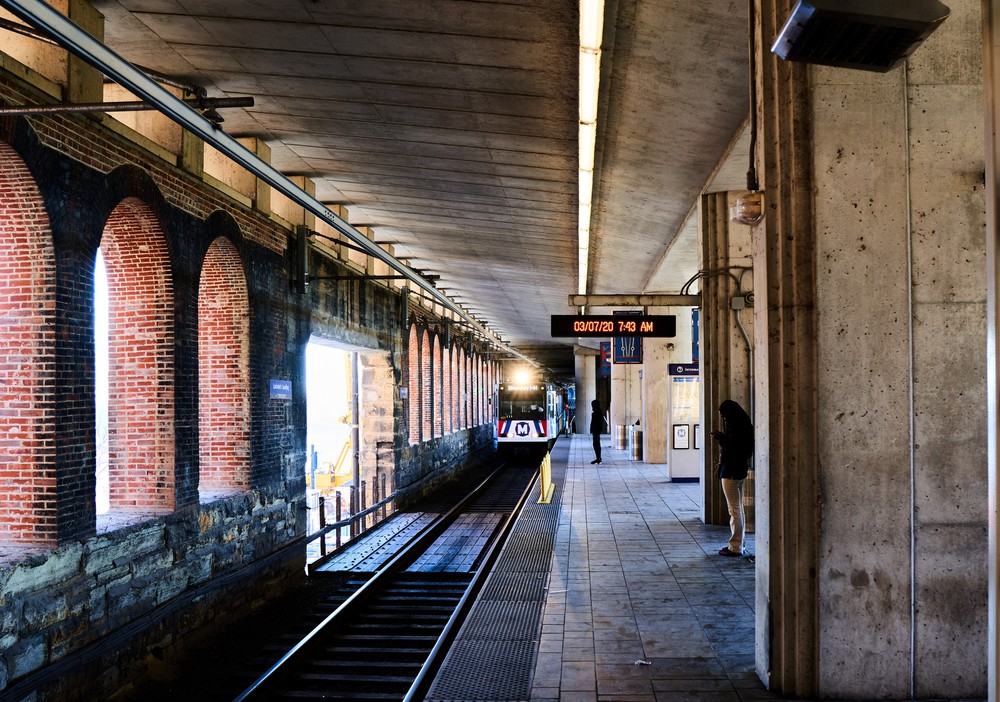
The Show-Me Institute is excited to release a new report by Randal O’Toole, one of the nation’s premier transportation economists. O’Toole’s report is titled, “Is St. Louis Transit Built for the 2020s or the 1910s?”

As Metro prepares to expand MetroLink again, we must ask one simple question. Why? Why are we expanding an expensive system that very few people use when Metro continues to cut its bus system over and over again? The bus system actually serves the people who need and use public transit, unlike MetroLink, which is primarily for those who use transit occasionally for sporting events downtown.

Did you know that the St. Louis area had more transit riders before we built MetroLink than we do now? We spent billions of dollars to build a light-rail system, and fewer people ride transit than before it even existed. What if we had spent a fraction of those billions on building a better bus system? A bus system that gets people who rely on public transit to school, work, the grocery store, and, yes, the ballpark, too.

It’s not too late to stop the latest MetroLink expansion mistake. I hope that O’Toole’s report can be a part of the discussion that convinces St. Louis’s political leadership to redirect our money for transit toward helping residents who depend on transit to go where they need to go every day instead of focusing on getting suburbanites to the soccer game a few times a year.

Support Us

The work of the Show-Me Institute would not be possible without the generous support of people who are inspired by the vision of liberty and free enterprise. We hope you will join our efforts and become a Show-Me Institute sponsor.

Donate
Man on Horse Charging