

From all of us at the Show-Me Institute, we wish you and yours a safe and happy Thanksgiving.
It’s Time to End Free Transit in Kansas City

We all know that you get what you pay for. When you pay nothing for something, you usually get something that isn’t worth very much. This applies to public transit just like everything else.
Several years ago, Kansas City decided to make its public transit free for all. After all, the purpose of local government is to just give things away for free, isn’t it? For several years, the pandemic-related free federal money train has allowed this “free transit” plan to continue, but that train is coming to a stop. Now, Kansas City leadership has some decisions to make. The transit authority has considered ending the “free” part of the ride before, and now it is time to do away with it once and for all.
Nobody is suggesting funding the entire transit system with fares. Subsidizing transit is an accepted part of urban economics, but that doesn’t mean you should make it free. “Subsidized” transit means you help low-income workers, encourage alternate transportation to large events, and help offset traffic problems. “Free” means you get homeless people sleeping on the bus and cuts to bus lines because you don’t have enough funding. “Free” results in fewer people using transit because the bad aspects of “free” are what matter most to people. Here is what happened in Tucson, Arizona when it moved to “free” transit several years ago:
“We have become a mobile refuge from the elements, frequented by drug users, the mentally ill and violent offenders that have made Sun Tran unsafe to ride,” the local Teamsters union warned in a letter to the city.
As one very sensible Kansas City bus rider put it at a transit meeting on November 13: “she doesn’t mind paying a fare as long as it’s affordable and bus lines don’t get cut.”
Fares are an important part of funding for a decent transit system. Perhaps more importantly, they also help keep the elements out of the system that make other people not want to use it. The Kansas City Area Transportation Authority should reinstate fares immediately.
What to Make of Big Tech’s Pivot to Nuclear

The American nuclear industry is making headlines seemingly every week, with developments in construction, innovation, legislation, and regulation. Recently, there have been a number of stories about large tech companies embracing nuclear energy. Consider these stories:
- “Microsoft deal would reopen Three Mile Island nuclear plant to power AI”
- “Amazon goes nuclear, to invest more than $500 million to develop small modular reactors”
- “Amazon and Google have plans for fueling their data centers: Nuclear power”
- “Oracle will use three small nuclear reactors to power new 1-gigawatt AI data center”
Why are some of the largest corporations, who are the biggest consumers of energy, trying to get nuclear plants up and running?
In my view, energy security—access to sufficient, affordable, and reliable energy—is the key motivator. These corporations likely foresee potential shortfalls in energy supply, particularly for sources that can meet demand at any time.
As these headlines show, corporations are even willing to go “behind-the-meter” in order to have access to clean, reliable, and consistent nuclear power. Behind-the-meter refers to the practice of purchasing power directly from a plant, bypassing tradition utility infrastructure. For Missouri, these national trends again highlight the need to seriously consider nuclear power as a solution to building a reliable grid for the future.
What Big Tech is Saying about Energy
A strong and reliable electric grid is vital. Demand for electricity is growing because of data centers, artificial intelligence, electrical manufacturing, and electric vehicles. More than ever, citizens rely on energy to power their daily lives.
Michael Terrell, senior director for energy and climate at Google, said this:
We feel like nuclear can play an important role in helping to meet our demand, and helping meet our demand cleanly, in a way that’s more around the clock.
When major corporations, whose profits depend on uninterrupted power, express concern about future electricity demand, it is worth paying attention.
A Warning Sign for Missouri
Missouri is not doomed, but if you see a bear running away from something in the woods, it is wise to at least consider why it is running. Big Tech’s movement toward nuclear may be a similar warning signal.
Missouri needs to be prepared for an immense energy transition. Amending the Construction Works in Progress (CWIP) law is one way forward. This would open the door for nuclear construction by allowing utilities to gradually recover costs during construction as opposed to all at once afterwards. Investing in more nuclear power is an investment in a strong, reliable power source that we will need as energy demands continue to increase.
Does the Hancock Amendment Mean Anything to Town and Country?

Town and Country, a suburb of St. Louis with a slightly pretentious name, is making a mockery of the Hancock Amendment. The city has imposed a 23-cent property tax increase (from zero to 23 cents), and is doing so without a vote of the people.
Is this legal? Perhaps.
Is this wrong? Absolutely.
The Hancock Amendment clearly states that new taxes and tax increases have to be approved by voters. Here is Section 22(A) of the state constitution (emphasis added throughout):
Section 22. (a) Counties and other political subdivisions are hereby prohibited from levying any tax, license or fees, not authorized by law, charter or self-enforcing provisions of the constitution when this section is adopted or from increasing the current levy of an existing tax, license or fees, above that current levy authorized by law or charter when this section is adopted without the approval of the required majority of the qualified voters of that county or other political subdivision voting thereon.
However, there are a few exceptions. The one the city seems to be relying on here is in RSMO 137.073.5, which states that a city that has previously voluntarily lowered its property tax rate below the legal ceiling may raise it up to that ceiling without a vote of the people.
However, the state auditor’s annual report on property taxes (page 4) explains how this works:
Sections 137.073.5(3) and 137.073.5(4), RSMo, provide that a voluntary reduction taken in a non-reassessment year (even numbered year) results in a reduced tax rate ceiling during the following reassessment year (odd numbered year). These provisions also allow taxing authorities that voluntarily reduce a tax rate in a previous even numbered year to reverse the impact of the voluntary reduction to reinstate a higher tax rate ceiling in the following even numbered year. To increase the tax rate in the following even numbered year, the taxing authority must conduct a public hearing, and adopt an ordinance, a resolution, or a policy statement justifying its action before setting and certifying its tax rate.
That explanation makes clear that the laws above are intended for reductions and increases that occur in subsequent years. The idea that Town and Country could reduce its property tax rate to zero and then increase it 27 years later without a vote of the people is, frankly, absurd. It’s a total violation of the spirit of the Hancock Amendment.
While this may not be a violation of the law, it is appalling. The residents of Town and Country have every right to be angry that they are being denied their right to vote by the city. Furthermore, if it is legal (and I am hoping someone challenges it in court) this loophole needs to be addressed by the state legislature. A city or county should not be able to set a tax rate for 27 years at zero and then just raise it because two generations ago voters approved a higher rate the city just hasn’t used.
This sort of chicanery is an example of local government at its worst.
Does St. Louis Need a City Manager?

A version of this commentary appeared in the St. Louis Business Journal.
Back in 2022, in response to the seemingly endless parade of scandals and mismanagement coming from City Hall downtown and the county offices in Clayton, several city managers in the area circulated an op-ed arguing that both the City of St. Louis city and St. Louis County should adopt a city/county manager system of government. Are they correct? Would the City of St. Louis benefit from professional, nonpartisan city management? (We will save the county discussion for later.)
As part of my new paper on municipal government in Missouri, just released by the Show-Me Institute, I reviewed the research and evidence on the use of city managers in local government. It is certainly an idea worth considering. Four of the five largest cities in Missouri use a city manager system, as do nearly all the larger suburbs in St. Louis County (if you count the closely related city administrator form).
The authors advocating for adoption of professional management argued that the change would, among other things, reduce corruption and improve the quality of public services. Based on the research I reviewed, the first point is likely; the second is possible but by no means certain.
Overall, the academic evidence suggests that adopting a city manager would reduce corruption, improve financial reporting, lead to more broadly focused legislation (and fewer narrowly targeted measures), reduce political conflict, and increase innovative policy thinking (in ways good and bad). St. Louis may not reap all of these benefits, but it should get some of them, especially reduced corruption.
On the other hand, there is not enough evidence to state that professional management would significantly affect taxes and spending, city employee pay levels, or the quality of city services.
The last claim by proponents of a city manager is key. Would the adoption of a city manager improve the quality of basic governmental services? (For example, would the potholes get filled faster under a city manager?) The presumption of better service quality with professional management is common, and it may be correct. But the evidence is not as clear as its supporters would suggest. Professional management might well perform better than management by elected officials. But as one academic stated, “For decades, analysts have presumed this performance gap exists, but they have yet to empirically demonstrate that any differences actually exist.”
Discussing change in St. Louis without considering the crime problem would be an enormous omission. The prevailing assumption is that police are more insulated from public pressure (for better or worse) in cities with a city manager. But even assuming that this presumption is true, does it lead to higher or lower crime rates? Another economist researched that question and found that there was no evidence that the presence (or absence) of professional management has any effect on municipal crime rates.
Professional city management may be what St. Louis needs, and it deserves careful consideration, but it is unlikely to provide dramatic or easy solutions to the city’s many problems.
Make Missouri Education Great

President-Elect Trump has repeatedly stated his desire to close the U.S. Department of Education and return education back to the states. To many on the right, this has been a longstanding goal. Yet here in Missouri, there is a slight problem with this strategy. Moving money and authority from Washington, D.C. to Jefferson City means placing more authority in the hands of the commissioner of education, the Department of Elementary and Secondary Education, and the state board of education, all of which have terrible track records.
There is hope. Several members of Missouri’s state board of education are serving on expired terms. Missouri’s governor-elect has an opportunity to reshape the state board of education. By appointing new members who are committed to bold, innovative policies, the governor can break the cycle of dysfunction that has plagued the board and department. (Does anyone recall the disaster called Common Core or the Top 10 by 2020 initiative?) These appointments can bring a renewed focus on empowering families, fostering school choice, and improving student outcomes across the state.
Missouri has long struggled with underperforming schools and bureaucratic inefficiency. A revamped board with a clear vision and a commitment to reform could transform the educational landscape. For instance, new appointees could push for greater autonomy for local school districts, promote policies that expand educational options for families, and ensure that resources are directed where they are most needed—toward helping students succeed.
If President-Elect Trump follows through on his pledge to return education to the states, Missouri must be ready to rise to the occasion. This begins with a strong, forward-thinking state board of education. It is time to seize this moment of opportunity, embrace meaningful reform, and truly make Missouri education great.
The ball is in the governor-elect’s court. Missouri’s future—and the future of its children—depends on what happens next.
The governor-elect is currently looking for qualified individuals to serve on the state board of education. If you are interested in serving, notify the governor-elect of your interest by completing the form here.
Homeschooling Trends in Missouri with Collin Hitt

Susan Pendergrass speaks with Dr. Collin Hitt, Executive Director of the SLU PRiME Center and co-author of the paper “Taking Attendance: Estimating Homeschooling Populations in States Without Official Homeschool Data—A Pilot Analysis in Missouri”.
Produced by Show-Me Opportunity
Missouri’s (Hopefully Successful) DMV Makeover
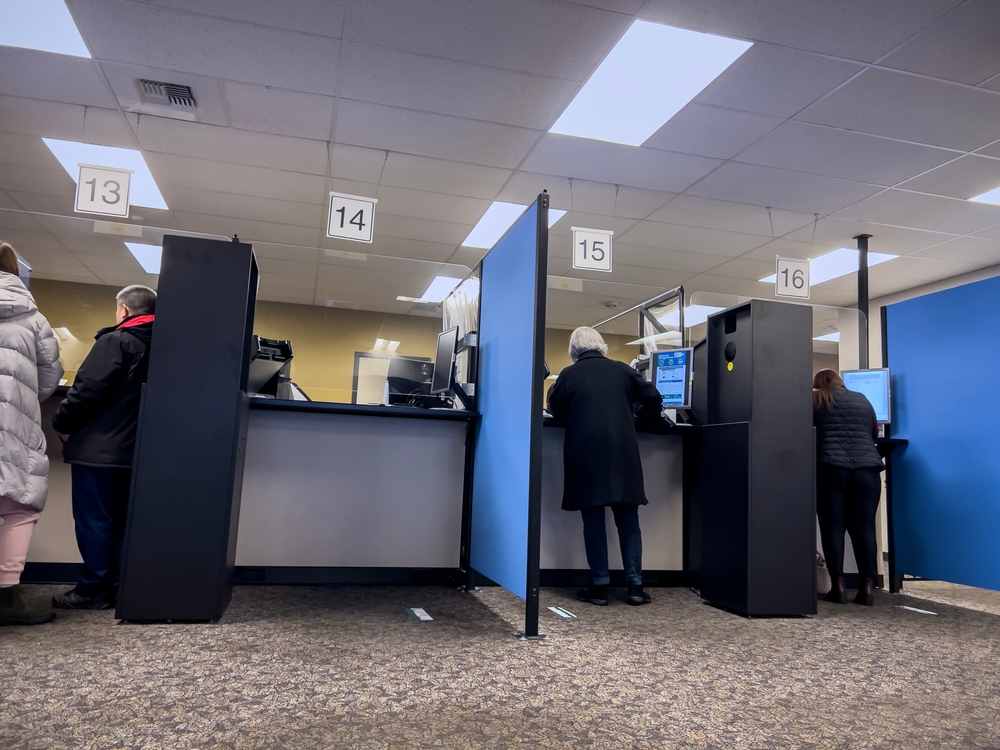
When I hear the term driver’s license, I either think of Olivia Rodrigo’s breakout song or the prospect of waiting in line for a near century, only to realize I forgot one of the many required documents. Either way, tears are flowing. But there is hope for improvement. Missouri is attempting to transform those tearful DMV visits into a smoother experience, as in mid-November the first phase of a new, “modernized” system was rolled out.
There are a few key features in this first phase:
- Adults 21–49 will be able to renew their licenses online every other renewal period.
- If you lose your driver’s license, you can go online and get a new one every other time.
- No need for new drivers to bring a physical copy of a Missouri State Highway Patrol driver test to the DMV.
- New computers, scanners, and customer tablets will be added.
- 175 new workstations at 275 license offices will help reduce wait times.
- 10% of administrative fees will continue to fund technology upgrades until a “modernized, integrated system for vehicle titling and registration, liens on vehicles (dealing with loaned vehicles), driver’s licenses, and identification cards” is established.
The second phase, which is slated for July 2026, will focus on reform in the taxing and titling process. After these two phases, only one percent of administrative fees will be remitted to maintain the new system. This funding mechanism has similarities to a user fee, which is a good approach to funding services. However, it is not a true user fee, as it is possible to buy a vehicle without directly benefiting from the new DMV services.
In the first days of the system, there were long delays with an influx of customers and workers getting acquainted with the new system. This is not a great sign, and we should continue to monitor the situation to see if wait times improve.
As of now, the price tag for this new system is $63 million, but the entire system upgrade (both phase 1 and phase 2) as a whole could cost more than $100 million. In Nevada, similar upgrades were slated to cost around $125 million, but may balloon to potentially over $400 million. Hopefully, prices will not skyrocket and the new system will provide an efficient system for Missourians. In the meantime, Missourians should keep an eye on this process to ensure that our government makes wise use of our tax dollars and keeps a tight rein on the project to avoid wasteful spending.
Let’s Grow Missouri, Literally

We often talk about growing Missouri in abstract ways. We want to grow the economy, grow the tax base, grow the number of gigantic waterfalls. But I think we should try to grow Missouri in a more literal way by simply taking land and people from Illinois.
There is a part of Illinois that may actually be interested. On election day, voters in seven Illinois counties approved a referendum (non-binding, obviously) on seceding from Illinois and creating a new state without Chicago. This makes a total of 33 counties that have passed this Illinois Separation Referendum, as it is called. Twenty seven of these counties either border Missouri or can be connected to Missouri by other counties that have also passed the referendum. Five more counties could connect to Missouri if just two more counties pass it, too. (One county, Iroquois County in northeast Illinois, is going to have to look toward Indiana.)
While the referendum calls for leaving the current state of Illinois to create a new state, like the West Virginia model that I assume they are following, I think Missouri needs to get aggressive here. In the same way that President Trump could embrace destiny by acquiring Greenland, I think Governor-elect Kehoe should take that approach as well.
Territorial switches between states are rare, with Maine and West Virginia being the two most famous examples. North and South Carolina made a very minor land exchange as recently as 2017. The last time Missouri made a territory change was 1950, when Missouri and Kansas exchanged some land after flooding along the Missouri River border. The primary expansion of Missouri territory after statehood was the Platte Purchase, which added our six northwest counties to the state. However, that land was ceded from unorganized territory, not another state.
So, let’s get this done, Missouri! Let’s grow our state’s territory and population the old-fashioned way—by taking it from someone else! (Though we’ll do it peacefully, of course.)


