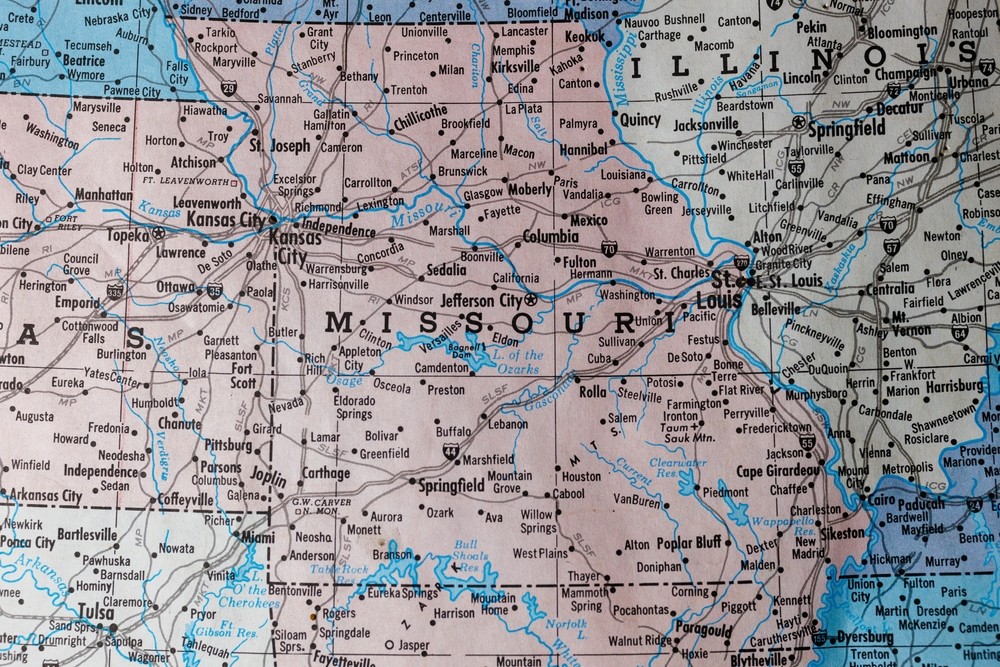
Details of the Negotiations Between the Royals and Clay County

Given that Jackson County voters rejected the proposed 40-year 3/8 cent sales tax that would have funded a downtown baseball stadium, the team may decide to re-enter negotiations with Clay County. According to  documents I’ve highlighted below, those negotiations were put “on hold” by the Royals on January 16, 2024.

Linked here are documents regarding those negotiations received through an open records request:

“No” Vote Wins on the KC Stadium Tax, and a $50 Billion State Budget

David Stokes, Elias Tsapelas, and Patrick Tuohey join Zach Lawhorn to discuss:

– The KC stadium tax “No” vote victory
– Other election day results from across Missouri
– The latest on the $50 billion state budget that passed out of the House, and more.

Listen on Apple Podcasts 

Listen on SoundCloud

Produced by Show-Me Opportunity

Creve Coeur Engages in Panic Subsidizing

When someone buys and wants to develop one of the most valuable parcels of land in one of the wealthiest areas of Missouri, how should the city—in this case, Creve Coeur—respond? Well, if you are the politicians in Creve Coeur, you bend over backward to throw subsidies at the developers.

The new city motto should be: “Tax subsidies in Creve Coeur, just there for the asking.”

Honestly, the idea that the old Monsanto and Bayer site at Olive and Lindbergh needs tax subsidies is beyond ludicrous. The fact that the local officials in Creve Coeur seem to be enthusiastically supporting this instead of laughing the proposal out of the council chambers shows—once again—how far we have fallen from the idea of a level playing field for everyone.

Let’s state a few facts. Keep in mind the proposed development has both residential and commercial components.

This particular area has comparatively low taxes as it is. The Ladue School District has the lowest commercial property tax rate in St. Louis County and one of the lowest residential tax rates (go to page 2 in the 2023 tax book in the link for the data).

The Ladue School District is also one of the top school districts in the state. People want to buy homes or condos or rent apartments there.

The property is not some abandoned, vacant lot. The current owners are paying property taxes now. The idea that Creve Coeur is desperate here—that if they don’t approve this subsidy request some financial disaster will occur—is absurd

Here is the most important part: there is absolutely no evidence that the use of local tax subsidies helps economic growth. None at all. The short-term incentives of part-time politicians looking to “do something” while in office cause a great deal of harm.

If a parcel at the corner of Olive and Lindbergh in Creve Coeur needs tax subsidies (hint—it doesn’t), then any and every spot in our state needs tax subsidies.

Creve Coeur government officials should focus on creating a reasonable zoning and permitting process, modest local regulations where necessary, and maintaining as low a property tax rate as possible. That is all the developer of this location needs or deserves. The fact that local officials appear to be racing to give away the store is equal parts stupid and infuriating.

Sometimes, Sanity Wins

On April 2, Jackson County voters rejected a proposed 40-year 3/8 cent sales tax that would have funded a new downtown baseball stadium for the Royals as well as renovations for the existing Chiefs stadium at the Truman Sports Complex. The vote wasn’t close, either. Almost three fifths (58%) of voters rejected the measure in a higher-than-usual turnout spring election.

What I found gratifying is that a great deal of voters, regardless of their own political views, seemed to understand that the economic impact claims made by the proponents of stadium subsidies were simply not true. Show-Me Institute analysts have been making this point since our founding.

Read Timothy Lee’s post from 18 years ago, Stadium Proposal Unfair to Taxpayers, and you will see the exact same arguments I made in 2024. The basics of good public policy do not change, they may just take a while to catch on.

Our Thoughts on SB 727

The large 167-page education bill, Senate Bill (SB) 727, has been making quick progress through the state legislature and is now in the Missouri House. There are a number of reforms in the proposal, including:

·         Education savings account (ESA) expansion

·         Charter school expansion

·         New voting procedures for moving to a four-day school week

·         Re-establishment of required minimum days of instruction in certain school districts

·         Aid bonus for districts that meet new minimum-day requirements

·         Reworking of how students are counted for the funding formula

·         Creation of a new evidence-based home reading program

·         Increase in teacher salaries

·         Ability to implement pay differentiation for teachers in certain hard-to-staff subjects

·         Creation of a scholarship program targeting hard-to-staff subject areas and schools


This bill proposes some needed reforms that will improve the educational landscape for our students, families, and teachers. Students and families would have greater access to the schools that best suit their needs.

However, there are still a number of changes that could make SB 727 stronger. Below are links and summaries to three detailed breakdowns of different policies contained in the bill.

The Missouri Senate Moves on Education Choice

Click here for the full article

  • Eligibility for the MO Scholars program is dramatically expanded with SB 727.
    • Eligibility for MO Scholars is expanded outside Missouri’s 10 largest communities.
    • The low-income restriction line has been raised from 200% of the free or reduced-price lunch boundary to 300% (a yearly income of roughly $166,000 for a family of four).
  • However, unlike the other states that have passed similar legislation, Missouri still would not provide any public funding for the scholarships under SB 727.
    • Funds still must be raised from scholarships through donations by individuals or corporations.
    • Missouri should provide public funding for the MO Scholars program
  • Charter school expansion to Columbia is a good start, and hopefully more cities will be eligible in later years.

Now Is Not the Time to Tinker

Click here for the full article

  • Missouri does not need to tinker around the margins of the current state foundation formula—we need to build a new one.
  • SB 727 changes how students are counted for the state aid formula, from all attendance to half attendance and half enrollment. The bill acknowledges the chronic absenteeism crisis, but waters down the incentive to fix it.
  • Even with the change, districts can still use the highest number of students from the past three .
  • Missouri cannot redeem this funding formula with tinkering—we need to go back to the drawing board and mimic a student-oriented system like the system in Tennessee.

How Will the Four-Day School Week Progress in Light of SB 727

Click here for the full article

  • SB 727 creates a new voting procedure for parents to have a say in switching to a four-day school week (4dsw), but this only applies to the largest Missouri communities.
    • Only around 100 of the 553 school districts and charters will be subject to this new voting process. Smaller communities are excluded—they should not be.
    • Without open enrollment or greater educational choice policies, there will still be numerous families trapped in a 4dsw district despite preferring a different schedule.
  • SB 727 re-establishes instructional day minimums in Missouri, but again, this only applies to the largest Missouri communities.
    • Large school districts will be required to have 169 instructional days if they operate on a five-day school week, and 142 days if they use a four-day school week.
    • Most districts and charters in the state—80 percent—are not subject to this requirement.
    • The threshold for this requirement is still rather low; most states require 180 instructional days.
  • An aid bonus is provided for districts that have 169 instructional days. This provision appears to be an attempt to diminish the use of a 4dsw. However, this would probably be unsuccessful.
  • A 1% aid bonus would equate to an average of $24,000 for districts that used a 4dsw in 2022–2023; a 2% bonus equals an average of $48,000.
    • This would be equivalent to around 0.6% of a 4dsw district’s total expenses, which is not a huge sum to incentivize a major schedule change.
  • If the goal of this provision is to diminish the use of the 4dsw, it will probably be ineffective. Could money instead be spent on another program, such as providing public funding for the ESA program?
  • For many small school districts in Missouri, it does not appear that SB 727 would create any significant incentive to reverse the trend of moving to a 4dsw.

The suggested changes outlined above could serve to make SB 727 stronger and improve the educational environment for students, parents, and teachers in Missouri.


Next Gen Connection with Show-Me Institute

Join the Show-Me Institute for ‘Next Gen Connection: Facts and Fair Arguments from a Free Market Perspective’ on April 9th from 5-6 PM at Cafe Napoli in Clayton, MO. Connect with Show-Me Institute experts and fellow free market enthusiasts while enjoying light hors d’oeuvres and a drink.

RSVP Here

Cost: Complimentary, but RSVP required.

Event Sponsored by: James G. Forsyth III, John Lamping, and Rex Sinquefield

Missouri Public Education in Four Graphs

I had a professor in college who was very good at getting his points across by waving his hands in the air, creating imaginary graphs. I found that, for me, it was very helpful to study current happenings by keeping the big underlying trends in my mind (or my fingertips).

Recently, the Reason Foundation released a report on K-12 resources and outcomes. Not to minimize the comprehensiveness of this report, but it aligns nicely with what my fingers would describe about public education in Missouri over the last fifteen years. So let’s take a look at data from the U.S. Department of Education and the Missouri Department of Elementary and Secondary Education (DESE) and see where we are.

Public school enrollment in Missouri is down.

Why? Nationally, birth rates have been going down since the Great Recession. In addition, Missouri has done little to make itself attractive to families with school-aged children. In several of our neighboring states families can pick any public or private school for their children. Meanwhile, more than 95% of Missouri families can still only choose between their assigned public school and virtual learning.

The number of teachers is up.

Why? This one is hard to figure out. There is little evidence that reducing classroom size improves achievement, but it continues to be a popular approach for Missouri districts.

Spending on public education is up.

Why? Spending on public education rarely goes down. Much of education spending is driven by the graph above and teacher contracts can be hard to terminate. In fact, due in part to the fact that district budgets are largely fixed, the DESE 2024 budget requests that the state raise the amount appropriated per student because enrollment is down.

Achievement has been declining.

Why? My speculation is that Missouri districts face no competition and are not held accountable. States like Florida with robust choice programs and letter grades for schools and districts have leapfrogged over Missouri in national rankings. Even as test scores decline, nearly every district in the state (514 out of 520) is considered “fully accredited” by DESE and the state Board of Education.

So, to recap—enrollment down, teachers up, spending way up, and achievement slowly tanking. Next year, Missouri will have a new governor and a new commissioner of education. Let’s keep this context in mind as we hold them accountable for changing the outcomes.

The Upcoming Senior Property Tax Freeze Vote in Boone County

A version of the following commentary appeared in The Columbia Missourian.

Several years ago, my colleagues and I were debating what the worst possible tax policy change could be. (I work at a think tank, so conversations like this are normal.) We settled on “exempting lottery winnings from income taxes.” While it may not be quite as bad, the ongoing proposals before Missouri counties to freeze the property taxes for senior citizens are similarly misguided attempts at tax reform. Boone County is the first county to put this question before voters, who will vote on Proposition One on April 2. Hopefully, Boone County voters will see through the sympathetic arguments for the plan and realize that this is very poor public policy.

Last year, state legislation authorized any county to freeze the real property taxes of the primary homes for senior citizens who qualify. Their property taxes will stay at the same amount they are when they become eligible for the plan, which for most people would be when they turn 62. The purpose of the proposal is to help senior citizens stay in their homes as they age, but there are several major problems with this idea.

This proposal is harmful simply because it reduces the property tax base. Unless local governments in Boone County cut services in response to the enactment of this tax freeze for seniors, it will almost certainly lead to higher tax rates on those property owners not eligible for the freeze. Proposition One will be every bit as much of a tax increase on non–senior citizens as it is tax relief for some senior citizens. People who live in homes of similar value with similar public services should pay similar property taxes. The recent college graduates in Columbia who have lived in their home for a year should not pay higher property taxes than their neighbor just because the neighbor has lived there for two decades.

Concerns over reducing the tax base are especially applicable in Boone County, with its substantial amount of university-owned property that is already off the tax rolls.

Passage of this proposal would also lead to the problematic situation in which people vote on property tax increases that they themselves do not pay. The single best aspect of property taxation is that it imposes the costs of local services on the people who use those services, unlike sales or hotel taxes that are exported in part to visitors, shoppers, and others. Instituting a system in which people vote on property taxes they won’t pay breaks that beneficial connection.

For a cautionary tale about the dangers of property tax subsidies, consider California’s famous Proposition 13, which was passed in 1978. Prop. 13 limited the increases in property assessments and taxes for homeowners. The measure has certainly had its intended effect of keeping property taxes low for longtime California homeowners. However, it has also reduced mobility, dramatically increased alternative taxes, limited homeownership opportunities, and caused substantial tax disparities between similar properties. This is not what Boone County needs.

According to data from the Federal Reserve, people ages 65 to 74 have the highest net worth of any age group. So why, if we were to pick any age group for tax exemption, would we pick the wealthiest among us? (People over 75 have less wealth than those 65–74 or 55–64, but they have a higher net worth than any age grouping under 55.) We shouldn’t be handing out property-tax exemptions to anyone, whether those exemptions take the form of corporate subsidies, developer abatements, or senior-citizen tax freezes.

Passage of Proposition One would certainly benefit some of Boone County’s senior citizens, but it would alter the county’s property tax and assessment system in a myriad of harmful and biased ways. Property taxes work best when the assessments are accurate, the base is wide, and the rates are low. Proposition One does not move Boone County in that direction.

Support Us

The work of the Show-Me Institute would not be possible without the generous support of people who are inspired by the vision of liberty and free enterprise. We hope you will join our efforts and become a Show-Me Institute sponsor.

Donate
Man on Horse Charging