Open Enrollment: Empowering Missouri Families

Missouri’s outdated school assignment rules make it very difficult for families to choose the best public school for their children. The Hirshey family’s story is just one example.

When Dawson was seven years old, he suffered a life-changing injury at a baseball game. His recovery required brain surgery and extensive care. Now, as he and his twin sister Delaney grow older, they want to attend a larger school with more opportunities and resources to support Dawson’s ongoing needs. But Missouri’s rigid school boundary laws make that choice nearly impossible—unless their family moves or breaks the law.

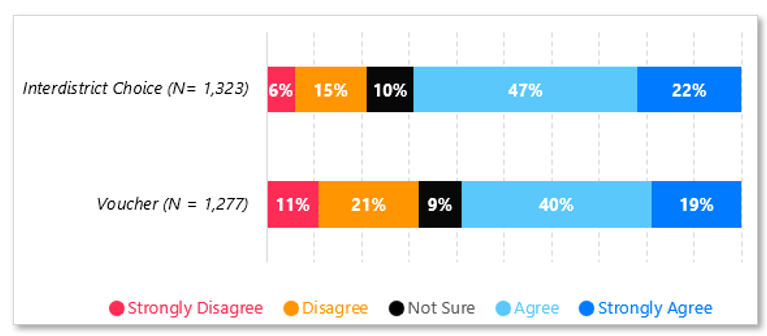
Missouri should adopt strong universal open enrollment polices. Open enrollment policies allow families to choose their public school either within their home school district (intradistrict choice) or in a different district (interdistrict choice). By allowing students to attend any public school with available space, Missouri can empower parents with choice and ensure that no family is punished for simply wanting the best for their child.

Learn more about strong open enrollment policies here.

Debunking Open Enrollment Myths

Susan Pendergrass, James Shuls, and Avery Frank debunk common myths about K-12 open enrollment policies, addressing concerns about their impact on rural schools, overcrowding, and financial stability.

Timestamps:
00:00 Understanding Open Enrollment in Missouri
09:51 Common Myths About Open Enrollment
19:59 The Impact of Open Enrollment on Academic Performance
30:07 Legislative Landscape and Future of Open Enrollment

Listen on Spotify

Listen on Apple Podcasts 

Listen on SoundCloud

Produced by Show-Me Opportunity

MOGE, Open Enrollment, Banning Phones, and COVID-era Water Bills

David Stokes, Elias Tsapelas, and Avery Frank join Zach Lawhorn to discuss: the Missouri Office of Government Efficiency (MOGE) and its impact on state governance, legislative approaches in the House and Senate, the role of outside experts in identifying inefficiencies, and the importance of accountability through timelines. They also cover educational policies like open enrollment, challenges with smartphone use in schools, COVID-era municipal water policies, source of income laws, and the ongoing debate over eliminating the state income tax.

Listen on Spotify

Listen on Apple Podcasts 

Listen on SoundCloud

Timestamps

00:00 Introduction to MOGE and Government Efficiency
02:16 Legislative Approaches to Government Efficiency
04:50 The Role of Outside Experts in Government Review
08:25 Timelines and Accountability in Government Initiatives
10:49 Historical Context of Government Efficiency Initiatives
11:39 Understanding Open Enrollment in Education
17:18 Challenges and Myths of Open Enrollment
19:55 Legislative Movements on Smartphone Policies in Schools
24:08 Water Shutoff Policies and Municipal Challenges
29:56 Source of Income Laws and Recent Legal Developments
33:15 The Debate on Eliminating State Income Tax
37:09 Exploring Property Tax as a Revenue Source

Download a Transcript of this Episode Here

Produced by Show-Me Opportunity

Some Good News for Kansas City and St. Louis

For years, many who sought to excel in a creative or professional field headed to the coasts. Cities like New York, San Francisco and Washington, D.C., were seen as the epicenters of opportunity, while Midwestern metropolitan areas like Kansas City and St. Louis struggled to retain their talent.

This may no longer be true. A new report from Heartland Forward, Heartland of Talent, highlights these cities as destinations for the creative class—individuals in knowledge, technology and artistic sectors. The findings are compelling:

  • Kansas City boasts a 45.4% concentration of creative-class jobs, ranking 19th among large metropolitan areas. Notably, it stands 7th in growth, with an increase of nearly five percentage points between 2019 and 2023.
  • St. Louis follows closely, with a 44.8% concentration, placing it 20th in the rankings.

Educational attainment further underscores this trend:

  • Kansas City has seen its share of college graduates rise to 40.8%, a 3.1 percentage point increase since 2019, surpassing the national average.
  • St. Louis experienced a 3.4 percentage point uptick, bringing its college graduate population to 39.1%.

I’ve been critical of proposals for attracting the “creative class” for years, especially when it requires certain types of economic development subsidies. While this report does refer to the value of amenities, something report author Richard Florida has done for years, it does so after crediting simple housing affordability.

It’s also important to note that references to Kansas City in this report encompass both the Missouri and Kansas portions of the metropolitan area. This distinction is crucial, as the economic vitality varies between the two. According to a 2020 report by the Show-Me Institute, the Kansas side of the Kansas City metropolitan area outperforms the Missouri side in several key metrics featured in the Heartland study, including population growth, job creation, GDP, income levels, and educational attainment. If evaluated independently, the Missouri portion would likely rank lower nationally across these indicators.

Certainly, there is much to recommend Missouri’s two largest metro areas over places such as Washington, D.C. Affordability and the resultant higher quality of life are what brought me to Kansas City 20 years ago. Being a more attractive place to live and work, however, should not lull us into a false sense of security. It does not change the fact that Missouri is not performing well comparted to other states—there is much work ahead.

HB 1044 and Expanding Charter Schools in Missouri

Senate Bill (SB) 727, passed into law last year, allows any state-approved sponsor to authorize a charter school in Boone County (the Columbia area). Prior to SB 727, only charter schools in Kansas City Public Schools and St. Louis City Public Schools were explicitly permitted to have any sponsor.

As of today, no local school board has ever sponsored a charter school in their district, despite having the ability to do so. Until that trend is broken, the creation of charter schools depends on securing sponsorship from other state-approved entities, such as:

  • 4-year universities;
  • Community colleges;
  • Private universities;
  • Technical schools; or
  • the Missouri Charter Public School Commission.

House Bill (HB) 1044 would expand charter access by allowing any state-approved sponsor to authorize a charter school in districts located within a charter county or in any municipality with greater than 30,000 inhabitants. This bill would be a major step toward increasing educational options, fostering competition, and driving innovation in Missouri.

Which School Districts Would HB 1044 Apply To?

Charter school expansion in this bill would be limited to school districts in or partly in St. Louis County, Kansas City, Jefferson County, Clay County, St. Charles County, St. Joseph, Springfield, Columbia, Joplin, Jefferson City, and Cape Girardeau. According to my analysis of the bill language, only around 60 school districts would be included.

It should be noted that if a district has been provisionally accredited (or unaccredited) for three consecutive years, any of the listed state-approved entities can sponsor a charter school in that district. Recently, the Missouri Charter Public School Commission created a charter school called the Leadership School in the provisionally accredited Normandy Schools Collaborative.

The Need to Create a Truly Choice-Rich Educational Marketplace

Expanding charter access is a good step, but it is only one part of building a stronger educational marketplace. Open enrollment is another necessary policy for our state, and it can actually amplify the potential benefits a charter school can bring.

For example, the Arizona Autism Charter Schools attract families from significant distances, with some parents commuting as far as 50 miles to access better services for their children. This opportunity exists partly due to Arizona’s open enrollment policies, which enable the charter to serve students across the entire region rather than just one district.

HB 1044 again moves Missouri in the right direction, but there should be no restrictions on where charter schools can operate. Of the 43 states with charter schools, Missouri is the only state without a rural charter. That needs to change, as educational entrepreneurs across the state should be able to go to the Missouri Charter Public School Commission if the local school district denies their application.

Missouri must build on last session’s momentum and create a stronger, more competitive, and more innovative educational landscape where every family can access high-quality options, no matter where they live.

Missouri Must Protect Taxpayers from Sports Subsidies

The White House X account recently issued a tweet listing “Eliminating special tax breaks for billionaire sports team owners” as one of the president’s tax priorities.

That one item is substantial. According to a paper in the December 2024 issue of the National Tax Journal, the total revenue loss to the federal government was $4.3 billion due to the 57 stadia built since 2000 that have benefitted from subsidies.

If that tax break is eliminated, team owners will demand that states make up the difference.

We know that these subsidies fail to generate a return on investment for taxpayers. They don’t drive economic development and their economic impacts are overstated. Maybe they make a metro area feel good about itself—but even then the benefits are too small to justify the costs.

Missouri has a lot on its plate right now with efforts to cut spending and income taxes so that Missouri is a more attractive place to live and work. More and greater handouts to billionaires should not be a priority.

Hanging Up on Smartphones in Missouri Public Schools

Smartphone use has become a national debate. As technology has advanced, cell phones have changed from devices for simple communication to portals to a digital world. One problem with this change is that students routinely venture into that world during school hours. A staggering 97% of 11–17-year olds report using their phones during the school day, with a median time of 43 minutes per day.

Numerous studies have investigated the potentially harmful effects of smartphones and social media. In fact, the U.S. Surgeon General has recently called for a warning label on social media for youth. While national leaders are considering action more broadly, numerous states are considering the issue, including Missouri. House Bill (HB) 408 proposes a statewide approach to the smartphone problem in schools.

What Would HB 408 Accomplish?

If passed, HB 408 would require every school district to adopt a written policy governing “electronic telecommunication” (primarily smartphone) use. At a minimum, each policy would need to:

  • Prohibit students from using, operating, possessing, or keeping on such student’s person a smartphone or connected device during regularly scheduled instructional activities.
  • Require students who bring a device to school grounds to turn it off and store it properly during instructional activities.
  • Establish guidelines for using smartphones during field trips, transportation, and other “noninstructional” school activities.
  • Provide exceptions for students with an individualized education program (IEP), a 504 Plan (for students with special accommodations), or those with individualized healthcare plans.

Why HB 408 Would Help

Teachers overwhelmingly report that smartphones are a major classroom disruption. A Pew Research Center study found that 72% of U.S. high school teachers say that smartphone distraction is a major problem. Additionally, 83% of National Education Association (NEA) members support prohibiting smartphone and personal devices during the entire school day.

Research reinforces these concerns, as studies have shown that receiving notifications (or even the potential of receiving them), can disrupt learning and lead to lower performance.

Bullying has routinely been connected to smartphone use, with devices being used for recording fights, cyber bullying, and spreading harmful content on social media. Missouri has seen a rising number of disciplinary incidents despite a smaller student population. In the 2012–2013 school year, there were 11,703 suspensions of 10 or more consecutive days—that number rose to 14,890 in 2022–2023.

In January, Normandy Schools Collaborative enacted a total smartphone ban on district property, citing that smartphone use has been a primary cause of bullying, staged fights, and sexual misconduct. However, the success of the policy will hinge on effective enforcement.

When asked about the total ban on school property, a director of security at the Normandy School Collaborative stated: “We tried a policy where you could have a cell phone, just not in class. The students did not adhere to the policies.”

It would be inaccurate to completely scapegoat smartphones for all the aforementioned issues in schools, but it would also be difficult to argue that they are not exacerbating the problem.

HB 408 is a policy that would potentially improve the academic and social environment for Missouri schools, but its success still hinges on how districts and parents enforce the policy. If passed, it will be fascinating to see which strategies (such as allowing cell phones but not smartphones) prove most effective.

Performance Districts and Education Spending

The State of Missouri provides almost half of the funding for public education in the Show-Me State. In its latest budget request (fiscal year 2026), the Department of Elementary and Secondary Education (DESE) has requested almost $10 billion. This year’s request includes an increase of nearly $300 million for the Foundation Formula, due to an increase in the base amount that the state considers “adequate” to educate a child, also known as the Student Adequacy Target (SAT). The SAT had been $6,375 for four years from FY 2020 through FY 2024. The FY 2025 budget requested increasing the amount to $7,145, phased in over two years.

Governor Kehoe’s first budget does not include the $300 million requested for the formula (although it does include $200 million in other additional funding). So, let’s break down the requested increase to see if the governor is refusing to “fully fund the formula,” as accused. Perhaps instead the requested increase is not reasonable.

Technically, the SAT reflects the current expenditures per student in Missouri’s highest-performing districts, referred to in the law as Performance Districts. The thinking is that what these districts spent should be adequate. But what does it take to be a Performance District? The way the law has been interpreted is that Performance Districts are those that receive at least 90 percent of their possible points on their Annual Performance Report (APR) under Missouri’s accountability system.

The accountability system, also known as MSIP 6, gives districts points based on a rubric of items considered important by DESE and the state board of education—although some are only loosely related to performance. The FY 2026 DESE budget request relies on 2022 APR points to calculate the SAT. In 2022, districts could earn up to 52 APR points for attendance, having 8th graders fill out an Individual Career and Academic Plan, administering a Kindergarten Entry Assessment to incoming kindergartners, submitting their required financial reports on time, conducting a Climate and Culture Survey, and submitting a Continuous Improvement Plan. All 29 of the Performance Districts received 52 out of 52 points for these categories.

But let’s take a closer look. Eight of the districts only serve students in kindergarten through 8th grade—they don’t have high schools. These districts had only 114 possible APR points, and 52 of them had nothing to do with student performance.

In two of the Performance Districts, Leopold R-III and Ste. Genevieve, fewer than half of the students tested scored Proficient or higher in English/language arts. In another Performance District, Mansfield R-IV, just 52 percent of high school graduates met any benchmark for being considered college or career ready when they graduated. In Brunswick R-II just 28.6 percent of graduates received an advanced credential prior to graduating, compared to 100 percent of graduates in Jefferson C-123. Are we sure these are the best 29 districts out of more than 500?

Here’s the problem: weak accountability systems don’t hold districts accountable. In the case of Missouri, that consequence bleeds over to funding. More than half of the Performance Districts are very small, with fewer than 300 students in the entire district. Spending tends to be higher in these districts because there are few economies of scale. That higher spending leads to hundreds of more dollars for all 850,000 students in the state when it leads to a budget request to add $300 million in state spending.

So before calling foul on the governor’s budget, let’s make sure that the DESE budget request actually makes sense.

The Chevron Debate Comes to Missouri

One of the biggest decisions at the U.S. Supreme Court last year was its decision in the Relentless vs. Department of Commerce case (and a related case) to overturn the Chevron doctrine.

I am not a lawyer, so I am going to keep this all very simple. As one legal blog explained it:

Under the Chevron doctrine, if Congress had not directly addressed the question at the center of a dispute, a court was required to uphold the agency’s interpretation of the statute as long as it was reasonable.

This obviously puts a great deal of power into the hands of regulatory agencies. All they had to do in interpreting federal rules for regulatory purposes was not be insanely crazy, and courts would be required to defer to the agency’s judgement. These were glorious days for regulators. Unlike, say, now.

If you believe, like I do, that regulatory powers have expanded too far, then overturning Chevron was a strong move for individual liberty and is something to be celebrated.

But it is a federal case. We have our own regulatory issues in Missouri. That is why legislation has been introduced to apply these same changes to Missouri laws. As the summary of Senate Bill (SB) 221 explains:

This act modifies the standard for review for a state agency’s interpretation of statutes, rules, regulations, and other subregulatory documents. Specifically, a court or administrative hearing officer shall interpret the meaning and effect of such statutes, rules, regulations, and documents de novo, rather than de novo upon motion by a party if the action only involves the agency’s application of the law to the facts and does not involve administrative discretion. Further, after applying customary tools of interpretation, the court or officer shall exercise any remaining doubt in favor of a reasonable interpretation that limits agency power and maximizes individual liberty. [emphasis mine]

Right now, a state agency is suing a woman in St. Louis for practicing dentistry without a license. The question is whether installing tooth jewelry should require a dental license (which is, obviously, not easy to get). If Missouri’s Chevron legislation passes, the regulators in this instance would have to act more strictly under the law as written by the legislature and rely less on various interpretations of that law by the Missouri Dental Board, which, believe it or not, may be a bit biased. If this case goes to court, the judges will no longer have to just assume the dental board is correct.

I don’t know whether the person in question is practicing dentistry or not. I do know that a Missouri where the courts don’t automatically assume the regulatory agency is always correct is a freer Missouri, and that is something I want.

Support Us

The work of the Show-Me Institute would not be possible without the generous support of people who are inspired by the vision of liberty and free enterprise. We hope you will join our efforts and become a Show-Me Institute sponsor.

Donate
Man on Horse Charging