Kansas City Hires Fox to Watch Henhouse

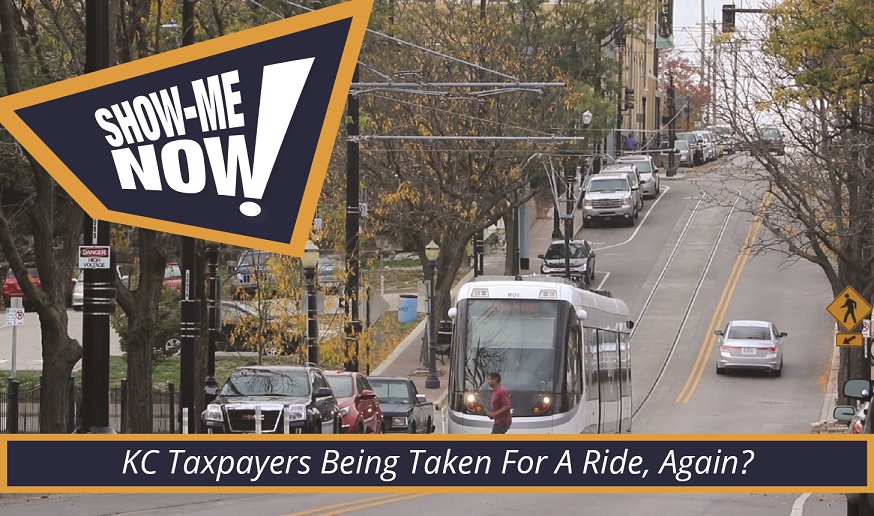
According to the Kansas City Business Journal, the City of Kansas City has approved contracting with the Council of Development Finance Agencies (CDFA) to "conduct a comprehensive analysis of the city's historic use of incentives and the resulting impacts." Their report may be used to assess the effectiveness of economic development subsidies, but what do we know about this organization?

First of all, CDFA is not an accounting or financial auditing firm. According to their website, they are:

a national association dedicated to the advancement of development finance concerns and interests. CDFA is comprised of the nation’s leading and most knowledgeable members of the development finance community representing hundreds of public, private and non-profit development entities.

Their mission is “to promote the common interest of Development Finance Agencies with respect to public policies and programs,” which isn’t exactly what you’d expect from an independent, disinterested organization.

In short, we’ve agreed to pay up to $350,000 to an association that represents development financiers and their “interests” to evaluate the effectiveness of our development financing. How likely is it that CDFA will be critical and impartial? This is a legitimate concern, because Mayor James has already stated that “City Hall doesn’t do a good enough job of promoting how economic development benefits the city.” Are we paying for analysis, or for cheerleading?

To assess their own economic development programs, the Saint Louis Development Corporation hired The PFM Group, an independent public financing advisory company. Of themselves, PFM writes,

Founded April 11, 1975 on the principles of expert, unbiased advice, the PFM Group of companies also provides investment advisory and management/budget consulting services to clients across the country and are recognized as industry leaders. 

For $180,000—roughly half of what Kansas City proposes to spend—PFM completed a substantive analysis of St. Louis economic programs and concluded that TIF and abatement are extremely costly and have little or no economic development impact. (We’ve reviewed their findings here.)

Other studies of economic development subsidies like TIF have been conducted by scholars at universities such as the University of North Carolina-Chapel Hill and Washburn University in Topeka. These studies, along with works published in the Journal of Urban Economics, and in Urban Studies have raised serious concerns regarding the impact of economic development subsidies.  Other regions have found substantial costs associated with little economic benefit, so Kansas City should take its self-evaluation seriously.

States like California, which ended TIF in 2012, and cities like St. Louis should be applauded for facing the reality of their economic development policies. Not so in Kansas City. If our leaders are serious about promoting good policy, they need to be willing to seek out independent, disinterested research and make the appropriate changes.

Subsidies in Saint Louis, Part 3: Where They’re Used

Supporters of economic development subsidies justify them on the basis that the subsidies will help boost economically depressed areas by increasing investment. The intention seems good; but in Saint Louis, incentives seem to be going to places where they aren’t needed, and they don’t seem to be going to the places that do need them.

A study commissioned by the Saint Louis Development Corporation (SLDC) looked at geographic distribution of incentive use in the city and found that roughly two-thirds of the total value of credits is concentrated in a handful of neighborhoods. This by itself may not be a problem—maybe those few areas are struggling disproportionately and need the help. But that’s not the case. To the contrary, the study showed that most incentives go toward neighborhoods that already have strong housing markets. In other words, well-off areas are receiving subsidies, while the economically depressed parts of St. Louis are ignored.

One potential cause of this inequitable distribution is the lack of rigor in the approval process for incentives. Tax increment financing (TIF) applications currently require land to be declared as “blighted,” or as “conservation” or “economic development” areas, but the legal definition of blight has become so watered-down that almost any piece of property can be declared blighted.

Additionally, the SLDC report found that some important requirements that other cities use when deciding to award tax abatement aren’t applied in Saint Louis:

As it relates to tax abatement, a significant number of the benchmarked cities require either (or both) a cost benefit analysis prior to award of the abatement and have job creation criteria as part of the decision to award. St. Louis does not require either for tax abatement. (p.3)

It seems that Saint Louis’s method of evaluating and approving tax incentives could stand some improvement, but the issues run deeper than the approval process. Part 4 of “Subsidies in Saint Louis” will discuss accountability measures regarding reporting and job creation.

“But for those willing to recognize the simple lessons of history, slow growth is not hard to diagnose or to cure.”

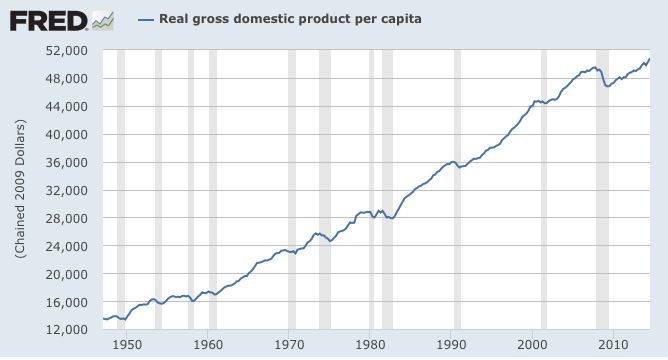
Earlier this week, the Wall Street Journal published an op-ed by John Cochrane, Senior Fellow at the Hoover Institution, that explored our current lackluster GDP growth. The conclusion is not that improvement is impossible, but rather that some deep restructuring is necessary to make it happen.

Cochrane’s growth-oriented policy program outlines the need for more efficient regulations and a simpler tax system that would encourage work instead of undermining it. He says the ideal tax system should be one that raises revenues without drastically distorting economic behaviors, and a pure tax on consumption is “close to that ideal.” The piece goes on to cover a myriad of policies where free-market reforms could boost growth and improve standards of living.

While I highly recommend reading the piece, the Show-Me Institute also had the pleasure of hosting the self-described “Grumpy Economist” last month at Saint Louis University, where he talked in more depth about how these reforms could affect Missouri and the nation. The full presentation is available online here

Amendment 3 Falls, Hard

With the unexpected result of the Presidential election and big-ticket statewide races, I don’t blame you if you missed the result of the Amendment 3 initiative petition.

We here at the Show-Me Institute were very interested in Amendment 3 because the issue was so complex and multifaceted. From the funding mechanism (cigarette taxes) to the policy it would support (early childhood education) there was more to the question than met the eye.

Now the people of Missouri have spoken, and by a 60% to 40% margin (as of this moment), they soundly rejected Amendment 3.

There is much parsing of this election to be done, but I do want to offer a couple of quick reactions:

  • Missouri does not like cigarette taxes. Not only did Amendment 3 fail, but so did Proposition A, a much smaller cigarette tax (by a 55% to 45% margin). These initiatives are just two in a long line of cigarette taxes that the state has voted down. At 17 cents, Missouri has one of the lowest cigarette taxes in the nation, and it appears we want to keep it that way.
  • Voters can read between the lines. At first glance, it looked like Amendment 3 would win in a walk. According to Ballotpedia, the first polling on this issue back in July had the issue winning 53% to 29%. As more and more information came out and voters became more informed about the issue, that support eroded and eventually became opposition.
  • Ideas matter.  Not all of the campaign finance numbers are in, but according to Ballotpedia numbers, the “Yes” campaign outspent the “No” campaign by a wide margin, $12.8 million to $5.7 million. But it was to no avail. In the end, the arguments matter more than the spending, and the proposal failed.

I don’t think we need to close the door on pre-K, though my colleague Emily Runge’s piece earlier this week has definitely caused me to temper enthusiasm for it (which I didn’t have a great deal of to begin with). We do need to think long and hard about how we structure it and pay for it.  As we argued in 20 for 2020, a voucher-based system that puts students and parents in charge is the best way to structure pre-K if we’re going to do it, and we should be skeptical of any plan that does otherwise.

Support Us

The work of the Show-Me Institute would not be possible without the generous support of people who are inspired by the vision of liberty and free enterprise. We hope you will join our efforts and become a Show-Me Institute sponsor.

Donate
Man on Horse Charging