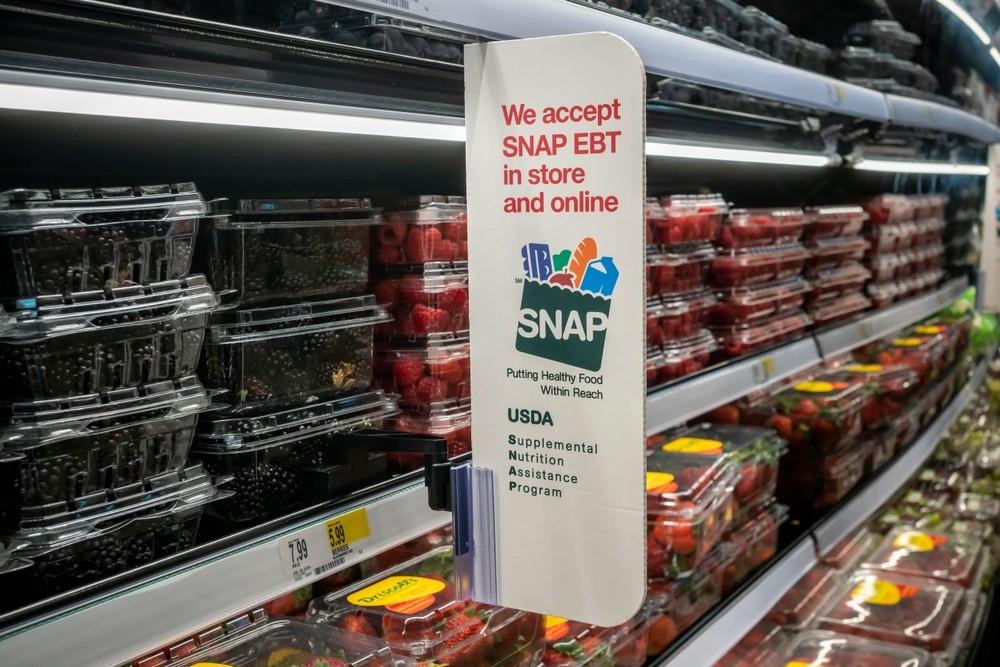
If you applied for a mortgage, you wouldn’t be surprised if the bank asked how much money you made or had in your bank account. You also wouldn’t be surprised if the bank asked you to prove what you said was true with a paystub or bank statement. Though it may sound surprising, Missouri has largely taken people at their word when they report similar information to receive benefits from the Supplemental Nutrition Assistance Program (SNAP).
Starting October 1, that will no longer be the case. The Missouri Department of Social Services (DSS), which administers SNAP, recently announced that applicants will need to provide documentation of certain expenses and financial resources when applying for or renewing benefits. Until now, recipients have generally been allowed to self-attest to shelter costs, dependent-care expenses, and countable resources such as money in a bank account.
These details are important because they can affect both whether someone is eligible and how much assistance they receive. SNAP benefits are based on a household’s financial circumstances, but expenses such as rent and childcare can be deducted from income when calculating benefits, while financial resources can affect whether someone is eligible for benefits at all. Reporting higher expenses or fewer available resources could therefore significantly affect the benefits a household receives. Under the new rules, Missourians will need to provide supporting documents such as bank statements or childcare receipts for these details.
Requiring basic documentation for information that directly affects someone’s benefits may seem like an obvious safeguard that Missouri would have had in place for years. Unfortunately, that hasn’t been the case. For a program serving more than 600,000 Missourians and distributing more than $1 billion in benefits each year, it should be obvious that getting the right amount of money to the right people is too important to simply take someone’s word for it.
For Missouri, getting those calculations right is quickly becoming more important. As I’ve written previously, the One Big Beautiful Bill Act (OBBB) will soon require states with payment error rates above 6% to pay a portion of SNAP benefit costs, which have historically been entirely federally funded.
According to the most recent data from the U.S. Department of Agriculture, Missouri’s payment error rate for 2025 was 8.67%. That doesn’t mean 8.67% of benefits were lost to waste or fraud, but it does mean that for every dollar of SNAP benefits issued, more than 8 cents were paid incorrectly relative to what recipients were eligible to receive.
Missouri has one more year to improve its error rate before the new cost-sharing requirements take effect. For the first year, states can use either their 2025 or 2026 error rate to determine their share. If Missouri’s current 8.67% rate were used, the state would be responsible for 10% of SNAP benefit costs, or an estimated $150 million per year. Reducing those errors will require more than asking for a few additional documents, but better verification is an obvious place to start.
It shouldn’t be controversial to ask someone to provide proof of information that determines how much taxpayer-funded assistance they can receive, especially when there are hundreds of millions of dollars on the line. The surprising part of Missouri’s new verification requirements isn’t that they begin next month. It’s that the state hasn’t been requiring this documentation all along.
expand the initiative and referendum petition process by making it a fundamental right;
allow courts to revise ballot summaries through lawsuits;
prohibit the legislature from weakening initiative or referendum powers;
prohibit the legislature from changing or repealing laws enacted through the initiative process, or passing laws similar to those rejected by referendum, without approval from at least 80% of both chambers; and
preserve existing majority vote and signature requirements for initiative and referendum petitions.
H.L. Mencken famously said: “Democracy is the theory that the common people know what they want and deserve to get it good and hard.” If you agree with Mencken, you probably like this proposal. Why wouldn’t Missouri want to move more toward government by direct democracy? Direct democracy is great; just ask Socrates.
More seriously, I think Amendment Six is a very bad idea. I have long opposed greater reliance on initiative petitions and constitutional amendments for state government. As I wrote back in 2008:
We are a republic, not a direct democracy. We elect people to make laws and decisions. If they are not doing a good job, then we should elect different people.
To give one recent example, the Missouri Legislature made significant changes to Proposition A, passed by voters in November 2025. That proposition raised the state minimum wage and instituted a complex system mandating sick leave for employees in Missouri. It was the type of decision that voters in Missouri had (and have) no business weighing in on. The legislature left in place the minimum wage provision but removed the sick leave policies instituted by voters. The approved petition contained pages of legal minutia which if implemented would have imposed tremendous burdens on small businesses and would likely have resulted in people losing their jobs rather than getting paid leave. I am confident that most voters were unaware of the operation of these provisions when they voted yes.
When Missouri legalized marijuana (which I generally support) by initiative petition, there were 38 pages of legal changes and descriptions. The petition made major changes to how sales taxes on marijuana would be charged and collected. That is a decision that elected officials should make, not voters.
If Amendment Six passes, the legislature—which is elected by the people, I remind you—would no longer realistically be able to address errors and bad policies passed via the initiative petition process. For many backers of Amendment Six who wish to replace a conservative legislature with progressive ideas, that is the point. But Amendment Six is a way to empower special interests over elected officials and the voters, and I think that is a very bad idea. (Trust me, I am well aware that special interests also have significant influence on elected officials.)
It has been said many times that direct democracy is two wolves and a sheep voting on dinner. Our system of government has many flaws, but it is still the best option for anyone interested in anything approaching limited government.
Everyone wants to help kids and senior citizens, right? Who could oppose a new sales tax in the City of St. Louis to fund early childhood education and daycare? And who could be against a new property tax in St. Louis County for services designed to help seniors stay in their homes? Well, I could. Politicizing charity and mandating it through law is dangerous. St. Louisans would be wise to think twice before going down this road.
Proposition B is a half-cent sales tax for early childhood services in the City of St. Louis on the November ballot. If passed, it would create a new board that would authorize childcare subsidies for families and direct funds to childcare providers, including schools and for-profit daycare businesses.
Proposition S is a five-cent property tax increase for senior services on the November ballot in the county. If approved by voters, it too would create a new board to oversee the distribution of funds to charities that serve older adults. Not surprisingly, invaluable local gadfly Tom Sullivan has documented how almost all of the political support for Prop S has come from well-funded charities that would benefit from it.
Charity should not be politicized, yet that is exactly what these proposals would do. Board members of various St. Louis-area charities that might receive funds would have something new to consider when they decide whom to support in various political races—one can’t risk backing the wrong horse and putting the charity’s funding in jeopardy. It’s machine politics at its most insidious.
Another concerning thing about both of these new taxes is that their funds would not be limited to lower-income people. Any family in the city, no matter how wealthy, would be eligible for childcare subsidies. While the allowed childcare subsidy for wealthy families would be low, it is preposterous that they would get anything. The same goes for senior services in the county. Seniors are the wealthiest group in our society. While some of the charities that would receive funds have income limits for their services, others do not, and there is nothing in the county’s plan that limits participation to low-income seniors. We would be raising taxes on working people and the young so that wealthy families in the city and well-off seniors in the county could receive taxpayer-funded subsidies.
The St. Louis County proposal would also lead to the problematic issue of people voting on property tax increases that they do not pay. The single best aspect of property taxation is that it imposes the costs of local services on the people who benefit from them. But because of the senior property tax freeze, many seniors who receive these new services will not pay the taxes. That is now how democracy is supposed to work.
Any future city or county funds would involve creating special taxing districts, and the last thing St. Louis needs is another obscure taxing entity with little accountability and even less oversight. For example, the children’s service fund in Lafayette County, near Kansas City, engaged in troubling fiscal practices for years. After a whistleblower brought this to light, the state auditor investigated and referred the fund to authorities for possible Medicaid fraud.
Will some people benefit if St. Louis voters pass these new taxes? Of course. But creating new, obscure taxing agencies, entangling philanthropy with politics, directing public money to the wealthy, and making charities dependent on government largesse will not improve life in St. Louis. Let’s allow these charities do what they were intended to do—help our neighbors—without the government getting involved.
The Washington, D.C.–based Archbridge Institute just released its rating of occupational licensing burdens in each of the 50 states and Washington, D.C., and Missouri came out looking very good.
That institute’s 2026 State Occupational Licensing Index tracks two things across over 200 different professions: whether or not a state requires licensing and, if it does, how onerous it is to get one. Missouri received a perfect score of 0.00, (ranking 51st of 51) meaning Missouri has fewer barriers than other states. This is a good thing.
Occupational licensing is something Show-Me Institute analysts have covered for a long time. My colleague Avery Frank described occupational licensing as “the government giving someone permission to work in a certain field. Obtaining a license typically involves satisfying an educational requirement and paying a fee.”
While often cast as public safety measures, Frank notes that a study conducted by the Mercatus Center at George Mason University found that in “only 16% of included studies did researchers observe positive relationships between licensing and product quality.”
What licensing does is raise prices, create barriers for entrepreneurs, and reduce innovation. Licensing is often overseen by professional organizations whose main aim is to make it more difficult for would-be competition to, well, compete.
In coming last—the lightest barrier in the country—Missouri just narrowly beat out Kansas, which earned the second-lowest (best) rating. The report credits this directly to Missouri’s 2018 universal recognition law, which lets a worker licensed in good standing in another state transfer that license here. A 2020 law greatly improved the effort.
There is always room for improvement, of course. Archbridge notes that Missouri still has about 120 licensing barriers on the books. And Frank has pointed out that even under the 2020 reform, waivers can take up to six months to award. Frank also notes that sunset provisions—requiring licenses to periodically justify their existence or expire—would help reveal other outdated requirements the way past scrutiny already did for licenses like hair braiding.
Nevertheless, a win is a win, and Missouri is doing well on occupational licensing.
Education policy of late has strongly emphasized equity. I do not believe policymakers have purposefully subordinated excellence in public schools, but too often that has been the result.
Emphasizing equity over excellence means that top-achieving students are not pushed as much as they should be. This is bad for them individually and bad for society, given how much we depend on top performers to drive economic growth and fund the government.
Worse still, new research by Farah Mallah shows that emphasizing equity at the expense of excellence can also be bad for equity.
Why? If public schools do not provide the opportunities that high-achieving students and their families want, some will go elsewhere—whether to another public school, another district, or a private school. If we believe low-achieving students benefit from attending school alongside more advanced peers, failing to provide advanced opportunities can have equity consequences too.
Mallah examines this issue using the introduction of Advanced Placement (AP) courses in Texas high schools. Rather than measuring integration by achievement, she measures it by income, which is strongly related to achievement. She shows that adding an AP course increases the share of high-income students in the school.
One concern is that adding advanced courses might attract high-income students while also separating them from low-income students within the school. Indeed, Mallah finds that this happens: adding an AP course increases sorting by income across classrooms. However, the increase in high-income enrollment schoolwide more than offsets the increased sorting, and on net the share of high-income classmates in low-income students’ classes increases by about 12 percent. Moreover, low-income students also take advantage of the new opportunities themselves: their AP enrollment increases by about 6 percentage points.
The broader lesson is that efforts to promote equity cannot ignore families’ choices. Failing to ensure that advanced opportunities are available in a school can change which families choose that school in the first place.
Equity and excellence are not competing goals. If we want more equitable schools, we cannot afford to neglect excellence.
Cape Girardeau County is the only first-class, non-charter county in Missouri without countywide planning and zoning. That fact, reported recently by Rick Fahr in the Southeast Missourian, is often cast as a deficiency waiting to be corrected. It shouldn’t be. It’s the result of voters being asked directly, more than once, and saying no both times.
Cape Girardeau County had a zoning framework once. Voters approved county planning in 1972, and officials spent the next two decades building it out: subdivision and mobile home park rules in 1975, a master plan for unincorporated areas in 1977, a setback ordinance in 1988. Then, in 1992, a proposed zoning ordinance failed at the ballot box, and its failure voided the planning structure built since 1972 along with it. When county leaders tried again in 2000, voters rejected it a second time, by 69%. Twice, nearly a decade apart, the county had this exact conversation and reached the same conclusion.
Missouri isn’t the only place this has happened, and the country’s best example of it working out fine is also its most extreme: Houston. Voters there rejected zoning in 1948, in 1962, and again in 1993, and Houston is now the fourth-largest city in the country. In his book Arbitrary Lines, planner M. Nolan Gray makes the case that most people, including many local officials, quietly assume zoning and land-use planning are the same thing. They aren’t. Houston handles the genuine conflicts—a slaughterhouse next to a school, a concrete plant near a hospital—through targeted nuisance ordinances and privately negotiated deed restrictions, not a citywide permission system. Gray argues zoning was never really designed to solve those problems in the first place; it was designed to inflate property values and slow the pace of new development by giving existing residents a formal veto over what gets built near them.
That’s worth considering, because the case for zoning usually sounds reasonable on its face. Todd Wiesehan, who runs planning and zoning for Christian County in Missouri, told the Southeast Missourian that zoning provides tools for orderly development and helps a community avoid the friction that comes as an area fills in. That’s a fair description of what zoning is supposed to do. It’s a much less accurate description of what it actually does. Springfield is proving the point this year: city planners and neighborhood residents spent a year identifying roughly 3,600 single-family lots for modest housing—duplexes, small multi-unit homes, and other similar “starter” housing Springfield says it needs. Planning commissioners, facing objections from residents in the affected neighborhoods, scaled that number down to just over 1,000 lots limited to major corridors. So much for “orderly development”—the outcome was decided by whichever property owners were organized enough to show up, not by any neutral planning principle.
Cape Girardeau County is facing its own version of this test right now, albeit without a zoning code. Rumors of data center development nearby have put the question back on the table. At a June candidate forum, all three candidates for presiding commissioner raised real concerns about drainage, infrastructure, and unregulated subdivision growth, and every one of them still leaned against full zoning, grounding their answers in property rights. Asked directly for the county’s current position, the three sitting commissioners gave about as clean an answer as government offers: “There are no plans at this time for planning or zoning.”
That restraint isn’t free. Clinton County’s zoning administrator, Tricia Knight, told the Southeast Missourian her office fields property line disputes, drainage complaints, and neighbor conflicts that would otherwise have nowhere to go. Cape Girardeau County doesn’t have that apparatus, and residents there will have to work out some of those disputes through civil courts or informal means instead. That’s a real trade-off, not an oversight, and it’s one the county’s voters have now made twice, with their eyes open.
Not all heroes wear capes, but plenty of them live and vote in Cape Girardeau County! They didn’t forget to adopt zoning. They considered the question, twice, and to their credit turned it down both times.
Susan Pendergrass speaks with Brian Kisida, associate professor in the Truman School of Government and Public Affairs and director of Mizzou’s Open Minds Initiative, about what’s missing from civics education in America. They discuss why current civics assessments test trivia rather than real understanding, why comparing the U.S. to authoritarian regimes could improve civic knowledge, whether teachers are to blame for declining faith in America among young people, and how Missouri could build better civics assessments and reporting.
Susan Pendergrass (00:00): Thanks so much for joining us on the podcast. Brian Kisida, you are the associate professor in the Truman School of Government and Public Affairs at Mizzou, and also director of Mizzou’s Open Minds Initiative. We just talked briefly before we started recording that we’d like to have you come back and just talk about the Open Minds Initiative, because civic discourse on higher ed is certainly another thing that we’re very interested in. So thanks for coming on.
Brian Kisida (00:23): Yeah, and when we get to that topic, I’ll be a huge critic of the civic discourse movement in higher ed, and I’ll tell you how we’re doing it better.
Susan Pendergrass (00:31): Great, that’s even better. I love that. Meanwhile, this is part of a sort of an ongoing series of podcasts we’ve had, because prompted by a couple months ago, Pew and Gallup was putting out some survey data, and Cato, that shows, with the election of some primary elections of some folks from the DSA party, that there’s a rising opinion of socialism and a falling opinion of capitalism. And in the conversations we’ve had at the Show-Me Institute about this, and about how kind of surprising that is, we’ve been trying to pinpoint, is it because people don’t know what socialism and capitalism are, or is it really that they do like it better? And trying to understand, what do people know. I spoke to somebody on the podcast from Cato, and part of their survey was, how many branches of the federal government are there, and only, I think, forty percent got that right. So we know that people don’t really know a lot of stuff. But then I started looking into Missouri K-12 education, if I could kind of get a feel for how Missouri students are doing on history, government, civics, whatever is tested, social studies. And in the NAEP, at the national level, they have some test score data, but not at the state level. And I was trying to find some state-level information about maybe trends on what Missouri kids know, and I really couldn’t find much at all. And so I really want to talk to you today about this idea of what could states be doing in K-12 education to do a better job of teaching these subjects, and what to do about the fact that we don’t even really have test score data to know how we’re doing. So a long lead into that, but thank you very much, because I know you’ve written about this, and I would just love to get your thoughts on that.
Brian Kisida (02:21): Yeah, there is a lot to unpack there. I want to start by just saying that
Brian Kisida (02:26): I think we are missing the plot here. I think that a lot of these types of things that you’re citing, I think, are focused on the wrong things. So you mentioned some of these things, we see these sort of alarmist reports all the time. Students don’t know the branches of government. I remember there was a headline a couple years ago, one of these alarmist headlines, it reads: “A new national poll finds that most Americans don’t know that the Constitution was written in 1787. Nearly two-thirds of Americans named 1776,”
Brian Kisida (03:08): when the Declaration of Independence was signed, and to that I say, I do not care. I think you’ve
Brian Kisida (03:17): already centered on one of the things, which is, what we actually measure tends to be trivia. So let’s look at the broader landscape. Roughly half of states in the United States actually have some sort of civics exam. Fewer than those have it as a course, as a graduation requirement. For a lot of them, it’s just, like, complete it. Missouri, it’s complete it. You can take it as many times as you want until you pass. It won’t bar you from graduation. But even among those, outside of a few outliers, like Florida, who’s developed a really strong, I think, civics knowledge test, even among the ones that do have exams, it tends to be trivia. So the majority of states that are testing this stuff are borrowing questions from the U.S. citizenship exam. And the U.S. citizenship exam has questions like, what is the name of the national anthem, name one of the two longest rivers in the United States,
Brian Kisida (04:16): where is the Statue of Liberty. These are not questions, if I look at the world and I look at the sort of breakdown in civic attitudes and dispositions that we have been witnessing from the right and the left, on the extremes, I don’t see how knowing these things is going to help us. So focusing merely on how bad we’re doing on these performance measures, kind of, I believe, misses the point of what actually should we be measuring, and what actually do we want students to come away learning.
Susan Pendergrass (04:50): And what should we be measuring? I mean, and what should we be measuring, especially for high school students. It feels to me like if they don’t even know the trivia, how are they going to know the underlying concept?
Brian Kisida (05:01): Yeah, so I’ve been working on this. I’m in the middle of a two-year project, I got a nice
Susan Pendergrass (05:01): Okay.
Brian Kisida (05:01): fellowship to pursue this stuff from the Carnegie Foundation. And my thesis is that we need to focus more on measuring civic values and dispositions. But let’s hold that thought for a minute. First let me dispense with
Susan Pendergrass (05:23): Okay.
Brian Kisida (05:23): sort of, I think, the three ways that we can try to improve civic capacities in this country, or in school systems, or in districts. One, I think, is just a no-brainer: quantity. So what are most states requiring? One semester. One semester of government studies. That’s just simply not enough. So we can talk about quality all we want, but there’s only so much quality you can put into one semester. So quantity has to be addressed. We need more of it. It should be integrated from K to 12. You can integrate lessons about government and politics in literature classes, starting in elementary school. So quantity, I think, is issue number one. The second way that people tend to want to approach this is they think that if we write stronger standards and requirements in state departments of education, that that is going to trickle down into the classroom. One, I don’t believe that that’s how reform works, and lots of research has found that it doesn’t. You might help give teachers a better guiding framework, but we know that people respond to incentives, and if there’s not some assessment framework tied to the standards that people write in state departments of education, we can’t expect it to be done. The common adage to think about this is, what gets measured gets done. So I think it’s great to get together and talk about and write down into laws whatever it is that we think students should be learning, but I do not think that we should expect that to translate into classroom practice. So I end up at the third thing, which is, I think we need stronger assessments.
So within that framework, okay,
Susan Pendergrass (07:09): Okay.
Brian Kisida (07:09): what should assessments look like? Again, there are variations and types of trivia that we might ask. Knowing where the Statue of Liberty is located, I don’t think adds to our sense of civic values and dispositions. I think we need to reform it in two basic ways, in the ways that we measure these things. One is, there are certain things that you just kind of need to know to have an informed attitude and disposition. So you mentioned communism and socialism. Why don’t we have civic knowledge exams and items that ask students, how do these countries differ from the United States? What happened? I ask my students all the time, have they ever heard of the Cultural Revolution in China? None have. And this is really one of, I think, the most
Brian Kisida (08:03): important ways that we could improve our civic knowledge database, is to actually put the United States in a comparative perspective. Because it’s not just that students today are perhaps having very uninformed opinions about bad ideas, but
they don’t actually, we have no sense that they have the knowledge to form those opinions better. So think about what it is when a student has an idea that you and I might think is completely uninformed, and we can actually measure that. We can say, how does the United States differ in the ways that it protects constitutional rights and liberties compared to country X, Y, and Z? What did happen under Soviet rule, under communism? What does free speech look like in China? And then you actually have, so I think that’s a way to embed knowledge questions within a framework that still leads to,
can we expect students to have informed values and dispositions when it comes to democracy? And one of the things that we’ve seen, not just the general sense of students’ beliefs, but what we’ve seen is a real decline in faith in America. Poll after poll of young people finds that they
Susan Pendergrass (09:27): Right. Yeah. Wanted to bring that up.
Brian Kisida (09:29): are not necessarily committed to democracy, they’re not necessarily proud to be an American, and if you don’t know much about how America differs from the rest of the world, it might be understandable that you would think that. And I think that Americans are admirably self-critical.
I did a recent look at the NAEP civic items, in terms
Brian Kisida (09:56): of which ones are critical. And the number of NAEP civic items that are critical of America versus items that are critical of other countries is like 10 to 1. Good, good for us, like we’re critical of ourselves. We should be self-critical, but we should
Susan Pendergrass (10:08): Wow. Yeah, yeah.
Brian Kisida (10:11): not be so self-critical to the point that we undermine the things that we do that are good. So that’s one way that I think we can use knowledge-based civic assessment. And this requires states to take on this task, build task forces, start working groups, and figure out how to reform this. The other thing that I believe in is that we actually should directly measure attitudes and dispositions. So these aren’t knowledge tests, maybe there’s not a right or wrong answer, but as a way to have a good check on what students are coming out of schools believing, I think that we should ask students questions that measure
their sense of tolerance for difference. We should ask students their respect for the rule of law. If we’re upset when we see too many students, too many young people on social media celebrating the assassination of Charlie Kirk, or something like that,
I don’t know how to understand that. What I would like to know is, I would like to be able to look at school systems and say, okay, of your graduates, how many actually are committed to the views of tolerance and pluralism and the rule of law and individual rights. And those are a little bit difficult, because we kind of have an aversion in this country to asking students about their opinions, but I think that there’s ways that we can get there.
Susan Pendergrass (11:40): Yeah. What do you think about going upstream a little bit to the colleges of education, and what teachers are now being prepped for when they go out into their careers, ’cause it seems to me that some of this could be due to, I want to say this carefully, but this idea that the teachers in charge of their classroom, and they can teach facts and opinions and culture in whichever way they choose to do so, and I think that has contributed to this idea that a lot fewer young people are proud to be Americans. They’re proud of this country, because I feel like they must be getting something from the classroom that suggests that. What do you think?
Brian Kisida (12:23): I’m not convinced of that.
Susan Pendergrass (12:26): You’re not. Great.
Brian Kisida (12:28): But I don’t want to say it’s not a problem. So let’s take colleges of education first and then take teachers second. Colleges of education, absolutely, I think, tend to be some of the most leftward-leaning, echo-chamber sort of spots on college campuses. Of course that varies. If we’re talking about Columbia or Harvard, it’s going to be different than if we’re talking about the University of Missouri. But I don’t really believe that they have the power to brainwash teachers into a particular way. I do believe that there’s a missed opportunity to give teachers more good preparation. But I gave a talk at the most recent Missouri Social Studies Conference, a statewide conference of social studies educators, and I didn’t know what I was going in to expect. I thought, is this going to be a super woke, whatever the media narrative might lead me
Susan Pendergrass (13:36): Sure, sure.
Brian Kisida (13:36): to expect. It was excellent. I met social studies teacher after social studies teacher that was committed to American values and pluralism and democracy. It was a breath of fresh air. And I’ve also done my own research,
Susan Pendergrass (13:54): That’s great.
Brian Kisida (13:56): a study that we published in Education Next recently, where we actually pulled a representative sample of teachers in the United States, a representative sample of parents, and a representative sample of the general public. And we asked them very basic questions. One of the questions that was just very straightforward was, should schools teach that America is fundamentally good. And teachers scored higher on that than parents and the general public.
Brian Kisida (14:26): You have these pockets of San Francisco or Seattle or Massachusetts,
Susan Pendergrass (14:35): Sure, sure.
Brian Kisida (14:36): where teachers, and teachers unions and the like, are engaging in politics in a way that most of the public does not want them to. But I think they are outliers. That is what countless numbers of research, Jay Greene at the Heritage Foundation did a similar study, where they polled teachers and they came to the same conclusion. Teachers mostly look like Americans, because they are. You have teachers in rural places all over this country who are trying to do their best. So I do think that placing the blame on teachers is misguided. I think we really need to focus on the places where we can actually make change.
Susan Pendergrass (15:16): Yeah, I say that because I’m not really trying to bash teachers, but I have pushed back a little bit on this reforming how we teach civics and social studies, because in Missouri anyway, we have not yet nailed how to teach kids to read. We are really falling short, especially with our little kids, and we have some forty percent who are scoring below basic on NAEP, which means they’re functionally illiterate by third and fourth grade, and that does not bode well for their lives. And so I tend to want to just go back, and we’re going to start talking about math more and more, because now we know about the UCSD problem and all of that. We’re going to start talking about math more, and I don’t think we’re really getting the basics right, and civics feels like sort of down the road from those two. And with the reading in Missouri, there are some disproven methods of teaching reading, like three-cueing, where teachers unions and rural teachers have pushed back and said, nope, you can’t tell us what we cannot teach, what method we cannot use, if we want to use that method and we deem it necessary in our classroom on that day, then we will use it, you can’t ban it. And that pushback is surprising to me, because I did a podcast with Chad Aldeman, who said it’s been proven to be harmful, it’s a harmful teaching method. And yet teachers in Missouri have pushed back and said, you can’t tell us how we’re not going to teach. So that’s where that’s coming from for me. You certainly know the civics and social studies part of that much better than I do, but I’m like, if they won’t accept a ban on that, then how do we get to this next
Brian Kisida (16:51): I think
Susan Pendergrass (16:51): level?
Brian Kisida (16:51): the only thing I would add, and I’m sure you saw the Wall Street Journal piece a couple of days ago, where it was correlating union strength with reading scores.
Susan Pendergrass (17:01): Sure did. Wasn’t good. Yeah.
Brian Kisida (17:05): I think the only thing I would add to that is, I just don’t think teachers, in the way you phrased it, it made it sound like teachers’ unions represent and speak for teachers, and I don’t think they do. I think that we accept
Brian Kisida (17:15): that narrative, but you talk to a teacher, my wife is one, they’re in the union
Susan Pendergrass (17:20): Right, right.
Brian Kisida (17:22): because they want legal protection if somebody, if some parent tries to sue them wrongly, or if their principal tries to fire them or retaliate against them wrongly. And this is the problem with teachers’ unions, is that they’ve become political beasts instead of just advocating for employees and
Susan Pendergrass (17:37): Yes.
Brian Kisida (17:38): employees’ rights. And that’s a huge problem, especially in states where union dues are required, but also in states where union dues are voluntary, but it’s still the only way teachers feel that they’re protected, just in terms of normal workplace
Susan Pendergrass (17:52): Right.
Brian Kisida (17:53): things. Yeah, that’s a problem. In terms of the reading thing, I’m with you in a sense, but I wouldn’t put civics so far downstream, maybe, as you. I do think that
Brian Kisida (18:07): preserving what we have here is the most important thing that we have going on in public education. That’s me. But I think there’s a compromise here.
Brian Kisida (18:16): If students need to learn to read better, can we have them read the Constitution and Animal Farm,
Susan Pendergrass (18:24): Mm-hmm. Yeah.
Brian Kisida (18:24): and other things that we think can serve double duty. That sounds like a perfect scenario for me. In fact, I talked to a teacher
Brian Kisida (18:31): at that social studies conference, and I was actually curious, I was like, so do kids still read Animal Farm? And he said, yes, my students read it every year.
Susan Pendergrass (18:41): Yeah, yeah. That’s one of my favorites. Yeah, absolutely. I hope kids are still reading books. Yeah,
Brian Kisida (18:46): Not as much as we need them to, for sure.
Susan Pendergrass (18:48): So yeah, I was looking at the Missouri standards on social studies, and I know, going back to the original survey data we talked about, the standards on economics are very thin. Economic systems, very thin. So if I understand, we would have to sort of beef up, not put an emphasis on those, but those need to be good, but then we need better assessments, and then we need those assessments to count. Right?
Brian Kisida (19:15): Yeah.
Susan Pendergrass (19:17): So how do we make that happen? That feels like a long game in Missouri.
Brian Kisida (19:20): I think that it’s a long game generally. The process of building assessments is years, it’ll take years. But what are we waiting for? We can do this.
Brian Kisida (19:33): And when you say those assessments should count,
I know that you can run into political opposition, especially from the unions, if you make tests high stakes. But I think another thing that we’ve seen
Brian Kisida (19:47): is that a test doesn’t have to be high stakes in a particular accountability system with carrots and sticks to be effective. Stigma and shame does a lot. We’ve seen this through research all over the place. David Figlio, right? So Missouri’s about to do
school grades, letter grades, and
Susan Pendergrass (20:09): Yes.
Brian Kisida (20:10): when they implemented this in Florida, I’m pretty sure this was David Figlio’s research, they found that there were some real repercussions if your school got an F, or maybe a D or whatever. But they found that schools improved
Brian Kisida (20:28): even if they were given a C instead of a B, if they were there on the threshold. So I’m not, because I also believe in school choice and not too much government coercion, because I think government can get it wrong so often. But that doesn’t mean that we can’t make this information publicly available. I would like every school’s report card
Brian Kisida (20:51): to not just include some sort of amorphous letter grade or test score averages, or whatever proficiency means, that most people don’t really understand. I would also like it to say,
Susan Pendergrass (21:02): Right.
Brian Kisida (21:02): here’s how they performed on the civics, here’s how they performed on the civic values and dispositions test, survey, we can call it. We don’t even have to call it a test.
Brian Kisida (21:14): Because those things give parents and the public and policymakers information that they can use to figure out what’s going wrong in places, to figure out what’s going right in other places. The bottom line is, we need data, because you can’t solve a problem unless you can identify it. But I don’t know if I’d be super
Brian Kisida (21:33): draconian about assessments.
Susan Pendergrass (21:40): So do you see any appetite for this in Missouri? For starting to focus on social studies and civics?
Brian Kisida (21:47): Not as much as I would like to see. Other states have made this a real priority. Florida, Texas,
Susan Pendergrass (21:54): You mentioned Florida.
Brian Kisida (21:55): Iowa, Utah. There’s kind of a growing list.
Susan Pendergrass (22:00): All choice states. Yeah.
Brian Kisida (22:01): of states that have really made this a key feature of what they’re doing. I would like to see this be something that would move forward
more squarely on Missouri’s agenda, at the state level. I’m part of a group called the Missouri Coalition for Civic Learning. We’re doing what we can as volunteers, members of our organization go down to Jefferson City and they’ll testify and meet with legislators. We’ve held several meetings with legislators to try to get this on the agenda. Missouri’s legislature doesn’t
typically work super smoothly, and things don’t happen quickly, but by all means, if you’re a listener out there and you want to be involved, let’s make this happen.
Susan Pendergrass (22:47): So let’s just talk for a minute about NAEP. We’ve been throwing that term around, can you tell me a little bit about what that is, or tell listeners what that is? And I’m curious to know, is there consideration for changing the social studies exams?
Brian Kisida (23:01): Yes, so NAEP is the National Assessment for Education Progress. It is typically referred to in shorthand as the nation’s report card. And NAEP is the way that we see and track how students are learning. NAEP civics has always been the redheaded stepchild.
We need to reform NAEP civics, we need to fund NAEP civics, we need to be serious about this. Back to my pushback
on what I think is the most important function of publicly funded education. And I am happy to say that I know that the National Assessment Governing Board that informs how NAEP works, I know that they’re building a task force right now to revamp NAEP and reassess what we’re measuring, and I’m excited to see where that goes.
Susan Pendergrass (23:52): That’s great. All right, great. Well, thank you so much again. We’re going to keep talking about this, because I do believe math, reading, and civics are all important at the state level. We’re going to keep talking about it all the time. But I really hope that with this push toward more accountability in the state from the governor, that we can include social studies in the conversation, at least, so that number one, I’d just like to know how the kids are doing.
Brian Kisida (24:18): Yeah, yeah, no, let’s make it happen. Listeners, let’s do it. Thank you.
Susan Pendergrass (24:22): I appreciate it. Thanks so much, Brian.
St. Louis County Executive Sam Page is asking the St. Louis County Council to raise the county’s property tax rate this year. Local governments have authority to make small changes in rates without a vote of the people, and Page claims this is needed to avoid cuts to county services. (The power to adjust rates without a vote is legitimate enough when it’s used for small, short-term changes. Town & Country shows how it can be abused.)
While the cuts might come in multiple areas, there seems to be consensus that the potential cuts would be focused on the county police department, since that is the largest general budget item. (In most other counties, we would be referring to it as the sheriff’s department.) As the council’s budget coordinator said, “There is no scenario in which you don’t cut the police.”
But here is the tricky part. Within a state or within a city, services are spread out within the entire state or city. MoDOT serves transportation needs throughout Missouri. The Kansas City Fire Department serves all of Kansas City. But within counties, some services are countywide, but many other services are focused on the unincorporated parts of the county, even though most taxes are countywide. So what you have here is a proposed property tax increase on all one million people of St. Louis County that will primarily fund police officers who mostly serve the 300,000 people of unincorporated St. Louis County.
Why would a resident of Brentwood want to pay higher taxes for police who don’t serve Brentwood? Brentwood has its own police to pay for. (Note: I am well aware that the county police contract to provide policing in some cities, such as Wildwood, but those cities pay for that service directly out of city revenues, not out of general county taxes.)
There are services in Missouri counties that are countywide, meaning that you get the same service whether you live in a municipality or not. These include public health, most revenue offices (collector, assessor, recorder of deeds, etc.), and parks and recreation (counties operate parks inside and outside of cities). Some county services are only for the unincorporated areas. For example, regulations of county planning and zoning departments don’t apply within municipalities. Some departments serve both cities and unincorporated areas but in different ways. A county road department will maintain arterial roads that serve everyone, but also the neighborhood streets in an unincorporated subdivision.
These differences also vary by county. For a rural county with only a few small towns in it that provide limited services, the county will be the dominant provider of local government and county taxes will serve everyone more or less equally. For a large urban county that is almost entirely composed of cities and towns, such as Jackson and Clay counties, the various municipalities are the dominant provider of local services and the portion of county taxes that go to the unincorporated parts tends to be small. St. Louis County is the largest county in the state and while it has many municipalities, it also has a very large unincorporated population, which creates a difficult tax situation.
St. Louis County residents just rejected a countywide use tax. Sam Page wants a countywide property tax increase. In my opinion, the county council is unlikely to agree to it. Is there an option that would allow county taxes to be raised but have it fall mostly on the county residents who receive the services?
Yes, there is. The utility tax (also called a franchise tax or a gross receipts tax) is simply a sales tax on your utility bill. There is a special law for St. Louis County that imposes the tax only in unincorporated areas. (It also applies to Jackson County, but I don’t think it has been enacted there.) Residents of St. Louis County pay a five percent tax on their utility bills. If the county executive and county council truly believe that revenue increases are necessary to fund county police (and I am not saying they are) then the county should propose a franchise tax increase. That would impact the taxes paid and the services received by residents of unincorporated St. Louis County, and I think that would be the fairest and efficient approach.
Susan Pendergrass (00:00): Thanks so much for joining us on the Show Me Institute podcast. I’m being joined by Avery Frank of the Show Me Institute and Dr. James Shuls of the Institute for, and I already forgot, Civics and Liberty at Florida State University.
James V. Shuls (00:13): The Institute for Governance and Civics at Florida State University.
Susan Pendergrass (00:18): Mine wasn’t bad. I mean, yeah.
James V. Shuls (00:21): We can start a new institute.
Susan Pendergrass (00:22): And also a senior fellow at the Show Me Institute, and you’ve certainly done a lot around Missouri education for a long time. And one of the things that I know you’ve worked on, and you as well, Avery, over the years, is the idea of the headlines around the teacher shortage crisis. That it is a crisis, regardless of what’s happening with K-12 enrollment. Regardless of what has happened with teacher salaries in the state of Missouri, I feel like every year we find out that there is a crisis. Is that right, Avery?
Avery Frank (00:58): Yeah, and that’s honestly what’s been said a lot, and most of it revolves around, we’re not paying teachers enough. They usually point at our low salary, that it’s one of the worst in the nation, and say, well, if we had a higher average teacher’s salary then these things would be fixed. And even after we supposedly fixed them in twenty twenty-five when we raised the minimum teacher salary to forty thousand, we’re still seeing the same complaints. I believe I saw a few op-eds about the topic this year,
Avery Frank (01:25): and, as we’ll discuss in the paper, I won’t spoil the whole podcast, but there’s a reason
Susan Pendergrass (01:31): Go right ahead.
Avery Frank (01:32): that we’re still feeling that pressure even after making these general, broad changes.
Susan Pendergrass (01:37): Yeah, I mean, the state recently, within the last few years, had a blue ribbon commission to study it, and I think this is the time of year when teachers are making their decisions if they’re going back or not, and they have these empty spots to fill. But I guess the first question is, is there a crisis-level teacher shortage in Missouri? Go ahead, James.
James V. Shuls (01:55): So what happens oftentimes is there are problems, for sure. There are some districts that struggle to find teachers. There are some subject areas where it’s hard to find teachers. And what happens is, whether it’s the media or the teachers union or some group that really would benefit or really would like to see us pay teachers more or increase education funding, they latch on to those stories and they latch on to those narratives. And they make it sound as if there’s this huge, broad crisis across the state. It would be kind of like, if I had ants in my kitchen and I said, my gosh, there’s ants, and you came and looked and you said, there are ants in your kitchen, James, there’s a crisis in this neighborhood, there’s ants
Susan Pendergrass (02:38): Yeah.
James V. Shuls (02:38): everywhere. It’s like, well, there’s a localized problem in my kitchen, or in my school, or in some school, right? That doesn’t necessarily make it a statewide problem. And it doesn’t make it necessary for us to have statewide solutions. That’s part of the point that Avery and I drive home in this paper: when you actually look at the data throughout the state, there are isolated problems. There are certainly things where some government intervention could potentially help. But what happens is the people, like I said, who would benefit, or who want to see broad education policies, or who want to see increased teacher pay overall, latch onto those isolated stories and blow them out of proportion.
Susan Pendergrass (03:18): Yeah, and I might be doing the same thing here, but from a macro level, at the state level, I talk about this all the time, that K-12 enrollment is declining and it’s going to continue to decline. There’s no forecast that turns that around. We’ve had smaller and smaller kindergarten classes for fifteen years. So we will be looking at smaller and smaller K-12 enrollment for a long time. Yet the number of public school teachers has actually increased at the state level by several thousand teachers. Now that doesn’t mean that every district is necessarily hiring, but what about, in addition to teachers, Avery, hasn’t there been massive hiring in support staff at the school level?
Avery Frank (04:00): Yes, there’s been a huge boom both in administrator full time equivalent and staff as well as teachers. James and I, we just tried to unwind it a little bit for just teachers, and we look at, okay, there’s about, if we assume there’s twenty kids per classroom, there’s about twenty eight thousand fewer students, we’d expect there to be about fourteen hundred fewer teachers, but when we look at it, over that same time period we’ve lost all those students, we actually have four thousand more teachers. So we’re seeing some very strong upward trends for administrators especially, but teachers as well, while our students continue to lose enrollment, and that’s gonna have a lot of pressure financially. But I also do think it kind of shows up in the shortage data, ’cause a lot of our districts don’t really have any problems with shortage, and how could they, with all these teachers? But that doesn’t change the fact that we still have some districts that, even when we have a huge influx of teachers and staff, still have some schools and subject areas that are struggling, because they’re not being paid a market wage that they should be, because the teacher profession still is not as market oriented as a lot of other professions.
Susan Pendergrass (05:18): Yeah, so you mentioned this as a solution, James, in the paper: teachers are paid on a step and ladder, and to pay one teacher a higher base salary you have to pay every teacher basically a higher base salary, you have to shift the step and ladder. What about differential pay? I thought Missouri passed that a few years ago.
James V. Shuls (05:37): Well, I wanna hammer home the point that Avery just made for a moment first. While we’re losing students, we’re adding teachers. And that gets left out of the narrative around teacher shortages. If you continue to hire more and more and more, even when you don’t need more and more and more, that puts pressure on the system. And if a high performing district or high-paying district starts hiring more teachers, and let’s say the colleges of education aren’t producing more teachers, where are those teachers going to come from? Well, they’re going to come from the hard-to-staff places that are hard to work in, where teachers don’t want to be there. So if you think about this in the St. Louis context, if Rockwood goes on a hiring spree, hiring more teachers, teachers might leave Normandy, they might leave Riverview Gardens and head over to work in Rockwood. You could see the same sort of thing throughout the state. So when districts are hiring more and more teachers, that puts pressure on the market and helps to contribute to this idea that there’s a shortage. But to ask your question about differential pay, think about that scenario I just mentioned. If you increase overall pay across the board and every district now pays teachers more because you’ve raised the base or whatever it is, well, you’ve not helped those disadvantaged districts at all. What you’ve done is simply made everyone get paid more, which may be good, and maybe in the long run, if we paid everyone more, maybe more people might want to come into the profession. But that’s a solution way down the road and it’s very expensive. It doesn’t lead to any solutions today for the districts that are struggling to attract teachers today.
Susan Pendergrass (07:26): So tell me a little bit more about this pipeline, Avery. The teachers in Missouri public schools in the St. Louis, Kansas City area, they probably come out of UMSL and UMKC programs. Are the universities and colleges across Missouri supplying as many teachers as they used to?
Avery Frank (07:46): Most of our universities are seeing fewer completers. Some are pretty extreme. If you look at Lindenwood or MOBAP or UMSL,
Susan Pendergrass (07:55): What’s MOBAP?
Avery Frank (07:56): Missouri Baptist, sorry, that’s a local
Susan Pendergrass (07:58): Okay, well, that
Avery Frank (08:00): locals saying. If
Susan Pendergrass (08:01): Yeah.
Avery Frank (08:02): you look at Rockhurst University, I believe in Kansas City, you see a lot of pretty significant downturns, and I do think part of that is because there’s less students in the city and all of that. But we’re seeing a lot of downward pressure on that, but at the same time we’re actually seeing a lot of upward growth in non-university teacher preparation programs. So when you look at the American Board, Certification of Teacher Excellence is a long title, but they’re actually the biggest producer of new teachers in twenty twenty-five. They had about five hundred teacher completers, and that program is basically for career switchers that want to take online classes, and then they come and take a few tests and they’re ready to teach, as long as they show they have subject expertise and they can handle a classroom. So that’s not a four-year path, that’s a go-at-your-own-pace kind of path. And it seems like that is growing a lot more in Missouri, while our traditional programs, even though enrollment is up, enrollment is up a lot in a lot of these programs, completion is still down, which is interesting.
Susan Pendergrass (09:09): Why do you suppose?
Avery Frank (09:11): There’s definitely a lag, because there was a big trough a few years ago, but now it’s on the upward trend. So I do anticipate there to be some increase in teacher completion, but at the same time I would have to look deeper into why exactly completion rates are dropping even though enrollment is going up.
Susan Pendergrass (09:34): Well, you taught at UMSL, James. Did you see a declining demand for these degree programs? I just thought of your point, Avery, that if we have fewer high school graduates, and it’s the high school graduates in St. Louis that maybe go on to be the students in the teacher prep programs in the metro area colleges, so if there’s fewer high school students there’ll be fewer of them. But did you perceive a drop in the demand for these, James?
James V. Shuls (10:03): Well, one of the challenges that a university like UMSL, University of Missouri St. Louis, has, is that they just don’t get a lot of first time freshmen. Most of
Susan Pendergrass (10:11): Yeah, yeah.
James V. Shuls (10:11): the teacher candidates that they would get would be going to a community college first and then transfer to UMSL. UMKC I would say is probably in a similar boat. So one of the interesting things you see in our paper is a table that lists the number of completers in Missouri teacher preparation programs by area. And
Susan Pendergrass (10:28): Yeah.
James V. Shuls (10:29): you would think, with St. Louis and Kansas City being the biggest areas of the state, that they would have the most teachers being produced there. But that’s not the case at all. It’s southwest Missouri, central Missouri, that are producing the most teachers. St. Louis is in third. Kansas City produces fewer teachers than northern Missouri, and almost the same number as southeast Missouri. So if we want to do something at the university level, then targeting funding to specific areas where there are significant needs would be an appropriate strategy, again, rather than a statewide sort of program. But what I saw at UMSL in my time there was significant growth, as Avery said, in our alternative programs. So while the traditional
Susan Pendergrass (11:19): Hmm.
James V. Shuls (11:20): program, I don’t want to say limped along, but went along and struggled to attract students, especially first-time students at the university, the alternative programs for students who already had a bachelor’s degree and now wanted to go back and get certification to become a teacher, those programs were significantly growing. And that’s where we’re seeing,
Susan Pendergrass (11:41): Okay.
James V. Shuls (11:42): as Avery suggested, some of the uptick in the number of people who are able to be certified, through these alternative type of programs, both university based and non-university based.
Susan Pendergrass (11:56): So Avery, I wanna back up a little bit on the crisis, the shortage. You mentioned that it’s not across the board, it’s in certain subjects. What subjects do we know to be experiencing a shortage?
Avery Frank (12:11): So it’s not just in our paper, but when you look at the literature on the teacher shortage, because a lot of other states have faced this as well, our paper finds similar results. We think of high need subject areas, we think of special education, we think of the STEM subjects, higher mathematics, physics, chemistry, earth science. Interestingly, in Missouri, industrial technology was the highest of teach positions left vacant and or inappropriately certified. But then when you look at the other side you see elementary education, early childhood education, English, social studies, those have the least amount of shortage pressure. And it’s kind of what you’d expect. I’m not trying to say they’re easier subjects to teach, but there are more people that go in to teach those subjects that have more interest in those. A physics teacher is a little more specialized. A special education teacher takes a certain type of demeanor and care for that kind of student. And when we go and we see that in most school districts, and Missouri hopefully addressed it with pay differentiation a little bit, it depends if they’re actually implementing it or not, but when you’re paying all those teachers the same for something where you have enough supply and demand, you have a higher supply, you’re not paying them their market wage ’cause you have less people wanting to work in those jobs, but you’re paying them the same, and some would probably argue it’s harder to teach physics than elementary education, although I know that it’s very hard to deal with little kids, as I’ve experienced leading in my church. But you
Susan Pendergrass (13:50): Yeah.
Avery Frank (13:50): know, it’s just, you have to think about market wages and everything. And when you look at the literature, we noted at the beginning of our paper that in states where special education teachers were paid more, not relative to others, not just more overall, more relative to other subjects, shortages in special education were much lower, because teachers were getting a reward for teaching in those high need areas.
Susan Pendergrass (14:14): And you have looked at the number of applications per open spot, right?
Avery Frank (14:19): Yes. And there’s lower applications in the high needs subject areas.
Susan Pendergrass (14:21): And so, with some of those subjects that you mentioned, like elementary, social studies, elementary ed, open spots get multiple applications, right? That’s not really a shortage or a crisis.
Avery Frank (14:32): Yeah, just looking at, I can just give you one number, I won’t overload you with numbers, but when you look at physics, we found an average of seven applications per vacancy. And then when you look at social science, you get seventeen and a half applications per vacancy on average.
Susan Pendergrass (14:47): Notable.
Avery Frank (14:48): So you can see the big difference in the number, and just the interest in positions based on differences.
James V. Shuls (14:56): I have now, I have like two points that I want to make that are kind of different from one another, but both are
Susan Pendergrass (14:59): Sure.
James V. Shuls (15:00): market related. So, if I forget, one is related to universities, and one is related to this last point that Avery was making about applications. So maybe I’ll start there, on applicants for positions. The way the state talks about shortages is different from the way anyone else would talk about shortages, right? So usually when you think of a shortage, you think that there isn’t anyone, right? I can’t find someone to fill this position. Whereas what the state means is there were seven people who applied, but I didn’t really like the seven, or maybe they didn’t have the right degree or something along those lines. But it’s not that they didn’t fill the position, or it’s not that they didn’t have people apply for the position. So the state’s definition, and the way that they use the term around shortage, is very different. But going back to the numbers Avery was talking about in the shortage areas, this is another market-related point, it’s something one of our board members, Mike Podgursky, likes to rail against, that we
James V. Shuls (16:02): have so many certification areas. And maybe the reason we see industrial technology as one of our highest or hardest areas to fill is there are like no preparation programs. You probably couldn’t find a degree program in the state, at one of our universities, that specializes in industrial technology. So getting someone who can go into that program as a traditionally trained industrial technology teacher is going to be almost impossible, because it’s a certification area with no degree, or very few degree preparation programs. But almost every college has an elementary education degree program. Because, think about that, school districts need to have lots of elementary education teachers. Maybe they need one industrial technology teacher, and maybe not every district even has one, right? So the market doesn’t give the universities enough reason to create programs for these things. And then we artificially create shortages by having a ton of different little certifications. So one solution could be to get rid of some of these certification areas, or broaden them, or make it easier for people without traditional degrees to get certified to teach in those areas.
Susan Pendergrass (17:21): It seems, though, that generally speaking, the attractiveness of education as a career, when you’re selecting your major at a four year university, and tuition’s expensive, and the idea of majoring in elementary education, when you know that, relative to probably most people you know, your salary’s gonna be lower, you’re gonna be locked into this organized labor career field where somebody has to negotiate your salary every year regardless of your performance, and you’re gonna get kind of an old school pension at the end of it, which is gonna require you to stay in Missouri, either in one of our two cities or in the state of Missouri, for your full twenty five to thirty year career, it does not seem like a good fit for the people coming out of college today. James, it seems to me you’ve got people in this age range too. If you are working really hard in your first two, three, four years as a teacher, and staying late and pouring your heart and soul into it, and you see people pulling out of the parking lot at three oh five every day and getting the same salary or more, I just think it’s a disheartening field for our brightest, recent college grads. What do you think?
James V. Shuls (18:42): You know, I think back to myself, when I selected, when I wanted to go into teaching, I was an elementary education major. I did it really partly because I wanted to coach. You get a teaching
Susan Pendergrass (18:50): Yeah.
James V. Shuls (18:51): degree and I could coach. But I chose elementary because I like kids and I wanted to work with kids, right? So most of the other majors, though, people don’t pursue. I’m looking at our shortage list, the highest shortage we have: industrial technology, business, biology, technology education. I think it’s rare for someone to say, I really love kids and want to work with kids, so I’m gonna pursue an industrial technology degree. No, rather people are gonna pursue a career in those fields and somewhere along the way figure out, man, I think I’d like to teach, I would like to take my expertise and bring it into the classroom. I think
Susan Pendergrass (19:30): Yeah.
James V. Shuls (19:30): about that great quote, I think it’s Dan Aykroyd in Ghostbusters, who says, I’ve been in the private sector, they demand results, right? So you think about someone who’s been out there working in the private sector in one of these fields, and it’s a grind, and then they start thinking, you know, I could teach, get a stable salary, have a great schedule that aligns with my kids’ schedules, summers off, where I could do other things, consulting on the side, whatever it is, this could be a great career switch for me. Now, programs like Avery mentioned, ABCTE, American Certified Board Teachers of Excellence, is that right, Avery, have programs that allow
James V. Shuls (20:14): people to switch and get the certifications that they need. We need to expand those types of programs and not think of those as like a substandard certification, because what they’re doing is allowing us to bring in those experts with years of experience in different fields, and bring that into the classroom, and bring something to the students that a teacher who comes straight out of high school, gets a degree in business, isn’t gonna be able to bring in the same way.
Susan Pendergrass (20:45): So finally, James, do you think it matters if the education people within public education continue to talk about this as a crisis? ‘Cause I think from a PR point of view this is what you want to do, right? You want to raise the alarm bells as much as possible to draw attention to something. So I suspect that it will continue to be discussed as a crisis, as the teacher shortage crisis. Does it make sense to fight against that?
James V. Shuls (21:13): Well, we should be fighting against this with facts. This is the strategy of the unions, is to make you think this is a crisis. And you think about the public perception of education, they have done a very good job of making us think that teaching is an undervalued field where teachers aren’t paid enough, and they’ve pushed this line so long and so hard that I think a lot of people believe it. And I think it’s a weird strategy. Their strategy is, make everyone think teaching’s terrible so people don’t want to become teachers, and we could say there’s a shortage, and then we can get more money out of the legislature. That’s a really weird long game for unions to play.
Susan Pendergrass (21:57): Yeah.
James V. Shuls (21:58): I think teaching’s great. I would encourage people to go into teaching. I was a teacher myself. I encourage my own kids to go into teaching. I think it’s a wonderful profession with lots of terrific benefits, but we’ve got to approach it with facts. And one of the facts is, and this is what we hope to get out to the public and to legislators, is that the problems that we’re seeing, that we lay out in this paper, are not going to be solved with widespread state intervention across the board. They need targeted solutions, and we provide those ideas in the paper.
Susan Pendergrass (22:28): Every last word.
Avery Frank (22:29): I think when we talk about just the teacher shortage in general, we really need a lot better data reporting, and I know that’s just a policy
Susan Pendergrass (22:38): Yeah.
Avery Frank (22:39): analyst kind of thing to say, but when we’re looking at the teacher shortage data, St. Louis City didn’t report anything. There’s no data on St. Louis City on how their shortages are, and how they’re filled. There is data on other ones, but that’s a big deal. And it makes it harder to find and target these actual shortage areas. In our paper I do believe we identified the shortage areas, the trends, the overall trends. But if we had better data, I think we could do that. And just briefly to mention, on one of the policy solutions, James was talking about there’s not really any room for climbers, and people who are a little bit ambitious, in teaching. And that’s why I think one of the targeted policy solutions we have is crisis pay for districts and schools with severe shortages. So just to take St. Louis City, the St. Louis area, you have Riverview Gardens and Normandy that have around thirty percent of their positions being left vacant. About the whole rest of
Susan Pendergrass (23:40): Come on.
Avery Frank (23:41): the region is zero percent, or less than five percent. So we’re not thinking of the shortage pressure for Rockwood or Clayton. We’re thinking about how can we get teachers in Riverview Gardens, and Normandy, and Jennings. Those are the ones we’re worried about, those are the ones we need to help. And crisis pay, paying these teachers, saying, okay, you’re one of the best teachers in the state, we would need a good teacher evaluation system to do that, and you’re saying, okay, you’re one of the best teachers in the state, you can go make, I don’t know, a hundred twenty thousand dollars in Riverview Gardens, and see if you can get these kids from some of the lowest performers in the state to some of the best performers in the state. And Dallas, the Dallas School District, they tried this, and they saw significant growth for the students in their worst schools. And they were able to actually staff their worst schools in the
Susan Pendergrass (24:32): Dallas, Texas.
Avery Frank (24:33): state. Yes, Dallas, Texas, not Dallas, Missouri. And
Susan Pendergrass (24:36): Yeah, just want to qualify. Yeah.
Susan Pendergrass (24:39): Yeah, I think that’s right. I’ve seen this being floated a lot, pay teachers, I’ve heard it called combat pay, which I hate that term, but crisis pay, I think that’s absolutely a great idea. And then that does raise the profile of the profession. But I suspect we’re going to be hearing more about the teacher shortage crisis in coming years, even as enrollment continues to go down. If folks want to find your paper, what’s the title and where can they find it?
Avery Frank (25:07): The title is Evaluating Missouri’s Teacher Pipeline, and you can find it on the Show Me Institute website, and there are a lot of graphs and tables, so feel free to dig into it and look at everything yourselves.
Susan Pendergrass (25:19): Appreciate it. Thank you both for joining us.
James V. Shuls (25:22): Thank you.
Produced by Show-Me Opportunity
Support Us
The work of the Show-Me Institute would not be possible without the generous support of people who are inspired by the vision of liberty and free enterprise. We hope you will join our efforts and become a Show-Me Institute sponsor.