You can plug a 1,500-watt space heater into your living room wall without asking anyone. Plug in a 1,200-watt solar panel, however, and Missouri treats you like a small power plant. The two aren’t identical, since the panel can push power back into the wiring. But that difference calls for a safety standard, not a permit process built for commercial grade rooftop arrays.
Under Missouri’s net-metering law, a panel that feeds power into a home’s wiring is a “customer-generator.” Its owner must file an interconnection application with a wiring diagram, wait for the utility’s approval, and have a qualified electrician or engineer certify the installation. Bright Saver, a nonprofit that sells plug-in solar kits, won’t ship them to Missouri until the law changes.
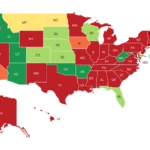
Two bills filed in the 2026 legislative session would have fixed that. House Bill (HB) 2444, sponsored by a Democrat from St. Louis County, and HB 2528, sponsored by a Republican from St. Charles County, are similar. Neither got a hearing as both were referred to committee on May 15, the last day of the session. Meanwhile, nine states passed similar laws built on the same idea.
The bills don’t eliminate oversight; they merely replace a utility’s case-by-case review with national safety standards. They define a “portable solar generation device” as a panel of no more than 1,200 watts that plugs into a standard household outlet, is meant to offset part of the owner’s own electricity use, meets the National Electrical Code, and is certified by Underwriters Laboratories (UL) or an equivalent lab. The device must shut itself off during a power outage so it can’t send current into lines that crews are working on. Utilities would not be able to add their own approvals, fees, or equipment on top of those standards, and they would not be liable for damage the devices cause.
The bills also avoid a lot of fights that surround energy policy. They exempt these devices from Missouri’s net-metering law, which means owners would not be entitled to credit for power that flows back to the grid. There is no tax credit, no rebate, and no mandate. Much of the fight over rooftop solar has been about whether customers who sell power back are paid too much and shift costs onto their neighbors. But that argument doesn’t apply here. A plug-in panel mostly works like an efficient refrigerator, reducing what the household buys. Any surplus it sends back to the grid earns the owner nothing.
The idea is new but not untested. Utah passed the first law in 2025. Its sponsor drafted the language with Rocky Mountain Power, the state’s largest utility, and the bill passed unanimously in both the House and Senate. Maine, Virginia, Colorado, Maryland, New Hampshire, Connecticut, Vermont, New Jersey and California followed suit. New Jersey’s bill passed both chambers without opposition. In Germany, where the devices took off in the 2010s, more than 1.3 million were registered as of May.
The effort is not without detractors. Opponents concerned about safety argue that a device pushing power into a household circuit could, in principle, overload wiring designed only to carry power out. Line workers also need assurance that a house isn’t energizing a dead line during an outage. These are real engineering questions, which is why the Missouri bills require certification and automatic shutoff. UL began certifying plug-in systems in just this way in January 2026.
There are also concerns about cost. A household that buys less power contributes less toward maintaining the energy infrastructure every customer depends on. But this is also true of every family that replaces its light bulbs with LEDs, buys a heat pump, or adjusts the thermostat to use less power. The same logic should apply to plug-in panels. Missouri law already shortens utility review for systems of 10 kilowatts or fewer. A certified small system shouldn’t face a more arduous process because of the shape it comes in. Plug-in solar is simply the easiest place to start.
Certainly, Missouri’s electricity is relatively cheap; our average residential price is below the national average. Bright Saver estimates its smaller kits would save a Missouri household $35 to $69 a year. Missourians can decide for themselves whether that is a good investment, just as they do with every other appliance.
The bills are written, they have sponsors from both parties, and ten states have adopted the idea. These bills should be given hearings in the next session.