Go On Take Your Money and Run

Some time ago I relied on the song “I’d Love to Change the World” by Ten Years After to tell the tale of the wealthy fleeing Connecticut’s high income taxes. Now New York is feeling the same pinch because the wealthy are, as Steve Miller might say, starting to take their money and run.

New York Governor Andrew Cuomo, who makes his livin’ off of the people’s taxes, held a press conference to bemoan the $2.3 billion drop in state income tax revenue in December and January alone. Cuomo suggested that this was the result of the 2017 tax reform bill which reduced the amount of state taxes one can deduct from one’s federal tax burden. As a result, states with high income taxes, like New York and California, fear that their wealthy residents will flee to lower tax states like Florida. As Steve Miller might say,

They got the money, hey, you know they got away
They headed down south and they’re still running today
Singin’ go on take the money and run

This should serve as an important reminder to public officials at every level, including the Missouri General Assembly and policymakers in St. Louis and Kansas City, that people do make choices based on tax burden. The San Francisco Chronicle is reporting that 53 percent of Californians want to leave the state in part due to the high cost of living, impacted by high income taxes.

As we’ve noted numerous times before, taxes in Missouri are too high. If Missouri wants to attract residents, employers, innovators—or anyone—policymakers must be better stewards of taxpayer dollars and provide basic services at the lowest possible cost.


Why the “Green New Deal” Will Not Fly in Missouri

How well prepared are different players in Missouri’s highly diversified economy to join the “Green New Deal” proposed by Congresswoman Alexandria Ocasio-Cortez (D-NY) and endorsed by several presidential contenders?

Are businesses and people in our state ready to make the jump from an economy that is heavily dependent on fossil fuels to one that would “meet 100 percent of power demand in the United States through clean, renewable, and zero-emission energy” over the next ten years?

Let’s start with Missouri farmers. Are they ready to switch to electric tractors, trucks, and combines in order to reduce their carbon footprint to the vanishing point over the course of a single decade?

We can answer that question with an unequivocal “No.” Here’s why.

Begin with the fact that there are no—repeat, no—Tesla-like, battery-powered farm vehicles on the market today that could begin to replace most of today’s diesel-powered vehicles in doing the heavy-duty, energy-intensive work involved in ploughing fields and gathering harvests. The battery-powered substitutes for today’s machines don’t exist, and – even if they did – other problems would prevent their instant and widespread use.

Did any of the utopian thinkers who devised the Green New Deal stop to consider that most farms are wired in much the same way as most homes. That is to say, they are not wired for industrial use – which is what would be required to bring about the presumed greening of agriculture through electrification.

The problem here cannot be solved by putting up hundreds or even thousands of new wind turbines to supplement the 500 now in use in Missouri – which provide an average of two megawatts of power per turbine, and then only when the wind blows.

As Blake Hurst, the president of the Missouri Farm Bureau, points out, the electrification of Missouri agriculture would be an immensely expensive undertaking. It would require nothing less than “totally rebuilding the electrical grid” in order to deliver far greater quantities of electric power to farms in thinly populated areas around the state. The grid, along with charging stations and other supporting infrastructure, would have to treat every farm with a fleet of one truck, one tractor, and one combine or cotton-picker as if it were a town with 10,000 or more inhabitants.

To understand the physics, consider a conservative estimate of the electrical requirements posed by a hypothetical electric combine that replaces a typical grain combine. The latter weighs 15 tons, consumes approximately 15 gallons of diesel fuel per hour, and is often used about 16 hours a day during harvest. At 40-percent efficiency, its diesel engine delivers about 244 kW of power.

To do the same work, the electric combine would need to carry the equivalent of about 3.5 Tesla batteries (4,400 pounds) for each hour of continuous use. It would therefore need approximately 28 Tesla batteries to go eight hours without recharging. The combined weight of all of batteries would be 17 tons, making the electric combine significantly heavier than the piston-driven combine. While battery technologies are improving, it will be some time before any dramatic changes in energy to weight are likely to take place.

Since recharge time has to be short for economic reasons (a farmer racing against time to bring in a harvest can’t afford to spend several hours a day twiddling his thumbs), suppose that the electric combine “fast charges” in 20 minutes, an optimal time suggested for electric cars. The charging station and related infrastructure (i.e., generation and power distribution) would have to be capable of supplying in the vicinity of six megawatts of power during the recharge period! Let us pause to consider what that means.

Recharging a single combine requires the same power output as three of today’s wind turbines. According to government data, 1 megawatt of power capacity will supply 750 homes. Looked at in this way, the infrastructure necessary to recharge just one electric combine in 20 minutes would also be capable of supplying electrical power to the equivalent of 4,500 homes.

Suffice it to say: If you multiply that one combine by the total number of big combines and other heavy-duty vehicles used on Missouri farms today, you arrive at a very big number.

Even if we, as a state, were prepared to pay the huge costs of participating in a federal government-led crash effort to transition from diesel-powered to battery-powered farming, it is doubtful that our farmers would thank us. Apart from the inevitable adjustment problems in the introduction of new equipment, the electric combines, tractors, etc. would be more likely to bog down in muddy fields because of the extra weight of carrying a multitude of Tesla-like battery packs. And that’s not all. Barry Bean, a large cotton grower in the Bootheel in southeastern Missouri, shudders at the thought of the long lines of farmers with their tractors and cotton-pickers at charging stations at the end of a long day: “We all work the same hours and we’d all be coming in at the same time.”

*****

Let us turn then to freight transportation, another area important to Missouri as a crossroads between East and West, North and South. If, in the year 2030, all of the heavy trucks passing through Missouri were battery-powered, what would it take to charge them? We could not answer that question without a good deal more research. But we can say what it would take to open a single recharging station to handle a tiny fraction of the heavy-truck traffic that flows through the little village of Kingdom City, lying at the intersection of Interstate 70 and U.S. Route 54, on a daily basis.

Using the same analysis as above, to support a single service station at this site capable a) of recharging a Class 8 truck in 20 minutes that has been on the road for eight hours, and b) of handling 10 such trucks simultaneously, we have estimated that the supporting electric infrastructure must be capable of supplying close to 40 megawatts. That is the equivalent of about 20 2-megawatt windmills just to serve one refueling station. That same infrastructure would serve the needs of about 30,000 homes, or a decent-sized town.

*****

All this brings us to a final consideration. Where does Missouri’s electrical power come from? According to the U.S. Energy Information Administration, we get more than three-quarters of Missouri’s net electrical generation from burning coal, and another five percent from natural gas-fired plants. Oh, yes, our one nuclear power plant in Callaway County is good for another 10 percent, not that the Green New Deal manifesto is calling for more nuclear power.

Even in the act of saying “sayonara” to the use of fossil fuel in just two sectors of the state’s economy – agriculture and freight transportation – we would have to fall back on fossil fuels to provide additional electrical generating capacity.

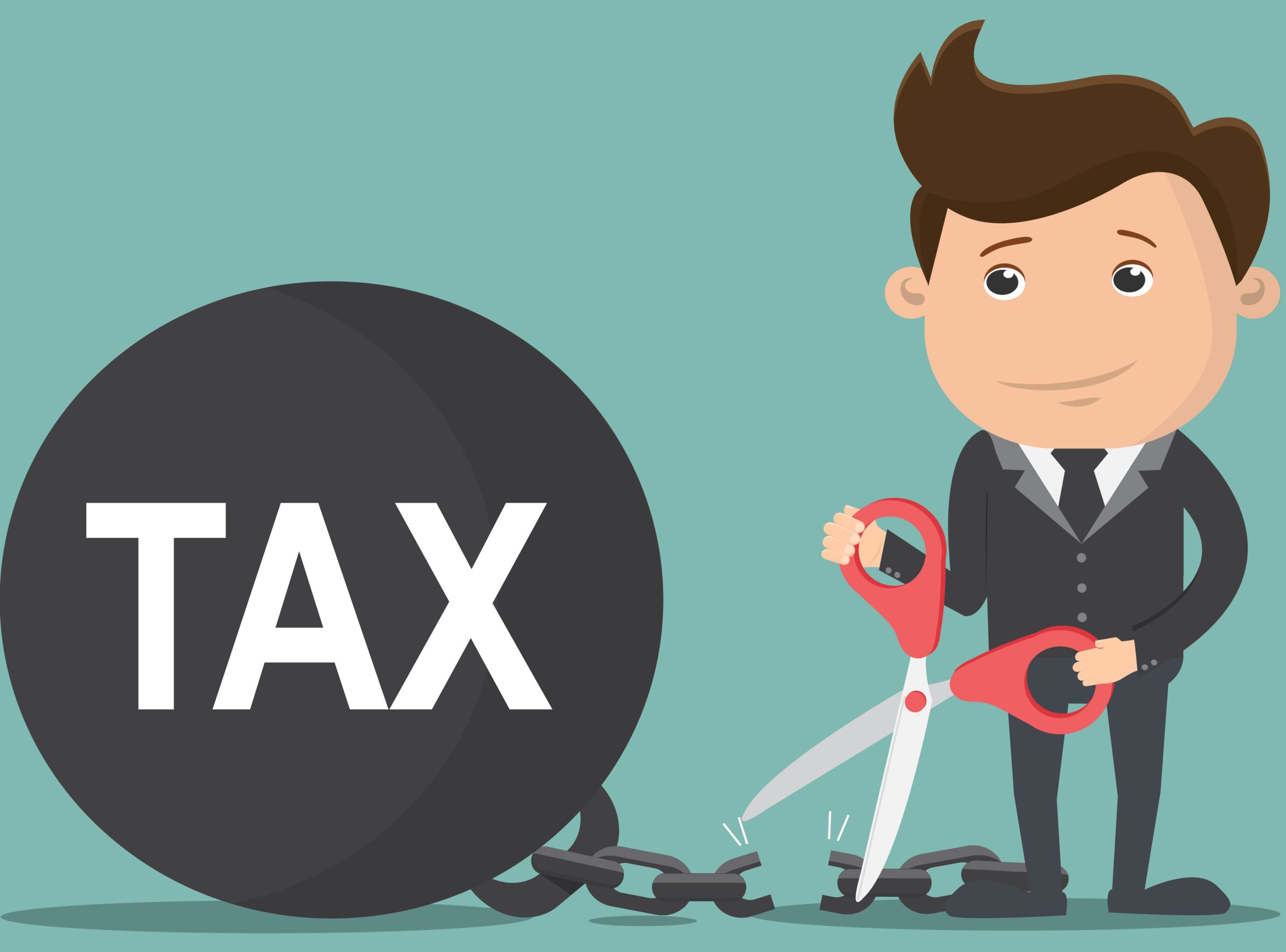
Giving Ex-Offenders a Fresh Start When Looking For a Job: Part One

High recidivism, or the rate at which ex-offenders return to prison, is a problem in Missouri and a major factor contributing to our high incarceration rate. According to the Missouri Department of Corrections, nearly half of ex-offenders in Missouri return to prison within five years of being released.

Whether it is for a technical violation of the terms of their parole or because they committed a new offense, having so many people return to prison is expensive. The average cost to incarcerate just one person for one year is $21,000. Multiply that by thousands of people serving years-long sentences and the cost of recidivism for Missouri taxpayers is in the millions.

While there are several important factors that may contribute to recidivism rates, research has found that finding employment upon release strongly affects whether someone will end up back in prison. This study from the Justice Center at the Council of State Governments explains why employment for ex-offenders is important:

Employment can make a strong contribution to recidivism-reduction efforts because it refocuses individuals’ time and efforts on prosocial activities, making them less likely to engage in riskier behaviors and to associate with people who do…Employment also has important societal benefits, including reduced strain on social service resources, contributions to the tax base, and safer, more stable communities.

Last year, Show-Me Institute’s Patrick Tuohey testified on a bill that would have removed the restriction on anyone convicted of a felony from obtaining a license to sell lottery tickets—a law which essentially prohibited them from working at convenience stores or gas stations. While this bill wasn’t adopted, other states have taken an approach that Missouri should consider.

Instead of considering different licensed occupations piecemeal, Fresh Start Legislation adopted in other states requires a comprehensive review of licensing boards’ restrictions on ex-offenders. Such a review can help ex-offenders by removing unnecessary barriers to employment. Part two of this blog post will dig more into what a Fresh Start law would look like and how it could help Missouri reduce its recidivism rates.

Giving Ex-Offenders a Fresh Start When Looking for a Job: Part Two

As researchers at the Show-Me Institute have pointed out before, occupational licensing can be burdensome for workers and consumers in Missouri without necessarily improving public health or safety. There is another area, however, where occupational licensing may do more harm than good: ex-offenders looking for jobs. People may think blanket bans on ex-offenders applying for licenses is good for public safety, but research has shown it can be counter-productive.

Currently, Missouri requires licenses for 240 occupations, 37 of which are for low- to moderate-income jobs. Many licensing boards list “good character” or not having committed “any offense involving moral turpitude” as a requirement for applicants or renewal of licenses. While it may make sense to prohibit some ex-offenders from obtaining a license, these vague statements shut out almost anyone with a criminal record regardless of the nature of their offense, the time that has lapsed since they served their time, or if they have successfully completed rehabilitation. It also precludes an employer from exercising its discretion in determining a person’s fitness for a position.

On one hand, it seems wise to refuse licenses in certain cases—say someone with a history of substance abuse or drug dealing applying for a pharmacy technician license. On the other hand, blanket bans of ex-offenders create obstacles to getting jobs that may have no connection with the crime committed and make it more likely that the offender will eventually return to prison. Other states—including Arizona, Indiana, Minnesota, and Tennessee—have shown there is a better way forward that strikes the balance between safety and second chances.

Instead of allowing licensing boards to have wholesale bans on those with criminal records, Fresh Start Legislation would require that boards list specific crimes that are directly related to the occupation in question and consider factors such as time passed since the last conviction and the nature of the offense. .

Under Fresh Start laws, boards may only outright deny applicants if they have a conviction within the last five years or if the conviction was for a violent or sexual crime. This means more dangerous criminals and repeat offenders would still be able to be screened out. But if someone has an older conviction for a nonviolent crime and has remained crime free since being released, their application must be considered and they are allowed to appeal the decision if denied.

Missouri’s Governor recently mentioned the need for better prisoner education so prisoners can be released ready to enter the workforce. But how much can educational programs accomplish if ex-offenders are being automatically shut out of hundreds of occupations? By removing unnecessary obstacles to ex-offenders leaving prison, a Fresh Start law would be a good first step to help these people get jobs and fully reintegrate into their communities. 

End the Cronyism: Repeal Certificate of Need in Missouri

The dance card for health care reforms in Missouri is starting to fill up. Last week the state released a study that looked for ways to improve the state’s Medicaid program, and a number of bills have already been filed to expand short-term medical insurance in the state. Both endeavors deserve serious engagement from our policymakers.

But rounding out the card is the important issue of Certificate of Need (CON). CON laws allow governments to prevent medical facilities from opening, expanding or providing certain services should a given activity fall under the oversight of the CON law. Want to open a new hospital or senior center? Considering a new investment in an existing facility? Unfortunately, the state of Missouri might just have the power to stop you.

In the next month or so we’ll release a paper that provides greater detail about what CON laws affect, here and around the country, but the argument against such laws can be summarized succinctly:

CON laws subvert the marketplace, replacing consumer health care decisions with those of bureaucrats—whose interests are not always aligned with consumers.

In an environment where health care prices continue to rise, it is bizarre that Missouri would maintain a system that places upward pressure on costs. Missourians need greater supplies of, and greater options for, medical goods and services; CON laws are an enormous barrier to that objective.

Currently there’s a minor constellation of CON repeal bills that have been introduced in the legislature, and it remains to be seen which one will break through and get the most attention. There are also a few bills that would “reform” the CON system, which simply constitute a reshuffling of the law. To put it plainly, you can repaint a car that’s a piece of junk, but under that paint job, it’s still a piece of junk. And that’s what CON laws are: junk. They hurt patients, benefit incumbent providers and disadvantage new market entrants.

Given this story about a recent hearing on CON repeal, it seems pretty clear that the providers benefiting from the current system would prefer the illusion of reform rather than the real thing. That’s understandable—they get an advantage under CON, albeit to the detriment of consumers. But allowing that to continue is wrong for Missouri and for Missourians. Keep it simple: repeal CON. Anything short of that is just window dressing.


2019 Legislative Priorities Generally Lining Up with Market Reforms

The Missouri House and Senate may have only just begun their legislative years, yet both chambers appear to be setting a course that free marketeers can get a little excited about. First in the House, Speaker Elijah Haahr made clear in his first address to the chamber that economic growth and small government were key items in his legislative agenda, as detailed by Missourinet:

At the heart of our efforts is one of economic growth. Our message that Missouri is open for business cannot be just lip service coming from this building (the Capitol). The policies we pass must focus on cultivating employers and not controlling their businesses,” Haahr tells the House….

Haahr also focused on conservative policies during his address, saying that “gone are the old ways of thinking that public money alone can end our problems.” He tells the House that Missouri has passed a balanced budget without raising taxes for 15 years that “that will not change on our watch.

Other items, including some health care and transparency reforms, appear to have some inertia behind them, but time will tell what eventually makes the cut and can find a pathway through the Senate.

On the other side of the building, Senate President Pro Tem Dave Schatz laid out a similar vision as that of the House, focusing on employment growth and job training. A recent St. Louis Public Radio piece outlined his agenda:

We face an economy that is very different than the one many of us grew up in,” said Schatz, R-Sullivan. “Advanced, practical skills are the ticket to the middle class and economic prosperity. We need to invest in the citizens of our state by offering training opportunities, regardless of age and experience. And any Missourian that wants to better themselves through hard work and education should have their state as an ally.

What does seem clear is that both the House and the Senate are generally in step with Governor Mike Parson’s priorities of workforce development and infrastructure, particularly roadways. How the two chambers will come to an agreement on specific ways forwards is an open question; the Senate, for instance, may be more predisposed to use a new internet sales tax to fund some of these items—which as we’ve said before, should be a non-starter.

But all things considered, these are good starting places for state government to be beginning the year from. We’ll keep you posted on their progress or, heaven forbid, their lack thereof.

Support Us

The work of the Show-Me Institute would not be possible without the generous support of people who are inspired by the vision of liberty and free enterprise. We hope you will join our efforts and become a Show-Me Institute sponsor.

Donate
Man on Horse Charging





