Who Will Speak For the Family Businesses They Shut Down?

Late last night and into the wee hours of today, the Missouri Senate debated a bill that sought to rein in many of the local government COVID excesses of the last year, including requiring local elected officials to vote on whether entire classes of businesses should be closed for extended periods of time. After hours of filibuster, the bill failed—with several members of the majority party voting against the measure.

I have to say I am disturbed. During last night’s debate, the conversation seemed to make it clear that some senators have more common cause with local political officials than they do with the people who elected them. The role of the legislature isn’t to simply defend bad local decisions. The role of the legislature is to defend constituents—the people who elected them in the first place—against bad local decisions.

Keep in mind it wasn’t long ago that the state stopped local officials from banning plastic bags. The state was also okay with stopping local officials from hiking their minimum wages locally, for fear of the business-destroying effects the higher wage requirement might have.

But straight up banning entire categories of legal businesses from operating for indeterminate periods of time?

The state senate is A-OK with that.

How excruciatingly unserious.

State elected officials are elected by the public, not by local bureaucrats, and it’s the interests of those regular Missourians that the legislature is duty-bound to prioritize. State officials need to realize now, not later, that they are elected to be a check on local officials. Their job is not to rubber stamp business-destroying decisions simply because a local official did it. Their job is to fight those decisions and protect their constituents from them.

TIF and the Pandemic, Part Two

In my previous post on the struggle of county health departments during the pandemic, I touched on funding levels for health departments before the pandemic. Even before COVID hit, were funding levels too low?

The Post-Dispatch article states that Missouri spends less state money on public health than any other state. That certainly seems to indicate that public health expenditures are too low in our state. But what if many other states collect public health money at the state level, while here in Missouri we collect it at the city and county level? As long as services are provided, would it really matter who collected the money first? I don’t think so.

Another comparison ranks Missouri rather high nationally in public health spending (ninth) and properly notes that most Missouri public health money is raised and spent at the local level. Most Missouri counties have a local property tax dedicated to funding their health departments. Many of our larger cities do also. So, we ought to realize that the reason the state may rank so low is that we fund public health at the local level while other states seem to fund more of it at the state level. I don’t think there is anything wrong with that, but I think people need the full picture of funding services like this before making judgments.

TIF and the Pandemic, Part 1

The St. Louis Post-Dispatch reported recently on the struggles of county health departments in Missouri during the Covid pandemic. We all recognize the vital services public health workers have provided over the past year to our communities. The article describes the myriad issues county health departments and their employees have faced in the past year, including funding levels.

Are the funding levels from state and county taxes (more on that in a subsequent post) enough to provide the right level of public health services? Federal emergency funds sent to the state stabilized funding issues for many departments during this crisis, but are we properly funding public health efforts in Missouri aside from that?

Well, I don’t know what the proper level of public health funding is, but I do know that the rampant abuse of tax-increment financing (TIF) and other tax abatement programs takes a very large bite out of local public health funding. Local governments in Missouri have given out over $7 billion worth of subsidies for TIF alone over the past few decades. Most of those subsidies come from property taxes, the precise taxes used to primarily fund our local health departments. If you add in property tax abatements and other types of tax subsidies, the number would be substantially higher.

I don’t know what percentage of that $7 billion in TIF would have gone to local health departments (both past, present, and future subsidies), but while it would likely be a low percentage, a low percentage of $7 billion is still a lot of money.

So, on top of all the economic, fiscal, social, and environmental damage TIF has caused, we can add in reduced public health funding during a pandemic. We can’t pass massive subsidy reform in Missouri fast enough.

Gas Tax Bill Undergoes Several Changes

A bill in the Missouri Legislature that would raise Missouri’s fuel tax has undergone several important changes.

Instead of raising the fuel tax by 2 cents per gallon each year for five years, the bill would raise the fuel tax 2.5 cents per gallon each year for five years. If it were to become law, Missouri’s fuel tax would be raised from 17 cents per gallon now to 29.5 cents per gallon in 2025. The bill’s sponsors estimate that, once the increases are fully phased in, these measures would raise an additional $462 million per year starting in 2026.

The tax increase would eventually cover a little more than half of the annual $745 million MoDOT claims it needs for high-priority road and bridge needs. Increased transportation funding is needed, Show-Me analysts and other organizations have pointed out.

There’s another new wrinkle added to the bill: residents can claim an exemption and refund for the additional tax amounts they paid as a result of the fuel tax increase. This exemption would only apply to vehicles that weigh less than 26,000 pounds, effectively ruling out commercial trucking companies from receiving the refund. The recordkeeping and reporting requirements for the exemption and refund are onerous particularly if you have more than one vehicle. Under the current draft of the legislation, the claim for a refund shall at a minimum include:  (1) Vehicle identification number of the motor vehicle into which the motor fuel was delivered; (2) Date of sale; (3) Name and address of purchaser; (4) Name and address of seller; (5) Number of gallons purchased; and (6) Number of gallons purchased and charged Missouri fuel tax, as a separate item.

It’s hard to know how many Missourians would take advantage of this refund mechanism, but available evidence suggests that most won’t. The fuel tax refund is modeled after South Carolina’s fuel tax rebate, and only $3.4 million in rebates were issued out of over $500 million raised.

Perhaps the most interesting change is that the bill would establish an Electric Vehicle Task Force to study how to ensure drivers of electric vehicles (EVs) adequately pay for the damage they cause to roads. As more people use EVs and don’t fuel their cars with gasoline, this will become a salient question for future legislation. The task force would also study how the charging of EVs will impact the state electric system, the role of utilities and the Public Service Commission in overseeing charging stations, and ensuring that electric customers without EVs don’t end up subsidizing those who do.

The bill still faces another vote in the Senate, so things could change once again. Hopefully, we see a final bill that addresses transportation funding issues in Missouri in a fair and equitable way.

SMI Podcast: A Road Map For Education Reform – Bill Mattox

On this episode of the podcast, Bill Mattox joins Susan Pendergrass to discuss what Missouri can learn from Florida’s fight for more educational freedom.

Bill Mattox currently serves as the Director of the J. Stanley Marshall Center for Educational Options at The James Madison Institute. In this role, he works with a wide variety of researchers, policymakers, educators, and parents to promote innovative reforms designed to make it possible for all K-12 students to obtain a high-quality education tailored to their unique needs, interests, aptitudes, and learning styles.

Listen on Apple Podcasts

Return of the Resource Curse: The Trouble That Comes from Too Much Money

Versions of this commentary appeared in the American Spectator and the Columbia Missourian.

Imagine painting yourself into a corner—as someone of limited means who is subject to wacky increases in the cost of something as basic as renting an apartment. I do mean wacky, with this big component in the cost of living not just doubling, but going up no fewer than eight times over the course of a single year.

That happened to me in 1975 as the sole breadwinner in a family of three. I offer this small bit of personal history as something to think about in pondering today’s news.

In the beginning of that long-ago year, I quit my job as a newspaper reporter at the St. Louis Globe-Democrat and moved to Beirut as a self-deployed freelance writer. This was shortly after the OPEC oil embargo and the quadrupling of oil prices in 1974. Thinking the Middle East would experience one of the greatest transfers of wealth in the history of the world, I wanted to be there as an observer.

My wife and I left a three-bedroom, two-bath apartment St. Louis’s Central West End. Our rent was $165 a month. With one young child, the cheapest, somewhat comparable place we could find in Beirut cost $700 a month.

The civil war in Lebanon erupted in early April, shortly after our arrival. By the end of the year, fighting in the streets of Beirut became so fierce it led to a mass evacuation of most of the city’s large expatriate business population. As a result, the Lebanese capital was suddenly “halas” —the Arabic word for finished—as the regional center for business in the Middle East. But the spending spree in Saudi Arabia, Iran, and other countries was just beginning. We resettled in Bahrain, where more sticker shock awaited. We moved into a three-bedroom, two-bath bungalow that cost more than $1,400 a month.

Why would it cost more than eight times as much money to find a place to live in the Middle East as it would in St. Louis?

The Middle East had been bitten by a strange curse—known in economic literature as the “resource curse,” or the paradox of plenty. Resource-rich countries are all too likely to squander the windfall wealth that comes from possession of precious metals or vital resources such as oil. Bubbles develop as people who have benefited the most from a sudden influx of money bid up the price of real estate and other assets that then become increasingly unaffordable for many other people.

I got lucky. I landed a full-time position with Mideast Markets, a high-priced publication that had sprung up to provide ongoing coverage of the fast-changing business scene in the Middle East. My new employer paid the full cost of our move and our housing as well. Bahrain became my jumping-off point for traveling throughout the region over the next three years.

With my own eyes, I saw the inevitability of prodigious waste in places where money was no object. I also saw how the resource curse exacerbates the divide between haves and have-nots. In Bahrain we lived across the street from a Persian family where eight sons—all in their twenties and thirties—were still living with their parents. Though they all had jobs, they had been priced out of the housing market—and this at time when others we knew were making fortunes in speculating in real estate.

Today our own government in Washington, D.C., is acting in much the same way as the governments in the newly oil-rich countries of yesteryear. Since the onset of the pandemic, our government has been passing out “free” money all kinds of reasons—from paying the unemployed to stay unemployed (knowing they would lose money by going back to work) to $3,000-a-child tax credits and $2,800 handouts to households with annual incomes of up to $140,000. And now we are seeing some of the same (if not quite so wild) distortions in housing prices and other asset values I saw in the Middle East.

I am not arguing against a safety net for the truly needy. Nor am I saying that there should be no compensation from governmental entities for government-ordered lockdowns that have forced thousands businesses to close their doors and deprived millions of workers of their livelihoods.

But where is all the money to come from to pay for what looks like a massive and ill-considered increase in the size of the welfare state? Not from current tax revenues or any gain in productive capacity. It is coming from funny money—trillions of dollars of borrowed or newly created money used to grease the wheels of an already strong recovery. If not repudiated through inflation, these financial obligations will have to repaid by American taxpayers in future years.

Good luck with that. How can making people less reliant on doing things for themselves and more dependent on getting checks from the government be a recipe for sound money and future success?


WATCH: Connecting Policy and People with Lee Habeeb

On March 18, 2021 the Show-Me Institute hosted Lee Habeeb for a special town hall.

Lee Habeeb is CEO and founder of American Private Radio and host of Our American Stories. Lee got his start in radio co-creating The Laura Ingraham Show, which launched in 2001. By 2007, it was the #1 show in America in its time slot. He moved to Salem Media Group, where he serves as VP of Content, overseeing shows hosted by some of conservativism’s greats: Bill Bennett, Dennis Prager, and Hugh Hewitt to name a few. Habeeb also writes a weekly column at Newsweek. With Our American Stories Lee provides a unique radio program that profiles American heroes and icons from history, industry, entertainment, sports and culture. Each hour the program showcases inspiring stories about people and events that have made a positive impact in American life.

Download the Our American Stories podcast on Itunes, Google Play, Spotfiy or wherever you find your podcasts and visit ouramericanstories.com  to find an affiliate station near you.

Watch the full event:

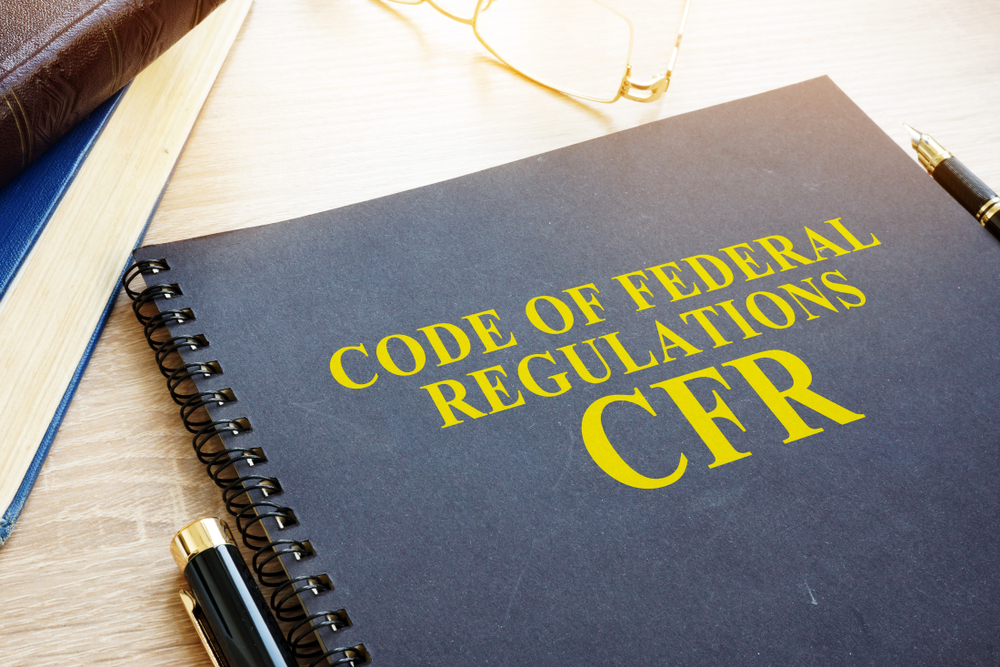
Do Federal Regulations Impact Missourians?

Did you know that professional, scientific, and technical services (a broad category that includes legal, payroll, engineering, and advertising services amongst others) is one of Missouri’s largest and most federally regulated industries? There are tens of thousands of federal regulations for this industry, but they don’t just affect Missourians that work in this industry. Regulations have unintended consequences that impact us all.

I’ve previously written about the Mercatus Center’s State RegData project, which calculates how many times each state tells its citizens what they can and cannot do. Using a similar program, researchers examined the impact that federal regulations have on individual states using the federal regulation and state enterprise (FRASE) index. Though federal regulations apply to all states, each state’s economy is made of different industries, so regulations targeted at specific industries will affect states differently.

The authors find that “[the] impact of federal regulations from 1997 to 2015 on the Missouri economy is associated with the following regressive effects:

  • 93,411 people living in poverty
  • 2.7 percent higher income inequality
  • 180 fewer businesses annually
  • 2,406 lost jobs annually
  • 7.35 percent higher prices”

I’ll admit that it’s difficult to quantify these things and find direct links between regulations and these effects; there’s no specific regulation that led to one of these specific consequences. However, this novel program counts phrases that usually translate to regulatory requirements (like “shall” and “must”) to track changes over time. The authors then use this data along with data for other economic indicators to find the regressive effects. Given what we know about regulations generally, these numbers make sense and are pretty staggering.

From 1997 to 2015, the effective federal regulatory burden on Missouri increased by 54 percent. Researchers have found that an increase in the effective federal regulatory burden on a state is associated with an increase in the poverty rate in that state. This helps to explain why federal regulations have led to more people living in poverty and higher income inequality. Regulations reduce entrepreneurship because they increase the red tape one must cut through to be successful, which impacts the number of businesses in a state. Regulations also increase the compliance costs for businesses, which they then transfer to consumers by increasing prices.

These regulations are not just affecting the industries or groups to which they are targeted. They can affect Missouri workers, small businesses, and consumers. As we continue through this legislative session in Missouri, we should remember the unintended consequences of legislation and regulations.

Support Us

The work of the Show-Me Institute would not be possible without the generous support of people who are inspired by the vision of liberty and free enterprise. We hope you will join our efforts and become a Show-Me Institute sponsor.

Donate
Man on Horse Charging