New Poll Shows Missouri’s Educational System in Crisis

Download the infographic here

Additional Findings

  • Missouri students are being left behind academically. A poll released today by the Show-Me Institute reveals that nearly 40 percent of Missouri parents believe their children are being left behind academically this year, compared to less than 7 percent last year.
  • Missouri’s limited educational freedom places a high burden on parents. Nearly half (46 percent) of Missouri parents report spending over $250 on school supplies for the 2020-21 school year. A similar number of parents (48 percent) report spending over 10 hours per week helping their children with school instruction this academic year.
  • Parents would like other options for their children’s education. Almost half of all Missouri families (47 percent) would change their child’s educational environment for the remainder of the school year if they had the chance.
The poll was conducted by Cor Services Inc. from December 2 to December 10. Researchers interviewed 510 likely voters with school-aged children. Full results are available here. 

New Gas Tax Bills Highlight Missouri’s Transportation Needs

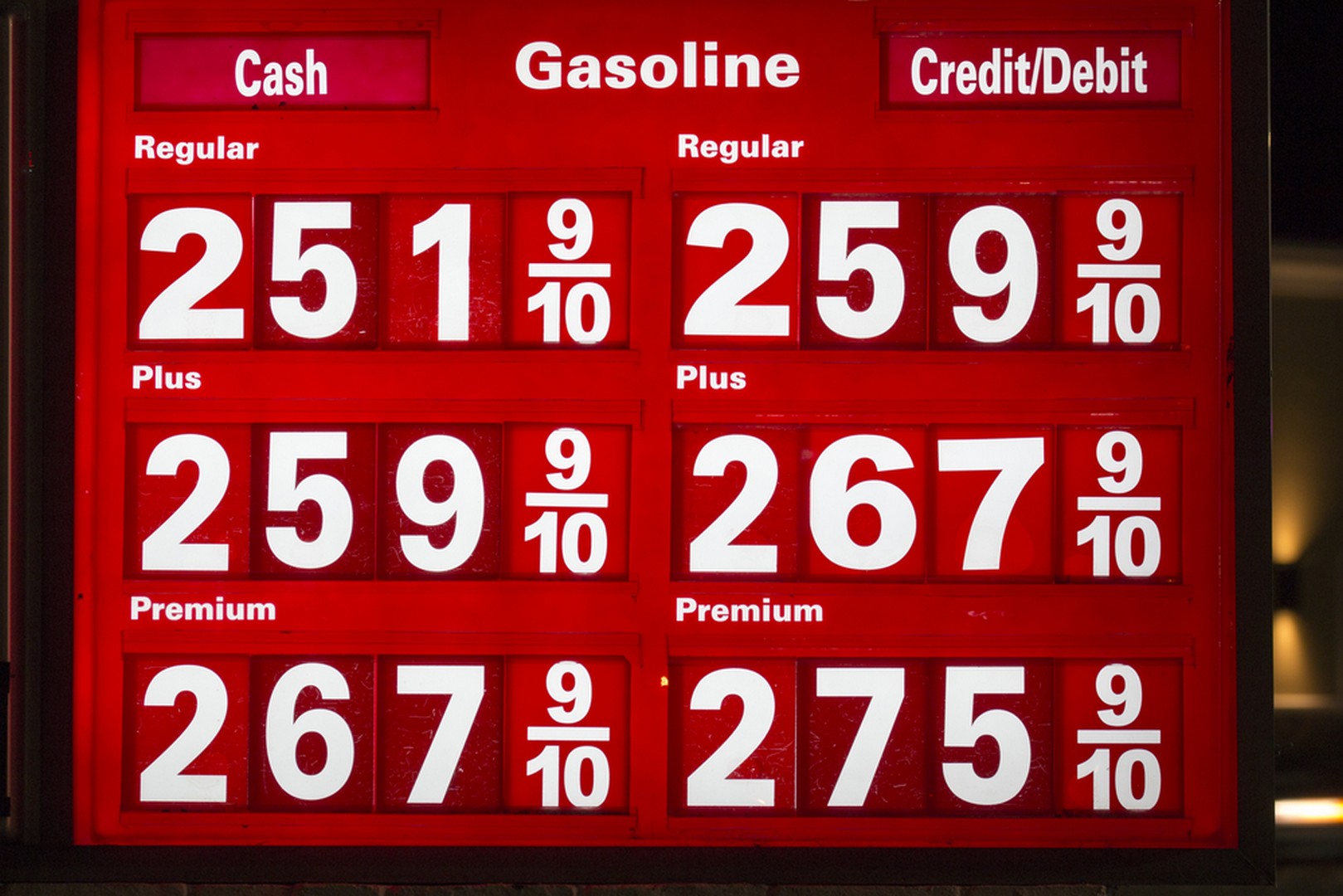
Missouri’s roads are getting some attention from the legislature. Two nearly identical bills that would increase Missouri’s fuel tax by 10 cents per gallon over five years (but through different processes) have been filed in the Missouri Senate. This increase would be carried out in 2 cent increments each year.

Both bills would place the question of raising the gas tax before Missouri voters. One would require a statewide vote to change Missouri’s current law regarding fuel tax rates, and the other would require a statewide vote to enshrine the new fuel tax rates in Missouri’s constitution. Missouri’s fuel tax has remained at 17 cents per gallon since 1996, and a 10-cent increase today would roughly adjust it for inflation since then. However, the full 10-cent increase under these bills would not be in place until 2026, and we can expect further inflation during the extra five years. Still, if our gas tax is five years behind inflation in 2026, that would be an improvement over the current 25-year gap.

The extra funds would provide a boost for Missouri’s roads. The Missouri Department of Transportation estimates that roughly $745 million in high-priority road and bridge repair and maintenance go unfunded each year. The most recent proposal in 2018 to increase fuel taxes by 10 cents per gallon was estimated on the ballot to raise an additional $400 million each year for road and bridge maintenance. The current proposals would likely reach this mark after the full 10-cent per gallon increase is reached after five years.

While voters have rejected fuel tax and road-dedicated sales tax increases in the past decade, research suggests that voters may now be amenable to increasing fuel taxes. A recent report from the Missouri Chamber of Commerce found that 85 percent of Missourians believe more money should be directed to road maintenance.

Specifically, drivers were asked about their support for a 10-cent fuel tax increase to repair Missouri’s roads. The report found that 45 percent of drivers support such a fuel tax increase, but when respondents were informed that it would cost an average driver $5 extra per month, 51 percent supported raising the gas tax 10 cents and adjusting its 1996 levels to current costs.

Ultimately, both fuel tax bills would have to navigate the Missouri Legislature before reaching voters, but the recent support may be the extra boost they need.

It Is Time to Change How We Collect Sales Taxes in Missouri

Comprehensive online sales tax collections in Missouri are likely inevitable. Because of the ongoing pandemic, they are also necessary. Covid and its effects on our lifestyle and economy have accelerated existing trends toward more online shopping. To fund the necessary functions of state and local government, it is important that sales and use taxes are collected as part of online sales in Missouri.

But we should not simply mandate an online expansion of the existing sales tax system. The current system has many problems and has been poorly implemented by the heavily fragmented local government in Missouri. For decades, our current sales tax system has incentivized corporate welfare and tax giveaways, unduly benefitted a few cities with large shopping centers, motivated many cities to export fiscal costs onto shoppers instead of residents, and enticed higher rates due to the political expediency of sales taxes over other forms of taxation.

In case you were wondering, none of that is a good thing. In my personal opinion, property taxation (especially land taxation) should be the primary method of funding local public agencies, complemented by sales taxation and direct fees for services. When people pay for the services they use, they want to make sure they are getting value for their tax dollars. When the cost of funding a city is paid for by shoppers from other areas, it becomes easy to constantly increase the rate to fund whatever the city wants, whether it is truly needed or not. After all, the voters aren’t paying for it—those other people are. If you are looking for evidence of this, think of all the Taj Mahal-like municipal recreation centers that have been built in Missouri over the past 15 years.

As part of a substantial expansion of the sales tax base with online collections, we should lower the rate to benefit residents. That rate reduction can be a general one or specific to certain, special taxes. I have one to propose first. If we collect online sales taxes, then the extra sales taxes added (on top of all the regular sales taxes) for sit-down meals at restaurants in St. Louis and Kansas City should be eliminated. We all want to help restaurants recover from the dire circumstances of the pandemic, so let’s remove that extra tax they pay that puts them at a price disadvantage against other types of food sales.

I make no claim to having all the answers here. Our myriad of sales tax exemptions, the alphabet soup of special taxing districts, and various distribution formulas make it all very complicated. But if we are going to expand the sales tax system to include all online sales, we need to rearrange that system in Missouri to fund our local governments while removing the harmful parts of the system we have seen much of in recent decades. More questions, comments, and suggestions on this topic to come soon.

MSA Growth in Missouri

The start of a new year is a great time to reflect on the past and make resolutions for the future. As the 2021 legislative session begins, we can put this into practice with Missouri cities by looking at their growth over the last few years and brainstorming “resolutions” to improve growth.

Missouri has eight metropolitan statistical areas (MSAs), a term used to describe a city with a population of at least 50,000 and the surrounding area. Below is a graphic from my latest publication, The 2020 Missouri Tax Landscape, which provides an overview of Missouri’s economy and taxes at the state and local levels. The compound annual growth rate (CAGR) of these MSAs is a calculated rate helpful for evaluating growth over time. While GDP growth is volatile, the CAGR provides a calculated rate as if the growth had occurred at a steady rate during the period.

Notes: Some MSAs cross state lines, indicated by the inclusion of the states in the label. Real GDP numbers are for the entire MSA. Real GDP numbers are in chained 2012 dollars, meaning they are adjusted for inflation over time with 2012 as the base year.

Source: Bureau of Economic Analysis. Real GDP by County and Metropolitan Area.  https://apps.bea.gov/itable/iTable. cfm?ReqID=70&step=1#reqid=70&step=1&isuri=1

Columbia and Kansas City had the highest growth rates from 2009 to 2018, growing by 1.6 percent each year on average. St. Louis grew by less than half of that rate—a meager 0.7 percent. The CAGRs of Missouri’s largest MSAs are nowhere near those of large MSAs in surrounding states. In the same period, Oklahoma City, OK grew by a rate of 2.9 percent; Cincinnati, OH-KY-IN by 2.4 percent; and Omaha-Council Bluffs, NE-IA by 2.2 percent. Additionally, all of Missouri’s MSAs fell below the national growth rate of 2.3 percent during this period.

There are a lot of factors that contribute to a metro area’s growth, and the tax climate is certainly one of them. High tax rates take spending money away from citizens and make cities and states less attractive to people and businesses. There’s a plethora of research showing that taxation (and especially taxation on income) has a negative effect on economic growth. Given the low growth rates of Missouri’s MSAs, it may be time for some tax-related New Year’s resolutions.

Five New Year’s Resolutions for Missouri Lawmakers

A version of this commentary appeared in the Columbia Tribune.

Missouri is considered one of the most “conservative” of the 50 states. Is that a good thing or a bad thing? It depends on how you define the word.

Over the past several decades, Missouri has been going downhill both economically and educationally—as one of the worst-performing states in GDP growth and educational achievement in K-12 public education. Why?

Too often, Show-Me State conservativism has been characterized by a lack of urgency and a satisfaction with the status quo.

As I would define it, conservatism does not begin and end with the preservation of existing institutions, and it most definitely is not about protecting the privileges of the rich by exploiting the poor or being indifferent to the problems of the needy. Where it begins is with the desire to protect and enlarge freedom for all members of society—enabling people to work and live lives of their own choosing so long as they do no harm to others in the pursuit of their own betterment.

Here, then, are five New Year’s Resolutions for leaders in local and state government:

#1: Improve Missouri’s competitiveness; turn the Show-Me State from an economic sluggard into a great place to live, work, and own or operate a business. That means lowering taxes—leaving more money in people’s pockets to spend or invest as they choose. It also means removing obstacles to commerce and opportunity posed by excessive licensing and regulatory requirements.

#2: End crony capitalism—stop providing subsidies and tax carve-outs for politically favored businesses that are not available to all other businesses. In 2019, Missouri reported 524 tax-increment financing (TIF) projects from 100 political subdivisions across the state. These projects are anticipated to have $10.1 billion in TIF-reimbursable project costs. Such subsidies drain money from public services and have a bad track record of failing to deliver promised job, investment, or economic growth. Reductions in tax incentives and spending can provide some of the budgetary space to lower or eliminate individual income and earnings taxes.

#3: Don’t treat small, owner-operated businesses as the designated fall-guys in government-ordered lockdowns—calling them “non-essential” businesses while allowing their big-box counterparts such as Wal-Mart and Target to continue to operate.

#4: Don’t be penny-wise and pound-foolish when it comes to taking care of essential infrastructure on a timely basis. Interstate 70, an economic and transportation lifeline, is falling apart. Numerous other major roads are badly in need of repair. Travel on Missouri’s roads has increased by 12 percent since 2008, but the state’s transportation budget has fallen by 15 percent. According to Missouri’s Department of Transportation, it now gets only enough revenue to cover a little more than half the state’s needed road and bridge repairs. One thing is certain: Postponing needed maintenance on long-lived assets such as roads and bridges is not a smart idea. It leads to escalating costs and catastrophic failure.

#5: Expand educational choice for students and families at all income levels throughout the Show-Me State. There is no worse example of blind allegiance to the status quo than Missouri’s K-12 public education system.

Supported by nominally conservative lawmakers, the state’s educational establishment—meaning school superintendents, teachers’ unions, and DESE (Missouri’s Department of Elementary and Secondary Education)—have blocked almost every initiative aimed at expanding school choice from vouchers and education savings accounts to expansion of charter schools. Despite a long record of poor results in the so-called “Nation’s Report Card,” members of the establishment continue to oppose all forms of competition and choice in public education.

And who is hurt the most by this self-serving obstinacy on the part of the providers of public education? It is of course the users: students and their parents and families, and most especially lower-income families trapped in non-performing schools who cannot afford to move to other school districts or to private schools.

As I see it, true conservatism is really about an allegiance to principles—and to enduring values such as freedom, hard work, and equality under the law—rather than an allegiance to the status quo.

Gas Taxes Around the States

Raising enough money to take care of Missouri’s roads has been a challenge. As I’ve written before, the Missouri Department of Transportation estimates that $745 million of high-priority road and bridge projects go unfunded each year.

Missouri’s gas tax—MoDOT’s largest in-state funding source—has not been adjusted since 1996.  Inflation, the rising costs of road maintenance, and increasing vehicle fuel economies have all lowered the value of the static gas tax over time.

However, many states have found ways to keep their gas taxes in line with changing times.

For instance, numerous states have indexed their gas taxes to inflation to keep gas tax levels in step with the rest of the economy. Some states index gas taxes to other metrics. For instance, North Carolina’s gas tax is indexed to account for changes in the state’s population, as well as for inflation. Nebraska’s gas tax adjusts based on a combination of the state transportation budget and a tax that varies based on the price of fuel. Georgia’s gas tax is indexed to vehicle fuel efficiency to keep up with auto industry advances. Other states apply the state sales tax to gasoline on top of a base cents-per-gallon rate, so that the total fuel tax revenue collected varies with the price of fuel.

In other states gas tax increases are revenue neutral, a point which is worthy of consideration, especially this year. South Carolina is in the process of increasing its fuel tax in two-cents-per-gallon increments over six years. However, residents can write off the extra gas taxes paid at the pump from their income taxes. This essentially restructures where the taxes go, as residents don’t necessarily pay more taxes, but more of the taxes they pay go toward transportation.

Lawmakers have already proposed measures to raise Missouri’s gas tax by 10 cents per gallon over five years in the new legislative session. And while gas taxes are not a perfect solution, as they do not always align road usage and damage to payment for their upkeep, they are one option. And as evidenced by other states, Missouri policymakers have options as to how to approach this problem.

Unfocused St. Louis

Some of my colleagues at the Institute have already weighed in on the shortcomings of a draft report promoting regional growth recently published by Greater St. Louis, Inc., with the support of groups like FOCUS St. Louis and other St. Louis–area stakeholders. The report, STL 2030 JOBS PLAN: Driving a Decade of Inclusive Growth, implies and encourages a robust government role advancing a number of objectives cited as important to the authors.

Without unnecessarily repeating my fellow bloggers, the report is both discouraging and concerning. Local government micromanaging of the economy in a vacuum is bad news anyway, but micromanagement for the purpose of dismantling “systemic racism” and promoting “inclusive growth” exemplifies the preference for buzzwords over substance that has saddled residents of the region with ineffective governance and squandered tax revenue for over a half-century.

We don’t need more jargon to fix St. Louis. We need an actual focus on the problems that have bedeviled it. Two years ago I condensed those problems into an op/ed published in the St. Louis Post-Dispatch that focused on the three essential issues that confront St. Louis: public safety, its schizophrenic tax policy, and education. Like the authors of the recently released report, local leaders two years ago seemed most concerned about making St. Louis City the cultural and economic pivot point of the region again, but in both cases that amounts to putting the cart before the horse. As I wrote,

The city’s greatest issue isn’t whether it will be the economic center of the region. Its greatest issue, the one that will determine its long-term viability, is whether it will be a competent steward of public money and the public’s trust—whether the city will address the policy questions that ultimately underpin and promote long-term development and population growth. Doing so will require a meticulous commitment to getting the fundamentals of governance right and eschewing the rest.

It’s said that the best time to plant a tree was 20 years ago, and the next best time is to plant a tree is today. For the sake of its future, now is the right time for St. Louis to address its fundamental and widely recognized issues of governance in a serious and research-driven manner. Until the city gets serious about regaining public trust by getting back to the basics of governance—above all, a full commitment to security, education and the stewardship of the public checkbook—no one should be surprised when more St. Louisans follow their predecessors out the door.

I hesitate to be overly critical of any undertaking that requires significant thought, but the report reads like more of the same from St. Louis’ collective leadership, with little in the way of fresh thinking or, frankly, self-reflection. If the region is going to turn the corner and chart a new prosperous path, local government needs to focus on getting the basics right. Any proposal that would detract from that singular focus by government, especially when advanced by private sector leaders, is unproductive. That is, unfortunately, what I believe this draft of this “jobs plan” is, and I hope that for the sake of the region, it is significantly revised.

Support Us

The work of the Show-Me Institute would not be possible without the generous support of people who are inspired by the vision of liberty and free enterprise. We hope you will join our efforts and become a Show-Me Institute sponsor.

Donate
Man on Horse Charging