Multnomah County, Oregon Should’ve Called St. Louis Before Making This Mistake

Multnomah County, Oregon, which contains the city of Portland, recently approved a local income tax increase to fund tuition-free preschool. This measure will increase the local income tax by 1.5 percent for individuals who make over $125,000 and 3 percent for those that make over $250,000. Those of us in the city of St. Louis are all too familiar with earnings taxes such as this one. If Multnomah County had called St. Louis City, we could’ve told them that this local income tax increase is a bad idea.

In general, economic theory tells us that local income taxes have negative effects on population and economic growth in the cities that have them. Not only do these taxes discourage earning an income, but they are easy to avoid by moving or relocating businesses. This makes localities that have local income taxes less competitive relative to surrounding localities and encourages people to make the short move to where they can keep more of their hard-earned money.

We’ve seen this play out in the St. Louis area, especially regarding population; it’s fairly common to hear about people and businesses moving from the city to the county. St. Louis County does not have an earnings tax and the county’s population decreased by 0.46 percent from 2010 to 2019. The City of St. Louis, on the other hand, has a 1 percent earnings tax and has seen a staggering population decline for years. The city’s population decreased by 5.87 percent in the same period—that’s more than 12 times as much as the county. And just a little bit further from the city, St Charles county’s population increased by 11.12 percent in the same period.

Many factors can contribute to population decline; an additional tax on income is certainly one of them. Economic theory suggests that Multnomah County may see its local income tax hike have negative effects on population and economic growth. St. Louis can confirm that with experience. If they’d asked, we would’ve told policymakers this is a bad idea for their county.

Fixing the “Delmar Divide” with a TIF?

Developers are asking for millions in tax subsidies for a redevelopment project with the hopes of fixing St. Louis’s “Delmar Divide” between the Central West End and the low-income neighborhoods north of Delmar Boulevard. I work (and wrote this piece) not far from the proposed project area, and I’ll admit, it could use a facelift. But not one funded by tax dollars. Is throwing tax dollars and special perks to developers really the way to bridge this gap between a high- and low-income area?

The Kingsway Commercial Tax Increment Redevelopment Plan involves developing multiple projects where the Central West End meets Delmar Boulevard. But perhaps more importantly, a big chunk of funding for these projects would come via a tax-increment financing (TIF) district that would raise $6.2 million. This project will also be financed by a mixture of state and federal tax credits. There are additional plans to create a community improvement district (adding to Missouri’s growing special taxing district problem).

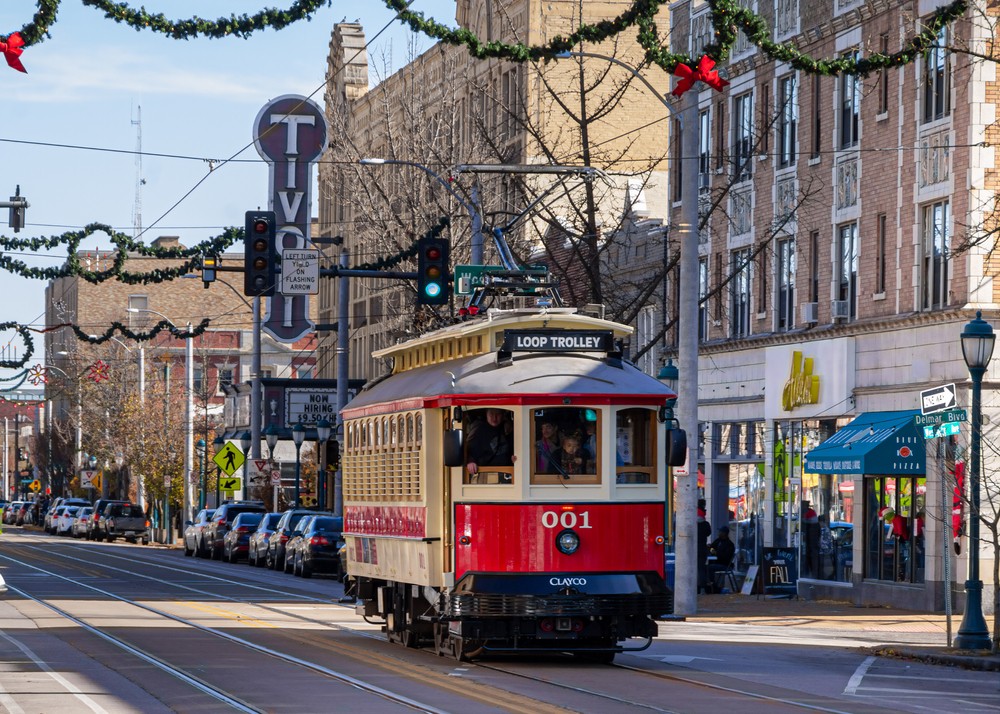
These economic development tools would help to finance this project at the expense of taxpayers; they give developers cash, reduce their tax burdens, and could increase sales taxes in the area. North of the “Delmar Divide” is generally a low-income area, so should we really be redistributing tax dollars from low-income residents to developers instead of using these dollars for public services? Especially when other publicly funded ventures like the Cerner headquarters in Kansas City or the Loop Trolley right down the street from this project haven’t delivered on their promises?

While I’m sure most can appreciate the “bridging the gap” intention of this project, TIF is a flawed economic development tool that often gives no benefit to taxpayers. TIF requires that an area be blighted (for which Missouri has a very broad definition), and that the development would not happen without the public funding. With the thriving Central West End neighborhood just steps from this development, it’s hard to believe that development in this area would not occur without millions of public dollars. Moreover, even if this area were blighted, does it really need these perks for the next 23 years? Is diverting tax dollars to a private development project really the best way to develop this area of St. Louis?

Commentary: Funding Roads by the Mile, Not the Gallon

A version of this first appeared in the Columbia Daily Tribune.

Missouri’s road maintenance funding is on a road to nowhere.

Interstate 70, Missouri’s economic and transportation lifeline, is falling apart. Many other roads Missourians travel on each day also need to be fixed, and they too will continue to deteriorate because the Missouri Department of Transportation is running out of money.

While travel on Missouri’s roads continues to increase (up 12 percent since 2008), MoDOT’s budget has been headed in the opposite direction (down 15 percent in the same period), and that has resulted in a whopping $745 million in unfunded road transportation needs.

MoDOT remains heavily dependent on the state fuel tax (17.4 cents per gallon) for road maintenance, and that’s part of the problem. Because of the improved fuel economy of today’s gas and diesel-powered cars and trucks, fuel tax receipts have declined even though people drive more and put more wear and tear on the roads. Furthermore, drivers of electric vehicles are paying significantly less for road maintenance because they aren’t paying fuel tax.

It’s time to rethink transportation funding. The damage inflicted upon roads is determined by how much drivers drive on them and how much their vehicles weigh, not by how much fuel they consume. A better way to match the damage drivers do to the road with what they pay for its upkeep is to charge by the mile, instead of by the gallon.

Several states experimenting with road-usage charge programs demonstrate how such programs could be implemented. One method to record mileage is by a simple odometer reading. Drivers could self-report their odometer readings as part of the annual vehicle registration process or by plugging a recording device into the vehicle’s diagnostics port. While this method would pose no threat to driver privacy, it would be impractical for those who frequently drive out of state.

A more controversial method is to record precise in-state miles driven by using GPS technology. Current programs in Oregon and Utah use third-party providers to record in-state mileage either through a GPS-equipped plug-in device or a smartphone app. In both cases, the state receives the total miles driven for billing purposes with no location data.

While this poses more concerns for driver privacy, it should be noted that GPS satellites do not track locations. GPS responders, whether in plug-in devices or cell phones, track their location in relation to satellites, but do not necessarily share their location with those satellites. Protecting driver privacy is a serious concern, and the reporting of personal or location-specific data should only be allowed when explicitly agreed to by drivers.

With these first two methods, as drivers pay for their miles driven, they are reimbursed for the gas taxes they paid to travel those miles.

A third method is to use electronic tolling to raise maintenance funds specifically for heavily traveled highways, as many states already do. Drivers can use transponders that send a signal that is picked up at certain points along the road, and payments can automatically be deducted from that driver’s account. Those with concerns about the privacy implications wouldn’t have to opt for a transponder. Instead, cameras on the highway could record their license-plate number and a bill could be mailed based on their driver registration information.

No system is perfect, but in each of the examples listed above, drivers can choose their method of payment and are presented with several options depending on their privacy concerns.

In any case, our current system of taxing fuel usage is becoming less viable. Missouri policymakers should consider solutions already in use in other states to move Missouri’s transportation funding methods in the right direction.

Telemedicine Gaining Momentum

Amidst the hardship and disruption of the coronavirus pandemic, the rise of telemedicine has been a small silver lining. Shortly after the public health emergency began, it became clear that adequate access to health care would be a problem. In the months that followed, actions taken by Missouri’s government, patients, and providers alike led to tremendous growth in remote care services. The question now is what role telemedicine should play once the virus is defeated.

Back in March, I wrote about the need for Missouri to make telemedicine more accessible. To contain the virus, Missourians were asked to stay at home even in cases where they’d normally receive care. It made sense to take advantage of telemedicine to allow those at risk to limit their exposure to COVID-19 wherever possible. The problem was that state laws and regulations were restricting access to the service (read more about the restrictions here). Fortunately, the governor rightfully waived many of those restrictions temporarily, and the state legislature followed suit by allowing out-of-state providers to begin caring for Missourians.

Over the next few months, many patients tried telemedicine for the very first time, and providers responded by ramping up their remote care offerings. In fact, by April, telemedicine grew to account for nearly 70 percent of all health care encounters in the country. And though that number has since declined, there are still far more remote visits happening today than there were before the pandemic.

While telemedicine may be a silver lining, it is certainly not a silver bullet. Many people’s health care issues are serious enough that they cannot be sufficiently addressed remotely. And for many Missourians, it is simply more desirable to see their health care providers in person rather than on their phone or computer screen. This does not mean that telemedicine services aren’t valuable. The takeaway should be that the complex issue of health care access cannot be solved by any one-size-fits-all approach. The issue also underscores the importance of patients and providers deciding the best ways to deliver care going forward, not government bureaucrats.

Policymakers need to remember what we’ve learned during this unprecedented time and take the necessary steps to keep the momentum going. That means permanently ending the regulations and barriers for telemedicine that were temporarily lifted back in the spring. Telemedicine may not fix everything that’s wrong with health care in Missouri, but it should be open and available to all who need and benefit from it.

Election Day Is a Great Day for Civics Education

My friend James Shuls is giving so-called “action civics” education a good fisking (here, here, and here) and I just wanted to add one quick point.

Frederick Hess of the American Enterprise Institute has been similarly concerned with American schools teaching students a form of civics that is “participation-centric.” It is of course important for students to learn how to vote and how to contact their elected officials, but, as Hess argues, this is the easy stuff of civics education.

As Hess puts it:

A participation-centric approach to civics education is insufficient because it emphasizes what citizens must do to get their way but slights the reality that we frequently won’t get our way—and can even give students the sense that it’s somehow illegitimate when we don’t.  In a nation as sprawling, dynamic, and diverse as ours, it’s a sure thing that many citizens won’t get their way—even when everyone is engaged and operating in good faith. Civics education must help students understand this reality and the safeguards that protect us when we don’t get our way.

Today’s election is a great opportunity to reinforce this idea. Very few people, anywhere, will cast a ballot in which every single candidate, ballot initiative, or constitutional amendment they select will win. Everyone will be a mix of disappointed and satisfied.

So what can teachers do? They can explain that our Founding Fathers anticipated this very thing. They can explain how our American system diffuses power both horizontally (among the branches of government) and vertically (among the federal, state, and local governments) so that no one group is ever entirely in control. This allows the various factions (as James Madison called them) to keep each other in check and work out their differences in a variety of different venues. They can tell students that are upset with the result of the federal election to look at what is happening in their state or local community, or vice versa. Teachers can explain that even if their preferred candidate did not win, our system of government has safeguards built in to protect them and that there will be more elections in the future, and more chances to have their voices heard.

Elections are about more than winning. They are the process by which a free people adjudicate their differences. If we focus too much on the result of elections, we risk delegitimizing the process. If we erode the norms and values upon which elections are built, we risk losing the means of maintaining a representative democracy.

Action Civics: Teaching Students to Become Activists (Part 3 of 3)

In my previous two posts on action civics (which you can find here and here), I have suggested that this form of pedagogy is dangerous for two reasons. First, it asks students to become activists in solving problems while failing to give them the tools to fully consider the varying arguments and nuances of an issue. It encourages them to view issues in black and white terms. Second, action civics pushes a model of what it means to be an “active citizen” that many Americans may not agree with.

This post is intended to address a concern that my critics may raise. I can already hear the question: Don’t you think students should have a voice in important issues that affect them and society?

The answer is a resounding yes!

But we can achieve that without pushing a political ideology on students and without the explicit aim of turning students into activists. And, importantly, giving students a voice should not be the only goal of civics education. Indeed, voice by itself is neither a good or bad thing. An uninformed voice can do harm to the individual and society.

The primary goal of civics education, apart from helping students understand how government works, should be to help students be reflective and compassionate individuals. It should be to equip them with the tools to weigh arguments and to decide on a course of action, not to leap to a course of action, consequences be damned.

In their report on action civics, Thomas Lindsay and Lucy Meckler examined 27 political projects listed on the website of Generation Citizen, an action civics organization. Let’s consider just two of the issues noted by Lindsay and Meckler—raising the minimum wage and funding a year-round homeless shelter for LGBTQ+ youth.

Action civics would have the students identify an issue (in this case, poverty), identify a cause (low wages), and advocate for a solution (increase the minimum wage). But of course, there are many other issues at play here. The goal of action civics is to have students do something about the problem. A better goal is to help students understand the issues surrounding a problem. In a discussion about the minimum wage, or any other contentious issue, a good teacher should ask students to consider various viewpoints. If those views do not come up naturally from other students, the teacher should even play devil’s advocate. They should ask: What will happen if businesses are required to raise the wages they pay? Where will the money come from? Do you think this will lead businesses to hire more or fewer workers? Who will be hurt or helped by increasing the minimum wage?

These are discussions students and teachers should have. It is okay at the end of the day for the students to still support raising the minimum wage. It is not okay for them to never hear the other arguments or question their assumptions.

Similarly, consider the project where students advocated for funding a homeless shelter for LGBTQ+ youth. Here is how the discussion between a teacher and students should go: “That’s an interesting idea. How much do you think something like that would cost? And how do you suppose the city should pay for it? Of course, city officials must balance the budget, so the money must come from somewhere. Either they will have to reduce costs somewhere else or they will have to increase revenue. Why does the government have to open the shelter? Is it possible this could be done through private philanthropy?” These are the issues students should be wrestling with.

There is a fundamental difference between the goals of action civics and what I consider to be the primary goals of civics education. Action civics proponents want students to do civics. The goal is to launch students to action, to become activists. But activism is not the goal of education; at least, not in my view.

I believe civics education should help students understand civics and civil dialogue. Not all problems require a government solution and even when they do, not all government solutions work the way we intend them. A good citizen is not one who leaps to action to impose their will on others, but one who reflectively contemplates issues from other points of view. Moreover, as the research of those supporting action civics suggests, most citizens believe being a personally responsible individual who exercises their rights as citizens is exactly what we want to see in our fellow citizens. Action civics downplays this notion of the “personally responsible citizen.” That is simply wrongheaded.

Action Civics: Teaching Students to Become Activists (Part 2 of 3)

In my previous post, I introduced readers to a concept known in education circles as action civics. As I noted in that post, proponents claim action civics is a way to teach students about civics by engaging in civic activity—to learn by doing. The true aims and intents, however, seem much deeper—the idea is to mold students into a specific ideology about what it means to be a good citizen.

The iEngage summer camp at Baylor University uses an action civics curriculum. On day one, the students are asked to consider, “What does it mean to be a good citizen?” While this question may sound innocuous, the students are likely guided to a position that many citizens would be uncomfortable with. In their seminal work on the topic, “What Kind of Citizen? The Politics of Educating for Democracy,” Joel Westheimer and Joseph Kahne (scholars who heavily influenced the creation of action civics) create a hierarchy for kinds of citizens.

While many citizens support the idea of a “personally responsible citizen,” Westheimer and Kahne dismiss this conservative notion as inadequate for citizens in a democracy. Next, in the hierarchy of Westheimer and Kahne is the “participatory citizen,” who actively engages in community events such as food drives. Yet, this do-gooder is still not quite the right type of citizen for Westheimer and Kahne. The highest level in their hierarchy is the “justice-oriented citizen.” This type of citizen “critically assesses social, political, and economic structures to see beyond surface causes” and “knows about democratic social movements and how to effect systemic change.” Rest assured, this is the type of citizen students participating in iEngage will be pushed towards becoming.

The next few days build on this effort to turn the students into activists:

Day 2 – “How can citizens investigate community issues?”

Day 3 – “What does it mean to advocate?”

Day 4 -“How can we advocate effectively for an issue?”

Day 5 – Advocacy project workday and issue showcase

This is the model of instruction that is being pushed to educators throughout the country. As Thomas Lindsay and Lucy Meckler note in their recent report on action civics for the Texas Public Policy Foundation, much of the language of action civics sounds good. Who wouldn’t want kids to actively learn how government works?

The problem is much more subtle. Students are not learning how government works—they are learning how activism works and, more importantly, they are learning a philosophical view of politics. Students engaged in an action civics curriculum are asked to consider a problem, such as homelessness or income inequality, and then asked to find solutions to these issues Forget for a moment that we are asking students to come up with solutions to perennial problems of the human condition and consider the types of solutions action civics requires of them—governmental solutions. Action civics does not ask students to consider whether it is right or proper for the government to intervene or whether there may be a more suitable non-governmental solution. The only tool in the belt appears to be a hammer in search of a nail

The goal of action civics is not to teach students how government works. The goal is to change how students see their role as citizens, and the model of citizenship that is being pushed is not politically neutral. Indeed, it is a model that many Americans, especially those who believe in a limited role for government, may fundamentally disagree with.

Driver Privacy and Electronic Tolling

My recent posts have explored ways to connect paying for road maintenance with the damage drivers’ vehicles inflict upon roads (rather than with the amount and type of fuel those vehicles consume). Having covered odometer readings and GPS tracking, I’ll turn now to tolling.

Modern tolling is electronic rather than using traditional stop-and-go toll booths. Drivers have transponders that send a signal that is picked up at certain checkpoints along the road. Payments can either be deducted from an online account with the tolling organization, or drivers can receive a bill in the mail. For drivers without a transponder, license plate photos direct the tolling organization—whether state-run or private—where to mail the bill.

Electronic tolling is widely employed in several states, and each new state that adopts the technology benefits from the years of experience gained by the others. Missouri would not have to reinvent the wheel should tolling be adopted here.

The main privacy concern with electronic tolling is whether transponders remain active outside of toll roads on which they are meant to be used—as could happen if the state transportation department wanted to use the transponders to collect traffic flow data (for example, to inform decisions about adding lanes in congested areas).

One method by which states have attempted to mitigate this concern is by allowing anonymous transponder accounts, where data is stripped of personal information and reported by an internal account number. Again, though, drivers who aren’t comfortable with having a transponder in their car could still have bills sent to them via mail based on their license plate.

Ultimately, the current fuel tax system of funding road maintenance is becoming less viable, as the increasing popularity of electronic vehicles renders fuel taxes less effective and more unfair. Policymakers can begin the transition to road-usage charges, but this will require balancing the efficiency and accuracy of various measurement options while also respecting the privacy of motorists.

Action Civics: Teaching Students to Become Activists (Part 1 of 3)

Jurassic Park was a tremendous movie for a number of reasons. I remember sitting on the edge of my seat as I watched the suspenseful scene where the cup of water jostled as the T-Rex approached. What I didn’t pick up on as a 12-year-old in that Wehrenberg theatre were the important ethical questions raised by Dr. Ian Malcolm (played by Jeff Goldblum): “Your scientists were so preoccupied with whether or not they could, they didn’t stop to think if they should.” Yet, somehow, all these years later, I see this important ethical dilemma cropping up in important ways. No, I’m not referring to the idiots doing crazy things on Youtube or TikTok. I am talking about the increasingly popular method for teaching civics instruction—action civics.

As the sub-headline of Catherine Gewertz 2019 Education Week article states, “Through ‘action civics’ lessons, students become activists in their communities.” As Gewertz notes, “The name of this instructional model—’action civics’—signals its mission: not only to teach students how their government works but to harness that knowledge to launch them into collective action on issues they care about.”

This post is the first of three related to the topic of action civics. It is prompted, in part, by a recently released report from the Texas Public Policy Foundation. In their report, Thomas Lindsay and Lucy Meckler lay out important reasons for concern regarding action civics. They note:

In the course of this examination, we will come to see that, in the final count, the debate over Action Civics presents two contrasting views of democracy. Action Civics stems from a communitarian, participatory view of democracy, which finds its roots in Rousseau’s concept of the “general will.” At its philosophic roots, this agenda tends to distrust the checks on popular will offered by the representative democracy crafted by our founders and enshrined in the Constitution.

As this blog series will make clear, the proponents of action civics are clear in their intent—they hope to produce students who are more inclined toward activism. Importantly, the goal is not just to address social ills, but to address them through government action.

Many teachers throughout the country and within Missouri may have adopted an action civics pedagogy for teaching students because of the rich platitudes offered by its supporters. They may agree that students learn better by doing rather than by “sitting and getting” as is often common in social studies classrooms. The problem here, as I have alluded to in my intro, is that proponents of action civics and the teachers that implement this strategy in their classrooms were so concerned with whether they could teach students in this way that they did not stop to think whether they should.

Asking students to “become activists in their communities” or to advocate for collective government action before laying a foundation of understanding regarding political philosophy (including that of federalism and limited government) is a recipe for disaster. It leads to the types of outcomes we currently see in our political landscape where the very people advocating for the rights of one group are quick to trample on the rights of others. It drives students to see their actions as right and noble and those who oppose them as cruel and mean spirited.

Despite what proponents of action civics might say, it is not the duty of public schools to launch activists. Rather, it is the duty of public school teachers to help students understand this great American experiment in self-government. It is their duty to teach students about our institutions and their roles, as presented in our founding documents and the writings of the founding fathers. Furthermore, it is the duty of teachers to help students understand that people today have different views on the role of government and on the best policy solutions to the problems we face. If your goal is solely to create activists (and activists of a particular kind), you might skip some of these essential lessons.

Support Us

The work of the Show-Me Institute would not be possible without the generous support of people who are inspired by the vision of liberty and free enterprise. We hope you will join our efforts and become a Show-Me Institute sponsor.

Donate
Man on Horse Charging