State Business Tax Climate Ranking

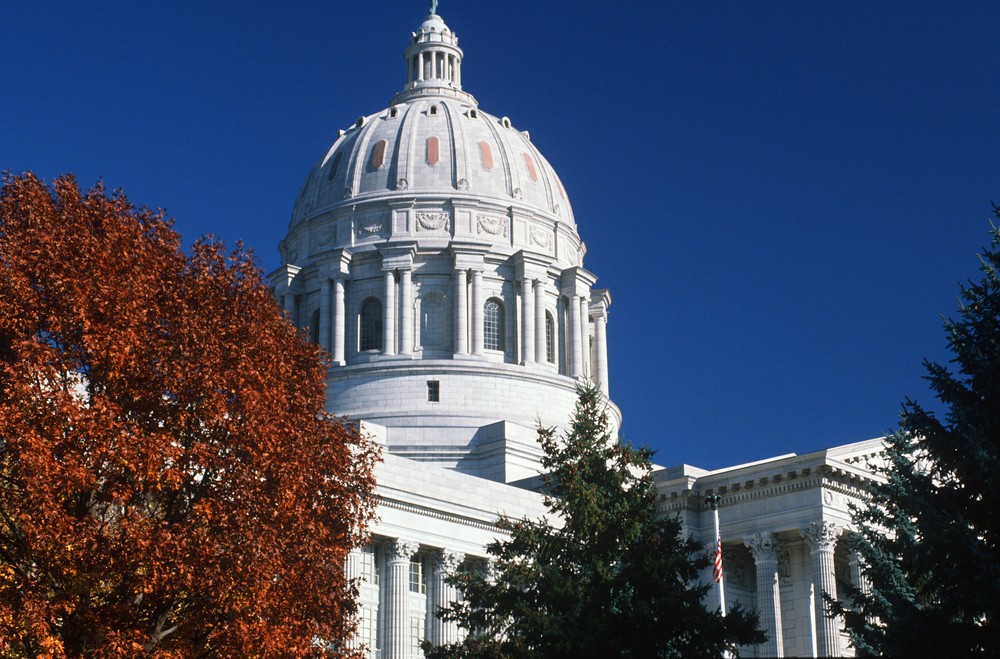
Missouri ranks 13th in the Tax Foundation’s “2022 State Business Tax Climate Index,” down two spots from last year. This publication grades how well states structure their tax systems and provides an overall rank along with individual ranks for five tax types. State indexes such as these are useful tools for comparison, and they help us think about what can be done to move us up in the rankings.

Per the Tax Foundation, states with the best tax systems “will be the most competitive at attracting new businesses and most effective at generating economic and employment growth.” A state should aim for a tax system that does not negatively affect business decisions; you don’t want businesses to relocate or decide not to expand because of tax concerns. Research has found that taxes that are low and broad based are least likely to affect business decisions in this way, and therefore make the best tax systems.

Missouri ranked relatively well for state corporate income tax, unemployment insurance tax, and property tax. Areas for improvement are the individual income tax and sales tax, as Missouri ranked 21st and 25th respectively. (It’s important to note that local taxes are factored into the index, but the main focus is state taxes, so this may not be a full picture of the taxes that affect Missouri’s businesses.) As explained in the index, Missouri has a good definition of taxable income, but a lot of income tax brackets, standard deductions, and exemptions, which complicate the tax system. Missouri’s highest income tax rate, 5.4 percent, is higher than the highest tax rate of 20 other states. The sales tax index is affected by sales tax rates, including the high local sales tax rates from numerous special taxing districts across Missouri.

Lawmakers should act to improve our ranking in this index—not just for bragging rights, but to attract businesses to our state. Lowering tax rates is one way to move Missouri in the right direction. Lawmakers should continue to lower income tax rates and work to rein in special taxing districts to improve the business tax climate in our state.

Event: Missouri School Rankings (Jefferson City)

Missouri schools are failing to teach the core subjects of reading and math, and the most recent test scores show that students are falling further behind. In response to the Missouri Department of Elementary and Secondary Education’s (DESE) failure to perform one of its most basic functions, the Show-Me Institute, in conjunction with Show-Me Opportunity, launched The Missouri School Rankings Project and MoSchoolRankings.org.

On February 23, Susan Pendergrass, director of research and education policy, will present her findings from the Missouri School Rankings Project and give an overview of how to use the website.

Register

This event is sponsored by Show-Me Institute and Show-Me Opportunity.

Event: Election Security Panel with Kinder Institute (Columbia)

You are invited to join the Show-Me Institute and the Kinder Institute on Constitutional Democracy for an expert panel discussion on election security on February 17. Four election officials will explain how they currently keep Missouri’s elections secure, offer suggestions for how to improve election security, and answer questions from the audience. We hope to see you there.

Panelists:

  • Eric Fey, St. Louis County Democratic Director of Elections
  • Brianna Lennon, Boone County Clerk
  • Kurt Bahr, St. Charles County Director of Elections
  • Shane Shoeller, Green County Clerk

Register

This event is sponsored by Show-Me Institute, Show-Me Opportunity, and Kinder Institute on Constitutional Democracy.

When It Comes to The Land Bank, St. Joseph Should Get Out While It Still Can

A version of this commentary appeared in the St. Joseph News-Press.

You are probably familiar with various versions of the phrase, “Time to get out while the getting is good.” While that suggestion does not often apply to government, it most certainly does to the St. Joseph Land Bank.

In 1971, the state created the nation’s first “land bank” in St. Louis to help get control of vacant properties and return them to private use. Since that time, the St. Louis land bank has proven better at acquiring properties than at returning them to the private sector. In a struggling city like St. Louis, that alone should not be a surprise. More troubling is that the hesitancy in getting rid of the properties it had has been no accident. Research by Show-Me Institute staff and others documented the alarming frequency with which legitimate offers for property in the land bank have been rejected. Most commonly, the land bank has been rejecting offers in order to hold the land for future — often more politically connected — development. That development has seldom come to fruition, so thousands of land bank parcels have just sat there for decades.

In 2012, Kansas City followed St. Louis with its own land bank. At the time, the Show-Me Institute published research documenting the failures of the St. Louis land bank as a warning to Kansas City about what was ahead. But, proving once again in government that nothing succeeds like failure, the state approved a Kansas City land bank, which was started up later that year.

Fast forward to December 2021, and the Kansas City Star has just published a series of stories on development failures in parts of Kansas City, including a major article on problems at the Kansas City land bank. Needless to say, the Kansas City land bank has not lived up to its promises. Its executive director was removed in 2018 after accusations of political favoritism and other problems. The family of the Jackson County executive received a special deal on certain properties, which raised plenty of eyebrows. As in St. Louis, the Kansas City land bank has been plagued by conflicts of interest and poor management.

Land banks have fundamental problems. Ideally, they would work quickly and efficiently to place properties they own back into private hands. But that very speed is what will inevitably make them subject to abuse by those with political connections. In order to guard against such problems, they can become a typical bureaucracy—slow and ponderous to deal with. But if they do that, few in the private sector will want to work with them. So, the choices are to operate quickly and accept some level of malfeasance or to operate bureaucratically and drive away some of the people who approach you. Finally, land bank employees have little incentive to do their jobs so well that they find themselves out of one. Idealists may wonder why St. Joseph’s land bank can’t have the best of all worlds and be nimble, honest, and focused—but if the experiences in St. Louis and Kansas City are any guide that is not going to happen.

The St. Joseph land bank has, according to reports, chosen to err on the side of ponderous bureaucracy since it began operating in 2019, and that was before it even held any properties. Now it has five properties to try to return to the private sector as taxable, productive land and buildings. I remember in 2012 when Kansas City opened its land bank and promised it would be operated more effectively than St. Louis’s. That didn’t happen. I am sure the same promises would be made now at the St. Joseph land bank in reference to Kansas City. I don’t dispute the sincerity of the promises—just the likelihood of their fulfilment.

Traditional county land trusts have worked fine as a way to deal with abandoned properties. The City of St. Joseph should take heed of the recent stories in Kansas City and transfer those five land bank properties to Buchanan County for inclusion in the annual county tax sale process. Get out while the getting is good, or else I will expect in about five years to read a News-Press exposé on the failures of the St. Joseph land bank.

Think We Can’t Handle the Truth? Think Again

A recent survey conducted by ALG Research and Public Opinion Strategies of 2,500 registered voters has some interesting items for legislators and the Missouri Department of Elementary and Secondary Education (DESE). Here’s a summary of the “Bottom Line”:

There is high, and deep, support for student testing in K-12 public education. As a result, elected officials across the country should ignore the noise and instead focus on what the lion’s share of voters are saying – test students each year to assess progress in reading, writing, and math, and look for opportunities to improve the way states can measure student progress in the future. Voters want testing to be fixed, not ended.

Overall, things are not looking good. Almost half (44 percent) of all voters in this survey say that the public schools in their state are on the wrong track and more than two thirds (68 percent) of parents believe that their children started the school year behind. But people don’t want to gloss over what is happening. In fact, nine in ten respondents said that testing students every year in reading, writing, and math is important.

Even when presented with arguments against testing, respondents overwhelmingly believe it is necessary:

DESE is preparing to launch the sixth version of the Missouri School Improvement Program (MSIP), which is used to hold schools and districts accountable for their performance. MSIP 6 is likely to be even less grounded in assessments than MSIP 5, given that just one half on one page in the accompanying 22-page document deals with academics.

Legislators would be wise to remember that parents and voters want real accountability. We can handle the truth, even in times of dismal performance. In fact, we welcome it.

Commentary: A Tsunami of Bad Policy

This commentary appeared in The St. Louis Post-Dispatch on December 7, 2021

Inflation has reared its ugly head again—hitting a 30-year high of 6.2 percent, which is more than triple the Federal Reserve’s definition of stable prices. Unfortunately, the wayward policies that have contributed to soaring prices, pervasive shortages, and sputtering growth are not going away. In fact, they are poised to get a whole lot worse.

President Biden signed the first of two giant spending bills into law on Nov. 15. That was the $1 trillion “Infrastructure Investment and Jobs Act.” The second bill is the administration’s proposed Build Back Better Act, passed by the U.S. House of Representatives a few days later and now pending before the Senate.

Taken together, we are looking at a potential tsunami of bad policymaking. Let us count the ways the two pieces of legislation threaten our nation’s freedom and prosperity:

#1. The infrastructure act is only partially about infrastructure as most people think of it. For example, the law spends only $110 billion on fixing roads and bridges—barely putting a dent in the maintenance backlog—while Amtrak alone will get 60 percent as much as all of America’s bridges and roads combined. Yes, that Amtrak—the one that has consistently run operating losses almost every year for the past 50 years. Tens of billions of additional dollars will go into public transportation even though only five percent of Americans rely on public transit in commuting to work.

#2. Also under the infrastructure act, the government says it will make “the largest investment in clean energy transmission and grid in American history,” and it calls for “building thousands of miles of new resilient transmission lines to facilitate the expansion of renewables and clean energy.” Wind and solar have been lavishly supported for decades, but still only account for 11 percent of U.S. electrical power generation, and their actual role is much less than that because they are intermittent. Does anyone seriously think they can come anywhere close to replacing gas and coal as the primary source of 60 percent of electrical power generation and be equally cheap, reliable, and easy to use?

#3. Then, too, as part of the green energy component of the “infrastructure” plan, the federal government will mastermind the building of a network of 500,000 electric vehicle charging stations, thereby not only putting taxpayer money at risk, but also putting the federal government in the position of picking winners and losers among America’s small-town communities through its choice of where to put those stations. The survival of local communities may soon depend increasingly on Washington, D.C.’s whims.

#4. The proposed Build Back Better Act would permanently and dramatically expand the welfare state and abolish work requirements as a condition for receiving aid. There would be some “free money” for taxpayers at all levels of income. The wealthy would get theirs in the form of expanded state and local tax (aka SALT) deductibility. The top current deduction of $10,000 isn’t much for a top-one-percenter living in an expensive house in a spendthrift, high-tax state like California or New York. Build Back Better includes an eightfold expansion of the maximum SALT deduction to $80,000. The typical taxpayer would get no benefit, while top earners would receive an average windfall of nearly $23,000. The Build Back Better Act would also permanently enshrine the Biden administration’s reimagined Child Care Tax Credit, which would allow a family to receive thousands of dollars a year ($3,600 per child under age 6 and $3,000 per child at 17 and under) in government cash with zero earned income and no expectation whatsoever of anyone having to seek a job.

#5. Adjusted for a lot of gimmickry, a close reading of the bill shows that it would result in nearly three trillion dollars in cumulative budget deficits over the next decade. Claims that the bill will not add a dime to deficits and debt are entirely spurious.

To sum up, what we have here is an overarching vision for transforming America. It would concentrate more decision-making power in the hands of the central government. And it would turn what has been a society of producers, workers, and investors into a society of people and institutions (including unions, businesses, schools, and an enlarged army of social workers and activists) whose livelihoods depend on what government gives them.

Medicaid Expansion Fuels Enrollment Growth

In the first two months since the state expanded Medicaid eligibility, nearly 25,000 Missourians have enrolled in the program.  This brings Missouri’s Medicaid enrollment to the highest point in state history, with more than 1.1 million recipients of state-sponsored health coverage.

A growing Medicaid program is nothing new for Missouri. Enrollment has crept higher in each of the past 21 consecutive months, dating back to the beginning of 2020. In that time, the program’s rolls have ballooned by more than 31%. In fact, enrollment in every single eligibility category (adults, children, elderly, persons with disabilities, pregnant women, etc.) has grown significantly over the past two years.

Keep in mind that program enrollment is the single biggest driver of Medicaid costs, which is a big part of why I was so concerned about Missouri expanding the troubled program. Even before Medicaid expansion went into effect, our state already expected to spend more on the program this year than ever before. In total, the program cost more than $11.5 billion last fiscal year, which was nearly 37% of the state’s budget. This year it’s expected to eclipse $12 billion for the first time.

Of course, the Medicaid program has been severely impacted by the COVID-19 pandemic. In response, the federal government approved multiple relief packages that include supplemental Medicaid funding. But this federal “relief” is now contributing to the state’s continued program growth. One of the early relief bills, the Families First Coronavirus Response Act, included a provision prohibiting states from removing anyone from Medicaid coverage unless the recipient asked to be removed or relocated out of state. This means that Missouri’s Medicaid agency stopped checking whether those already enrolled in the program were still qualified to receive services. Unsurprisingly, enrollment has increased in every month since, and it’s unclear when the agency will be allowed to resume eligibility redeterminations.

As I’ve written before, it’s long past time for Missouri’s elected officials to take the steps necessary to reform the state’s Medicaid program. Rooting out unnecessary spending in the Medicaid program should have been a higher priority before expansion, but now that continued enrollment growth is all but assured, it’s a necessity. How much longer can state taxpayers afford to foot the bill for this runaway spending?

Support Us

The work of the Show-Me Institute would not be possible without the generous support of people who are inspired by the vision of liberty and free enterprise. We hope you will join our efforts and become a Show-Me Institute sponsor.

Donate
Man on Horse Charging