Hazelwood, Bankruptcy, and Special Laws

The City of Hazelwood has announced that it is cutting back on the services it provides its residents. In related news, Hazelwood had a starring role in my new paper on special laws in Missouri. Is that a coincidence? Well, no, it isn’t.

Hazelwood’s biggest issue is that it is being held at figurative gunpoint by Robertson Fire District, a taxing district here in St. Louis that could qualify as one of the most obscure taxing districts we have. Robertson Fire District probably should not exist. The City of Hazelwood’s municipal fire department should be providing fire protection services to the entire city, but can’t because of a special law in Missouri that limits the ability of cities in St. Louis County that annex unincorporated areas to provide fire services in those areas.

Cities must pay taxes for the fire district to provide the fire services, which they do less efficiently than municipal fire departments. And it is much easier for fireman’s unions to get control of a fire district than a city government (though they can do that, too.). Anyway, Robertson has significantly raised its property tax rate—a rate that the City of Hazelwood, not just the residents within the fire district, must pay. These expensive bills from the high-spending Robertson Fire District are the primary reason Hazelwood is making the cuts mentioned at the start of this piece, and considering filing bankruptcy. From a Post-Dispatch story on the topic:

Median employee pay in the [Robertson] district was $116,066 in 2021, according to district salary records.

In 2021, the city paid Robertson $4.5. million out of a total budget of $30 million, and that does not include the cost to fund the Hazelwood municipal fire department, which covers other parts of the city.

The Robertson contract requires the city pay any fire district tax exceeding 99 cents for each $100 of assessed value. That cost has ballooned over the years, Hazelwood City Manager Matt Zimmerman told the Post-Dispatch in April. [Author’s note: The current rate is $2.41, much higher than $0.99, although the district claims it is going to lower it.]

This story is an example of a special law that is harming Hazelwood, and other cities, too. Cities within St. Louis County that incorporate or annex new areas should be allowed to provide municipal fire services within those areas. Frankly, Chesterfield should be operating its own city fire department; it could save Chesterfield residents a lot of money.

There is another special law, however, where Hazelwood gets the better end of the deal and uses that special authority to stick it to taxpayers. This law relates to hotel taxes. Hotel taxes within St. Louis County are pooled and used to fund tourism promotion, the downtown dome, and a few other things. The tax rate paid on hotel rooms everywhere in St. Louis City and County is 7.25 percent, on top of the normal sales tax rate. But a few cities (four to be precise, most near Lambert Airport) are allowed to have a hotel tax on top of that rate, and the most egregious one is Hazelwood, with a rate of five percent. The combined sales and hotel tax rate in Hazelwood is over 20 percent, and that is unjustifiable. (The other three cities’ extra hotel tax rates are all under one percent.)

In other words, throughout St. Louis City and County hotel taxes of 7.25 percent fund regional items, but a special law allows Hazelwood to charge an extra five percent to just promote Hazelwood. That needs to be changed and excessive hotel taxes need to be disallowed.

Live by the sword, die by the sword. I fully agree that Hazelwood’s primary financial problem is derived from a harmful special law that needs to be removed (the fire district law), but the legislature also needs to address the hotel tax that benefits Hazelwood unfairly.

I look forward to the Mayor of Hazelwood supporting both changes, not just one of them.

 

Charter School Students Will Finally Stop Getting Shortchanged

Governor Parson has now signed House Bill (HB) 1552 into law. In signing HB 1552, the governor has acknowledged that some public school students are not worth less than others just because they have chosen a charter school instead of their assigned public school. The Missouri law that addresses charter school funding will no longer have the “glitch” of charter school student state funding being deducted from local school district state funding.

In Kansas City, a large number of students attend charter schools. But because charter school funding comes from the local district’s state funding pool, which is finite, there is effectively a cap. Once the local district ran out of state money, charter school students stopped receiving a full share. This has led to charter school leaders trying to negotiate with Kansas City Public Schools (KCPS) to please dip into their local education revenue to fully fund what charter school students should, by right, be getting in state funding. This will no longer be necessary, as state funding will cover the difference.

More importantly, by fixing this glitch, the legislature and the governor have removed the disincentive to open more charter schools in Kansas City or for existing charter schools to expand and try to move families off waiting lists. I truly believe—and the pandemic has only exacerbated this—that Missouri families want more education options, not fewer. The legislature has been slowly moving in the right direction with Empowerment Scholarship Accounts (ESAs), improving access to the Missouri Course Access (MOCAP) virtual program, and giving parents direct access to federal stimulus money in the form of Close the Gap scholarships. Let’s keep this momentum going.

A Little Good News on Gas

As gas prices remain historically high across the nation and a statewide gas tax holiday seems unlikely, some very organized Missourians may soon get back a few dollars of the hundreds they’ve spent at the pump over the past nine months. Starting on July 1, Missouri drivers will be able to submit receipts for purchases from October 1, 2021, to June 30, 2022, to receive a refund of the 2.5 cent gas tax hike which went into effect last October 1.

To avoid letting voters decide on this tax increase, Missouri lawmakers included a provision that ostensibly stopped the new law from triggering the Hancock Amendment by providing a mechanism to decrease revenue. As Show-Me Institute Senior Analyst Elias Tsapelas pointed out when the tax increased last year, the refund included in the law is effectively a mail-in-rebate gimmick. The state seemingly hopes to profit off Missourians and people driving through the state who will not go through the hassle of collecting gas station receipts and filing refund claims.

The gas tax is currently set to increase by 2.5 cents each year until 2025, and every time it does, drivers will be eligible for a larger refund. In 2025, Missourians who keep their receipts and file the required paperwork will get 12.5 cents back for every gallon of gas purchased. Tammi Hilton, creator of the No MO Gas Tax app, which digitally stores receipts until forms are due, estimates that a person who bought gas one to two times per week since October could receive a refund of $40 to $45 this year. That number will only increase in the future.

The form to request a refund can be found here. It requires personal and vehicle information along with a detailed list of all gas purchases between October 2021 and June 2022. The form must be postmarked by September 30. But if you didn’t think to take down the name and address of every gas station you’ve visited since last fall, and the exact amount of gas you purchased there, don’t worry – you will have another shot at claiming a refund next year. The tax increases by another 2.5 cents on July 1. If the form, which requires a separate log of transaction details for each fueled vehicle, seems designed to discourage refund seekers from getting their money back, thank the legislature, which enshrined these requirements in the law.


SCOTUS, Scooters, and a Gas Tax Holiday

David Stokes, Susan Pendergrass and Abigail Wagner join Zach Lawhorn to discuss the recent SCOTUS decision  upholding a parent’s right to choose a religious private school, even if the tuition is being paid for with public dollars, the idea of a federal gas tax holiday, the ban on electric scooters in St. Louis, and more.

Listen on Apple Podcasts 

Listen on Stitcher 

Listen on SoundCloud

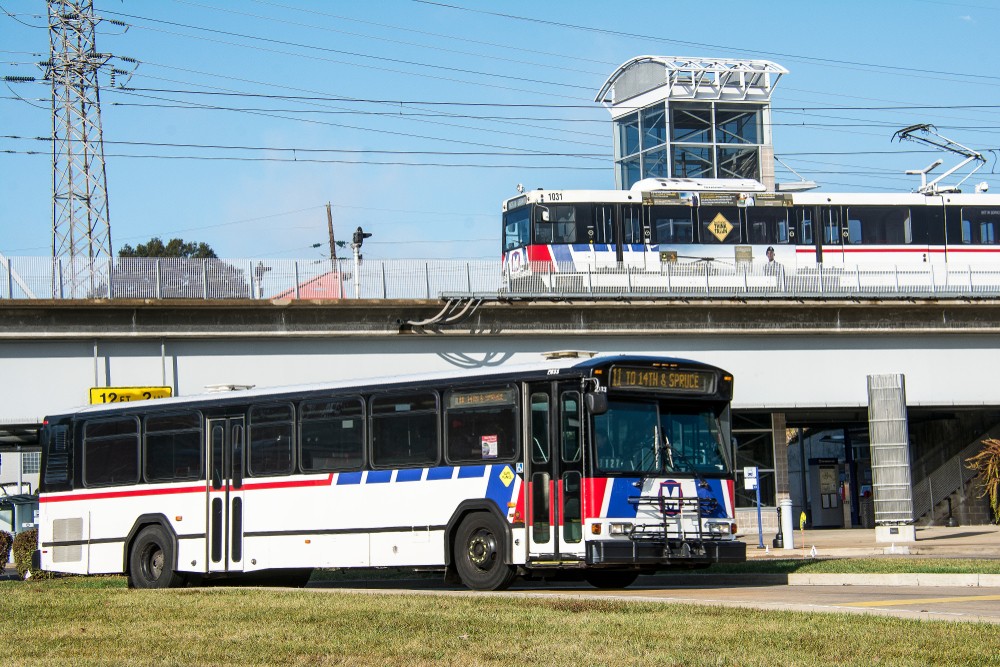
Even with an Updated Route, MetroLink Expansion is a Waste

Plenty of federal funds are available after President Biden signed a 1 trillion-dollar infrastructure bill into law last November, and Saint Louis Mayor Tishaura Jones is trying to cash in through an expansive northside–southside MetroLink expansion.

The proposed route received some tweaks earlier this month, and now is set to run from Natural Bridge Road at Grand Boulevard in north city down Jefferson Avenue past the National Geospatial-Intelligence Agency (NGA) headquarters and the site of the new MLS stadium. This new plan has an estimated price tag of between $600 and $800 million and would be financed primarily through federal funds. However, like the ill-advised KC Streetcar expansion, expanding MetroLink would be a waste.

The first and most obvious problem with the proposal is ridership. The project is touting the ability to connect impoverished areas of North Saint Louis with centers of commerce in places such as downtown and the Central West End. However, project leaders have yet to put out research supporting this claim. Considering that fewer and fewer people are commuting downtown for work, there are reasons to be skeptical of this assertion.

As a longtime Saint Louis sports fan, I understand that MetroLink can be a convenient way to get downtown and avoid the stress and costs of parking. However, building an additional stop and line to service the new MLS stadium is completely unnecessary, considering its proximity to Union Station­­­–it is only 0.2 miles away, or a five-minute walk. Instead of changing lines to access the dedicated stadium stop, soccer fans taking the train downtown would be better off exiting at Union Station and making the short walk over.

As with the KC Streetcar expansion I wrote about in a recent blog post, spending hundreds of millions of dollars on a questionable MetroLink expansion comes at the expense of bus systems.  Saint Louis Metro has been forced to cut lines amid staffing shortages, an issue which is predicted to persist into next year. Metro Bus is the primary means of transportation for roughly 22,000 St. Louis commuters, compared to only 4,000 commuters who primarily use MetroLink.

If St. Louis wishes to use federal money to improve public transit, it should improve the bus system and invest in more efficient types of public transportation, like Bus Rapid Transit (BRT). Unfortunately, policymakers’ tendency to chase shiny objects will likely leave Saint Louis with a defunct trolley, an oversized light rail system, and thousands of unhappy bus riders.

A Lesson on Early Literacy from the Magnolia State

If I polled one hundred Missourians on which state they thought had the best early literacy policies in the nation, I’m almost certain most of them wouldn’t immediately say “Mississippi.” Mississippi has long been at the bottom of the pack when it comes to reading performance, while Missouri has consistently floated in the middle. However, in 2013, Mississippi brought in a dynamic state superintendent of schools, Dr. Carey Wright, who has emphasized a science-based approach to early literacy and taken a tough stance on promoting struggling readers to the next grade level.

In the years since Wright’s appointment, Mississippi has reversed its last-in-the-nation status with an impressive increase in the percentage of its fourth graders who can read at grade level. In 2013, only 21 percent of Mississippi fourth graders achieved a score of proficient or above on the National Assessment of Educational Progress (NAEP), well below the 2013 national average of 34.8 percent. By 2019, Mississippi had improved that by a whopping 11 percentage points, a magnitude of gain that is rare on NAEP. In just six years, Mississippi fourth grade reading scores were equivalent to that year’s national average of 34.6 percent.

While scores have only just hit the average mark, Mississippi’s literacy growth in 2013 to 2019 exceeded that of every other state by seven points. During the same time period, Missouri continued to tread water. Our fourth-grade proficiency rate actually decreased by one point, from 35 to 34 percent. So, what did Mississippi do differently?

In 2013, along with appointing Wright, Mississippi passed the Literacy-Based Promotion Act (LBPA), requiring third graders not reading at grade level by the end of a school year to remain in third grade for intensive reading intervention. This requirement stems from research showing that students learn to read in kindergarten through third grade, then read to learn from fourth grade onward. Because of this, third graders who can’t read proficiently are four times more likely to fail to graduate from high school than those who can. Mississippi’s retention of students with literacy deficiencies gives them another chance to reach this important milestone and ensures that students are fully prepared to hit the ground running in fourth grade.

Missouri has already made some progress on this issue. Governor Parson signed SB 681 this spring, which requires reading intervention for struggling K-3 students. The new law, however, doesn’t require that third graders who demonstrate reading deficiencies be retained, and early research suggests that Mississippi’s strict enforcement of its retention policy may have played a major role in the NAEP score increase. If that proves true, Missouri lawmakers should consider taking a page out of Mississippi’s book by requiring that students read proficiently before starting fourth grade.

Legislature Squanders Health Care Opportunity

As has been discussed on this blog multiple times over the past few weeks, Missouri’s 2022 legislative session was largely a disappointing one. For me, the biggest letdown was the legislature’s failure to capitalize on the momentum for health care reform.

Since long before the COVID-19 pandemic began, my colleagues and I have written about the insufficient supply of health care providers in Missouri and offered a bevy of reforms that would help address the situation. Then, once the coronavirus arrived in the spring of 2020, Governor Parson waived a variety of laws and regulations that were needlessly inhibiting health care professionals from practicing in our state. While this was a positive step, waivers only offer temporary solutions to a permanent problem.

For the nearly 20 months after the waiver was first issued, state health care supply grew because of the reduction of unnecessary burdens. Thousands of Missourians tried telemedicine for the first time. Advanced practice registered nurses (APRNs) were allowed to navigate freely across the state to serve patients that needed care. And licensed health care providers from other states were allowed to come to Missouri and easily begin providing care.

While the services described above may not sound out of the ordinary, none of them were allowable under Missouri law prior to 2020. Telemedicine was largely restricted to patients and providers who had met previously in person. APRNs were only allowed to practice medicine within 75 miles of a collaborating physician. And finally, state professional registration boards were not required to recognize the licensure of many practitioners from other states, or at least not without first requiring them to clear too many unnecessary hurdles. Fortunately, Missouri’s legislature acted on that last item and approved interstate license reciprocity in 2020, which drastically improved the licensing process for out-of-state professionals interested in working in Missouri. Unfortunately, easy access to telemedicine and APRNs remained reliant on emergency waivers.

As I wrote less than a month ago, I was optimistic going into the 2022 session that reform was on the way. Missouri was turning the corner on COVID-19, and Governor Parson allowed the emergency order for the pandemic to expire, along with the health care waivers. Rarely is the opportunity for legislative action so apparent and uncontroversial; the legislature simply needed to enshrine the popular status quo from the past two years into law. Instead, health care reform was another victim of this year’s legislative dysfunction, leaving any hope for action once again to the future.

Support Us

The work of the Show-Me Institute would not be possible without the generous support of people who are inspired by the vision of liberty and free enterprise. We hope you will join our efforts and become a Show-Me Institute sponsor.

Donate
Man on Horse Charging