
Education as a Winning Issue in 2022 with Andy Smarick

Susan Pendergrass speaks with Andy Smarick, senior fellow at the Manhattan Institute, about how the 2022 campaign and election cycle provided an opportunity to better understand whether national issues and narratives around education match those at the state level.
Read Andy’s full report here.
Produced by Show-Me Opportunity
The Case Against Rebooting Film Tax Credits in Missouri

In 2013, Missouri ended its film tax credit program. Now there’s legislation moving in Jefferson City to revive the failed program.
Legislators should leave film tax credits where they lie, on the cutting room floor.
Studies Cited:
Tax Foundation: https://bit.ly/3Zln1zy
Mackinac Center: https://bit.ly/3ZsgPWi
Pot Taxes Can Help Municipal Kettles Get into the Black

A version of this commentary appeared in the St. Louis Post-Dispatch.
When Missouri voters approved the ballot initiative legalizing marijuana last year, one part of the plan authorized cities and counties to enact a three-percent tax on marijuana sales in their communities (once again upon voter approval). Not surprisingly, many local governments in the St. Louis-region are attempting to do just that this coming April. The argument in favor of voters approving the tax is straightforward enough, but the debate over what to do with the new tax revenue is more complex.
“Pigouvian” taxes are taxes levied on certain goods to address their negative effects. They are common and include special taxes in Missouri on items like cigarettes, alcohol, and pool tables (yes, really, pool tables). Tobacco and alcohol consumption impose certain costs on society, and the extra tax revenue is used to fund services to address those negative effects, like lung cancer research and drunk driving enforcement. In addition, the taxes simply make the item more expensive, thereby reducing consumption. Elsewhere, for example, gas taxes may be quite high not only to fund roads but also to encourage public transit. Marijuana legalization will indisputably have some negative societal effects, and the three-percent local sales tax on it can help fund services like county health departments and municipal police efforts to mitigate those negative impacts. Also, life is not a Cheech and Chong movie—dare to dream that it were! —and cheap pot really doesn’t do anyone much good. I generally support neither new nor high taxes, but the argument in favor of these new local marijuana sales taxes is very strong.
What to do with the money is more difficult. There are two questions: Should the revenue be dedicated to certain uses or sent to the general fund? And should it serve as new revenue or be used to cut taxes elsewhere? Economists have long debated the costs and benefits of earmarking taxes for specific uses. Directing taxes into the general fund gives local officials more flexibility to address local needs, but earmarking taxes improves both voter and elected-official decision-making and accountability. In some cases, as with cigarettes, the harms to society are easy to determine. Accordingly, the choice to earmark tobacco taxes to health-related fields, as we generally do in Missouri, is defensible. Legal marijuana, however, will be more like alcohol, with costs and harms (also called externalities) to society spreading across a variety of sectors. Should the tax revenues go to policing? Health care? Family services? Frankly, who knows? This is why alcohol taxes generally are not earmarked in our state, nor should local marijuana taxes be.
Politicians will try, as is their wont, to treat the new marijuana tax revenue as manna from heaven. Voters should demand more from them as we approach the elections. A new marijuana tax should not just be an opportunity to raise more revenue. It should also be an opportunity to replace other, more economically harmful taxes. St. Louis County, with its high commercial property surtax, should use the marijuana revenue as a justification for a surtax reduction. Cities such as University City with the woeful economic development sales tax—a misnomer if there ever was one—should use the marijuana revenue to replace that useless tax. It could be a small part of a larger package to help phase out the earnings and payroll taxes in St. Louis city. And, yes, at a minimum it should replace the anachronistic pool table taxes implemented long ago in the days of seedy pool halls, gangster molls, and bathtub hooch.
There is, unfortunately, one question mark hanging over the upcoming votes. The question of whether a county-level marijuana sales tax will apply countywide or only in the unincorporated areas is unclear and will likely be determined in court. The budgetary implications for counties are enormous, as the revenue difference between the two options is substantial. If county taxes are determined to be in addition to municipal taxes, that could make the total sales tax for marijuana purchases well above twenty percent. A sales tax that is too high is concerning because it might encourage the illegal market for marijuana to continue, as has happened in California. This would nullify one of the purported benefits of legalization.
Marijuana taxes are an opportunity to improve both the current budgets and the long-term tax environment for cities and counties. Voters should demand a plan that does both.
Missouri’s Ghost Students

Imagine that your taxable income on your annual income tax return wasn’t how much you earned last year, but the lowest amount that you earned in any of the last four years, even if you were unemployed for one of them. You could just keep rolling out that really low earning year for several years. That scenario is what actually happens with Missouri’s funding for public education.
The foundation formula—which is used to equalize public education dollars between property-rich and property-poor school districts—is based on the highest student attendance number in any of the last four years. It has always been the case that Missouri districts can pick the highest of any of the last three years to use as their average daily attendance (ADA), but the law was adjusted during COVID to allow districts to use any of the last four.
Here’s what puzzles me—this is still happening. According to instructions from the Department of Elementary and Secondary Education (DESE), in FY 2022 student attendance was “broadly impacted” by the Delta and Omicron variants and therefore, for FY 2024, districts can still use the highest attendance of the four previous years. Isn’t it time to stop leaning on COVID?
But here’s what this means in reality. Let’s take the district Fort Zumwalt district as an example. In 2021, it received an average of about $3,000 in foundation formula money per student. Even though its ADA in 2022 was 15,971, Fort Zumwalt gets to use its 2019 ADA of 16,856 for four years, giving it almost 900 ghost students to use in the formula. Moreover, its ADA has steadily declined from over 17,200 students in 2015 to just under 16,000 in 2022—this decline started before the pandemic. Statewide, using the maximum ADA for the past four years for all school districts results in a total of 65,500 ghost kids. Using the foundation formula’s per-student State Adequacy Target amount (the minimum amount the state says each student should receive in state funding) of $6,375 results in over $415 million in funding for students who used to be in attendance.
We know that kids have been on the move since the pandemic. Homeschool numbers have skyrocketed. Private schools have enrolled public school switchers. Some students may have decided that virtual schooling worked well for them, and some parents have gotten together to start their own schools. Public funding for education can easily keep up. We should be funding students where they are, not where they used to be.
Comments on Increasing the Minimum Wage in Missouri
This year, the Missouri Secretary of State has already received 24 initiative petitions to raise the state’s minimum wage. If any of these proposals receive the required support to be placed on the ballot, Missouri voters could have the final say on the issue come November 2024. Over the past fifteen years, the Show-Me Institute has published numerous reports on the potential impacts of raising the minimum wage in Missouri. Last week, I submitted comments to the secretary of state’s office on twelve of the current proposals. Those comments can be read via the link below.
“Loyalty Oaths” in University Employment Should Be a Non-starter
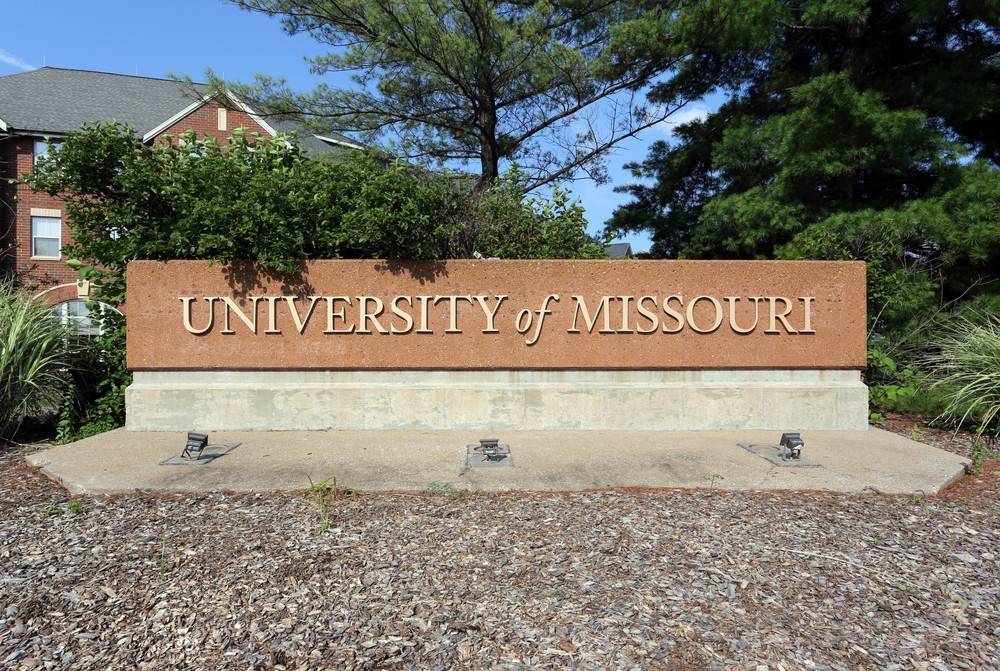
Colleges and universities have been implementing diversity initiatives for many years now. I’ve commented on the massive problems inherent in the diversity, equity, and inclusion (DEI) push in education in the past. But now some Missouri institutions of higher learning have taken it a step further by requiring the equivalent of a “loyalty oath” to diversity initiatives as a condition of employment.
“Loyalty oaths” can mean a lot of things, but here I mean “loyalty oath” to be an ideological attestation required for public employment. Want to work at Missouri State? UMSL? UMKC? You might have to toe the DEI line first, even though doing so (1) is prejudicial to applicants, (2) undermines the free inquiry objectives of government colleges and universities by homogenizing professors, and (3) could deny Missouri students the best teachers by biasing hiring toward ideologues rather than experts.
Here’s another example: a University of Central Missouri job listing for a librarian features this remarkable sentence that starts reasonably and spirals from there:
The Cataloging and Metadata Librarian identifies and addresses metadata remediation needs, as well as the adoption of new or updated standards and vocabularies in support of James C. Kirkpatrick Libraries’ commitment to incorporating social justice into our work, focusing on the James C. Kirkpatrick Libraries’ diversity, equity, inclusion, and anti-racist efforts.
A math professor listing for Mizzou notes that an applicant who can “employ justice-oriented frameworks (e.g., anti-racist, abolitionist, decolonial, indigenous)” to their work would be a preferred applicant.
Taxpayers should be paying to “decolonize” math, huh?
Employees of America’s higher education system have long been left of center on average, but taxpayers shouldn’t have to subsidize this special kind of nonsense. Compelling librarians and math professors to commit to the Left’s preferred politics is viewpoint discrimination that encourages groupthink and creates an academic environment where everyone who’s hired to educate is part of some political in-group. That’s unhealthy if you want an academic environment that challenges biases rather than affirms them.
Hiring practices like those required in these “loyalty oaths” could discourage highly qualified subject matter experts from even applying for jobs that have no, or should have no, political or social justice component. Florida is in the process of uprooting this sort of caustic academic culture entirely, dismantling DEI programs in colleges and universities statewide. All other things being equal, are Missouri taxpayers really willing to cede qualified conservative and moderate professors to states like Florida? I don’t think so.
Missouri institutions of higher learning should focus on creating a welcoming environment by treating employees and students as individuals instead of trying to engineer campus-wide groupthink through the way that they hire teachers. Woke loyalty oaths have no business in the state’s hiring documents.
Update: University of Missouri President Mun Choi responded to this post with the following statement:
University of Missouri President on faculty recruiting practices:
The UM System does not have loyalty oaths
——-
COLUMBIA, Mo. — A recent post from the Show-Me Institute references “loyalty oaths” related to faculty hiring at higher education institutions. I want to be very clear — we do not have loyalty oaths of any kind at the University of Missouri System.
We strive to ensure that every UM System university has employees who are committed to an inclusive and welcoming environment for everyone. Currently, we have students and scholars from every county in Missouri, all 50 states and more than 50 countries, among them individuals from various walks of life, including from rural and metro areas, military veterans and first-generation students — each with a different point of view.
———–
We hire the best faculty who exemplify the highest standards of teaching and research, and we do not compromise on quality.
A (Tweaked) Clean Slate Bill Offers an Important Opportunity for Criminal Justice Reform

Over the past few years, the Clean Slate Initiative has picked up steam in state capitols around the country. What is Clean Slate, you ask? It’s a basket of expungement laws intended to help non-violent ex-offenders get past their previous mistakes, making it easier for them to find employment and housing by removing past qualifying crimes from their criminal records. I’m generally supportive of measured expungement efforts, as I can’t imagine the Founders intended for there to be a permanent, digital scarlet letter on every American who’s ever broken the law.
That said, there is a great deal of balancing that has to take place when considering legislation like this. After all, employers and landlords both have their own interests in having a full picture of who they’re hiring or housing. Does a bank want to hire someone convicted of fraud? Probably not. Good faith arguments about the manner and extent of expungement laws are an important part of the process, and those debates are happening in Missouri over Clean Slate. For me, a Missouri version of Clean Slate needs to ensure two things happen.
First, in contrast to Clean Slate’s “automatic expungement” proposal, why not have former offenders initiate the expungement process, after which expungement is automatic?
It’s a nuanced but important point. Supporters of model Clean Slate legislative language generally prefer the idea of “automatic expungement”—that after a certain period of time, an offense drops off criminal records without any action taken by the ex-offender. In Missouri, the existing expungement process is a petition-based system, which can be fraught, winding, and ultimately unwieldy for many former offenders to navigate. Many don’t bother, leaving expungeable offenses on their records.
But combining the offender-initiated expungement process with automated expungement offers the best of both worlds. It puts the responsibility on an offender to start the process of beginning a new chapter in their lives and strikes out the judicial bureaucracy that stops many ex-offenders from initiating expungement to begin with.
Second, the state should not impose a sort of prior restraint on background check companies.
The standard Clean Slate proposal contemplates restrictions on what background check companies can tell employers and landlords, even if what they tell them is true. There’s no denying the truth that ex-offenders broke the law, and background check companies have the right to share truthful information about an individual’s criminal record. The question is, how do you best balance the First Amendment rights of companies and the policy objectives of Clean Slate?
Well, a better way forward is to set out legal incentives for background check companies in the way they characterize past expunged offenses. The state should allow background check companies (1) to omit expunged offenses and protect them from liability for that omission, and (2) to report the expunged offense but only if its expungement is clearly included. Such an approach would not only allow background check companies a path to omit offenses without running afoul of the First Amendment, but it would also give ex-offenders a right to sue for defamation if their criminal history is mischaracterized by these companies.
Central to the issue of background checks is how those performing background checks even gain access to this criminal justice information, which at its core is a kind of transparency issue. Missouri has a robust court activity database where reams of case information are readily available to the public, and overall, that’s a good thing.
But while transparency of government is extraordinarily important, transparency of the records of individuals is a thornier policy subject. Individual income tax filings are highly protected documents not subject to public perusal; should non-violent and comparatively low-level criminal offenses be treated similarly? Perhaps. In any case, if the expungement of criminal records is ever to be properly effectuated, legislators must also assess how available these records should be in general.
As with all policy proposals, legislators should weigh out all the costs and benefits of Clean Slate, both as originally proposed and as it might be modified for Missouri. For a complex issue like criminal justice reform, the details matter, and getting those details right can take time. Clean Slate may or may not get done this year, but with a few tweaks, I think it can get done here in Missouri sooner, not later.
Money for Movies, Funding Education in 2023, and Pot Taxes
Susan Pendergrass, Elias Tsapelas, and David Stokes join Zach Lawhorn to discuss film and entertainment tax credits, Susan’s break down of state and federal funding for education in Missouri, freezing property taxes for people over 65, and more.
Download Susan’s New Report Here.
Produced by Show-Me Opportunity
