St. Louis County Municipal Use Taxes Should Expand the Tax Base, Not the Size of Government

A version of this commentary appeared in the St. Louis Business Journal.

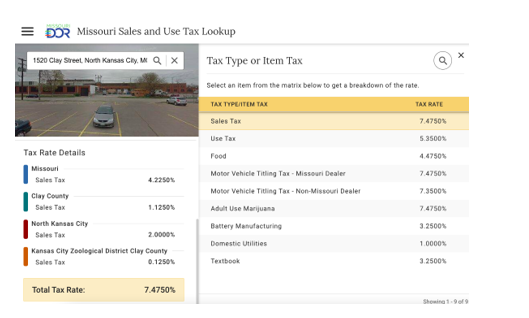
Use taxes in Missouri are simply sales taxes on goods delivered to your home from out-of-state sellers. Local governments have been authorized to collect use taxes for a long time—predating the internet, even—but they have not been widely adopted. Collecting sales taxes on a family’s Sears catalog purchases in St. Louis was a lot of work for little revenue. The internet has changed that. The Supreme Court decision in the “Wayfair” case, changes to state legislation in 2021, and, most obviously, the tremendous increase in e-commerce during the pandemic, have all combined to greatly increase the need or desire (depending on your point of view) for governments to tax online sales.

For purposes of comparison, e-commerce now makes up over 14% of total sales in the United States according to the U.S. Department of Commerce. For cities in St. Louis County, 14% is a lot of sales not to tax. To address that, several St. Louis County municipalities (Chesterfield, Town and County, Fenton, Maryland Heights, Velda City, Flordell Hills, and Northwoods) have placed a use tax on the April 4, 2023, ballot. In many of these municipalities, use taxes have been proposed and failed previously. However, a lot has changed in e-commerce in recent years, and it may be time for voters to revisit the issue. (Although for cities like Chesterfield and Fenton, where voters rejected the use tax less than a year ago, asking again in the manner of a spurned yet persistent suiter is unseemly.)

Expanding the tax base with a use tax, if done in conjunction with a reduction of other, more harmful taxes, could be a beneficial change for cities in St. Louis County. But let’s be clear: if there is no corresponding reduction in other taxes, this is a tax increase on residents.

Flordell Hills is a particularly intriguing decision. I’m curious to see if voters will trust city government with more tax money after two city officials were recently convicted of stealing over $600,000 in city funds—a substantial portion of the annual budget. Fool me once . . .

It is a central tenet of tax policy that a tax base should be as broad as possible. The more expansive the tax base, the lower the rate that must be imposed to fund the functions of government. Exact use-tax revenue amounts are hard to predict, but Maryland Heights, to give one example, previously estimated it would receive about $2 million per year if a use tax is enacted. The use tax could be approved by voters to responsibly expand the tax base and equalize the competition between online and physical stores, but it should not be approved simply to grow municipal government revenues. Imposing a use tax in a revenue-neutral manner is not new idea. It is exactly how the Missouri legislature addressed this issue with the state’s new use tax law in 2021.

For the cities in St. Louis County proposing to impose their own use taxes, the simplest way for them to offset the revenue increases from the use tax would be to lower their property taxes in a revenue-neutral manner. That would lead to a wider tax base, fairer competition between businesses, and lower rates for taxpayers. Other options for various cities if the use tax is approved include eliminating more harmful taxes or fees. Reducing the local utility tax rate would be another good exchange for cities that do not levy property taxes, such as Chesterfield.

The imposition of a use tax in these St. Louis County cities could be a positive policy change. It could also be an easy way for politicians to just raise taxes one more time. By having various city officials pledge to enact offsetting revenue reductions that embrace the positive aspects of the use tax, these municipalities can amplify the public benefits while curtailing the tax impact on residents and businesses. That is a plan I think most taxpayers and voters could support. Without such a commitment, though, the use tax is just another tax increase.

Tax Refund: Failure to Launch

The results are in, and the first year of Missouri’s gas tax refund program couldn’t have gone much worse.

Recently, the Missouri Department of Revenue released data showing that in the refund program’s first year, fewer than 17,000 Missouri taxpayers decided to claim a refund. This amounted to less than $500,000 being returned to taxpayers.

Back when the gas tax hike was being debated, I repeatedly sounded the alarm about a few of the bill’s provisions (read more about the concerns here). The gist of the bill was that the state’s gas tax would increase by 2.5 cents per year for five years, but Missourians could get a refund for the amount of the new tax they paid.

Typically, Missouri’s constitution requires tax increases to receive voter approval before they can be enacted. But this refund provision helped convince lawmakers that their legislation wasn’t necessarily a “tax increase” on Missourians, thus giving them the ability to sidestep this pesky provision. According to the bill’s fiscal note, even the department of revenue’s “low-refund” estimate suggested that at least 15% of all gallons purchased would receive refund claims. If this were true, this first year of refunds would have totaled more than $11 million. Instead, only about 4% of the low estimate was claimed.

At the time, I remarked how skeptical I was that many Missourians would claim these refunds. I thought that unless the department of revenue made it easier for taxpayers to file claims, the amount of money eligible for refund would likely be too small to convince Missourians to bother. The process is tedious and cumbersome—in order to file for a refund, you must keep all the gas receipts that you are seeking reimbursement for, fill out a spreadsheet with information on those receipts, and the request must be completed in a narrow time window after the fiscal year ends. While the current sample size for refund claims is small, the ridiculously low amount of dollars returned leads me to believe that this prediction turned out to be correct.

To be fair, this is only the first year of the multi-year effort, and as the gas tax continues to rise over the next few years, the value of the refund to taxpayers will increase. But it’s also fair to say the participation in year one should be worrying to anyone who believed the bill was not an effort to significantly raise taxes on Missourians without their input.


Legislature Must Remove the “Compact Exception” to License Reciprocity

I’ve talked a lot about licensing reform in the last decade, especially in the health care space. The reason is simple: supply matters, and ensuring that consumers of all services have the maximum available supply of professionals of all sorts is crucial to maximizing quality and minimizing costs through competition.

First with the Volunteer Health Services Act in 2014 and then with a raft of licensing reforms in recent years—including unilateral license reciprocity/universal license recognition (ULR) in 2020—Missouri has been on a solid policy trajectory on licensing reform in the last decade. Just last week, in fact, the Archbridge Institute announced that by its metrics, Missouri has the second lowest burdens for licensure in the United States behind only Kansas.

Clearly, the Show-Me State can’t allow itself to be second fiddle to the Sunflower State, so the legislature. must. act. now.

And while my grammar here is intentionally overdramatic, my point is unironic: Missouri can and should make its licensing system better. I was reminded of this when I heard that the House was debating adoption of the Interstate Medical Licensure Compact (IMLC,) which deals with physician licensing and which I even wrote about in my 2016 paper “Demand Supply: Why Licensing Reform Matters to Improving American Health Care.” There, I noted:

[U]nder the Compact . . . the status quo licensing restrictions remain largely the same, harming physicians and patients alike. The Association of American Physicians and Surgeons (AAPS) has concerns similar to [researcher Shirley] Svorny’s, cautioning that the Compact will “[increase] the power of a private bureaucratic organization to intervene in, define, and control the practice of medicine.” The Compact would preserve the 50-State licensing regime physicians and patients currently live under, with the wide variety of requirements to not just earn but also maintain a physician’s license in each jurisdiction.

As I’ve long argued, licensing reciprocity statutes are superior to “compacts.” A “compact” that allows physicians and other professionals to practice in other states that they otherwise couldn’t has the potential to be a good thing, but in a state with license reciprocity on the books, a “compact” has the potential to actually harm consumers.

That’s because in a state like Missouri, if the legislature passes a compact law for a profession, it could actually supersede the state’s better reciprocity statute. As my former colleague Corianna Baier observed last year:

[T]he current licensing reciprocity statute states that licensing reciprocity “shall not apply to an oversight body that has entered into a licensing compact with another state for the regulation of practice under the oversight body’s jurisdiction.” On its face, this language indicates that the license compact would overrule licensing reciprocity to the injury of Missouri consumers.

Here’s another way to think about it. With Missouri’s current licensing reciprocity, Missouri consumers have access to professionals in 50 states and Missouri licensees have access to 1 state (Missouri). (Of course, they may have access to other states with reciprocity, but that is not controlled by Missouri lawmakers.) If Missouri were to enter the Audiology and Speech-Pathology Interstate Compact, it seems that consumers seeking audiology or speech pathology services would have access to professionals from only 16 states (the 15 in the compact plus Missouri), and Missouri licensees would have access to customers in 16 states. While this change gives a small benefit to licensees, Missouri consumers lose out. [Emphasis mine]

This is an important point and explains why we have seen redoubled efforts to pass “compact” language for some professions in Missouri recently. A compact would take power from the market and give it to powerful, entrenched leaders in various professions and allow them to regulate members and competition for that field.

The simple fix (and one that you might have surmised from the title of this post) is to remove the “compact exception” to license reciprocity. Clearly, the adoption of the IMLC for physicians may be advantageous to physicians and the medical bureaucracy, but Missouri’s reciprocity statute must supersede such agreements to be in the interest of consumers. Striking language in the current statute to the contrary would be a major advancement that, I think, would catapult Missouri into an unambiguous position as the national leader in licensing reform, ahead of that state-that-shall-not-be-named to the west.

If the IMLC bill continues through the legislative process, it may be the best vehicle for compact-excising reform to come, but we’ll see what the remainder of the session brings on this policy front. Stay tuned.


University of Missouri System Walks Back “Loyalty Oaths” in Job Listings

Last month I criticized a wide swath of Missouri public universities for requiring woke ideological attestations as a condition of employment, which I characterized as “loyalty oaths.” Around that time, a state legislator submitted legislation to deal with the matter, and late this past Friday, news broke that University of Missouri President Mun Choi would be stripping the problematic hiring language from the job listings posted by the University of Missouri System:

The goal of this language change would be to address concerns about diversity statements resembling “loyalty oaths” or “litmus tests,” Choi explained in his letter. MU spokesperson Christian Basi said Friday afternoon that the university does not and has not used these practices during the hiring process but wanted to clarify its practices. . . .

The Show-Me Institute, a Missouri-based think tank that advocates for “free markets and individual liberty,” also criticized the state’s universities for using diversity statements as “loyalty oaths” in the hiring process.

“We do not use loyalty oaths or litmus tests but a few of our job advertisements contained information that may give some readers the impression that such a request was inferred,” Choi wrote in his letter this week.

As reported by the Columbia Missourian, the new “values” language reads as follows:

We value the uniqueness of every individual and strive to ensure each person’s success. Contributions from individuals with diverse backgrounds, experiences and perspectives promote intellectual pluralism and enable us to achieve the excellence that we seek in learning, research and engagement. This commitment makes our university a better place to work, learn and innovate. In your application materials, please discuss your experiences and expertise that support these values and enrich our missions of teaching, research and engagement.

Without nitpicking, I will say that this language is an improvement over previous university job application expectations, such as noting that ideal candidates for a math professor position “employ justice-oriented frameworks (e.g., anti-racist, abolitionist, decolonial, indigenous)” in their work.

No one should blind themselves to the fact that the woke mindset has penetrated deep into Missouri’s higher academy. The incidents I cited were not isolated, and they are likely the tip of the iceberg. President Choi’s statement was good as far as it goes, but so far as I can tell no university employee was disciplined for requiring diversity statements, and the bureaucracies that produced them remain untouched.

Barring a legislative solution, we are going to see the woke agenda continue to consolidate its control over Missouri higher education.

If the system’s move was made to halt a statutory solution, Missouri legislators should not oblige. While I welcome President Choi’s improved and appropriate expectations for prospective hires, he doesn’t lead every public university in the state, and there’s nothing to stop other universities—or the University of Missouri System in the future—from falling back on woke bad habits.

President Choi’s decision to excise woke loyalty oaths from university hiring documents is encouraging. The legislature should finish the job.

Tax Cuts, Tax Votes, and Open Enrollment

David Stokes, Elias Tsapelas, and Avery Frank join Zach Lawhorn to discuss the start of the second half of the legislative session, the tax cut bill moving through the House, upcoming ballot items, the status of the open enrollment bill, and more.

Listen on Apple Podcasts 

Listen on Stitcher 

Listen on SoundCloud

Produced by Show-Me Opportunity

Tax Credit Insanity

It’s said that the definition of insanity is doing the same thing over and over again and expecting different results.

Missouri’s economy has lagged much of country over the past decade. And for more than twenty years, Missouri has been a national leader in awarding tax credits for private gain in the name of “economic development.” If issuing tax credits were a good way to spur growth, our state would have one of the fastest-growing economies in the country. But it’s not, so we don’t.

Unfortunately, despite years of evidence that economic development tax credits don’t work, state policymakers appear to be doubling down on this wrongheaded approach. After more than a decade dormant, Missouri’s film tax credit is on the path to returning. The Senate approved a bill rebooting the program, and a House committee recently voted out a separate measure including the credit. All of this for a program that was so bad our elected officials got rid of it in 2013.

Countless reports, studies, and audits reached the same conclusion: the program is a horrible investment. It serves too narrow of an industry to help grow a state’s economy. Much of the credit’s benefit goes to out-of-state companies and workers. And further, the tax credits do not generate sufficient tax revenues to justify the subsidy. While it is true that many other states currently offer some form of film subsidy, that is not an excuse for Missouri to rejoin this race to the bottom.

As we enter the second half of this year’s legislative session, there’s still time for our elected officials to reverse course. It’s understandable that policymakers would be interested in finding policies that would help get Missouri’s economy back on the right track, but government picking winners and losers isn’t the way to do that.

In fact, turning around Missouri’s economy doesn’t have to be as difficult as our elected officials are making it seem. If taxes are too high for the film industry to consider Missouri, instead of subsidizing Hollywood, policymakers should focus on lowering the tax burden for all Missourians. At the very least, our elected officials need to stop advancing policies that we already know don’t work. Bringing back the film tax credit is not just a bad idea—it’s an insane one.

China, Russia, and the Changing Global Landscape with Senator Jim Talent and James Jay Carafano

On March 21, 2023, the Show-Me Institute hosted a virtual event with Senator Jim Talent and Heritage Foundation’s James Jay Carafano. They discussed rising tensions between the United States and China, the ongoing Russian invasion of Ukraine, the possibility of conflict over Taiwan, and more. Watch a recording of the event here.

Listen as a Podcast

Listen on Apple Podcasts 

Listen on Stitcher 

Listen on SoundCloud

Support Us

The work of the Show-Me Institute would not be possible without the generous support of people who are inspired by the vision of liberty and free enterprise. We hope you will join our efforts and become a Show-Me Institute sponsor.

Donate
Man on Horse Charging