Costly AND Outdated. Where Do We Sign Up?

The Bi-State Development Agency, commonly known now as Metro, is once again proposing to expand the MetroLink light rail system in St. Louis. At this time, Metro is proposing to build a north–south connector route along Jefferson Avenue in St. Louis City, with plans to eventually connect it up to North St. Louis County.

Is this plan going to be a positive step forward for the St. Louis area? No, not at all. It will be a wasteful doubling down on a failed strategy to force feed light rail into a metropolitan area that would be far better served by an improved bus system from a transportation, financial, and social perspective.

In a forthcoming paper for the Show-Me Institute, Randal O’Toole will discuss how addressing transit issues in St. Louis by expanding MetroLink is a fool’s errand, and an extremely expensive one at that. Metro’s total transit ridership in 2019 was less than it was in 1993, before MetroLink even opened. The pandemic only exacerbated this problem, with fewer jobs and workers in downtown than before. Jobs are spread out throughout the metropolitan area, and buses are well equipped to connect workers to changing jobs, students to new schools, and sports fans to games. (We can admit MetroLink does a good job with the sports teams for some—but that is hardly a justification for expanding the entire wasteful system.)

Metro would better serve our region by spending its tax money on an effective bus system, including bus rapid transit for high-volume areas, instead of expanding a costly, inefficient, and unwieldy fixed-route light-rail system that fails in its primary purpose—serving St. Louis transit users.

Kansas City Leaders Need to Get a Handle on Crime Situation—Now

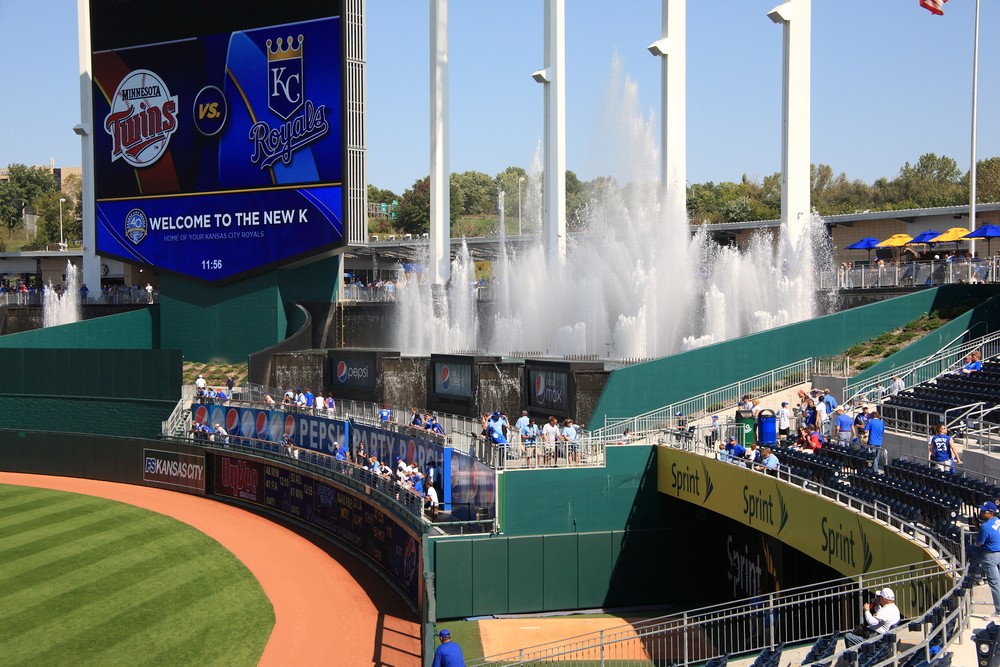
Frequent Show-Me Institute readers are likely familiar with our analysts’ concerns about violent crime in St. Louis, but many of those critiques apply to the state’s largest city, Kansas City, as well. The City of Fountains is presently on pace to blow by last year’s homicide count of 171 killings, which was the city’s second highest on record. It appears Kansas City officials finally believe something has to be done about the murder problem—possibly because the Royals are hinting that they might leave the city entirely.

And what’s being done? Judging from the latest press conference held by the police chief and mayor yesterday, not much:

The Violent Crime Reduction Initiative first unveiled at a news conference in mid-May and doubled down on by officials Wednesday after the latest spike in violence involves what’s described as an aggressive collaboration between police and a host of other groups, who have ventured into some of the poorest neighborhoods to knock on doors, offering social services, and promising enhanced city services to further spread the gospel of crime prevention.

Several community activists and those working with KCPD say the new strategy encourages more collaboration between police and local organizations. But they also say it’s not all that new of a concept. Others are even less optimistic, pointing to a fractured relationship between police and the community, and a focus on criminals instead of the underlying causes of violence. [Emphasis mine]

With continuing attempts at defunding the police, city leaders have done a bang-up job of making Kansas City less safe. While I’m as big a booster as any of my hometown, it’s become increasingly isolated from the rest of the state in its effort to adopt California’s prerogatives rather than Missouri’s.

Like most things involving human interactions, Kansas City’s crime problem is complex. But it shouldn’t take, or appear to take, a professional sports team considering a new home in a neighboring city and county for Kansas City officials to get serious about their most fundamental charge of public safety. Sure, it may be more fun as a government official to show up to parades and wear construction helmets at groundbreakings, but the hard work of governing is far more mundane—and far more important—than waving a pennant during winning years and taking credit by proxy for the athletes assembled by the city’s professional sports franchises.

Kansas City officials need to get back to basics—not just to keep the Royals, but because it’s what they owe all their citizens. We’ll see if it’s too late to keep the baseball team, but to hear the governor talk about it, it’s possible that cake is already baked.

Legislature Might Look at Indy 500 Winner for Inspiration

I’ve let my feelings be known about how the 2023 legislative session went: poorly. A handful of bills that I favor passed, including one to keep men out of women’s sports. A long-discussed Interstate 70 expansion got the green light, albeit with a less-than-optimal funding approach. Beyond those items, the list of legislative failures is loooong, with no expanded school choice or transparency in education near the top.

But failure needn’t be permanent, as racecar driver Josef Newgarden showed this past weekend. While being a professional racer is an achievement in itself, Newgarden had been hounded by his inability to take the Indianapolis 500 checkered flag in his 11 attempts. But this year, on his 12th attempt, Newgarden found the winner’s circle. It was a relief compounded by years and years of frustration.

“It is mentally draining to be here for weeks and just to know that you really only have one opportunity, and it comes down to today, and that’s the day you’ve got to be perfect and great and everything has got to work out.

“So you spend all this time and effort, and it’s really just a mental grind to work through that. The more you’ve been here, the more it’s not worked out, the more that grind really starts to gnaw at you.

“I don’t necessarily subscribe to the fact that if you don’t win the 500 your career is a failure, but I think a lot of people really view this race and this championship with that lens, that the 500 stands alone – and that if you’re not able to capture one, then the career really is a failure in a lot of ways.

“I’ll be honest, it’s annoying. It’s been terrible,” said Newgarden, which also happens to describe the Missouri Legislature to a T. It has been terrible, despite the potential to do great things in the last couple years, getting close to the podium . . . but not quite to the winner’s circle.

In 2023, legislators crashed spectacularly and didn’t finish. Here’s to hoping their attempt in 2024 is, finally, victorious.

A New Normal in the Housing Market with Mark A. Calabria

Susan Pendergrass speaks with Mark A. Calabria about new mortgage regulations designed to increase equity in home ownership, if today’s housing market has echoes of the pre-2008 market, what higher interest rates for longer could mean for first-time home buyers, and more.

Mark A. Calabria is a senior advisor to the Cato Institute. He provides strategic input and direction on the federal economic policymaking process. He previously served as director of financial regulation at the Cato Institute, where he cofounded Cato’s Center for Monetary and Financial Alternatives.

Find Mark’s latest book “Shelter from the Storm: How a COVID Mortgage Meltdown Was Averted” here: amzn.to/3ODhPVH

Listen on Apple Podcasts 

Listen on Stitcher 

Listen on SoundCloud

Produced by Show-Me Opportunity

Hunting and Fishing Fees May Be Going up in Missouri

Are higher fees coming to Missouri for huntin’ and fishin’ (but fortunately not for lovin’ every day)? Maybe. The Missouri Department of Conservation (MDC) has granted initial approval for a fee increase to hunting and fishing permits, so hold on to those pocketbooks, sportsmen (and women):

MDC director Sara Parker Pauley said in the statement that, in the past 20 years, permit prices have remained stagnant despite costs for goods and services drastically increasing.

“In early 2003, the price of a resident firearms deer permit was $17 and the cost of a gallon of unleaded gas was $1.42,” said Pauley. “Jump ahead two decades to May 2023 when the cost of a resident firearms deer permit is still $17 while the cost of a gallon of gas is about $3.30. That cost increase really adds up considering MDC purchased nearly 908,000 gallons of gas in 2022 to run vehicles and equipment.”

Pauley added that, on average, most resident hunting and fishing permit prices would be adjusted by roughly $1. [Emphasis mine]

That seems like a pretty reasonable fee for the service provided by the state, which facilitates (among other things) fish hatcheries and shooting ranges. And the concept of a fee is consistent with my general principle that the folks who enjoy a government service should be the ones to pay for it, like a gas tax for building and maintaining roads.

But it’s also worth keeping in mind that conservation in Missouri also receives funding from a dedicated sales tax. The fact that hunting and fishing permitting costs haven’t risen in two decades is probably less a testament to MDC fiscal management and more a result of the department more or less swimming in money.

The MDC has so much money, in fact, that there was even talk on the floor of the Senate this year of abolishing the fees entirely in light of the department’s budgetary largesse. (As expected of most things in the Senate, nothing came of that conversation, but it did waste about 15 minutes of floor time. So there’s that.)

My stance on hunting regulations was probably best captured in my 2016 letter to the St. Louis Post-Dispatch, “Keep government out of the way of deer hunters,” wherein I extolled the importance of sportsmen (and women) in controlling wild animal populations and ensuring barriers to their entry into that market, like fees, were as low as possible. Fortunately, Missouri’s permit costs are not extravagant and promise not to become extravagant in the future if recent reports are to be believed. But it’s probably a good idea for legislators to reexamine how the MDC is funded in general—with either a fee or a sales tax, but maybe not both.

30 Car Break-ins, Fewer Airbnb, and More MoLeg

David Stokes, Patrick Ishmael, and Avery Frank join Zach Lawhorn to put a bow on the legislative session, discuss new restrictions on short-term rentals, and calls to increase security in downtown St. Louis following a rash of car break-ins around Busch Stadium.

Listen on Apple Podcasts 

Listen on Stitcher 

Listen on SoundCloud

Produced by Show-Me Opportunity

“The Kansas City Royals of North Kansas City”?

With the expiration of the leases for the Kansas City Chiefs and Kansas City Royals creeping ever closer, there’s been a lot of talk about where the teams might build their next stadiums—and how much local taxpayers will end up subsidizing them. My position, and that of many of our staff, is pretty clear: Missouri taxpayers shouldn’t be subsidizing professional sports.

Well, I have some bad news. On Friday, word broke that the Royals have been talking with North Kansas City and Clay County officials for a ballpark development, and those talks have gotten fairly serious. According to two county commissioners and the mayor of North Kansas City:

Over the past few months leaders from Clay County and the City of North Kansas City have had conversations with the Kansas City Royals about the possibility of developing a new baseball stadium and adjacent ballpark district in North Kansas City. This plan would include commercial, residential development and entertainment experiences adjacent to the stadium, complementing the amazing businesses and entertainment options that already exist in downtown North Kansas City today. We look forward to continuing our work with the Royals and have additional meetings scheduled with them.

The Royals confirmed in a recent media report that they are considering a location in North Kansas City. We think it is important that we communicate our efforts with the community, and the reason we plan to work with the Royals on behalf of our respective jurisdictions to select a North Kansas City site for the planned new stadium. Although no agreement has been reached by either Clay County or North Kansas City to take action on, we are striving to lay the groundwork necessary for a plan that is positive for the city, the county and our entire community.

A vote on a countywide tax for the stadium could come as early as this November, a quick turnaround for such a seemingly late-breaking project. Apart from the expected taxpayer subsidy, the potential North Kansas City sites have a few advantages, including no Kansas City earnings tax (and so instant raises for Royals employees) and a more stable crime situation than Kansas City, which just had its 88th murder of 2023, including seven murders in just the last four days as of this writing.

I expected both the Chiefs and Royals would remain in the region but thought that the Chiefs were the most likely to head to Kansas or some other non-Kansas City, Missouri jurisdiction. Friday’s news upends that assumption, with both teams leaving Kansas City’s boundaries now a legitimate possibility. No taxpayers should subsidize the Chiefs or Royals, but if Kansas City lucks out and gets to enjoy the teams without having to line their pockets, all the better.

And to North Kansas City and Clay County, I’ll just say this: Really? C’mon now.

Really?

Support Us

The work of the Show-Me Institute would not be possible without the generous support of people who are inspired by the vision of liberty and free enterprise. We hope you will join our efforts and become a Show-Me Institute sponsor.

Donate
Man on Horse Charging