Yes, Mr. Mayor, There Are Fewer Flights from KCI

At the March 19 panel discussion of the new stadium sales tax hosted by Kansas City PBS and the Kansas City library (available online here), former mayor Sly James interjected a complete non-sequitur. He said, in an attempt to impugn my analysis of the stadium tax: “There were a lot of things said about the airport, too. One of the things that Mr. Tuohey said about the airport was that it would be fewer flights, the exact opposite has happened. There’s more flights all the time.”

I have not written anything about the Kansas City airport in years, and I doubt I would have ever predicted flight numbers. I responded in the moment that I was writing about the number of gates at the new airport. But after the event Mayor James insisted I had written such a thing. I thanked him for reading the Show-Me Institute blog and didn’t think of it again.

The very next night, I was speaking to a community group in south Kansas City about the stadium tax. In the parking lot after the event, the representative of the Royals also mentioned my KCI flight prediction when I was speaking with him—which had not come up in the meeting.

Why are members of the Royals campaign sharing Show-Me Institute blog posts from 8 years ago? And which posts? There are many. (Here is a summary of the airport debate from 2017.) Were they referring to my post from 2017 pointing out that The Kansas City Star editorial board incorrectly asserted that a new airport will guarantee more flights? Or maybe it was the one from 2016 in which I wrote:

To sum it up, the airlines (and common sense) say that building an expensive new terminal will not increase demand for air travel. Quite the contrary, the higher costs to airlines and passengers may mean fewer flights.

Neither the former mayor nor the Royals representative mentioned a specific post, but it doesn’t matter. According to the Kansas City Aviation Department’s 2023 Annual Report, there were 5,195,871 enplanements (the number of people boarding the plane) in 2023. Compared to 5,951,776 in 2019, that represents about a 14 percent drop.

What about flights? Again, using Kansas City Aviation Department data, in January 2020, right before the beginning of the pandemic, the airport saw 8,606 carrier flights in and out of the old terminals. In January 2024, there were 8,138 carrier flights. That amounts to a 10 percent drop. The change between December 2019 and December 2023 is less dramatic, but still down a half percent. Mind you, this is after the International Air Transport Association (IATA) claimed in October 2023 that air travel demand is back to pre-pandemic levels.

Claiming that flights are up at KCI is incorrect. Even if the number of flights had increased, there is a lot more at play than just a new terminal. But then, these are the same guys who argue downtown baseball has positive economic impacts. It doesn’t.

Public Education at a Crossroads with Aaron Smith

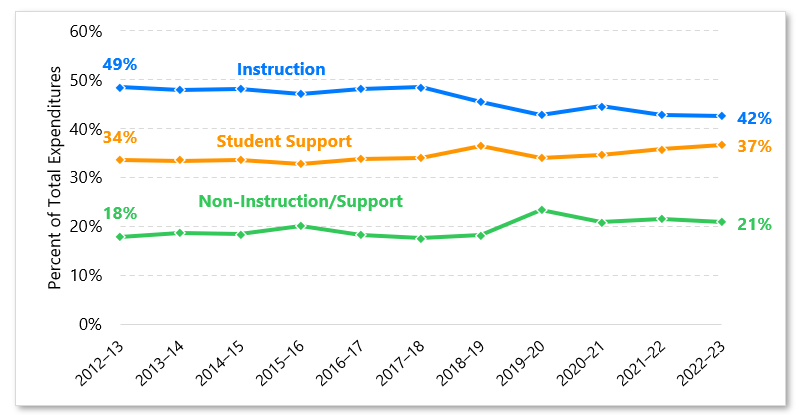
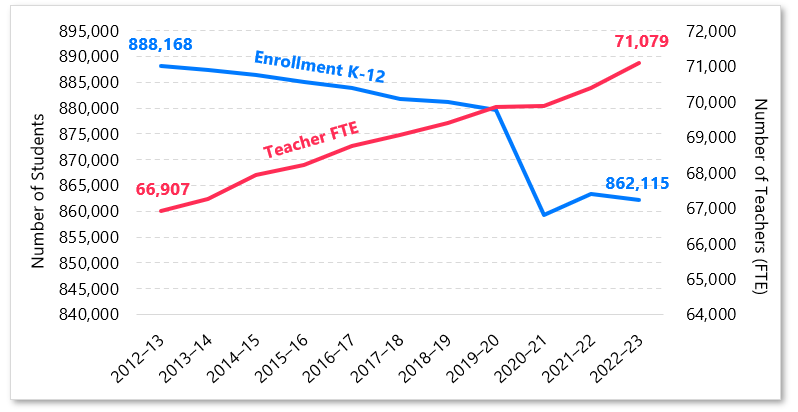
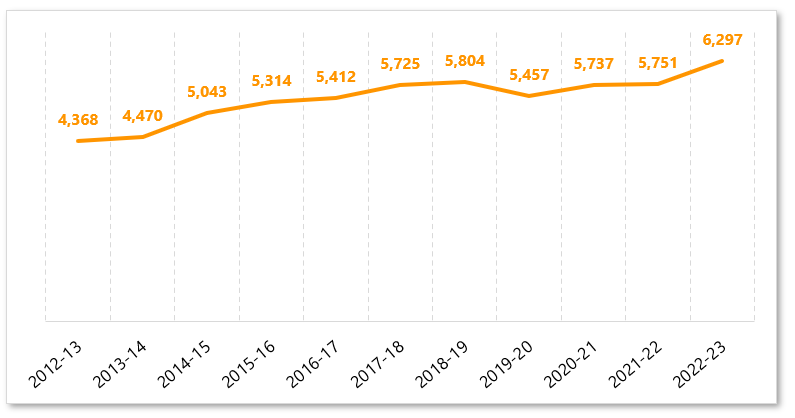
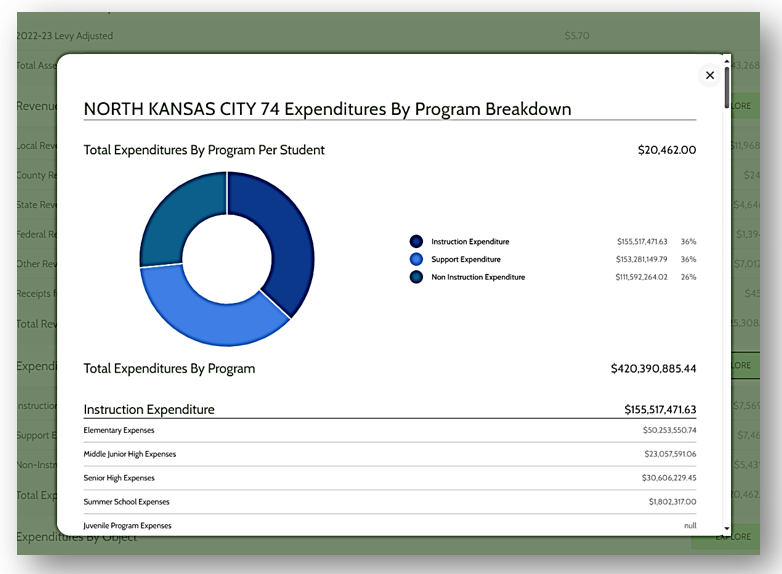
In this episode, Susan Pendergrass speaks with Reason Foundation’s Aaron Smith about his recent report titled Public education at a crossroads: A comprehensive look at K-12 resources and outcomes.

Listen on Apple Podcasts 

Listen on SoundCloud

Aaron Garth Smith is the director of education reform at Reason Foundation. Smith works extensively on education finance policy and his writing has appeared in dozens of outlets including National Review, The Hill, and Education Week. Smith graduated from the University of Maine with a bachelor’s degree in business administration and earned a Master of Business Administration from Texas A&M University.

Produced by Show-Me Opportunity

Is School Choice “Welfare for the Rich”?

As school choice policies advance nationwide, and to a lesser extent in Missouri, there appears to be a new line of argument against these policies. Historically, opponents said school choice options, such as charter schools, vouchers, or education savings accounts (ESAs) were an “attack on public education.” While those arguments persist, a new and growing argument is that these policies are “welfare for the rich.”

This argument rests on two assumptions. First, it assumes that the beneficiaries of private school scholarship programs (ESAs and vouchers) tend to be those already in private schools. Second, this argument assumes those in private schools are “the rich.” Thus, by creating programs that use direct government subsidies or are funded by tax credits, school choice programs are “welfare for the rich.”

This is an incredibly disingenuous argument. Indeed, the argument is nothing more than a red herring.

As everyone is aware, “the rich” are allowed to send their children to public schools. They can do so without facing any financial penalties. The United States Census Bureau calculates Small Area Income & Poverty Estimates (SAIPE) for each school district. This calculation estimates the number of students in each school district who fall below the poverty line. According to these SAIPE estimates, the Clayton, Kirkwood, Ladue, and Rockwood School Districts in Saint Louis County all have poverty estimates below three percent. Meanwhile, the nearby school districts of Riverview Gardens and Normandy have estimates above 35 percent. Yet, no one attempts to keep these wealthier school districts from receiving education funding because it is “welfare for the rich.”

A student from a rich family can attend any school district in Missouri and the district will receive funding for that student. But, if a parent, rich or poor, chooses to send their child to a private school, they lose that benefit. The issue is not that the family is rich, but that they have the audacity to choose a non-governmental school.

This is what makes the argument a red herring. It is a distraction from the real question—should families be denied educational benefits when they choose a non-public school?

Writing on this very issue in 1958, Father Virgil Blum lays the point out clearly: “It is fundamental that the state’s educational obligations are not to institutions and systems; its obligations are to children—the individual children of the state. Educational institutions and systems are but means to help the state carry out its educational obligations.”

Opponents of school choice will make any argument that seems to gain traction. Their fundamental objection, however, is against educational freedom. They simply do not believe individuals should be allowed to take their education dollars with them to the school of their choice.

Now Is Not the Time to Tinker

Last week the Missouri Senate passed Senate Bill (SB) 727—a comprehensive education bill—that, among other things, tinkers with the state education foundation formula. The foundation formula is used to, theoretically, even out spending between wealthy and poor school districts. The formula was developed by the Missouri Legislature the same year that Mark Zuckerberg started working on “The Facebook” at Harvard (2004). It’s outdated and rife with shortcomings. We don’t need to tinker around the margins of the current formula—we need to build a new one.

What SB 727 does is transition the counting of students from all attendance based to half attendance based and half enrollment based. That matters. If attendance is the method of counting students for state funding, districts are incentivized to get kids to school. If it is enrollment, districts are incentivized to register students. Right now we have a chronic absenteeism crisis in Missouri. We should not simply change the rules because we know that poor students are less likely to attend school.

Either way, it won’t really matter for many years because, even under the current system, districts can use the highest number of students from the past three years—meaning pre-pandemic attendance numbers are still being used this year. That is the most generous counting of students in a funding formula of any state in the nation. Many states use prior year numbers. A couple use the highest of the last two years, or an average of them. Only Missouri uses the highest of the last three years.

Most school districts rely on state funding. If it goes down, either local funding needs to go up or districts will need to reduce costs (likely meaning cutting staff). We have had declining enrollment for at least a decade. We now have declining attendance combined with declining enrollment. So, the effort to change the formula is not surprising.

Missouri needs to take its funding formula back to the drawing board and start over. Tennessee did so several years ago and created the Tennessee Investment in Student Achievement (TISA) formula. TISA is student centered, weighted to reflect student needs, and outcome based. It is considered the gold standard of funding formulas. Until we are ready to make a wholesale improvement, let’s not tinker around the edges of the foundation formula.

KC Stadium Tax: “They Are Asking Us to Give Them $2 Billion”

On March 20, Patrick Tuohey joined Mundo in the Morning on KCMO to discuss the recent debate held on the new 3/8 percent sales tax being proposed to support “funding for park improvements consisting of Arrowhead Stadium and its surrounds, and a new Major League Baseball stadium in Jackson County.”

The vote will be on April 2.

The Missouri Senate Moves on Education Choice

After much negotiation, the Missouri Senate has advanced a bill that would expand school choice (somewhat) for some Missouri families.

Senate Bill 727, which passed out of the Senate last week by a vote of 19 to 10, dramatically increases the number of children eligible to receive a scholarship under MO Scholars, an education savings account program established two years ago. Gone are the restrictions that scholarships can only go to students in Missouri’s 10 largest communities. And the low-income restriction line has been raised from 200 percent of the free or reduced-price lunch boundary to 300 percent (a yearly income of roughly $166,000 for a family of four).

The reason I can only describe the expansion as “somewhat” is because, unlike the raft of states that have passed similar school choice legislation in the last few years, the bill doesn’t provide any public funding for the scholarships. The six approved scholarship-granting organizations (SGOs) must still raise the funds for the scholarships through donations from individuals or corporations.

The bill also—finally—allows charter schools to open outside of St. Louis and Kansas City, a policy goal that Show-Me Institute analysts have been talking about for years. Granted,  only Boone County was added to the list, bringing in Columbia, but it’s a start. It may take years for a charter school to actually materialize in Boone County, but at least it may soon be possible.

As I anticipated, getting this bill through the Senate required some sweeteners for school choice opponents. These included raising minimum teacher salaries and changing how we count students for the foundation formula (more on that in a coming post). Too bad the negotiators didn’t get public funding for the scholarships with this trade-off. For now, we’ll wait to see what happens to the bill as it moves through the House.

Ask Famous Missourian Bob Barker if the Price Is Right?

Rent.com just released a report on, appropriately enough, rental housing rates in America that is worth some analysis. The report claims that the average rental costs in Missouri have increased, by percentage, more than any other state over the past year. I think that would surprise many people. It surprised me.

Whether this is a good thing or a bad thing depends on why it happened. If rents are up due to increased demand to live, work, study, and invest in Missouri, then it is a good thing. If rents are up because we are not allowing enough housing to be built, it is a bad thing. Which is it? Well, we don’t know for sure, and it certainly could be both. It might be the former—increased demand—and it might be the latter—restricted supply. I think it’s unlikely that it is primarily the latter. Overall, Missouri does not have especially strict zoning rules, environmental rules, or building restrictions to limit housing. For example, the Institute has published papers on the lack of centralized planning and resulting affordable prices in the St. Louis and Kansas City housing markets. But we can always be better as a state. Our cities have made mistakes in this regard and our counties have made some questionable choices, too.

There is a downside, of course, with higher rent costs—the rent for your apartment or office is higher. For landlords, that may result in higher property taxes. Similarly, there are benefits and downsides to increases in housing prices. But, overall, I think the increases in rental rates in our two major cities are a beneficial sign. It’s important to remind people that housing throughout Missouri is affordable, including in our big cities. Perhaps some of this increase is simply that there is more “room to grow” here than elsewhere. Perhaps we haven’t done anything at all, but limited housing supply and high housing costs elsewhere have driven some people to Missouri. We don’t really know for certain.

I do know for certain that some groups will take this “fastest rental increase in the country” news as an opportunity to try to add more government mandates in the name of “affordable” housing. That is the last thing our state needs. We don’t need more “source-of-income” rules or attempts to initiate rent control (which is, thankfully, illegal in Missouri). We don’t need affordable housing mandates on developers or further expansion of the low-income housing tax credit. (Although, to be fair, developers can avoid most of that by simply not asking for a tax subsidy in the first place.)

If you think housing or rental costs are too high, one can trust the free market to help lower the cost of housing in St. Louis and Kansas City if we let it. One of the reasons housing costs (buying and renting) in the United States have risen so much recently is constraints on supply, primarily via zoning limits. In recent years, Minneapolis and Austin have both made a point to increase the housing supply by substantially reducing their zoning rules. Housing costs and rental rates have significantly decreased in both cities as housing supply has increased. If we want rental and housing costs to decrease in Missouri, zoning reform is the way forward for St. Louis and Kansas City, not new government regulations or mandates.

Limiting Solar Farming?

A new piece of legislation introduced in the Missouri Legislature, House Bill (HB) 2651, would limit the amount of land that can be used for solar panels relative to farmland:

The total amount of real property associated with all solar energy projects that are established in any one county in this state shall not exceed an amount greater than two percent of all cropland in a county.

This bill highlights a legitimate concern. Solar farms take up a significant amount of space and require extensive transmission construction as well.

Nonetheless, interfering in the free market and banning the sale of land for solar energy projects seems like a step too far. While there are ample concerns with solar energy, why is the state government limiting property rights and picking winners and losers in the energy market?

If our state is concerned with the rapid growth of solar, the future reliability of our energy grid, and land use, why not take the shackles off the operation of the free market in energy? The Missouri Legislature could loosen restrictions around the nuclear industry. A traditional nuclear energy facility has a very small land footprint, requiring about 1.3 square miles per 1,000 megawatts of energy.

To generate the same amount of energy as nuclear, less powerful silicon solar photovoltaic farms need on average 63 times more land.

As I have written before, Missouri could do this by setting a solid foundation for nuclear and eliminating government restrictions on the industry. But what we don’t need is more government interference in the free market.

Caught Between a Rock and a Wet Place

The Metropolitan Sewer District (MSD) has a tax or price increase on the April ballot in St. Louis City and County. The question is not whether your taxes or fees are going up. They are. The question is in what manner they are increasing and by how much.

There are two different questions on the ballot. One is whether to issue $750 million in bonds for sewer system improvements. The other is whether or not to increase property taxes on residential property and approve a charge on commercial properties based on the amount of impervious area a property has—for example, how much of the land is a parking lot.

MSD is going to spend the money. It has to according to a lawsuit settlement with the EPA from years ago. If the bonds are approved, monthly prices for property owners will go up less rapidly in the short term, but more in the long run as the cost of bond financing will be added to the total cost. If the bonds are rejected, monthly prices will go up dramatically in the short run but will come down somewhat over time. The total cost will be lower due to no bond financing charges, but the immediate sticker shock will be substantial.

The impervious area charge for commercial property is the most interesting change. MSD tried to do something similar several years ago for more types of properties, but had to change after fierce resistance and lawsuits. I think basing part of your stormwater charges on how much of your property is grass and how much is asphalt (or other substances) is a great idea. Properties with more impervious areas like asphalt or concrete absorb less stormwater and create more stress on the overall stormwater management system. In a sense, this is a user fee. I would like to see MSD do that, in part, for residential property too.

The most troubling part of the proposal is how MSD intends to spend the money if the tax increase and impervious land fee are approved. Instead of spending the revenues based entirely on need, ten percent of the money will be used to create an “environmental justice fund.” It seems fair to wonder if money in an “environmental justice fund” will be spent based on engineering and science instead of social justice priorities. The justice fund is enough to make me hope the whole proposal fails. Another ten percent of the money will be spent based on decisions from a “regional advisory committee.”  Given that these sorts of committees are often based on political power and influence trading instead of engineering needs, you could wonder if this is another example of other priorities superseding engineering needs.

As Homer wrote and The Police sang, voters’ choices here are caught between Scylla and Charybdis. Sewer and stormwater rates are increasing no matter what. The vote feels like you are voting for General Secretary of the Politburo and there is only one choice on the ballot. Either way, your best hope is that the new pick dies quickly.

Support Us

The work of the Show-Me Institute would not be possible without the generous support of people who are inspired by the vision of liberty and free enterprise. We hope you will join our efforts and become a Show-Me Institute sponsor.

Donate
Man on Horse Charging