

This Is Not a Drill

As you may have read here many times, Missouri’s public school enrollment is shrinking. A big part of the reason for this is declining birth rates. A recent report released by the Western Interstate Commission for Higher Education (WICHE) projects that Missouri will have its largest class of high school graduates this school year—spring 2025—at 68,656 graduates. That includes 63,349 public school high school graduates and 5,307 private high school graduates. By 2041, WICHE projects that Missouri will have just 58,880 total high school graduates, with 54,401 coming from public schools and 4,776 from private schools.
Now that we have reached the (projected) enrollment peak and are heading down the cliff, Missouri needs to begin considering the implications for higher education and the workforce. First, the state should focus on the cost and access of public colleges and universities. Second students not planning on attending college should have access to career-building skills and certificates while still in high school. Finally, and most importantly, every Missouri high school graduate should leave school college or career ready.
We’ve known about these trends for a while, but there’s still time to adjust to our new enrollment reality if we make needed changes now. We’ll see if Missouri lawmakers actually follow through.
Civil Service Reforms Can Go Too Far

Tom Pendergast (and to a lesser extent his brother, James) cast a huge shadow over Missouri government and politics, both during his life and after. His corrupt domination of Kansas City politics eventually led to numerous changes in Missouri government. These changes include the Missouri Plan for selecting judges, putting the Kansas City police under state control, and numerous civil service reforms at the state and local levels in Missouri.
One of these reforms is a subject of contention right now in St. Louis. In the 1940s, the office of the City of St. Louis Personnel Director, in charge of hiring most city employees, was made almost entirely independent of elected officials. That was understandable at the time, as that was a period of significant political corruption in American cities.
Over time, though, a wise move to limit corruption has petrified—as so often happens in bureaucracies—into a position designed to protect the status quo. Between 1942 and 2021, only four people held the job. Yes, they may have been very good at it. But it was inevitable that they became protectors of the system and of the other people within the system, particularly other city employees who live in the same social and cultural circles. If they weren’t there to protect the status quo, why else would a retired personnel director be taking advantage of intricate knowledge of city charter rules to prevent the current mayor from getting her person into the position now?
Former Personnel Director Rick Frank, who held the job for 17 years before retiring in 2021, has reapplied for his old position. And the current director, Sonya Jenkins-Gray, on Nov. 15 granted his request to be placed on an eligible reemployment list, according to Frank and a copy of the letter he shared with the Post-Dispatch.
That, Frank said, means the mayor would have to at least interview him should the personnel director position open up. And she wouldn’t be able to pick an interim for the job while that list exists.
“If her intent were to put a provisional appointment in there, there’s a problem per the charter and the rules,” he said.
Remember that a major city employee union sued to prevent Mayor Jones from being able to select her chosen person for the position during a prior vacancy.
H.L. Mencken said that “democracy is the theory that the common people know what they want, and deserve to get it good and hard.” When people vote for change, the newly elected officials deserve the chance to institute that change, within reason. That includes putting the people they want into important positions. The voters can then judge those elected officials later at the ballot box.
Civil service rules preventing mass firings after every election are good, in that democracy functions better with such rules than without them. Rules that give local government personnel directors some independence from politics in hiring are also good.
However, when these rules ossify into a system where a former city employee applies for a job in a move that looks as if he is simply trying to obstruct the hiring decisions of the mayor, I’d say the rules have gone too far and need to be changed.
Yes, We Should Privatize the Post Office

The white whale of government privatization in Missouri is Springfield’s City Utilities, a municipal utility behemoth that should be broken up and privatized to make a fortune for Springfield taxpayers now and result in better utility services in the long run for residents. But at the national level, the privatization white whale has long been the U.S. Post Office. So, it is exciting to hear President Trump declare that he is open to the privatization of the post office.
There are many arguments for maintaining the current post office monopoly on mail, and economic efficiency isn’t one of them. Arguments include:
- The necessity of subsidizing rural life (especially really, really, rural life)
- General feelings about preserving “public goods,” as if getting a folder of advertisements delivered to your door each day is a “public good.”
And the one argument supporters of the post office usually don’t say out loud:
- Maintaining a small army of allied voters on the public payroll.
There are several ways the nation could go about privatizing the post office. The easiest would be to simply remove its monopoly protections against other companies delivering mail. That wouldn’t be privatization, but it would give people a choice to use other options for routine mail services.
Even with all the advantages the post office has over Fed Ex, UPS, etc., such as not paying taxes, exemption from parking regulations, and so on, it still manages to lose a lot of money each year.
Let’s face it. In the modern world, mail is no longer a necessary public service for the vast majority of people. For the people who still need it, there is no reason they should get subsidized service paid for (even if indirectly) by the rest of us. If you don’t want to adapt to technology or choose to live in outer Alaska, that’s fine, but you should pay more for your mail.
I write this at Christmas time, which is the only time that many people make use of the mail anymore. My family is sending out Christmas cards now, and we will pay the same price whether we mail a card to neighbors across the street or to friends and family in New York. Those price mandates and mail protections are absurd. I’d like us to sell the entire post office to the highest bidder, but short of that opening it up to competition is the next best thing.
Medicaid’s Checkup: Part 1

One of the few things healthcare providers almost unanimously agree on is the importance of annual checkups. Among other benefits, they offer providers a regular opportunity to gauge a patient’s health. The same idea should be applied to public policies, especially Missouri’s largest government-run program, Medicaid. After almost four years during which COVID-19 obscured the program’s performance, I think it’s long past time for a checkup.
First, here’s a quick recap of what’s happened with the program in recent years. In March of 2020, the COVID-19 global pandemic began, and the federal government declared a national state of emergency. Over the next several years, Medicaid’s enrollment boomed, and in response the federal government agreed to increase its share of funding for the program. But as is almost always the case, the additional federal money came with strings attached. Particularly, accepting the funds required Missouri’s Medicaid agency to stop checking whether program enrollees were eligible to receive services. This prohibition continued until the end of March 2023.
Additionally, during the pandemic period, Missouri voters approved a constitutional amendment that radically reshaped the state’s Medicaid program. The amendment expanded Medicaid by extending program eligibility to able-bodied Missourians making up to 138 percent of the federal poverty level. For a family of four, this figure represents yearly earnings of approximately $43,000. Unsurprisingly, this expansion has led to an enormous increase in program enrollment, and as with COVID relief funds, the federal government agreed to pay an increased share for those newly eligible to enroll.
Given these developments, it shouldn’t be surprising that Missouri’s Medicaid program looks much different today than it did four short years ago. Prior to the pandemic in 2019, Missouri’s Medicaid enrollment sat around 850,000, with about 520,000 of those enrolled being children. By 2023, total program enrollment had nearly doubled to 1.5 million, with approximately 740,000 of those being kids and 350,000 being adults who had enrolled as a result of the change in eligibility requirements. Today, according to the state’s most recent enrollment data, there are still nearly 1.3 million Missourians on the program, including 640,000 children and 340,000 “expansion” adults.
In terms of cost, the growth has been similarly shocking. In 2019, the program cost around $10.4 billion in total, with less than $2.2 billion coming from Missouri taxpayers via state income and sales taxes. In this year’s FY 2025 budget, Medicaid’s total cost has ballooned to an expected $18.2 billion, with $3.8 billion coming from state taxpayers. This represents a total increase of approximately 75%, and the growth of state taxpayer investment isn’t much lower at 74%.
In several upcoming blog posts, I’ll dive deeper into these numbers and explain why it’s important that our elected officials take action to rein in our Medicaid program sooner rather than later.
Nuclear Energy Is a Bipartisan Solution

As the new year approaches and a new presidential administration prepares to take office, we may see significant changes in the policy coming out of Washington, D.C. However, support for nuclear energy—a rare point of agreement in politics today—might be something that continues.
Recently, the White House unveiled its detailed framework for deploying nuclear energy, which emphasized the need for nuclear power in America’s future. This plan included an ambitious target to triple U.S. nuclear capacity by 2050. While this specific plan may not survive the transition, the sentiment is likely to endure.
Bipartisan Support for Nuclear
Both sides of the aisle recognize the potential in an American nuclear resurgence, albeit with different motivations. Part of the reason the Biden administration supports nuclear energy is because of climate change. Ambitious emissions goals are difficult to achieve without nuclear energy. The previously mentioned report argues:
Expanding domestic nuclear energy production has a key role to play in helping to avoid the worst impacts of climate change by enabling the nation to achieve a net-zero greenhouse gas emission economy no later than 2050. Nuclear power delivers safe, clean, reliable, and affordable electricity.
The Trump administration’s support hinges largely on reliability, capacity, and energy security. Members of the first Trump administration have advocated for keeping plants open, investing in SMRs (small modular nuclear reactors), and continuing to modernize the Nuclear Regulatory Commission. The president-elect recently affirmed this stance:
Starting on day one, I will approve new drilling, new pipelines, new refineries, new power plants, new reactors and we will slash the red tape. We will get the job done. We will create more electricity, also for these new industries that can only function with massive electricity.
Outside of the Oval Office, another notable example of nuclear momentum is the passage of the ADVANCE Act, which is designed to spur advanced nuclear construction and streamline regulations. This bill flew through Congress with an 88–2 vote in the Senate and a 393–13 vote in the House of Representatives before being signed by the president.
Bipartisan Action in Missouri
Nuclear energy is unique in that it is safe, powerful, and environmentally friendly. It is the most reliable energy source, and some claim it produces the lowest amount of greenhouse gas emissions over the lifecycle of the power plant. Public awareness of these benefits is increasing, as Bisconti Research found that favorability for nuclear energy increased from 49 percent in 1983 to 77 percent in 2024 among the U.S. public.
In the past, nuclear energy may have been viewed through a partisan lens, but today, it represents a solution to address some of our nation’s key concerns. This upcoming legislative session, lawmakers in Jefferson City should come together to craft meaningful policy that will help bring more nuclear power to the Show-Me State.
The Future of the Department of Education with Ginny Gentles

Susan Pendergrass speaks with Virginia (Ginny) Gentles, director of the Education Freedom and Parental Rights Initiative at the Defense of Freedom Institute, about the future of the Department of Education given recent remarks from the incoming administration about abolishing the department. They discuss the implications for American education policy, explore the potential impact on parental rights and education freedom, and more. Ginny, a long-time school choice advocate and host of the Freedom to Learn Podcast, brings a wealth of experience from her time at the U.S. Department of Education under President George W. Bush, the Florida Department of Education, and as a legislative analyst on Capitol Hill.
Produced by Show-Me Opportunity
Downtown St. Louis Doesn’t Need Subsidies
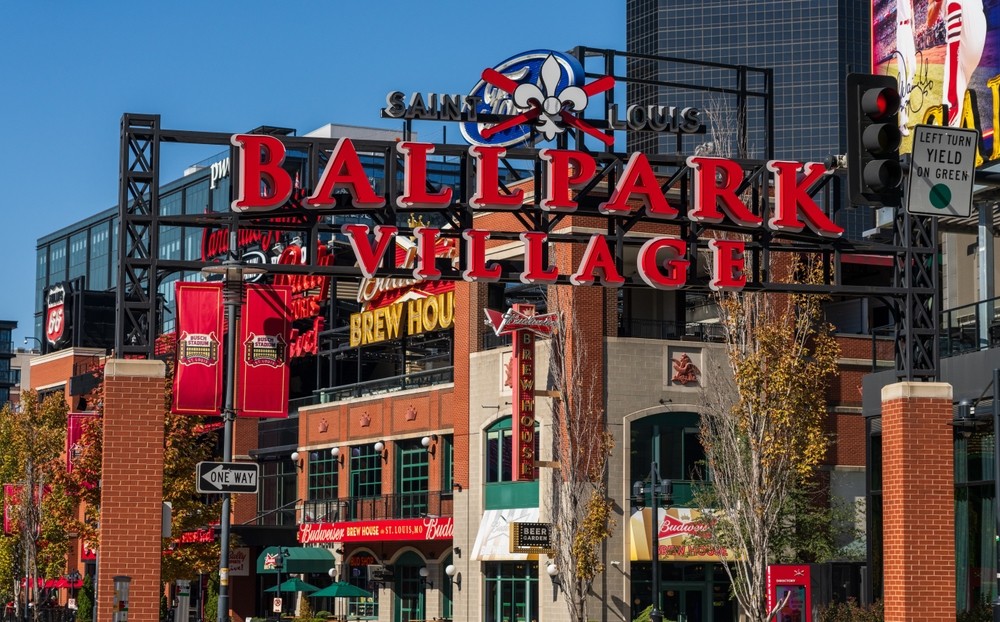
State lawmakers in Missouri are considering a $102 million tax credit program to convert empty downtown St. Louis office buildings, such as the AT&T Tower and Railway Exchange, into residential and retail spaces. Dubbed the “Revitalizing Missouri Downtowns and Main Streets Act,” the plan aims to address declining occupancy rates and boost the downtown economy by reimbursing developers for 25–30% of their conversion costs. While this sounds appealing, it’s a recycled idea that has repeatedly failed to deliver meaningful results for cities.
The proposal rests on shaky assumptions about the effectiveness of economic development subsidies. Tax credits and similar incentives have a long history of overpromising and underdelivering—even according to analyses from people supporting the projects!
These programs often enrich developers without producing significant long-term benefits for the communities footing the bill. Take, for example, the myriad subsidies for corporate headquarters and downtown stadiums in Kansas City. Despite their hefty price tags, these deals leave taxpayers shouldering higher costs with little to show for it in terms of jobs or economic growth. St. Louis risks again following the same path—throwing public money at developers while failing to address the underlying issues.
A major problem with subsidies like this is that they create a false sense of market demand. The St. Louis Post-Dispatch quotes one of the bill’s sponsors, Missouri Senator Steve Roberts, as saying, “The demand for more downtown residential is clear.” If that were true, private investors should already be stepping up. Developers should not need government support to pursue profitable opportunities.
Subsidy programs also suffer from a lack of transparency and accountability. Often, there are no robust safeguards to measure their success or clawback provisions when promises go unfulfilled. Without clear benchmarks and regular public reporting, these programs devolve into blank checks for developers.
St. Louis should focus on making the downtown area a desirable place to live by prioritizing public safety and basic city services. Addressing crime, for instance, would do far more to draw new residents and businesses than funneling public money into speculative real estate projects.
A smarter approach to revitalizing downtown St. Louis would let market forces lead the way. City leaders can play a supportive role by streamlining permitting processes and reducing regulatory barriers, making it easier for developers to pursue worthwhile projects. (There are some small, hopeful signs St. Louis is heeding this call.) At the same time, investments in public safety, infrastructure, and essential services would lay the groundwork for organic growth that benefits everyone—not just developers.
Yes, St. Louis needs more residents. Yes, increasing the downtown population would have all sorts of positive economic effects. But right now, too few people want to live there, and nothing will work until that changes first.
Missouri’s Accountability Crisis, Ghost Students and Tax Hikes

James Shuls, David Stokes, and Avery Frank join Zach Lawhorn to discuss what the latest test scores reveal about Missouri schools, the debate over a four-day school week as a budget solution, Town and Country’s controversial property tax increase, opposition to a comprehensive plan in Cole Camp, and more.
Produced by Show-Me Opportunity
