What Is the Right Level of Regulation in Public Education?

Back in September the Show-Me Institute released my paper, “Decentralization Through Centralization,” in which I examined the development of the nation’s first all-charter school district in New Orleans. Though a mouthful, the title was my way of highlighting the tension that exists in the decentralized New Orleans system, which has been created with greater centralized control. In the paper, my co-authors and I highlight several potential pitfalls that might occur because of the power vested in a centralized entity. This week, Reason released a video highlighting another potential pitfall of the New Orleans Recovery School District model—regulatory creep.

As Rick Hess, director of education policy studies at the American Enterprise Institute, notes in the video:

People like autonomy in the abstract, but they get real nervous about it. If any one of a hundred or a thousand schools does something goofy, there’s always a natural temptation to say, “Well, we’re for autonomy, but let’s have a rule that doesn’t let you do X.”

Over time, Hess suggests that these regulations mount. If not checked, the decentralized charter market could become a bureaucratic morass. So what is the right level of regulation? And is it possible for a decentralized school system to resist what Neerav Kingsland, former CEO of New Schools for New Orleans, calls “death by a thousand regulatory cuts”?

If you have seven minutes, you should check out the video.

When Public Schools Compete

slps

We Choose SLPS is the slogan for the Saint Louis Public Schools (SLPS) ad campaign, in which radio commercials, newspaper ads, and billboards highlight the strengths of the once-unaccredited school district. With the growing trend of open enrollment programs and charter schools around the country, it has become necessary for traditional public schools such as SLPS to compete for students.

The following is an excerpt from an article describing one Nashville principal’s experience canvassing for students:

It’s awkward. Someone peers out at her through the window. White looks away, pretending not to notice. After an uncomfortable few seconds, the door finally cracks open. White seizes her chance:

“My name is LaTonya White. I’m the principal at Rosebank Elementary School. How are you doing?” she asks, glancing at the clipboard in her hands. On it: a list of families in the area with soon-to-be kindergartners. “Yes, you should have a child ready to come to school soon.”

Canvassing for potential students—and honing this kind of front-porch pitch—are standard for charter schools. But for traditional public school leaders like White, it’s unfamiliar territory.

Competing for students may be unfamiliar territory for public schools, but for students it makes all the difference. When students have educational options other than the public school that corresponds to their zip code, public schools are held accountable for their performance.

This year, SLPS made improvements on their annual state report, an 18.6 percentage point gain, increasing attendance, graduation rate, and college and career readiness. As charter schools expand throughout the state and other choice options become available, I hope to see more public schools exhibiting the same behaviors as SLPS, turning schools into places students choose to be, instead of places they are obligated to attend.

Gruber on Arkansas Private Option: “Mathematically Impossible” to Be Budget Neutral

November was a bad month for Obamacare. Over just a few weeks, voters not only handed a series of punishing defeats to Obamacare at the ballot box, but the Supreme Court unexpectedly granted a hearing to the lawsuit King v. Burwell, which poses a serious threat to the future of the law.

Those setbacks haven’t quite kept Missouri’s Obamacare supporters from pushing ahead with their Medicaid expansion plans. In fact, some Missouri politicians have tried to use Arkansas’ Medicaid “transformation” as a reason to expand Medicaid in Missouri. But recent video revelations confirm that the state’s decision not to follow Arkansas’ lead was the right call.

In April 2013, Arkansas passed a Medicaid expansion more commonly known as the “Private Option.” The expansion uses federal Medicaid dollars to pay for Obamacare exchange health care plans for newly eligible Medicaid beneficiaries. Supporters claimed that the plan would save Arkansas money, but as it turns out, that was likely never going to be the case. Indeed, Obamacare architect Jonathan Gruber, who hailed his law’s lack of transparency, said as much . . . in October 2013, in a video only now coming to light:

The video is only the latest setback for Arkansas Obamacare supporters. After losing his State Senate primary, Arkansas’ chief Obamacare Medicaid architect won’t be returning next year to the legislature, largely due to his support of the expansion. And after last month’s general election, Arkansas might actually roll back its Obamacare expansion.

Missourians are being sold a bill of goods on Obamacare’s Medicaid expansion, just like Arkansas was before them. We deserve better than tired, old political strategies, and rather than look at Arkansas as an example to be followed, Missouri should look at it as a cautionary tale to be avoided.

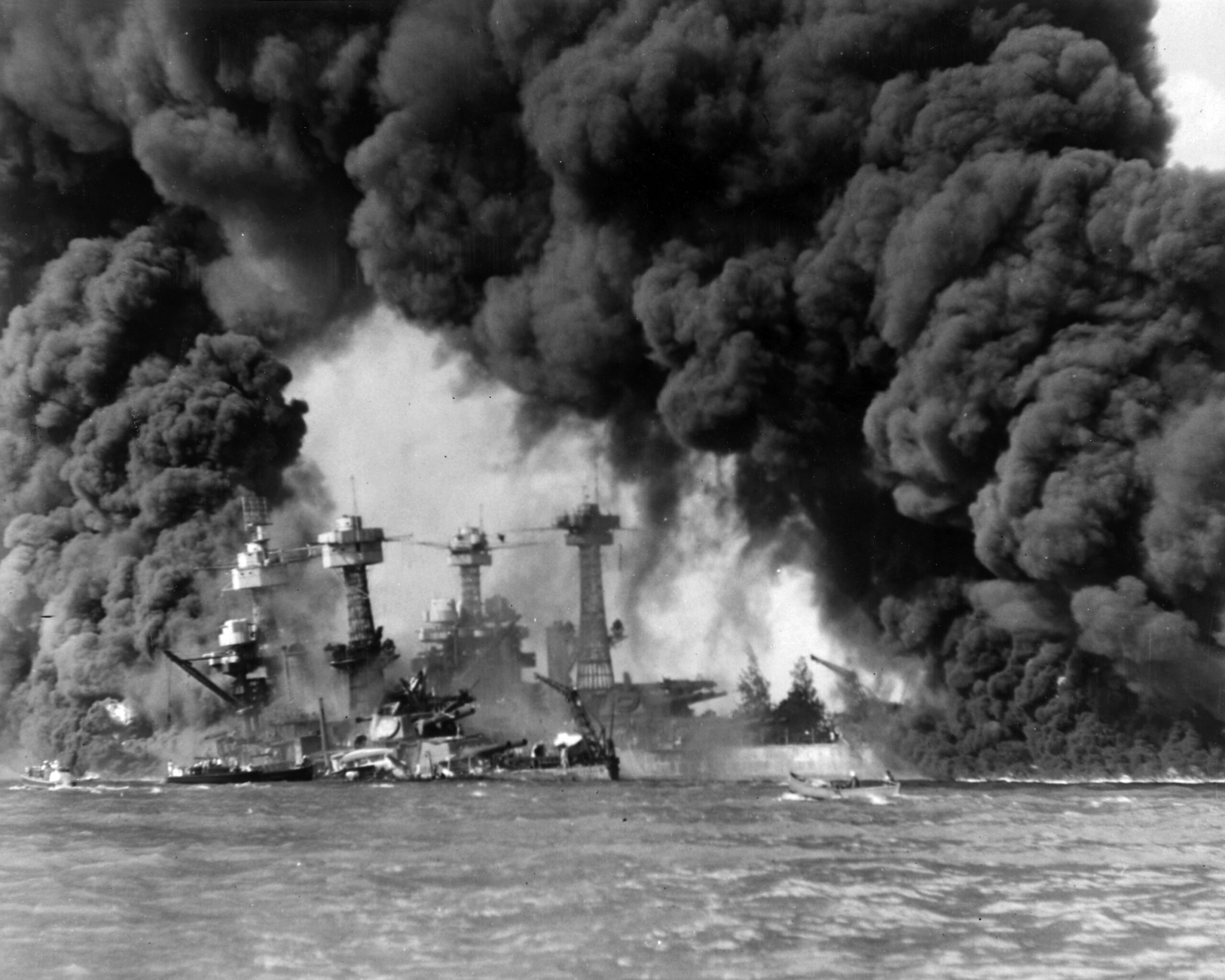
Remembering Pearl Harbor

alt

As first appearing in the Kansas City Star and the American Spectator:

A surprised and outraged Franklin D. Roosevelt called it “a date which will live in infamy.” But Dec. 7, 1941, may also be remembered as one of the great turning points (for the better) in world history. It had the startling effect of rousing a sleeping giant (the United States) into purposeful action, and that was the primary factor in stopping the forces of evil from cruising to an easy triumph in World War II. In Churchill’s words, the world was in danger of entering “a new dark age made more sinister, and perhaps more protracted, by the lights of perverted science.”

The Japanese Imperial Navy struck Pearl Harbor in two waves beginning at 7:48 a.m. Hawaiian Time. Japanese aircraft destroyed much of the U.S. Pacific fleet and killed a total of 2,403 Americans – which compares to the 2,605 Americans and 372 U.S. residents from other countries who lost their lives in the surprise attack on the United States launched by al Qaeda on 9-11-2001.

As the Japanese readied for their attack, Hitler was sitting pretty – perilously close to winning a two-front war. Having already conquered France and other smaller European nations in 1940, German troops scored one victory after another against the poorly equipped and outmanned British Army in Southern Europe and North Africa in 1941. “Evacuation going fairly well – that’s all we’re really good at!” Alexander Cadogan, at the British Foreign Office, observed in his diary during the British withdrawal from Greece. “Our soldiers are the most pathetic amateurs, pitted against professionals.”

Things looked no better on the eastern front – with the German army on the outskirts of Moscow. In three parallel offenses, German forces invaded Russia in late June – sweeping across the vast countryside with the same lightning speed that marked the earlier invasions of Poland and Western Europe. Desperately short of every kind of war materiel from boots and rifles to tanks and planes, the Russian army was saved by the onset of winter.

Pearl Harbor changed everything – ending the long, enfeebling debate inside the U.S. between isolationists and interventionists. Suddenly, America was at war, and almost everyone – from FDR on down to Charles Lindbergh, hitherto an arch isolationist – agreed that this was a war that had to be fought with everything we had. Overnight Lindbergh turned from dove to hawk. Though unable to regain the Army Air Corps commission which he had resigned in April 1941, Lindbergh flew 50 combat missions in the Pacific Theater as a civilian consultant.

Within days of Pearl Harbor, hundreds of thousands of Americans made up their minds to join the armed forces. That included the two oldest sons of Joseph Kennedy, another isolationist and outspoken advocate of the appeasement of Nazi Germany, whose departure from London where he had served as U.S. ambassador to the Court of St. James’s was a major addition by subtraction for both Roosevelt and Churchill. The older Kennedy left England in October 1940, at the height of the Battle of Britain, which reduced much of London and other cities to rubble.

My late father – then 24, a reporter with the Kansas City Star, with a wife and baby daughter – was one of the many who rushed to serve. He failed his first Navy physical – being exceedingly thin – but passed the second time after gorging on food and water. He was one of the “ninety-day wonders” – sent to officer training school for just 90 days of rigorous physical and classroom training – and went on to skipper a submarine chaser that saw action along the eastern seaboard, off the coast of North Africa, and in the North Atlantic.

If any disaster may be called a good disaster, it was Pearl Harbor, which awakened America with a violent start and averted what might easily have been the greatest setback to human freedom, joy, and advancement in world history.


Andrew B. Wilson is a resident fellow and senior writer at the Show-Me Institute.


Iowa, Nebraska, and Arkansas Legislators Gear Up for Income Tax Cuts

In 2014 the Missouri Legislature passed a modest income tax reduction which, given its size, by no means solved the state’s tax competitiveness problems. That fact is reaffirmed by the news we’re now hearing from some of Missouri’s neighbors. For instance, in Iowa—where state lawmakers cut taxes as recently as 2013—the income tax reform movement is getting bipartisan support.

State Rep. Tom Sands, R-Wapello, chairman of the tax-writing House Ways and Means Committee, said his preference would be to examine corporate and individual income taxes while exploring ways to simplify the tax system. Senate Majority Leader Michael Gronstal, D-Council Bluffs, said any tax cuts should be focused on helping middle-class Iowans.

“We will most definitely be looking at income tax reform, making the tax code flatter and simpler,” Sands said.

Sands added he hopes lawmakers will offer “substantial and meaningful tax cuts,” although he explained it’s too early to provide a specific dollar estimate because of uncertainties over state revenue.

Iowa is not the only border state looking to make income tax changes. In neighboring Nebraska, legislators (with the help of the Platte Institute) are exploring a round of tax cuts of their own that would also chop the state’s tax on incomes. On Missouri’s southern border, Arkansas is looking to cut its income taxes too, in part by getting the state’s tax exemption culture under control.

“They’re important to you; therefore, they’re important to me,” [Governor-elect Asa] Hutchinson told the [farming] group. “But we are now reaching a point in Arkansas that we need to look beyond more and more exemptions to our tax structure, and we need to look at an across-the-board reduction of our state income tax.”

Missouri lawmakers deserved applause for finally getting a tax cut across the finish line in 2014, but as we said at the time, that small cut alone is not enough to get the state on a firm, competitive footing for the years ahead—precisely because other states in the region weren’t going to stand still on tax relief. News out of Iowa, Nebraska, and Arkansas confirm this.

And make no mistake: The support for tax cuts has never been greater in the Missouri Legislature than it will be in 2015. Legislative leaders should not sit on their hands and let the opportunity pass them by. Our neighbors certainly aren’t.

A Guarantee for More Flights Out of Columbia Regional Airport

Recently, Columbia city officials announced that they were coming to a deal with American Airlines for a possible third destination for travelers leaving Columbia Regional Airport (the airport currently has flights to Chicago and Dallas). While the exact details of the agreement had not been released at the time this article was written, it seems likely that an extension of the soon-to-expire $3 million revenue guarantee would be part of the deal.

The revenue guarantee was part of the deal that brought American Airlines to Columbia, and prompted Delta’s departure. The idea is simple: American Airlines is guaranteed a certain amount of revenue from flights out of Columbia. If that revenue level is not reached, the city of Columbia and other regional supporters have to pay the difference. It was supposed to give American Airlines the incentive to test the Columbia market. The new service, if successful, would be profitable enough to convince the airline to operate following the expiration of the guarantee.

There is good reason to be skeptical of this government interference in the commercial aviation market. First, it transfers risk from the private company (which raises the expected value, and hence their incentive to service the route) to taxpayers who may or may not ever use the airport. Second, a revenue guarantee can make it difficult for a competitor to enter the market without the same type of risk reduction. Delta Airlines left the Columbia market for precisely this issue. Third, a revenue guarantee can be difficult to take away without risking service reduction. This is because even if American rarely (if ever) uses the revenue guarantee the insurance that the guarantee provides is part of the financial equation that determines the amount of service.

But ending the revenue guarantee is no easy choice. Small airports across the country are having trouble attracting air service, as national airlines consolidate and reduce less profitable routes (a practice known as “capacity discipline”). Cities without regular flights are at a distinct disadvantage in attracting businesses and residents.

However, Columbia Regional Airport would likely be able to attract airlines without the guarantee, as it did before the city wooed American Airlines. The real issue is how many routes and where the routes would go. City officials have long had grand designs to expand the airport’s reach to the west, build a new terminal, and massively increase total passengers. They were, when they were chasing American Airlines, and likely will remain unwilling to let the private market interfere with realizing those goals. Residents will have to decide if city leaders’ goals are worth subsidizing the airlines and interfering in the transportation market.

Highway Funding in Missouri: The Fuel Tax Option

The failure of Amendment 7, the proposed transportation sales tax, in August has left the Missouri Department of Transportation (MoDOT) in a financial bind. In the next few years, the department will no longer have the funds necessary to maintain the quality of the state highway system, much less improve it.

Former proponents of Amendment 7 claim that sales taxes are the best solution for MoDOT’s problems because they are the most politically feasible method of raising large amounts of money. Raising the state gasoline tax (currently 17 cents per gallon)—MoDOT’s principle revenue stream, they say—is not good policy because it is a declining source of funds and it does not poll well. But as we have shown before, fuel consumption has been declining very slowly, and it actually increased in the last year. The erosion in the gas tax’s purchasing power is mostly the result of inflation; Missouri last increased its fuel taxes in 1996, since which time prices have increased an average of 34 percent.

Far from being politically unfeasible, raising the gas tax is actually the simplest method for the state legislature to raise more money for MoDOT. That is because the provision that forces tax increases to go to the voters, the Hancock Amendment, has exceptions for small increases of existing revenue streams. Under the amendment, the legislature can increase revenue in any given year as long as new revenue does not exceed $106 million ($50 million in 1980 indexed to personal income growth) or 1 percent of state revenue looking back two years ($84.2 million for last year), whichever is lower.

Using 1 percent of previous state revenue as a cap, the legislature can collect around an additional $84 million in fuel taxes next year. Missouri currently generates about $29 million per cent from fuel taxes, meaning the state could raise fuel taxes by more than two cents without triggering Hancock requirements. Or, if Missouri followed the example of the federal government and many other states in charging diesel at a higher rate than regular gasoline, the state could raise the diesel fuel tax rate by five cents and the regular fuel tax by one cent and remain under the cap. That would generate an addition $78 million for MoDOT next year.

What’s more, because state revenue has been growing and per-cent fuel receipts have been declining recently, the state legislature could raise the fuel tax in successive years, which could give MoDOT the needed funds to maintain and make necessary improvements to state highways. In fact, this is precisely how Missouri last increased its fuel taxes in the 1990s.

Fuel taxes, as indirect user fees, are a preferable and possible way of funding highways in Missouri. If more money truly is required, the legislature has the option to raise fuel taxes without sending the issue to a ballot and without resorting to new, inappropriate funding mechanisms.

We Are Thankful for Transparency

There has been a lot of talk lately about transparency, especially the notion that “lack of transparency is a huge political advantage,” according to an architect of the president’s health care law. Last year, we wrote that we’re thankful for data, and that remains true.

Tied to our love of data is the assumption that government is transparent enough to provide it to us. Citizens of the Show-Me State should expect no less. And in that regard, Missouri is doing okay. In 1973, the state legislature adopted our Sunshine Law, making Missouri one of the first states to adopt such an open meetings law. The law in part reads:

It is the public policy of this state that meetings, records, votes, actions, and deliberations of public governmental bodies be open to the public unless otherwise provided by law.

In 2009 the Blunt administration sought for, and the legislature provided, the implementation of the Missouri Accountability Portal, and the Nixon administration has maintained it. The website allows users “a single point of reference to review how their money is being spent and other pertinent information related to the enforcement of government programs.” Though limited in scope and sometimes difficult to navigate, this site has been good for transparency in Missouri, helping keep citizens informed and the government responsive.

We’ll leave it to others to argue about the intelligence of voters or the political expediency of openness. But here in Missouri we’re grateful for the transparency we have and the data it yields.

Warrant Forgiveness: A Step in the Right Direction for Saint Louis County Cities

Recently, 65 municipalities in Saint Louis County announced a warrant forgiveness program for December. In the program, defendants with outstanding warrants can get their warrant dropped if they go to the municipal court that issued the warrant and post a $100 bond. While this is a good thing for many poor residents who have, for whatever reason, failed to attend court, it does not change the underlying problem of cities relying on fines and fees to fund themselves.

We’ve written before about how many Saint Louis municipalities get large, possibly illegal, portions of their revenue from zealous enforcement of traffic laws and local ordinances. Twenty municipalities get more than 20 percent of their revenue from fines and fees, with three cities (Calverton Park, Bella Villa, and Vinita Terrace) deriving more than 50 percent of revenue from those sources.

And should one of the many recipients of these citations need to appear in local court because they wish to challenge the citation or cannot pay the fine (or fix their ticket), it is far from convenient. Calverton Park and Bella Villa both only hold traffic court one evening a month. As an in-depth story in the Washington Post described, many residents, especially the poor, have a difficult time navigating the process.

Allowing defendants with outstanding warrants to set things right is a way of relieving some of the built up stress for locals, but a more long-term solution is to make policing about law and order, not revenue collection, in all Saint Louis County municipalities. That may mean combining police or court services with other municipalities, or if necessary disincorporating cities altogether. At the state level, that could mean strengthening and enforcing the Macks Creek Law. If something isn’t done to fix the underlying problem of burdensome municipalities, this holiday amnesty’s impact won’t long outlive the holidays themselves.

Support Us

The work of the Show-Me Institute would not be possible without the generous support of people who are inspired by the vision of liberty and free enterprise. We hope you will join our efforts and become a Show-Me Institute sponsor.

Donate
Man on Horse Charging