Saint Louis to Try, Once Again, to Spend its Way to Prosperity

A recent article in the Post-Dispatch reported on the city’s plans to spend more than a billion dollars on a new football stadium, a MetroLink expansion, and setting up land for the National Geospatial-Intelligence Agency (NGA). The mayor’s office hopes these expenditures will create:

“anchor investments” to leverage future development, combat crime and wipe out concentrated poverty.

Creating development and wiping out concentrated poverty are lofty goals, but are city’s plans to create “anchor investments” likely to be successful?

History says no. Saint Louis is no stranger to urban regeneration projects, or “anchor investments” for that matter. From 1992 to 2002, the region “invested” almost $1.5 billion (in present dollars) in the original MetroLink and a football stadium (the Edward Jones Dome). Neither of these projects created much ancillary development, and from the 90s to the present day Saint Louis City has continued to lag behind the rest of the nation in population growth and economic vitality. Nor should anyone have expected them to. Economists agree that football stadiums do not boost urban regeneration, and that rail transit provides (at best) incremental improvements in transportation and station-adjacent property values, not civic renaissance.

Saint Louis officials may have learned that they are not one massive redevelopment project from jump-starting an economic revival. Unfortunately, the conclusion they appear to have come away with is that they are many massive development projects away from success. After all,

  • The MetroLink did not go far enough.
  • The Edward Jones Dome has no brew pubs or bike paths.
  • The Arch grounds aren’t pretty enough.
  • There are “gaps” between redevelopment (i.e., tax break) districts. 

Just a few billion dollars more, and the city will finally be business and millennial friendly. All this while city’s business code remains an antiquated mess and the taxicab commission files an injunction to shut down Uber. 

If Apple Were in Charge of Government Transparency . . .

Ohio is leading the way with a Silicon Valley–like way to track each dollar spent by that state’s government. Since December 2014, Ohio Treasurer Josh Mandel has made every check written by the state available digitally on OhioCheckbook.com. This means that all state expenses, both large and small, are available online in an easily searchable database that includes checks written as far back as 2008.

Huge check to a major government contractor? It’s on there. Relatively small check to reimburse a state employee for travel expenses? It’s on there too. Information can be sorted and exported easily. There are even functions that allow you to contact the government official in charge of the agency that issued the check or share your findings on social media.

This site gives Ohioans unprecedented access to public information about how their government spends their tax dollars. And Mandel is working on expanding the database to include information from local governments as well.

Seriously, go there right now and click around. Neat, huh?

Missourians deserve the same level of government transparency. Imagine if we could search for and view each check paid from state funds, contact the responsible officeholders for inquiries about the purpose of each check, and then email accountable officials or share findings on social media—all from one website.

A tool like this would allow citizens and journalists to better understand how their government spends. And it would give government actors a powerful incentive to think twice about how they spent taxpayer money.

Square Coming to Saint Louis City, but Not to Its Property Tax Rolls

Square, a tech company founded by a Saint Louis native, has generated significant fanfare by announcing a new office in Saint Louis City. While the growth of the tech industry in the city and region is certainly positive, the incentives city officials granted the company have further damaged the city’s ability to create a business- and resident-friendly tax policy. Because while Square may be coming to Saint Louis, it is avoiding the city’s tax rolls.

For starters, Square’s new office is located at CIC@4240 in the Cortex Innovation Community, which is already a TIF district, meaning that the company will add little if anything to the city’s hollowed-out real property tax base: 

Worse yet, as the Post-Dispatch reported, the city plans to grant Square $3 million in industrial development bonds, which the company will use to buy equipment. This city action means Square will have access to cheaper credit than it otherwise would, and may not have to pay sales taxes on equipment. But it also means that the city becomes the lessor (and Square the lessee) of expensive industrial equipment, allowing the company to dodge property taxes on its equipment as well.

                The effect of these incentives is that Square’s impact on the city budget will be mostly in the form of the earnings tax, the same earnings tax that city officials have claimed they are trying to move away from. This latest tax break is just another in a long line of giveaways that make beneficial reform nearly impossible.

 The city claims it needed these incentives, and all of these incentives, to compete for Square. But how does the city expect to experience broader growth by granting favored companies special dispensations from an uncompetitive and inconsistent taxing system? Is it any wonder that after decades of this policy, the Saint Louis City is still among the slowest-growing large cities in the United States

Preschool: Silver Bullet?

Former St. Louis Mayor Vince Schoemehl recently penned a letter to the St. Louis Business Journal about the benefits of investing in early childhood education. He wrote:

“The benefits read like a laundry list of personal responsibility: more employment success, higher earnings, better health, greater education attainment, lower chances of incarceration, reduced likelihood of dropping out of high school, fewer teen pregnancies, and on and on.

Early education is good for business as well. Pre-K graduates show up on time, ready for work and with a temperament essential for work place success. They also possess confidence, curiosity and a greater sense of purpose, all of which will help the private sector’s bottom line…”

In short, next time I’m running late, I’ll just tell my boss, “Sorry, I didn’t go to preschool.” That ought to get me off the hook.

Preschool supporters like Schoemehl have good intentions, but often make the mistake of talking about preschool as if it’s some kind of cure-all. That just isn’t the case. While it’s true that preschool can offer some benefits for low-income students, creating a quality program is difficult. When preschool programs are constructed, they usually import some of the worst problems of our public K-12 system.

In a recent study, Vanderbilt University’s Peabody Research Institute performed an independent evaluation of the state’s Voluntary Prekindergarten program (TN-VPK). TN-VPK offers a full-day prekindergarten option for four-year-olds. The program focuses on the neediest children in the state.

Despite previous findings that showed that the Tennessee prekindergarten program was successful in producing improvements in academic skills by kindergarten, Vanderbilt found that there were no statistically significant differences between TN-VPK participants and nonparticipants by the end of first grade. Brookings Institution senior fellow Russ Whitehurst called the results “devastating for advocates of the expansion of state pre-K programs.”

In his letter, Schoemehl wasn’t necessarily advocating for a state-based program, “If we want our children to grow into responsible adults, then our kids need better options and those options need to start at birth,” he said. Schoemehl is right about one thing—options are key.

A targeted, market-driven program could deliver at least some of the results Schoemehl discussed, though no preschool model is a silver bullet. Missouri already has a large private preschool market. A voucher program that allows parents to choose the option that makes sense for their work schedules and children’s needs is a far better method of expanding access to early childhood education than simply adding a grade to an already struggling public K-12 system.

Stadium Planners Sweeten the Deal . . . for Billionaires

Recently, the governor’s stadium task force announced a provisional agreement for the naming rights of a proposed riverfront stadium. The deal would lease the naming rights for 20 years at a price of $158 million. The proposed name: National Car Rental Field.

With the stadium expected to cost the public around $400 million, one might have hoped that planners would dedicate the $158 million to paying off the public portion of stadium debt. After all, economists agree that stadiums do not generate much return in terms of development of tax revenue, so the lower the public subsidy, the better. Unfortunately, the benefits from the sale of naming rights, like the benefits of the stadium in general, will likely redound to the NFL and Rams ownership, not Missouri residents.

Stadium backers fear that $400 million in public dollars might not be enough to keep the Rams in town, so the stadium task force wants to sweeten the deal for the Rams, or whatever team is willing to play in Saint Louis. As the Post-Dispatch reported:

“Regional leaders here expect it could be an enticing carrot for a team owner seeking to defray his own portion of stadium construction costs…It doesn’t mean the state or city will have to pay less for the stadium, Peacock [the head of the stadium task force] emphasized. “It provides certainty around the project, more than anything…”

This is what happened when Saint Louis lured the Rams two decades ago, turning over 75% of naming rights proceeds to the Rams (along with personal seat licenses, the relocation fee, etc.), even though the Edward Jones Dome was built entirely at the public’s expense.

The use of naming rights revenue to placate the NFL, rather than Missouri residents, makes some sense. After all, the governor and the Missouri Development Finance Board plan to unilaterally spend around $300 million in state funds on the stadium, without the vote of the legislature or the people. As for the city, an ordinance requiring a vote on public financing for stadium projects was struck down in court (but the mayor says they’ll get a vote on the next stadium). The only group left that might vote no, and can vote no, is NFL ownership.

 As University of Chicago economist Allen Sanderson said, talking about the riverfront stadium plan:

“The NFL, first of all, is a monopolist. And monopolists don’t leave much money on table.”

 Missourians might soon have the disadvantage of rediscovering just how little money that will be. 

Allegiant Shows How Kansas City’s Airport Benefits from Low Costs

Recently, Kansas City International Airport (MCI) hailed the arrival of a new air service. The new airline, Allegiant, will operate flights from Kansas City to various destinations in Florida. More flight options are good for Kansas City, and it is likely that MCI’s low costs helped bring Allegiant, a low-cost airline, to the airport.

Allegiant’s business model  is to provide the cheapest possible flights for travelers going from Northern climates to warmer destinations in the South and on the West Coast. To maintain cost-competitiveness, the airline charges a low base price and then adds extra charges for various amenities passengers can decide to buy. This makes Allegiant typical of Ultra Low Cost Carriers.

But the attention to costs does not stop there. Allegiant often eschews larger airports for smaller, secondary airports in metropolitan areas. For instance, instead of flying out of Saint Louis International Airport, Allegiant flies out of Belleville, a little-used airport some miles distant. These secondary airports have lower costs than large hubs, and Allegiant can use that advantage to stay cheaper than the competition. Aside from its primary holiday destinations, Allegiant avoids the nation’s largest airports. As the map above shows, it even avoids busy medium-hub airports where possible.

How then did MCI, a busy, medium-hub airport, entice Allegiant? Part of the answer is likely low price: whereas most medium-hub airports cost an airline more than $10 per passenger, at MCI the cost is only $7.75 per passenger. Not only is that much cheaper than most airports of its size, it’s cheaper than most small- and non-hub airports, as the chart below shows:


Median Cost Per Passenger (2014)


Allegiant Airports

National Average

Large Hub

$9.44

$12.06

Medium Hub

$7.89

$10.29

Small Hub

$7.15

$7.97

Non-Hub

$5.58

$8.23

The low price makes it more affordable for Allegiant to take a chance serving MCI. In fact, holiday destinations aside, MCI is the busiest airport that Allegiant serves.

The addition of Allegiant to MCI underscores the reality that at airports, like everywhere else, costs matter. While expensive improvement projects may excite local leadership or spruce up the city’s front door, higher costs make an airport less competitive in its main mission: providing airline service. Residents and city leaders should remember that as they plan terminal improvements at MCI. 

Standing Up to Hardball Tactics

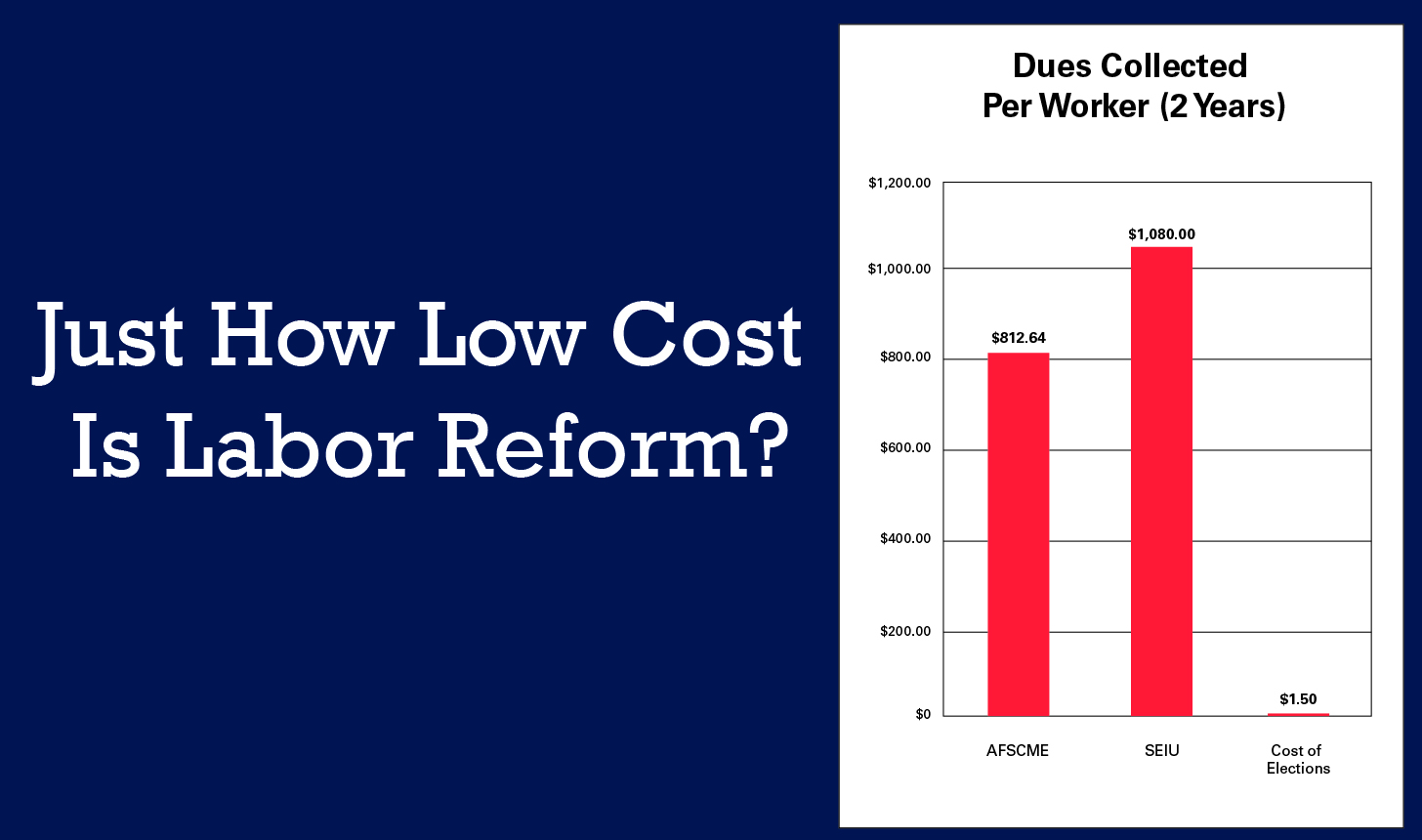
Jennifer Parrish, who operates a daycare business out of her home in Minnesota, was first approached by the Service Employees International Union (SEIU) in her own home. In 2006, an uninvited man showed up at her doorstep, walked inside when she opened the door, and asked her to sign a petition calling for the state to provide a health plan to daycare providers. According to Jennifer, it became clear after a few minutes that this man was not going away until she signed the petition. She told him she would take a copy and sign it after she read it. Reluctantly, he left.

At the time, SEIU was trying to organize Minnesota’s child care providers. When Jennifer got around to reading the petition, she realized that that it wasn’t about a health plan, as the man had told her, but part of a union organizing drive. Jennifer had been lied to.

Jennifer refused to play ball. Sometimes organizers tried to intimidate her. She recounts organizers following her to her car in an effort to show her that she was being watched. However, after she spoke out, most of the intimidation stopped. Eventually the Supreme Court affirmed the right of private care providers not to be forced into SEIU with the Harris v. Quinn decision.

In Missouri, we’re seeing similar stories coming out of SEIU organizing campaigns.

Take Mark Manteuffel, a biology adjunct at Washington University. St. Louis Public Radio reports this story about an SEIU organizer showing up at Mark’s doorstep and approaching his wife:

“They were just very pushy and rude,” Manteuffel said of the union representatives, “demanding my cell phone number. And they didn't introduce themselves first off, they just approached her and asked for me. So she stood back and asked them who they were and why they were looking for me. And she said that I would contact them if I was interested after they introduced themselves.

“The second time, the person said that they would show back up again, and she said no, he will contact you if he's interested. And they kind of huffed and puffed and said again that they would show up, and she said no, you're not listening to me, if you show up again, I will call the police and have you removed. Then the gentlemen seemed to get it.”

The campaign to organize Missouri’s in-home health care attendants is another front where SEIU has been active in our state. In 2010, the SEIU-backed Missouri Home Care Union won the right to represent all home care attendants despite receiving votes from less than 16% of attendants. Since then, the union has sought support from attendants who aren’t already members.

I’m hoping that the tactics used in Missouri don’t get as bad as they’ve been in other places. However, SEIU is not a member of the AFL-CIO and doesn’t always play by the same rules as an AFL-CIO union. For people who feel they’ve been targeted or persecuted for resisting SEIU’s organization drives, speaking out might be the best defense.

(Ms. Parrish is pictured above telling her story at an event sponsored by the National Right to Work Foundation. You can watch her presentation here.) 

The Ferguson Commission: A Bridge to Nowhere

As first appearing in the St. Louis Post-Dispatch:

The Roman philosopher Cicero once said, “Advice is judged by results, not by intentions.” It is hard not to think of these words when reading the final report of the Ferguson Commission.

The signature priorities, “justice for all,” “youth at the center,” and providing individuals the “opportunity to thrive,” could not be more noble. Unfortunately, we cannot judge the Ferguson Commission’s report on good intentions alone. We must examine the probable results. It is certainly too early to understand all of the long-term implications of the policies that the report advocates; however, based on the evidence, the prospects are bleak.

For example, the commissioners call for an end to poverty. Who can argue with that? But to eliminate poverty, they urge the adoption of a $15 an hour minimum wage. The commissioners admit that “debate exists over the short- and long-term economic implications of raising the minimum wage.” Yet they ignore this debate and selectively cite a report in support of the higher wage. This may be to the detriment of the people the commission is attempting to help. As Nobel-winning economist Milton Friedman once said, “The minimum wage law is most properly described as a law saying that employers must discriminate against people who have low skills.” The people most in need of entry-level jobs will suffer the most.

The commissioners outlined a plan to “enhance college access and affordability,” but gave short shrift to the greatest impediment standing in the way of a college education for disadvantaged students—subpar academics. The average ACT score for the Normandy school district was a paltry 16; not even high enough to gain admittance to most four-year state institutions. Less than seven percent of students scored above the national average. It isn't funding that is keeping these kids from going to college; it is their abysmal K-12 preparation.

The report, which is ostensibly about improving the outcomes for low-income African-American students (who make up more than 80 percent of the Ferguson-Florissant School District and more than 96 percent of students in Normandy), includes a plank granting access to state scholarships to undocumented students brought to the United States as young children. We can debate the wisdom of that policy another day, but what on earth does it have to do with improving outcomes in North Saint Louis County?

The commission did offer some helpful suggestions for making the inter-district transfer program sustainable, but they stopped short of calling for greater freedom of choice for the parents of children trapped in underperforming schools. Rather than confronting the issue, the commissioners punted and simply called for the creation of an “education design and financing task force.”

In the end, the K-12 education proposals amount to a call for more of the same. The state needs to “invest” in a universal pre-K program and move the compulsory education age down to 5 from 7. Note, not, “create a pre-K system that doesn’t suffer from the same problems of the current one,” but simply append another grade onto K-12 schools that are not meeting the needs of low-income and African-American students.

This is not to say that the commission report was altogether wrong. Indeed, the commissioners offered many suggestions that were on point and, if enacted, could lead to improvements in the Saint Louis community. But unfortunately, when the commission veered away from policies focused on the issues at hand toward tired planks of political opportunists—like increasing the minimum wage, expanding Medicaid, creating a universal pre-K program, and getting scholarships for undocumented kids—it lost sight of the problems it was set up to solve.

Arch Ground Already Costing Saint Louis More than Promised

                Recently, the Post-Dispatch reported that Great River Greenways, a regional, taxpayer-funded organization, could be on the hook for millions of dollars more than expected in the Arch Grounds project. Great River Greenways has long been part of the funding basis for “ArchRiverCity,” with dedicated funds coming from a sales tax passed expressly for that purpose (Prop P). But it turns out now that operating costs are exceeding what was originally budgeted.

To keep the Arch improvements on track, the director of Great River Greenways committed the organization (unilaterally) to cover half of the additional expenses (an extra $1.3 million a year). The organization will likely have to divert money from other sources to cover new costs. But those sources were supposed to advance trail construction and maintenance in the region, which might now be short-changed.

If all this seems convoluted, that’s by design. Perhaps out of fear that giving residents a reasonable estimate of costs—and a cautious estimate of benefits—might raise questions among the public, regional planners and politicians play shell games. Capital costs are understated and sliced up between levels of governments, or shunted off to quasi-governmental taxing districts (Great River Greenways, Downtown STL, etc.). Ancillary, but often necessary, parts of the development get moved to other parts of city budgets or ignored. Consistently, operation and maintenance is improperly budgeted for. All this so the local leadership can tell the public that they will receive a huge economic boon from a project they won’t have pay much, or anything, to get.

This leaves projects like ArchRiverCity, or the Loop Trolley, or the Kansas City Streetcar, or the Edward Jones Dome, or the Riverfront Stadium plan, with unrealistic budgets that leave everything to chance. When something goes wrong in construction (like delivery delays/cost overruns), or when maintenance expenses outstrip revenue sources, the projects have mini-heart attacks and taxpayers are on the hook. In the case of the Arch grounds, taxpayers will end up paying more through taxes diverted by Great River Greenways, a contingency that was neither discussed nor agreed to by any voters or any elected officials. With the number of extra-governmental taxing districts like Great River Greenways growing by the year, it is ever easier for residents’ money to be shunted from project to project with little public oversight.

Sustainable and efficient civic improvement programs rely on transparency and maintaining the trust of residents. One would like to assume good motives, but leadership in Kansas City and the Saint Louis region often seem willing to back convoluted funding plans (with obscured costs/benefits) in order to get a yes vote from a confused public. In doing so, they reduce transparency, which results in a cynical electorate. This is a recipe for dysfunction and waste.

Commenting on ArchRiverCity funding, one Great River Greenways board member stated flatly,

“I don’t feel like I’ve been sandbagged…This isn’t the only project that we don’t have enough money to do maintenance on.

Saint Louis residents should take that as a warning. 

Support Us

The work of the Show-Me Institute would not be possible without the generous support of people who are inspired by the vision of liberty and free enterprise. We hope you will join our efforts and become a Show-Me Institute sponsor.

Donate
Man on Horse Charging