

Trinity Lutheran v. Comer is a court case with humble origins. It started with officials at Trinity Lutheran School in Columbia, Missouri, who wanted to replace the gravel surface of the school’s playground with something more forgiving. Accordingly, Trinity applied to a state-run program whereby organizations can be reimbursed for the purchase of recycled tires that can be used to make a softer playground surface. If you think this story sounds simple, think again. On April 19, the U.S. Supreme Court will hear arguments in a case that involves the separation of church and state as well as the ways in which the government and groups with a religious affiliation can cooperate for the public good. This surprisingly complicated and potentially far-reaching case is the topic of a new essay by Show-Me Institute Director of Education Policy Michael McShane, which you can read here.
Attacking Charter Schools with “Alternative Facts”
In a recent letter to the editor of the Joplin Globe, Caroline Tubbs, a public high school teacher, makes a series of inaccurate claims about charter schools. As someone who has studied the issue of school choice closely for many years, I suspect the statements from Tubbs are the product of the misinformation she and many others have received. As is often the case with thorny public policy issues, the debate around school choice is often clouded with what we might now call “fake news.”
For instance, Tubbs suggests charter schools in Missouri do not have to administer state tests. This is simply not true. Charters administer the same exams to students as the traditional public schools do. You can view exam data on the Missouri Department of Elementary and Secondary Education’s website. They show that 70 percent of students at City Garden Montessori in Saint Louis scored proficient or advanced on the third grade English Language Arts Assessment in 2014, while just 64.9 percent did so at Joplin’s highest-scoring elementary school, Kelsey Norman. If you look at all the data, you’ll see charter schools in Saint Louis and Kansas City outperforming many Joplin schools.
Of course, not all charter schools are models of success; but neither are all district schools. Contrary to the claim of Tubbs, however, we do have reliable data and the effectiveness of charter schools has been measured. A 2013 study by the Center for Research on Education Outcomes (CREDO) at Stanford University showed that Missouri charter school students learned significantly more than their peers in nearby public schools in both reading and math.
Tubbs’s letter also misrepresents how school funding for charter schools works. She states that charter school students will take funds away from the district schools, and that part is true. Anytime a student leaves a district, the district will lose money. If a student moves from Joplin to Carthage, the Joplin School District would lose the same amount of money. Tubbs then goes on to say, “However, that public school district must continue to maintain facilities (pay the utility bills, fix the plumbing) and provide support services (bus transportation) for the remaining students.” But she does not mention that all of the funds used for facilities, maintenance, and debt service remain in the school district. Charters do not have access to these funds.
Tubbs also states that “non-public charter schools are not required to take all applicants.” First off, there is no such thing as a “non-public charter school.” Charter schools are public schools. They are free and open to anyone who lives within the attendance boundaries. They must take all students who apply, unless they are oversubscribed. Then they must hold a lottery.
Tubbs’s letter is filled with inaccuracies that are constantly repeated as if they were true. It’s time to put a stop to arguing with these “alternative facts.” We can have a debate as to whether charter schools are right for Joplin, Missouri, or the rest of the state, but we should do it with the truth in mind.
The Supreme Court Can Put a Nail in the Anti-Catholic Coffin
This week, the United States Supreme Court will hear a case out of our own backyard that wrestles with a vestige of our anti-Catholic past. In Trinity Lutheran v. Comer, the State of Missouri denied a Columbia preschool access to its scrap tire recycling program to resurface its playground because of Trinity’s religious affiliation. Missouri has a constitutional provision known as a “Blaine amendment,” which bars public “aid” to religious institutions.
James G. Blaine was the Speaker of the U.S. House of Representatives, a Senator from Maine, and the Republican party’s nominee for president in 1884. While historical accounts differ about his personal attitudes toward Catholics, there is no question that he tried to leverage anti-Catholic sentiment to make his way into the White House. He attempted to amend the U.S. Constitution to bar aid to the burgeoning Catholic school system that was cropping up around the country in response to the public schools’ emphasis on teaching Protestantism. (Many might be unaware that for a long time, students in public schools would read from the King James Bible and sing Christian hymns).
While Blaine was unsuccessful in amending the U.S. Constitution, 38 states have so called “anti-aid” provisions in their Constitutions, including Missouri.
Lawyers for Trinity, and for numerous faith groups filing amicus briefs, argue that the application of such provisions violates the First and Fourteenth amendment rights of individuals and organizations. As lawyers for the Institute for Justice put it, “the Religion Clauses of the First Amendment, as well as the Equal Protection Clause of the Fourteenth Amendment, demand neutrality—not hostility—toward religion.” The State of Missouri singled out Trinity, whose application otherwise would have been approved, solely because it is a religious organization even though the “aid” does not advance its religion.
Understandably, many folks reading this might not care about a school resurfacing its playground. But it is important to note that religious organizations provide important social services to members of our community—and to poor and marginalized communities around the nation—with government support. Soldiers use the GI Bill to attend Saint Louis University, and low-income families use Medicaid dollars at Cardinal Glennon hospital. If providing used tires to Trinity Lutheran is unlawfully providing aid to a religion, wouldn’t these other examples of cooperation between government and religious organizations amount to the same thing?
A decision in favor of Trinity would reinforce a commitment to treat religious organizations neutrally (neither privileging them nor discriminating against them) and would help close the door on a sad time in American history.
Mike Ferguson Explains The Problems with Special Taxing Districts on The Allman Report
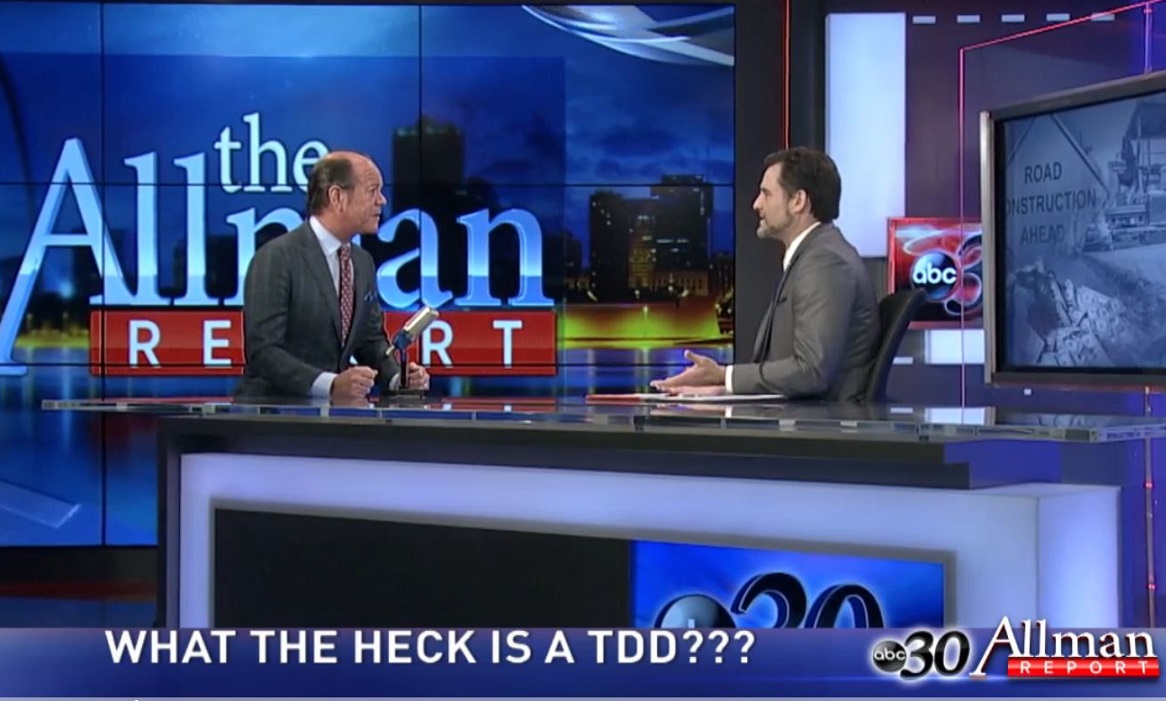
Show-Me Opportunity’s Mike Ferguson appeared on ABC 30’s The Allman Report on Wednesday, April 12, to discuss a report on transportation development districts recently released by the Missouri State Auditor’s office. Watch the entire show here.
Despite Subsidies, Joplin Rebuilt Itself

On May 22, 2011, a tornado ripped through Joplin, Missouri killing 166 people and damaging or destroying 7,500 structures. In the aftermath of the devastation, the people there were determined to rebuild.
Just six weeks after the tornado struck, Rush Limbaugh spoke to the people of Joplin on July 4 and said:
It’s going to be rebuilt. It’s going to be better than it ever was. You are going to show the rest of the country how it’s done because you represent the best of what this country has to offer. You understand the principle of hard work and self-reliance. You understand the difference between self-interest and selfishness.
Joplin was rebuilt. As part of the reconstruction effort, the city leaders adopted a tax increment financing (TIF) subsidy program and created the Joplin Redevelopment Corporation (JRC) to manage it. What happened next is an excellent lesson in TIF and developer subsidies for all Missourians.
The developers, Wallace Bajjali Development Partners, made all the usual claims about the need for government subsidies. In most cases a developer who gets TIF claims credit for every bit of construction that happens afterward. But in Joplin’s case, the developer went under before building anything. The JRC still issued the bonds and continues to collect the TIF taxes that would otherwise go to funding libraries and schools. But it has only bought and sold properties and paid professional fees (and even that earned it a rebuke from the state auditor). According to the JRC’s own reports, it has not built any infrastructure, developed any sites, or rehabbed any buildings.
Instead, the real reconstruction of Joplin was done by its private citizens—exactly as Limbaugh said it would be. Within four short years, Joplin recaptured the $34 million in assessed land value destroyed by the tornado—despite being saddled with a do-nothing TIF and redevelopment corporation for at least another decade, maybe until 2035.
The Show-Me Institute’s study of the TIF project (available here) is a lesson for all of Missouri. While studies of development subsidies in Saint Louis and Chicago show little lasting benefit from redirecting property tax revenue to developers, the circumstances in Joplin make this lesson exceedingly clear. No tax-subsidized developer rebuilt Joplin; The people did it themselves .
Auditor’s Report Sheds Light on Special Taxing Districts

The truth is out: low-profile micro-governments have been receiving billions of public dollars under the taxpayers’ radar for decades.
The number of special taxing districts, such as transportation development districts (TDDs) and community improvement districts (CIDs), has grown over the past 20 years at a rate rabbits would envy. These districts are formed through petition processes and levy a tax or fee (often sales and/or property taxes) to fund various improvements, ranging from roadway interchanges to streetcars to “great suburban walls.” As I’ve written before, the governance structures of these districts predictably lead to accountability and transparency issues.
But a report on TDDs recently released by the Missouri State Auditor’s office shows just how severe a problem these districts have become.
TDDs were intended to help fund public improvements through a tax similar to a user fee in order to avoid burdening the general public with the costs of these projects. For example, if a development required a new intersection with a traffic light, a tax could be levied on just that development to help pay for construction of the intersection. But TDDs have now morphed into a mechanism for private developers to tax the public for private gain.
The law that originally authorized the creation of TDDs (RSMO 238.200-238.275) allows for them to be established by residents or property owners. If a proposed district has no residents within its boundaries, property owners alone decide whether a tax is to be levied, and if so, how its revenues are spent. Often, TDDs are established by a single retail developer. This means that a single developer can (1) form a district, (2) impose a tax in that district, and (3) spend tax revenues nearly any way it sees fit. Unsurprisingly, TDD revenues often go right back to the developer in the form of a direct subsidy, and taxpayers are forced to the sidelines with no say in how their money is spent.
So how bad is the problem? In 2014 and 2015 alone, TDDs in Missouri collected more than $176 million in tax revenue—yet, only 6% of those TDDs had residents within their boundaries. According to the Auditor’s report, $125 million of that revenue was collected without residential voter approval. Given that TDDs have been operating this way for nearly 20 years, their collective public impact is in the billions.
The Auditor’s report has shed much needed light on the abuse of special taxing districts. Now that we have a diagnosis, Missouri needs to develop a cure. Show-Me Institute researchers have proposed several special taxing district reforms, including requiring a minimum number of residents in a district and tightening reporting standards. Taking advantage of unsuspecting taxpayers is wrong, so why do Missouri’s laws allow it?
Patrick Tuohey Discusses the Results of Tuesday’s Elections
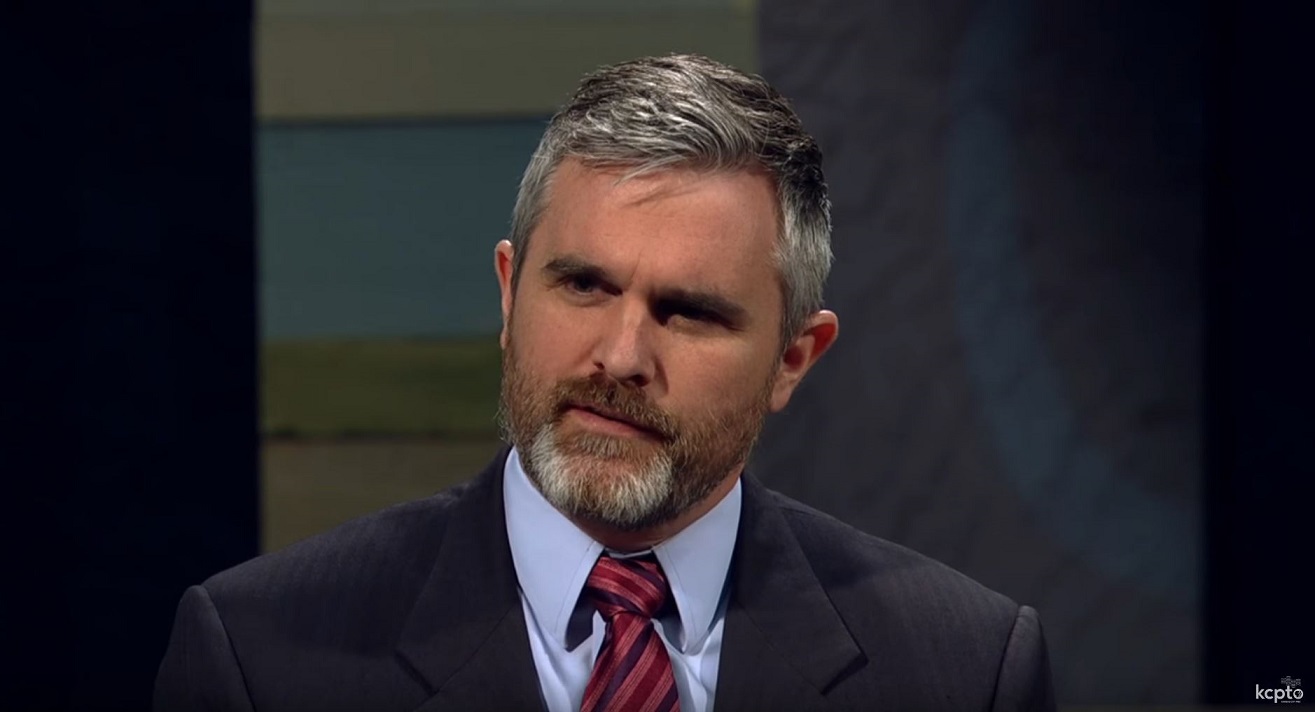
On Thursday, April 6 , the Show-Me Institute’s Patrick Tuohey appeared on KCPT’s Ruckus to discuss Tuesday’s election results and Supreme Court nominee Neil Gorsuch. Click on the link above to watch the entire show.
Congratulations, Neil Gorsuch
Earlier today the U.S. Senate confirmed the Supreme Court nomination of Judge Neil Gorsuch. Gorsuch’s impeccable credentials and sterling jurisprudence serve as an unambiguous example of the sort of judges we want to have on the highest court in the land, and the lowest courts. That Gorsuch was only approved after the Senate majority had to break a filibuster of his nomination should disturb every member of the legal profession and every believer in good governance. Indeed, the political litmus test advanced in the U.S. Supreme Court confirmation process of recent decades has done much to undermine the public’s sense that our courts are fair and impartial. The use of the “nuclear option” to break the most recent political impasse was the logical and necessary last act of that unfortunate trajectory.
Legislative tradition is important and ought to be asserted symmetrically. But legislators should not allow “tradition” to be used asymmetrically as an excuse either for interminable legislative inaction, or as a pretense to subvert the will of a supermajority, as is being done, for example, in the Missouri Senate. Justice Gorsuch’s nomination should have proceeded without the threat of a filibuster and consistent with substantive Senate tradition, and his seat on the Court merited a breaking of the filibuster that had been undertaken against it. Likewise, the pursuit of the People’s business in Missouri should not be stopped for “tradition’s sake” by lax acceptance of the legislative priorities of a superminority. It was a mistake for senators in the U.S. Senate to abuse the filibuster to try to stop Gorsuch; that same mistake is now being made in the Missouri Senate — and it should not be sustained.
Charter Schools: A Mother’s Plea for Her Son
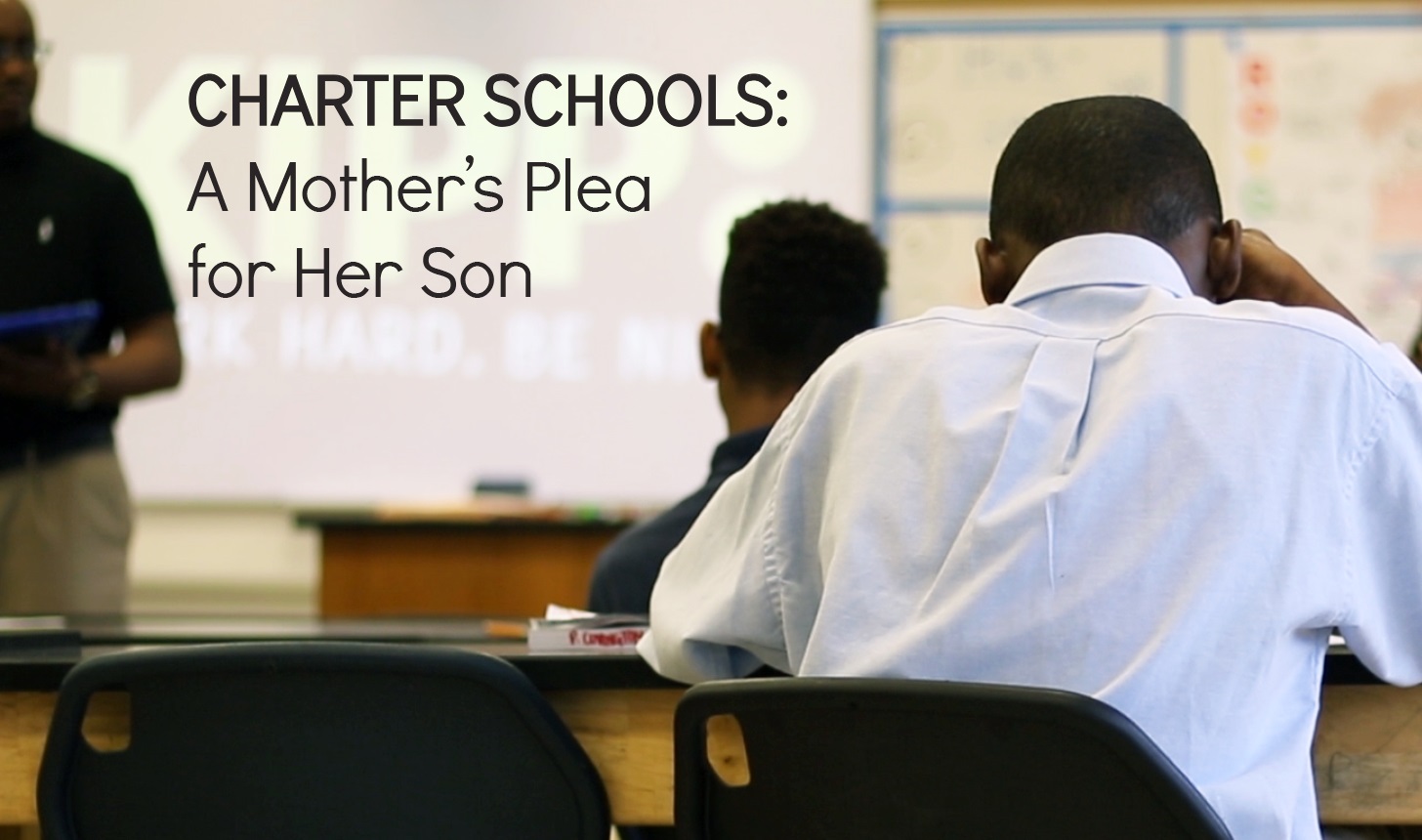
Carmen Ward’s son, Paul, has Asperger’s Syndrome. The Saint Louis public school system was unable to meet Paul’s needs and his academic progress was suffering, so Carmen turned to a charter school—KIPP Inspire Academy. It’s made all the difference.
Special thanks to:
