
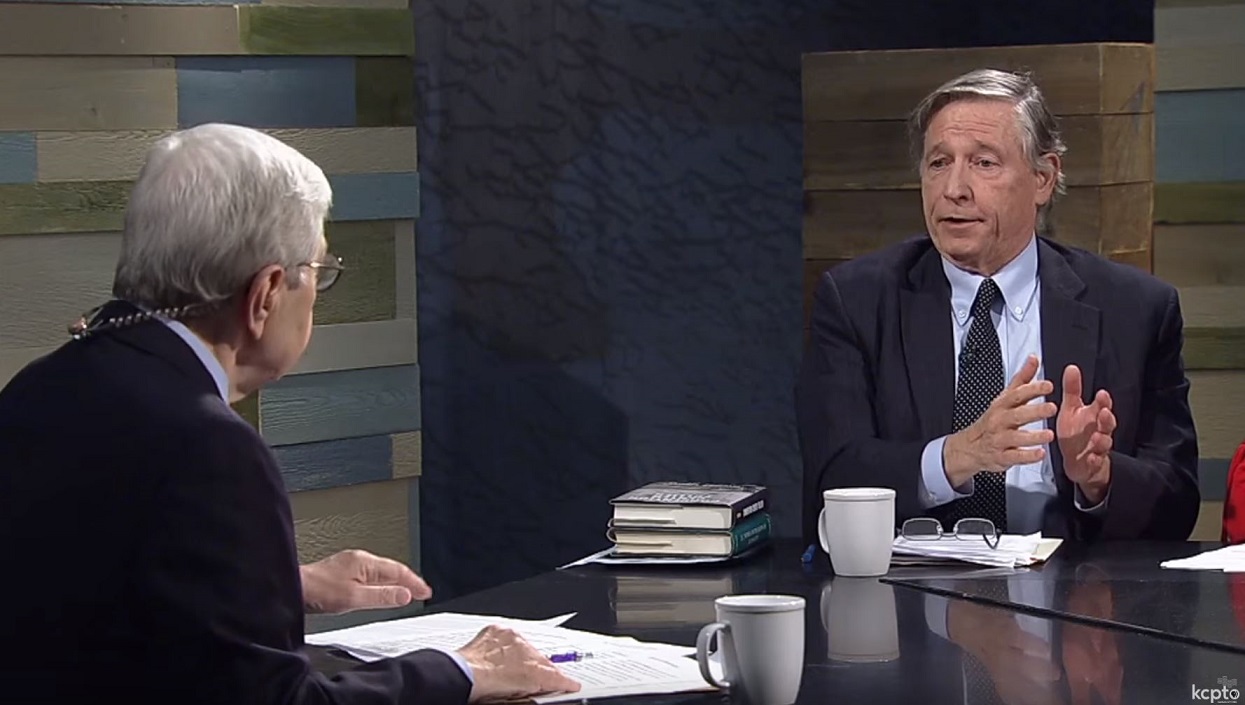
The Show-Me Institute’s Chairman Crosby Kemper III appeared on KCPT’s Ruckus on Thursday, June 29, to discuss Kansas City’s convention hotel as well as other local and state issues. Click above to watch the entire show.
Real Incentive Reforms for Saint Louis

Economic development incentives like tax increment financing (TIF) and tax abatement have been grossly misused in Missouri’s two major cities for decades. The City of Saint Louis has, from 2000 to 2014, given away more than 700 million in taxpayer dollars through these corporate welfare programs. Facing mounting public pressure and decades of research indicating these programs have “no real economic development impact,” officials are considering reforms to Saint Louis’s incentive policies. This is very welcome news.
Unfortunately, many of the reforms proposed by officials (which local activist and TIF critic Glenn Burleigh rightly notes are nonbinding) are unlikely to have much effect on the use of incentives or their detrimental effects. Two reforms—the reduction in the percentage of projects’ costs and the shortening of the terms of TIFs and abatements in economically better-off parts of the city—sound like significant steps in the right direction. However, similar reforms enacted in Kansas City last year have proved ineffective.
So, what reforms could genuinely curb incentive abuse? The surest and most effective reform is repeal—the legislature should completely eliminate these misguided programs from state law. California, the state that created TIF, repealed TIF nearly a decade ago.
But, short of repeal, what can be done? Here, and in a series of blogs in the coming weeks, I’ll discuss a cabinet of reforms policymakers should consider to make real progress in reforming incentives. Some policies will be austere, others more mild, but all, I believe, will offer creative and meaningful alternatives to Saint Louis’s misguided incentive policies.
1. Adopt an Incentive Budget
I live on a budget. You live on a budget. Policymakers in City Hall pass and ‘live’ on a budget. If we can do it, so can economic development agencies, developers, and their investors.
Policymakers could adopt a hard cap regarding how much they award annually through TIF and abatement. Think of this as an “Incentive Budget.” Just as the City budgets a certain amount for a program or service, it would allocate a certain dollar amount for TIF and abatement. The only difference would be that City officials couldn’t go beyond a certain amount—say $50 million annually. (For context, the TIF Commission awarded nearly $51 million in TIF subsidies in a single meeting earlier this year.) Many state tax credit programs have annual or cumulative caps like this.
This reform has several strengths. For one, it strictly limits how much revenue the city can give away. Policymakers have little political or financial incentive to tell developers “no,” but a strict cap could force them to do so. This could control the bleeding of city revenues and force development officials to think harder about which projects should get the limited number of subsidies available.
Second, it could help the City avoid budget gaps and manage future revenue losses. If policymakers and development officials are kept on a budget, the long-term financial impacts from incentive programs could be accounted for in advance. This would make the lives of folks in the Budget Division much easier, and help schools, libraries, and other jurisdictions deal with future lost revenue.
Urban planners, policymakers, and development officials may claim that such a reform would restrict their powers unduly, and show the world that Saint Louis is “closed for business.” (One might argue that the regulatory and tax environments are bigger problems than a scarcity of development subsidies, but those are topics for another day.) We have seen what happens without restrictions on the awarding of TIF, and it isn’t pretty. A hard cap may be the only way, short of repealing TIF and abatement, to stop the abuse. And if some game-changing project comes along that would bust the City’s incentive budget, place the decision-making power in the voters’ hands, like some state representatives have proposed. That way those affected by incentives—ordinary taxpayers receiving fewer and fewer city services—have more say in how they’re used.
An incentive budget is just one of many reforms that officials could explore. Others—about which I’ll be writing soon—include:
- Eliminating TIF and abatement for projects that already receive other state/local incentives: Prevent a single project from receiving every incentive on the books.
- Tying incentives to land uses: Ensure that incentives go to projects with real public benefits.
- Form a City-County incentive pact: Stop the race to the bottom.
Who Are the Villains in the Teacher Pension Story?

In the two-bit morality play that is pension reform in Missouri, my colleagues and I are frequently cast as the villains.
Whether it is the Missouri Retired Teachers Association, MNEA-retired, or the director of The Public School Retirement System, breathless commentary argues over and over that we have some desire to destroy teachers’ pensions.
I don’t take this personally. As Jay-Z says in classic song December 4th, “This is the life I chose, not the life that chose me.” But teachers in Missouri probably should. The stability of their retirement depends on it.
And that brings us to a recent article written by Chad Aldeman and Kelly Robson of Bellwether Education Partners. The refrain is one that should be familiar to readers of this blog. Many, many teachers are net losers in current pension systems.
The Missouri-specific numbers show that only 58% of Missouri teachers will “vest” in the pension system. Only 38% will “break even” in the system, meaning that 62% will pay more into the system than they will get out of it.
These are not my numbers. These are not Show-Me Institute numbers. These are numbers collected and analyzed by a third-party organization and published in a reputable journal house at arguably the most prestigious university in our nation.
Combine this with the fact that poorer districts subsidize pensions in wealthier districts, pension funds are taking on riskier and riskier investments to chase higher returns, pension plans have huge unfunded liabilities, and that reformed pension systems can be beneficial to teachers (more evidence here) and then ask yourself: Who are the villains again?
At some point cheap theatrics and ad hominem arguments aren’t going to cut the mustard anymore, and someone will have to answer to the facts: More than 40 percent of teachers fail to vest in the system (losing everything that the state has contributed), and more than two-thirds are net losers in the system.
State ESSA Plan Offers Opportunity for Course Access

Earlier this month the Department of Elementary and Secondary Education released a draft of its plan to comply with the federal Every Student Succeeds Act. This document outlines several key areas of state policy, particularly how the state will spend the federal dollars it receives and how it will hold schools that receive those dollars accountable.
I haven’t had a chance to fully dig into the document, but at the 30,000-foot level it seems reasonable to me. The state doesn’t appear to be doing anything overly ambitious (it is only slated to intervene in the law’s minimum 5 percent of lowest-performing schools, it doesn’t appear to be using any new or fancy non–test score indicators to try to hold schools accountable) which ultimately might be the most prudent path forward. It looks like the state is going to take a hard look at the lowest-performing schools and try and leave the rest alone. Seems wise.
One area where there is an opportunity, and where I wish the plan was a bit more direct, is under Title IV. Eagle-eyed readers of this blog would remember that I wrote about flexibility that the state has under this provision in the law to provide some innovative direct services to underserved students.
On page 50 of the plan (emphasis mine):
“To overcome the lack of course availability, MO-DESE intends to improve access to advanced coursework for all students, but particularly for minorities and economically disadvantaged students and for those whose rural or small school settings reduce their access. MO-DESE may also subsidize fees for AP and IB courses. Furthermore, where advanced coursework, including advanced mathematics and science are locally unavailable, MO-DESE will subsidize course fees for the Missouri Virtual Instruction Program.”
DESE’s plan is laudable, and we’re singing from the same hymnbook when it comes to recognizing that far too many students in the state lack access to higher-level coursework, but I’d like to see more than one sentence in a 94-page document laying out how to solve the problem. What students would be eligible? Would this be a formal “course access” program or just paying for courses ad hoc if and when funds are available? The state can spend up to 3%; will they spend that whole amount? Some fraction?
This document appears to be a step in the right direction. With some clarification, the state can take a bold step to fix the persistent problem of course availability in underserved areas.
If You’re Paying, I’ll Have an Ice Rink
It’s far too easy to spend other people’s money. If you’ve ever had a credit card or your identity stolen, you know this far too well.
Stanford economist Russ Roberts summarized the phenomenon thusly: “If you’re paying, I’ll have top sirloin.”
But in Chesterfield, it’s more like: “If you’re paying, I’ll have an ice rink.”
News of the Hardee’s Iceplex closure in Chesterfield was quickly followed by calls to find a new home for the Chesterfield Hockey Association. Quicker than a winger can flank the defense, a proposal for a new, $22.6 million facility came forward. The only catch? Taxpayers would have to cough up $7 million.
Those funds could come from a special taxing district, better known as a transportation development district (TDD), which levies an extra sales tax in the Chesterfield Valley retail area. If voters in the district—which encompasses less than a single percent of Chesterfield households—approve the tax, shoppers in the valley will help buy and improve land for a narrow special interest, adding yet another chapter to what’s become Missouri’s never-ending-story of public-cost/private-benefit development.
The problems with this deal are obvious and myriad.
For one, there’s the issue of “investing” in an ice facility when one just went out of business. The developer’s own market analyses show there is a glut of ice facilities in the region, which has “resulted in creating a ‘buyer’s market’.” If an ice rink isn’t a good use of private resources, what reason is there to think it’s a good use of the public’s resources?
Second, despite tax dollars being used to buy and improve land for the developer, there will be no public ownership of the facility. In fact, there isn’t even an agreement in place to let the public use the facility! If the facility changes hands or goes under, the city could end up owning the associated parking lot, but the last time I checked, there was no dearth of parking in the valley.
Then there’s the white elephant just up the road: the $45 million complex proposed by the Blues for Creve Coeur Lake Park. The duly-subsidized complex will undoubtedly compete with the Chesterfield facility, but—incredibly—proponents claim their project is insulated from economic pressures.
And the (unreported) cherry on top? Last month it was announced that a private investment group acquired a new facility for the Chesterfield Hockey Association to use as an ice rink. So even though the group has a new “home,” they still want you to build them an ice palace.
All in all, this project makes little economic sense. So why is it moving forward? Because Missouri’s loose TDD laws sanction (or rather, encourage) special interests to tax the pubic for private gain. And when you’re spending other people’s money, you’ll “invest” in just about anything.
TDD reform is long overdue. Until things change, I suggest we update Roberts’ adage so it reads: “If taxpayers are paying, I’ll have whatever I darn please.”
Breaking News: Trinity Lutheran Wins!
This morning, the United State Supreme Court ruled 7-2 in favor of a Columbia preschool that was denied a state grant to purchase scrap tires for their playground. (For background on the case, check out this SMI paper).
The Court reaffirmed the position that “denying a generally available benefit solely on account of religious identity imposes a penalty on the free exercise of religion.” In order to justify that penalty, the state has to clear a very high bar in proving that imposing that penalty serves a compelling state interest.
Missouri did not clear that bar. As Chief Justice Roberts argues in the opinion of the court, “the Department offers nothing more than Missouri’s policy preference for skating as far as possible from religious establishment concerns.” That is not enough, the court ruled, with Chief Justice Roberts punctuating his opinion by stating, “the exclusion of Trinity Lutheran from a public benefit for which it is otherwise qualified, solely because it is a church, is odious to our Constitution . . . and cannot stand.”
This is an important victory for civil society and for religious institutions that feed the hungry, house the homeless, educate the young, and provide healthcare to the sick. However, this case does not settle the issue once and for all.
The Chief Justice’s opinion contains a footnote around which we can imagine the next round of lawsuits will hinge. In footnote 3, the Chief Justice writes “This case involves express discrimination based on religious identity with respect to playground resurfacing. We do not address religious uses of funding or other forms of discrimination.”
So what does this mean for school vouchers, for example? We don’t know. In concurring opinions, Justices Thomas and Gorsuch argue that this ruling should extend to cases beyond identity into how funds are used, but that appears to be left for another day. This is not the last we will hear about religious organizations participating in public programs, but it is a shot in the arm for the argument that they have a right to do so.
Mike Ferguson discusses Chesterfield Valley Hockey Vote on The Allman Report
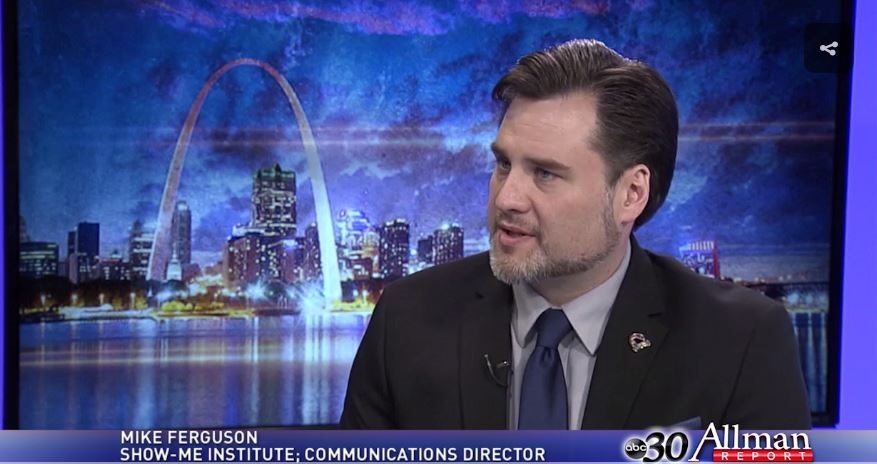
Show-Me Opportunity’s Mike Ferguson appeared on ABC St. Louis KDNL’s The Allman Report to discuss how transportation development districts are being misused, and how the laws governing them must be improved. Click here to watch the entire interview.
Tuohey Discusses Kansas City’s Airport on KCPT’s Ruckus
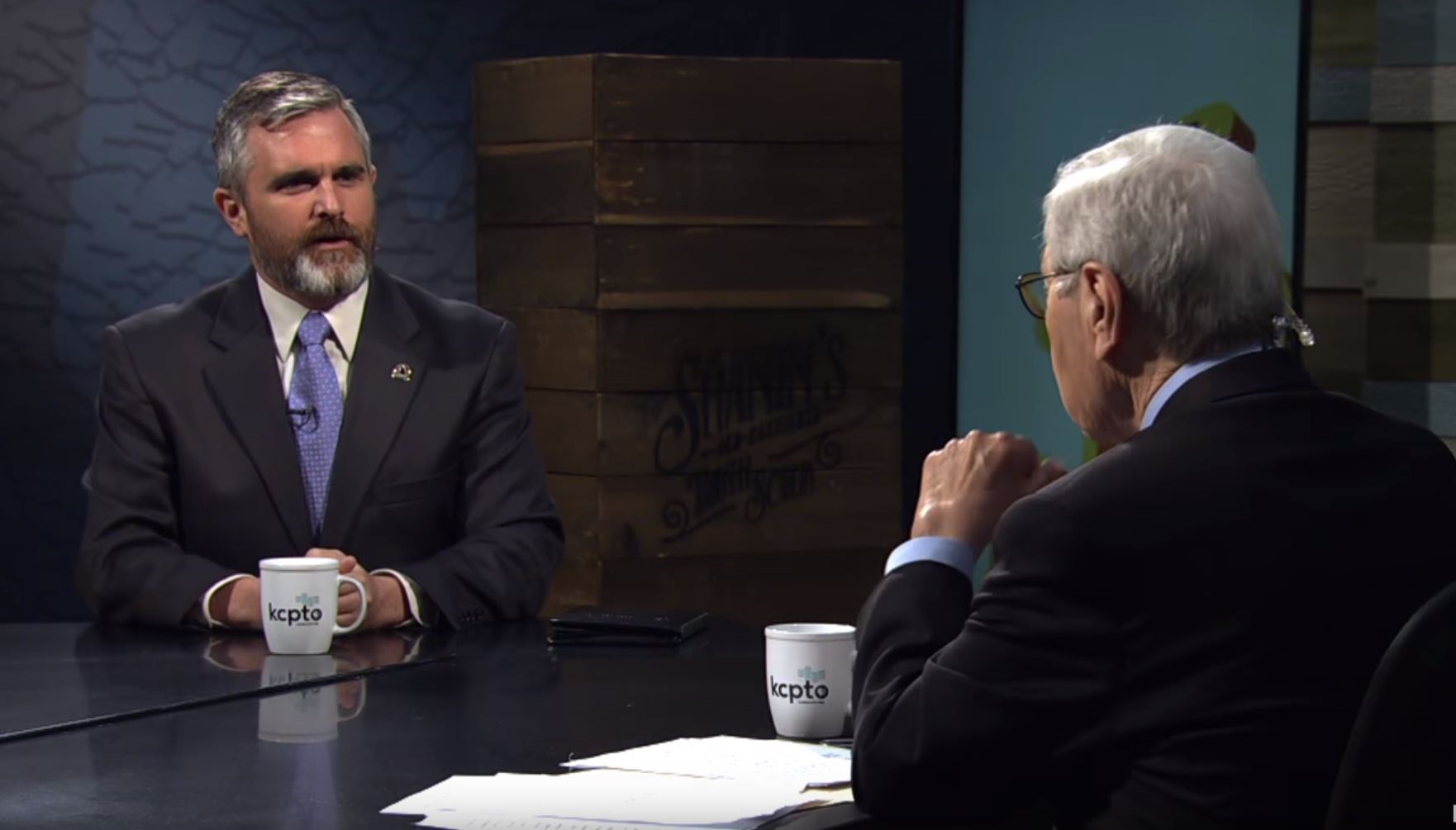
On Thursday, June 22, the Show-Me Institute’s Patrick Tuohey appeared on KCPT’s Ruckus to discuss the debate over the financing mechanism and public support for a single-terminal KCI, education funding in Kansas, and the decline of civil discourse in politics. Click above to watch the entire episode.
We Need to Make Missouri More Attractive to Charter Management Organizations
Earlier this week, the Center for Research on Education Outcomes (CREDO) at Stanford University released a new study of Charter Management Organizations. The study included more than 3.6 million student records from 26 states, including Missouri. A total of 5,715 charter schools were included in the study.
On average, charter schools improve test scores in English Language Arts and Mathematics at a higher rate than comparable traditional public schools. There is variation, though. Notably, the authors of the report found charter schools that belong to a network, (known as a charter management organization, or CMO), tend to perform higher than independent charter schools. Missouri’s charter schools didn’t fit this trend, as non-CMO schools performed relatively well. Nevertheless, the findings of this report have some important implications for Missouri.
Currently, there are relatively few large, successful charter management organizations operating in our state. There are a few reasons why this is so:
Limited Locations
For many years, charter schools could only open in Saint Louis and Kansas City. For a network of schools to thrive, it needs to be able to enroll a large number of students. The limited markets of Saint Louis and Kansas City make it difficult for this to happen.
Limited Enrollments
Charter schools can now operate in unaccredited school districts, but they still face problems with enrollment. Missouri’s charter school law does not allow students to enroll in charter schools across district boundaries, and Missouri has relatively small school districts. A charter must attract a large percentage of students in a small school district in order to be viable. This has prevented charters from opening in the perennially struggling school districts of Normandy and Riverview Gardens, as well as other places.
Making it easier for charters to open statewide and allowing them to recruit students from across district boundaries might entice more charter operators to open schools in other districts or on the borders of Saint Louis and Kansas City. Current law makes it difficult for charters to operate outside of the two cities.
Pension Barriers
An added difficulty is Missouri’s teacher pension system. Currently, there are three separate systems which do not have reciprocity between them, meaning that years of service do not carry from one system to another. Charter networks may wish to move teachers or administrators between schools, but if this means moving between pension systems, those individuals would lose money.
Funding Parity
Charters in Missouri do not receive local tax support for facilities and debt. An analysis by researchers at the University of Arkansas shows that charters in Missouri receive approximately 26 percent less funding that their district counterparts. This is a difference of more than $4,600 per pupil. Many states are trying to attract high quality CMOs and can offer them more support than Missouri can.
If Missouri wants to improve educational outcomes for students, the legislature should enact polices that make the Show-Me State more attractive to CMOs. For starters, the legislature could address the problems listed here by removing geographic limitations, opening enrollment policies, reforming pension policy, and improving funding parity.
