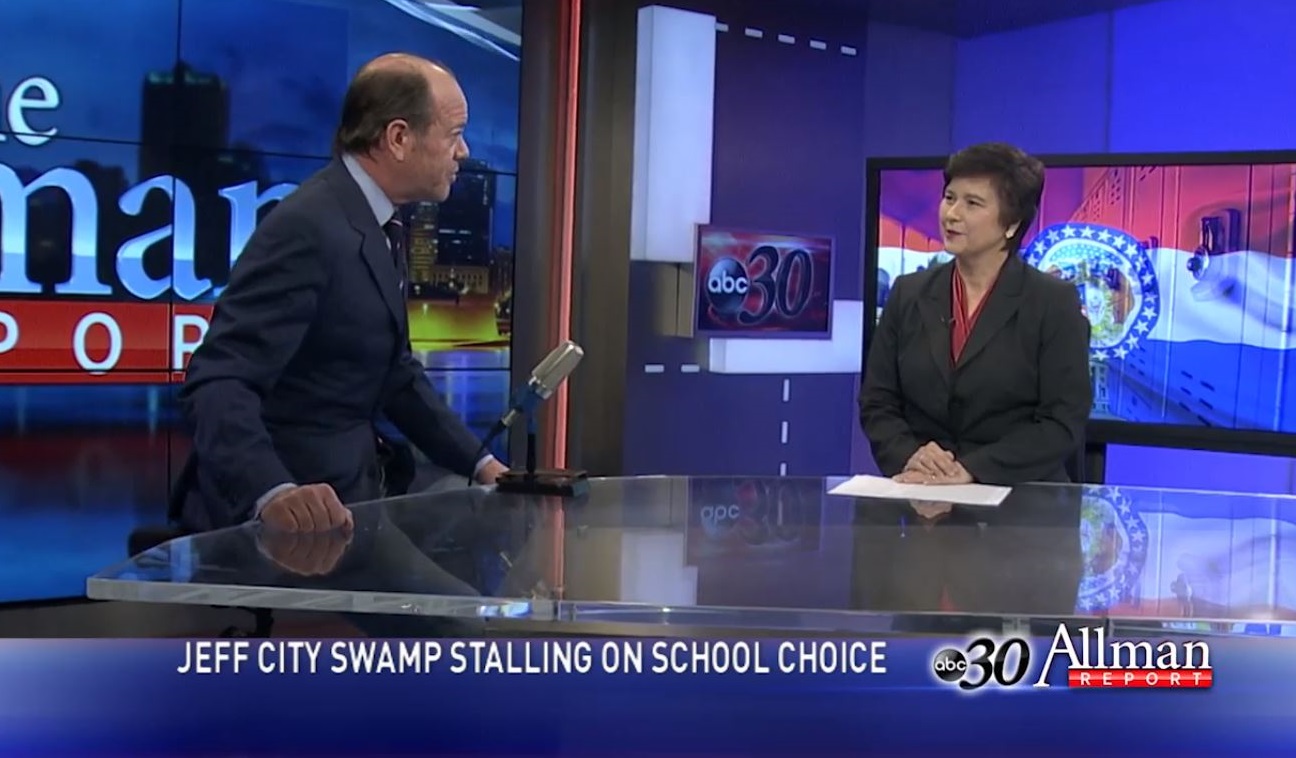
School Choice for Me, But Not for Thee: Part 4

Over the past two posts, I have discussed reservations some parents have expressed about school choice programs. First, I examined whether school choice programs hurt traditional public schools. Next I discussed the trade-off of moving from a democratically controlled school system to one that is controlled by choice. Today, I’m addressing a concern shared by many parents in focus groups I conducted in Saint Louis and Kansas City. This one focuses on private schools themselves.

Reservation Number 3: School choice may lower the quality of private schools

The argument goes something like this: the children who can’t afford to attend private school would bring the “problems of poverty” with them into whatever school they attend. The schools would get worse as a result. Tuition-paying families would leave. And on and on and on…

There are several problems with this argument. First, we should acknowledge that this response sounds really tone-deaf to the single mother living in poverty who wants a great education for her child. How many amazing figures from American history were born into poverty only to excel in school; Ben Carson and Supreme Court Justice Clarence Thomas are two that quickly come to mind. One of the first lessons we learn in Kindergarten is to never judge a book by its cover. We should give the benefit of the doubt to families who are working hard to find better schooling options for their kids.

Second, we have to recognize that this belief betrays a low opinion of private schools. It suggests that the schools are not good because of the effectiveness of the staff, the value of the school’s mission, or the innovativeness of the school’s curriculum. Rather, this line of thinking suggests a private school is only as good as the students who go there. In other words, the school would be no better than the surrounding public schools if they were forced to take all students. Is that what private-school parents really think about their schools? If so, they may want to reconsider their schooling decision.

Third, and in contrast to that argument, many private schools have a long and proud tradition of educating low-income and minority students. Moreover, they have been quite successful at it. Indeed, research suggests urban minorities are among the greatest beneficiaries of Catholic schooling.

To summarize, it is understandable for parents with kids in high-performing private schools to be concerned about the impact of a private school choice program. Yet, concerns about “dumbing down” private schools are often overblown. Moreover, we mustn’t forget that they get to choose whether they will accept any students at all! They don’t have to participate.

For policymakers, it is important to understand this dynamic when designing programs and when speaking with constituents. It is also important to remember public policies should not be designed to protect the privileged. Good public policy should attempt to enhance freedom, encourage individual responsibility, and improve outcomes for citizens. School choice accomplishes all of these goals.

Minnesota Is Embracing School Choice-Missouri Should, Too

School choice is shaking up Minnesota’s public school system. Either by using the open enrollment system or attending a charter school, 132,000 students opted out of their assigned school or district just last year.

Unsurprisingly, parents are welcoming more control over their children’s education. Marguerite Mingus, a mother of four in Minneapolis, wrote a powerful article on school choice; all of it is worth reading, but this paragraph is particularly striking:

I made the intentional choice—and continue to make the choice every day—to put my children first. I put my children ahead of what is convenient for me, ahead of what would be best for the district’s budget and ahead of what other parents whose kids do just fine in their neighborhood schools think I should do.

State money flows to the school of the student’s choice, and away from the school the student leaves—putting pressure on some districts that are losing students to other districts or charter schools. But as the editorial board of the StarTribune, the largest newspaper in Minnesota, noted, this situation presents a great opportunity for traditional public schools:

By popular demand, school options are likely here to stay. Given that reality, traditional public schools should do more to understand what their communities want and need. That starts with improving academic performance to retain and attract more students. In some cases, it means getting a better handle on school discipline and safety. And traditional schools should find ways to work cooperatively—both in programs and financially—with charters and other districts to offer the best, most effective programs for kids.

More school choice does not mean the end of traditional public schools; rather, public schools can and should be an important part of a diverse schooling system that better meets the needs of students. Here in Missouri, some healthy competition would improve our public schools and, more importantly, help ensure that every student in the state has the opportunity to attend a school that works best for them.

It would be hard to come up with a better endorsement of school choice than these two quotations. Parents in Minnesota have been given more control over their children’s education, and they intend to keep it. Is there any reason to think that parents in Missouri wouldn’t feel the same way? 

School Choice for Me, but Not for Thee: Part 3

Many people who have (and use) the resources to choose their own child’s school nevertheless oppose programs that make school choice available to all families. In this series, I have been discussing four reservations these parents cite in their opposition to government-sponsored private school choice programs. In my last post, I discussed whether school choice programs hurt students left behind, school districts, and the community. Today, I look at a different reservation—control.

Reservation Number 2: School choice gives the public less control of the school system.

Local control of public schools is as American as apple pie and baseball. In the vast majority of U.S. school districts, governance is of the people. Citizens in the local school district elect school board members. The citizens control the school system. Some worry that school choice would strip local taxpayers of this ability. Is this true? Just as is the case in considering finances, the simple answer is yes. In most school choice systems, whether public charter schools or private school choice programs, citizens do not have the ability to elect school board members. Here again, we must consider what this means.

Let’s first consider the current system where you and I can elect school board members. Say you are upset with something, or you want the curriculum changed (as I have in the past). What are your options? First, you can, and should, address the issue with the teacher. If this does not resolve the issue, you approach the principal and work your way up the chain of command—principal, assistant superintendent or district coordinator, superintendent, etc. Finally, you may approach the school board. When you bring your petition to the school board, it is not uncommon for them to grant you three minutes to speak at a public hearing. If you are lucky, they may take up the issue for further discussion.

Chances are you will not be very successful in getting the school district to change policy (So far I’m batting .000 on my complaints). If you are dedicated, and educated, enough, you may run for a position on the school board. You will have to hit the pavement and participate in local events to get up your name recognition. Let’s then say you get yourself elected to the board. Now, you have to convince a majority of the board members to vote your way on the issue.

How long has this process taken you? Probably years. And what have you gained? You have just managed to foist your will on the remainder of the students and parents in the school district, many of whom may disagree with you. As I have written elsewhere, our current system invites conflict because it is a winner takes all system.

While the current system puts the power into the hands of citizens, the average citizen actually possesses very little power to exact any meaningful change.

Now, let’s consider a school choice system. In charter and private schools, most boards are self-appointed and the board members may or may not be from your local community. Some schools may have parent advisory committees, but they often do not determine policy within the school. In this system, you lose your ability to elect board members; but you gain something else. You gain the ability to leave without having to move or pay for tuition. If the school isn’t meeting your needs, you can take your child to another school. This places tremendous pressure on the school to be attentive to your needs.

Right now, can you name all of the members of your local school board. No? OK, now name one or two great schools in or around your community that you would like your kids to go to. I’d wager more people could do the latter.

By switching to a school choice system, we lose control at the ballot box and gain control in the classroom. That seems like a good trade-off. 

School Choice for Me, but Not for Thee: Part 2

In my last post I discussed how some people support school choice for their children, but do not support private school choice programs that would extend options to other children. From my focus groups with 35 parents in Saint Louis and Kansas City, I found four main objections to these programs. These reservations were not held by everyone, but each was stated by numerous participants in the study. Over the next few days, I am dedicating a post to each reservation. If we are to convince parents, and the public at large, that school choice is a viable method for delivering on the promise of public education, we have to address these important issues.

Reservation number 1: School choice may hurt traditional public schools.

As I wrote in the paper, “Some worried that school choice programs may drain intellectual and financial resources from the low-performing schools. It is possible, they argued, that only families with the wherewithal to take advantage of the program would be able to access the choice schools. This would leave traditional district schools with the most difficult students to educate.”

This argument has been popular among opponents of school choice for a long time, so it was not surprising that it was also mentioned by parents. There was, however, some nuance to this reservation. Some parents worried about finances, others about students left behind, and still others about the impact on the local community. I’ll briefly deal with each of these issues.

Does school choice hurt school districts financially?

Let me tell you a little secret. Any time a student leaves a district, the district receives less money.

When a student moves to another public school district, the home district receives less money. When a student leaves to attend a charter school, the home district loses money. When a student uses a voucher to attend a private school, the home district loses money.

But it is also true that when a student leaves a district, that district has one fewer student to educate.  What’s more, because most school choice programs actually allow fewer dollars to follow the student than would otherwise be spent on him or her, most school choice programs leave money behind in the district. As a result, per-pupil spending in the district goes up

School choice doesn’t hurt school districts any more than families moving does, and we wouldn’t dream of banning people from moving.  Why should we prevent them from finding a better schooling option for their child?

Does school choice hurt students who are left behind?

A substantial amount of research has been conducted to answer this question. As EdChoice states:

Thirty-one empirical studies (including all methods) have examined private school choice’s impact on academic outcomes in public schools. Within that body of research, 29 studies find that choice improved the performance of nearby public schools…To date, no empirical study has found that school choice harms students in public schools.

It is perfectly reasonable to be concerned about disadvantaged students who may not participate in choice programs. We should look for every opportunity to help and support those students. The evidence, however, tells us that these students are not worse off; they are typically better off in a school-choice environment.

Does school choice hurt the community?

One thing is clear: Bad schools hurt a community. When students are forced to attend a low-performing school, more advantaged peers tend to leave. The quality of the school drops lower and housing values are depressed. School choice changes this. It makes it possible for families to stay in their communities and send their children to schools that meet their needs.

So what do we make of this reservation? As it turns out, we can put our minds at ease. Rather than harm academic, school, and community outcomes, school choice programs can have a positive impact on each. 

St. Louis’s Multi-Million-Dollar Toy Train

When will St. Louis’s long-delayed and over-budget Loop Trolley open? It’s hard to say, but in the meantime, construction on the project is causing a nightmare for nearby businesses. Even worse, the delays mean millions of dollars in additional costs for the public.

To learn more about the Loop Trolley project:

Face-Palm: Loop Trolley Over-Budget Likely Delayed, Again

Essay: Taxing Business in Missouri

As the U.S. Congress turns the national conversation toward reforming the tax code, one aspect they are discussing is the corporate income tax. Missourians would also do well to have a discussion regarding our own corporate income tax and how it affects—or in this case hinders—our state’s economic growth.  

You might assume that as a red state, Missouri’s corporate income taxes would be low. Since 1993, the top corporate income tax rate for Missouri has been 6.25 percent, currently the fifteenth-lowest in the country. However, a new essay by R.W. Hafer and Howard J. Wall argues that categorizing Missouri as a low-business-tax state isn’t quite that simple.

Drawing on data from the Tax Foundation, Hafer and Wall examine the total tax burden facing businesses, including income, property, sales, and unemployment taxes. They find that the tax burden on a business depends heavily on the type of industry the company is in. Because of different incentives and tax breaks offered to businesses in different industries, the effective tax rates paid by some firms are much higher than what others pay. For example, manufacturers enjoy a relatively hospitable tax environment; retail establishments and distribution centers, not so much.

This uneven distribution of tax burdens might not be harmful if the firms that were taxed the least were those that have the most beneficial effects on the economy. Unfortunately, the opposite seems to be the case. It turns out that the industry Missouri favors (manufacturing) seems to be the one in which low taxes are not related to higher state growth.

It seems (again) as if policymakers are trying to pick winners and losers—and finding out how hard it is to make the right call.

The essay, available at the link below, also explores the different tax burdens faced by companies in the same industry depending on whether they are new or established firms. Hafer and Wall’s findings help explain why our allegedly low-business-tax state has experienced such anemic growth in recent years.

School Choice for Me, But not for Thee

Parents want the best for their children. This is especially true when it comes to educational options. Each year, parents of means pay thousands of dollars in tuition at private schools, choose to send their kids to charters or other schools of choice, or even move to be in a better neighborhood or school district—all in order to give their children the benefit of a better education. Low-income parents lack these options. Too often, we tell them that they need to stay in their schools and try to make them better, even while more privileged families leave for greener pastures.

 In a recently published paper in the Journal of School Choice: International Research and Reform, “School Choice: The Personal and the Political,” I explore the question of whether parents who support school choice for their children would be willing to support programs that extend the same opportunities to other families. To find out, I convened five focus groups with parents in Kansas City and Saint Louis. A total of 35 parents of school-aged children attended these discussions. My findings were interesting, but not that surprising.

 The parents I spoke with strongly supported choice for their own children. In fact, most of their children attended schools of choice. More than 75 percent of the parents in the study either homeschooled or sent their kids to a school outside their traditional public school district. Of the remaining quarter, several sent their children to magnet schools within the traditional school district.

 Would they be willing to extend options to other children by supporting a private school choice program? As I write in the paper, “the responses were decidedly mixed.” Many parents who themselves expressed choice—including some who even sent their children to private schools—were not thrilled at the prospect of the government providing financial support for other children to attend those same schools.

 The parents in my focus groups expressed four main concerns when it came to private school choice programs. Over the next few days, I’ll take a look at each of these reservations and offer suggestions as to how school choice supporters might bridge the gap with parents like these.

 You can find the journal article here (paywall) or an earlier working version here

Education’s Problem Isn’t Too Many Bad Schools; It’s Too Few Great Ones

Often when I participate in hearings and discussions about education policy, I notice a narrow focus on one aspect of the problems confronting reformers: Many people who are dissatisfied with the status quo tend to focus too much on schools that are failing, and not enough on the reasons why there are so few high-quality education options for students. I explored this issue in a post for the EdChoice website. You can read it here.

Criminal Justice Reform Panel in Columbia

On Tuesday, September 26, Columbia College hosted the Show-Me Institute’s panel discussion on criminal justice reform, “Behind Bars in Missouri — Who is Paying the Price?” Panelists presented their thoughts on the state of affairs in Missouri and what reforms might address them. Panelists included:

  • Barry Langford, Chair of the Columbia College Criminal Justice program. Langford has taught at the school since 1994.
  • Aaron Hedlund,  economics professor at the University of Missouri and visiting scholar at the Federal Reserve Bank of Saint Louis.
  • Nicole Volkert, former prosecutor and municipal judge. Volkert has served both Monroe and Montgomery Counties and a legal advisor to the Columbia Police Department
  • Jennifer Bukowski, a criminal defense attorney with over ten years of experience. Nicole founded the Bukowsky Law Firm seven years ago after serving as a public defender for three years.
  • Eric Schmitt, Treasurer of the State of Missouri, elected in 2016. Previously, Eric served in the Missouri State Senate

The 90-minute presentation was packed with information. Panelists discussed criminal justice theory, the process and players from arrest to parole, over-criminalization, and the deleterious role of fees and fines, along with possible reforms. Some of the latter the Show-Me Institute has discussed before, including the cost of incarceration overall and reforms such as Raise the Age and reducing mandatory minimums. Panelists even pointed out the positive effects that education choice can have on incarceration likelihood.

The entire presentation is now available online (click above). The Show-Me Institute is grateful to everyone who participated.

Support Us

The work of the Show-Me Institute would not be possible without the generous support of people who are inspired by the vision of liberty and free enterprise. We hope you will join our efforts and become a Show-Me Institute sponsor.

Donate
Man on Horse Charging