

Only 22 percent of Missouri ACT test-takers scored “college-ready” in 2016, so it’s clear that we have a problem. That’s why Missouri should look at new ways to reform its education system. One solution could be education savings accounts (ESAs). ESA’s are flexible-use savings accounts used solely for education purposes such as school supplies, tutoring, or even private school tuition. Shouldn’t parents have the flexibility to decide what’s best for their kids?
Does Banning the Box Work?

WDAF TV in Kansas City recently reported that City Councilmember Jermaine Reed is seeking to expand the city’s ban-the-box initiative that currently prevents the city from including a box on job applications asking if the applicant has had a felony conviction. Approval of Reed’s proposal would mean that private companies and landlords would be subject to the same restriction in their applications. However, despite good intentions, research tells us that ban-the-box policies hurt minorities.
The WDAF story goes on to point out:
The city has “banned the box” since 2013 and said it’s been a big success. Employers can still do background checks, which could prevent someone from getting hired. But getting rid of the check box can help eliminate the stigma [that would] prevent qualified candidates from getting hired just because of their criminal history.
That is certainly a noble goal. But research from respected universities and public policy organizations casts doubt on the effort’s effectiveness. According to The Atlantic magazine,
. . . banning the box may actually be hurting some of the exact groups of people it was designed to help, according to a few new studies. In a recent paper from the National Bureau of Economic Research, Jennifer L. Doleac of the University of Virginia’s Frank Batten School of Leadership and Public Policy and Benjamin Hansen of the University of Oregon looked at how the implementation of ban-the-box policies affected the probability of employment for young, low-skilled, black and Hispanic men. They found that ban-the-box policies decreased the probability of being employed by 5.1 percent for young, low-skilled black men, and 2.9 percent for young, low-skilled Hispanic men.
The left-leaning Brookings Institution found the same, detailing what happens when the felony conviction disclosure is removed:
Employers are forced to use other information that is even less perfect to guess who has a criminal record. The likelihood of having a criminal record varies substantially with demographic characteristics like race and gender. Specifically, black and Hispanic men are more likely than others to have been convicted of a crime: the most recent data suggest that a black man born in 2001 has a 32% chance of serving time in prison at some point during his lifetime, compared with 17% for Hispanic men and just 6% for white men. Employers will guess that black and Hispanic men are more likely to have been in prison, and therefore less likely to be job-ready.
In short, ban-the-box policies are likely hurting minorities. Hiring discrimination is a thorny problem, but not all such problems have easy or obvious solutions. If your proposed solution is hurting the people it is intended to help, it’s probably time to think about a new approach.
Education Savings Accounts and Available Seats in Private Schools

Missouri has a lot of private schools—more than 600. Most of these schools, like their public school counterparts, are operating below capacity; that is, they have space to serve more students. Using data from the National Center for Education Statistics’ Private School Universe Survey, I calculated approximately how many available seats there are in these schools. To do this, I simply subtracted a school’s current enrollment from its highest enrollment over the past 10 years (In the coming months we’ll release a full report on this). Suffice it to say, there are a lot of available seats in existing private schools—more than 28,000. To put this into perspective, Missouri’s largest school district had fewer than 26,000 students in 2017.
While many of the existing private schools are located in St. Louis City, St. Louis County, and Jackson County, there are many throughout the state. Last year researchers at the Brookings Institution calculated that 73 percent of Missouri students have a private school within five miles of them, while just 65 percent have another public school within their district and 54 percent have a public school outside their district that is within five miles. The point here is that a private school choice program could expand educational options for students throughout the state, possibly more than any intra-or inter-district choice program could. This session, Missouri lawmakers will consider such a program.
Empowerment Scholarship Accounts, or education savings accounts (ESAs) as they are often called, enable students to receive support to attend the school of their choice. Unlike a voucher, which sends state funds directly to a private school, an ESA is like a debit card. The student and her parents can use the card to purchase school supplies, pay for tutoring, or even to pay for private school tuition. An ESA program currently under consideration in Missouri would be funded by tax-deductible donations made by individuals or businesses. While the donor receives a credit towards his or her taxes, Missouri students receive much more—opportunity. In essays for the Show-Me Institute, I’ve written about how these programs function and how they could save the state a significant amount of money.
Currently, 18 states have scholarship tax credit programs and 6 have ESA programs. By passing an ESA program, lawmakers can tap into the wonderful resource we have throughout the state—private schools. They can equip parents to take ownership of their children’s education and allow them to decide where their children will be educated. And, importantly, an ESA program can generate savings for the state.
Telephone Town Hall – January 18, 2018
This town hall discussion was held the evening of January 18, 2018. The call featured policy directors of the Show-Me Institute discussing our 2018 Missouri Blueprint and policy changes that would advance the interests of all Missourians.
It’s Not Food Deserts, It’s Food Swamps!

Does how close you live to a grocery store influence your diet? Advocates claim that it does, but research has failed to establish a connection. Nor does the research show a correlation between an area’s obesity rate and access to healthy foods. A new study suggests the real problem is not lack of access to healthy food, but rather an abundance of access to unhealthy food options, like corner markets and fast food.
Researchers at the University of Connecticut’s Rudd Center for Food Policy and Obesity have a name for places where unhealthy food is especially easy to find. They call such areas “food swamps,” and they define them as “areas with a high-density of establishments selling high-calorie fast food and junk food, relative to healthier food options.” The abstract from a recent Rudd Center study suggests there are policy implications:
Based on these findings, local government policies such as zoning laws simultaneously restricting access to unhealthy food outlets and incentivizing healthy food retailers to locate in underserved neighborhoods warrant consideration as strategies to increase health equity.
Just as with food deserts, the narrative surrounding food swamps sounds reasonable: If unhealthy food is more convenient and accessible than healthy food, then unhealthy food is what people will eat. But creating policy to address such a situation isn’t simple, nor is it without potential problems. One can imagine municipal leaders rushing off to draft all sorts of new feel-good legislation restricting restaurateurs’ property rights through zoning. The result could be nothing at all, or a raft of unintended consequences.
Ultimately, demand drives markets. Making healthy food more easily available will only help if people want healthy food. That might be why Rollin’ Grocer, whose mission was “to provide affordable, fresh food to customers living in food deserts and underserved neighborhoods through mobile grocery stores,” ceased operation in July 2017. Kansas City is spending upwards of $17 million to subsidize a Sun Fresh grocery store at the Linwood Shopping Center. Also at that center are a thriving Popeye’s Louisiana Kitchen, Linwood Chinese Express, and Pizza Hut.
If demand for healthy food does not increase, expect the Sun Fresh to face the same fate as its predecessor at that shopping center (it closed in 2007) while the fast-food restaurants nearby continue to flourish. The only thing that will change is a faster depletion of public funds.
Missouri’s Checkbook: 2000-2017
What does the state of Missouri spend your money on, and who is getting that money? You could always look at the state budget to give you a general idea of the state’s priorities, but unless you know where to look and have the time and money to complete the requests for the information, it would be pretty difficult to get your hands on Missouri’s “checkbook registers.”
Thanks to the hard work of many Show-Me staff, over the last few months the Institute has slowly accumulated a host of spending data—not only from the state, but from local governments as well—about how government officials are spending your money. Late last week, the state data set went live; expect to see a lot more in the days, weeks, and months ahead as we make more spending data available to the public.
If officials can spend your money, they can tell you what they’re buying and who is selling to them. We hope the public, researchers, stat geeks, and journalists find the information interesting and useful.
Course Access: Preparing Missouri’s Students for the Future

Missouri students are falling behind because not all schools can offer critical courses necessary for college and career readiness. But there is a solution. It’s called Course Access, and it allows students to take advanced courses such as physics and calculus. Isn’t it time Missouri invests in our students’ future?
Education Savings Accounts for Homeschoolers: Innovation in Action

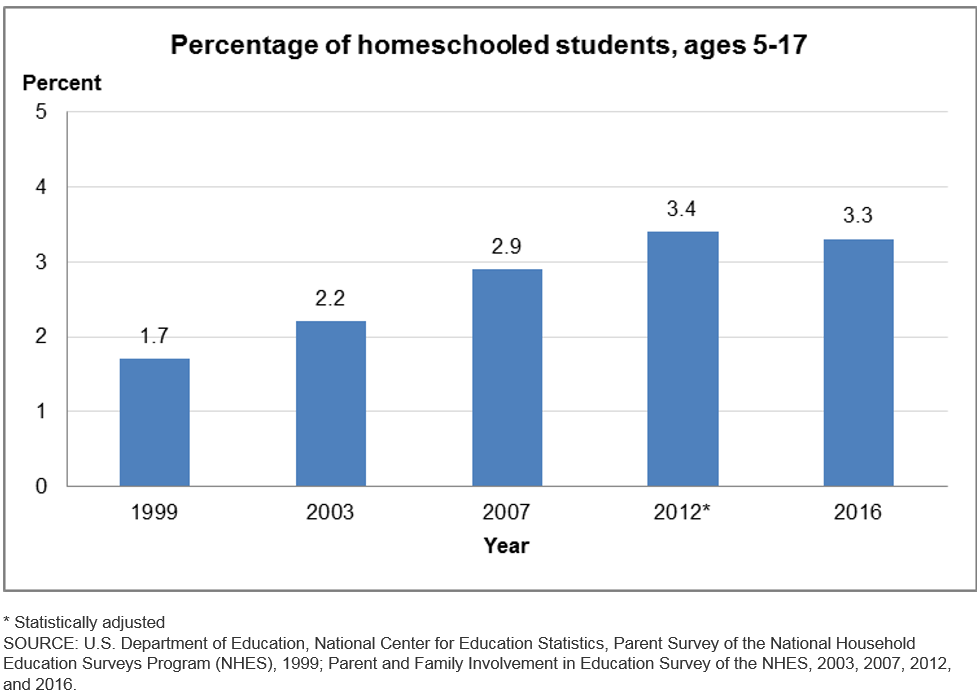
I recently heard it claimed that homeschooling was an innovative approach to education. It is hard to imagine calling something innovative in 2017 when it was the dominant approach to education throughout most of history. Nevertheless, interest in homeschooling does seem to be growing. From 1999 to 2012, the percentage of students ages 5 to 17 that are homeschooled doubled, going from 1.7 percent to 3.4 percent. The percentage has held relatively steady since, dipping slightly to 3.3 percent in 2016.
Parents homeschool their children for various reasons. According to the National Center for Education Statistics, “a concern about the environment of other schools,” “a dissatisfaction with academic instruction at other schools,” and “a desire to provide religious instruction” are among the most important reasons parents choose to educate their children at home.
These were certainly considerations when my wife and I chose to begin homeschooling our eldest son, a 7th grader, for the first time this year. But most important for us was that we felt like our son was falling through the cracks at the school he was attending. He’s bright, but he struggles in school. Since my wife and I were both educators, we thought we would see if we could give him the individual attention he needs. Our other school-aged children remain in the public school because it seems to suit them. In other words, our decision was all about customization—helping our child get the education that fit him best. (We’re still early in the process, so we’ll see how this goes!)
In recent years, states have begun to explore the idea of using education savings accounts (ESAs) to assist parents in this endeavor. I’ve written previously about how ESAs can be used to pay for private school tuition. Some states, such as New Hampshire, also allow ESAs to be distributed to homeschoolers. Parents can use these funds to purchase textbooks, tutoring services, or even classes at schools or colleges.
Homeschooling is not for everyone. It takes a lot of time and is a huge commitment. Moreover, it takes a lot of financial resources to do the job well. ESAs cannot remove all of these obstacles for parents, but they can help equip dedicated families with the resources they need to educate their children at home. I’m still not sure whether we should call homeschooling innovative, but using ESAs to help families customize their children’s education? Well, you don’t get much more innovative than that.
MoVIP Program Could Bring Advanced Coursework to Missouri Students

What’s so important about STEM education? For one thing, it’s a pathway to a high-paying job. According to the U.S. Department of Commerce, STEM (science, technology, engineering, and math) jobs are growing twice as fast as non-STEM jobs. STEM workers are solving many of our most complex problems; as a result, they earn higher incomes and have a major impact on our economic growth.
So, what does the STEM education landscape look like in Missouri? The Education Commission of the States has a Vital Signs database that tracks whether states give students “equitable access to high-quality science, technology, engineering, and mathematics (STEM) educational experiences.” According to this database, STEM jobs will grow by nine percent in Missouri over the next ten years, including an expected growth of 14 percent in advanced manufacturing jobs. In Missouri, STEM jobs earn, on average, over $34 per hour, compared to $18 per hour for non-STEM jobs.
Unfortunately, in 2013-14, over 30 percent of high school students in Missouri did not have access to Calculus courses, about 20 percent had no access to Physics, and 10 percent couldn’t access Chemistry. In terms of college readiness for STEM, just 5 percent of Missouri high school students took an AP math exam in 2015 and 6 percent took an AP science exam. By comparison, 14 percent of high school students nationwide took an AP math or science exam that year. These data are from a federal data collection, and they match the results of research by Show-Me Institute staff. In the 2015-16 school year, of the school districts in Missouri that had high schools, 40 percent had no students enrolled in advanced Physics or Calculus and over 60 percent had none enrolled in AP courses.
Are these numbers we’re willing to live with? If not, what can be done? Given that just 17 percent of Missouri 8th-graders have math teachers who majored in math and 36 percent have science teachers who majored in science, it’s not likely that we will be able to staff our way out of this any time soon. The good news is that we have the Missouri Virtual Instruction Program (MoVIP)—an underused online course program that could be offered to all high school students in Missouri who don’t have full access to STEM or other courses. Districts can arrange for students to take a course through MoVIP and cover the tuition. Under this scenario, a district could be expected to pay about $450 for a course per semester, and they would be free to negotiate lower rates if, for example, they have several students in the same course. Picking up the tuition for students who successfully complete an online course is a much more cost-effective solution for districts, and it can have a big impact on students’ opportunities.
As we celebrate National School Choice Week, we need to recognize that too many of our high school students have no choice when it comes to STEM classes. The structure to give them access is already in place, and this could be an easy way to meet a vital need.
