Missouri students are falling behind because not all schools can offer critical courses necessary for college and career readiness. But there is a solution. It’s called Course Access, and it allows students to take advanced courses such as physics and calculus. Isn’t it time Missouri invests in our students’ future?
Education Savings Accounts for Homeschoolers: Innovation in Action
I recently heard it claimed that homeschooling was an innovative approach to education. It is hard to imagine calling something innovative in 2017 when it was the dominant approach to education throughout most of history. Nevertheless, interest in homeschooling does seem to be growing. From 1999 to 2012, the percentage of students ages 5 to 17 that are homeschooled doubled, going from 1.7 percent to 3.4 percent. The percentage has held relatively steady since, dipping slightly to 3.3 percent in 2016.

Parents homeschool their children for various reasons. According to the National Center for Education Statistics, “a concern about the environment of other schools,” “a dissatisfaction with academic instruction at other schools,” and “a desire to provide religious instruction” are among the most important reasons parents choose to educate their children at home.
These were certainly considerations when my wife and I chose to begin homeschooling our eldest son, a 7th grader, for the first time this year. But most important for us was that we felt like our son was falling through the cracks at the school he was attending. He’s bright, but he struggles in school. Since my wife and I were both educators, we thought we would see if we could give him the individual attention he needs. Our other school-aged children remain in the public school because it seems to suit them. In other words, our decision was all about customization—helping our child get the education that fit him best. (We’re still early in the process, so we’ll see how this goes!)
In recent years, states have begun to explore the idea of using education savings accounts (ESAs) to assist parents in this endeavor. I’ve written previously about how ESAs can be used to pay for private school tuition. Some states, such as New Hampshire, also allow ESAs to be distributed to homeschoolers. Parents can use these funds to purchase textbooks, tutoring services, or even classes at schools or colleges.
Homeschooling is not for everyone. It takes a lot of time and is a huge commitment. Moreover, it takes a lot of financial resources to do the job well. ESAs cannot remove all of these obstacles for parents, but they can help equip dedicated families with the resources they need to educate their children at home. I’m still not sure whether we should call homeschooling innovative, but using ESAs to help families customize their children’s education? Well, you don’t get much more innovative than that.
MoVIP Program Could Bring Advanced Coursework to Missouri Students
What’s so important about STEM education? For one thing, it’s a pathway to a high-paying job. According to the U.S. Department of Commerce, STEM (science, technology, engineering, and math) jobs are growing twice as fast as non-STEM jobs. STEM workers are solving many of our most complex problems; as a result, they earn higher incomes and have a major impact on our economic growth.
So, what does the STEM education landscape look like in Missouri? The Education Commission of the States has a Vital Signs database that tracks whether states give students “equitable access to high-quality science, technology, engineering, and mathematics (STEM) educational experiences.” According to this database, STEM jobs will grow by nine percent in Missouri over the next ten years, including an expected growth of 14 percent in advanced manufacturing jobs. In Missouri, STEM jobs earn, on average, over $34 per hour, compared to $18 per hour for non-STEM jobs.
Unfortunately, in 2013-14, over 30 percent of high school students in Missouri did not have access to Calculus courses, about 20 percent had no access to Physics, and 10 percent couldn’t access Chemistry. In terms of college readiness for STEM, just 5 percent of Missouri high school students took an AP math exam in 2015 and 6 percent took an AP science exam. By comparison, 14 percent of high school students nationwide took an AP math or science exam that year. These data are from a federal data collection, and they match the results of research by Show-Me Institute staff. In the 2015-16 school year, of the school districts in Missouri that had high schools, 40 percent had no students enrolled in advanced Physics or Calculus and over 60 percent had none enrolled in AP courses.
Are these numbers we’re willing to live with? If not, what can be done? Given that just 17 percent of Missouri 8th-graders have math teachers who majored in math and 36 percent have science teachers who majored in science, it’s not likely that we will be able to staff our way out of this any time soon. The good news is that we have the Missouri Virtual Instruction Program (MoVIP)—an underused online course program that could be offered to all high school students in Missouri who don’t have full access to STEM or other courses. Districts can arrange for students to take a course through MoVIP and cover the tuition. Under this scenario, a district could be expected to pay about $450 for a course per semester, and they would be free to negotiate lower rates if, for example, they have several students in the same course. Picking up the tuition for students who successfully complete an online course is a much more cost-effective solution for districts, and it can have a big impact on students’ opportunities.
As we celebrate National School Choice Week, we need to recognize that too many of our high school students have no choice when it comes to STEM classes. The structure to give them access is already in place, and this could be an easy way to meet a vital need.
On Charter Schools, Let Families-not Politicians-Decide
This year marks 20 years since Missouri enacted the law that allowed charter schools to open in St. Louis and Kansas City. Currently enrolling 22,000 students, charter schools have given much-needed options to families in these districts that have struggled historically. Unfortunately, families in the rest of Missouri are denied the same opportunity to send their children to schools that better fit their needs
As we kick off National School Choice Week, it is worth remembering that charter schools are designed to meet the needs and wants of families through innovation and flexibility. Whether parents and children want an academically stronger school, a safer school environment, or a school with a particular mission or focus, families should be the driving factor for when and where charter schools open.
Simply put, Missouri is letting down its students by functionally limiting charter schools to only two districts in the state. There is proposed legislation that would purportedly expand the ability to open new charter schools, but it places other conditions on where charter schools may open:
1. A district must have at least 2,800 students—which is only 75 out of over 500 districts in Missouri.
2. A district must have at least one school building that scored 68% or less on the Annual Performance Report for two of the last three years.
3. The charter school can only serve the same grades as the school that meets the above criterion.
4. The charter school must give preference to students living in the attendance zone of the struggling school.
5. The charter school must apply to the local school board for sponsorship first.
This bill also creates rules for closing charter schools based on the results of their Annual Performance Review rather than the charter school’s performance contract with its sponsor. Overall, these provisions undermine the charter school model: more freedom in exchange for strong performance. Missouri’s charter school laws currently have our state ranked 30th out of the 44 states by the National Alliance for Public Charter Schools. We can do better for students by allowing for a strong charter school market that is responsive to the demands of families, not distant government officials.
If parents in a particular area are happy with their neighborhood school, that’s great! Charter school operators will most likely not try to open a school there. On the other hand, if a significant number of families want an alternative to their traditional public school, shouldn’t they have that option available?
This week, there will be over 30,000 events nationwide celebrating the educational opportunities that charter schools and other school choice programs have given students. By allowing charter schools to serve more communities in Missouri, we could see even more families joining the celebrations in the years to come.
Video: Expanding Charter Schooling in Missouri
Demand for charter schools is at an all-time high. Unfortunately, student’s charter schools are functionally limited to St. Louis and Kansas City, denying thousands of children an opportunity for a better education. Isn’t it time to expand charter schools in Missouri?
To learn more about charter school expansion check out our 2018 Missouri Blueprint.
How Will Expanded Use of 529 Accounts Affect Missouri’s Budget?
The federal tax reform bill is likely to have many consequences, intended and unintended. One intended consequence is that it expands the use of funds in 529 education savings accounts beyond college expenses to K-12 expenses. If parents open these accounts for their children and add money to them, they can withdraw those funds when needed for education expenses without paying taxes on what the savings have earned. In addition, in states that allow it, deposits to these accounts can be deducted from income on state forms, thereby lowering the tax bills of savers.
The St. Louis Post Dispatch cited an analysis of the impact this change could have on state coffers which found that Missouri tax revenue could drop by as much as $42 million dollars once all private school parents open these accounts and route their child’s tuition through them in order to reduce their state taxable income. That amount is dramatically higher than the likely reality, because it depends on several conditions being met.
First, every current private school student would suddenly have to have one of these accounts with enough funds to cover tuition. Second, in order to take the maximum deduction, all private school students would need to have married parents who file their taxes jointly. And third, all of those parents would need to have a marginal tax rate that is higher than the average for the state.
It is more likely that the impact would be about $32 million. We get this by multiplying the number of students enrolled in private elementary schools in Missouri by the average private elementary school tuition in Missouri ($6,800) and most (75 percent) private high school students by the average high school tuition of $11,500, with the remaining 25 percent of students taking the maximum benefit allowed for a single filer in Missouri of $8,000. Further, we use the average marginal tax rate in the state, which is 3.6 percent.
And while it is unlikely that a tax break of $500 or so would be enough to induce public school parents to switch to private schools, any who did would essentially save the state money. They would pay $500 less on their tax bill, but their child’s education bill would no longer be paid for with public dollars.
It makes sense to try to anticipate the impact of federal tax reform on state tax revenue, but it needs to be done in a sensible way.
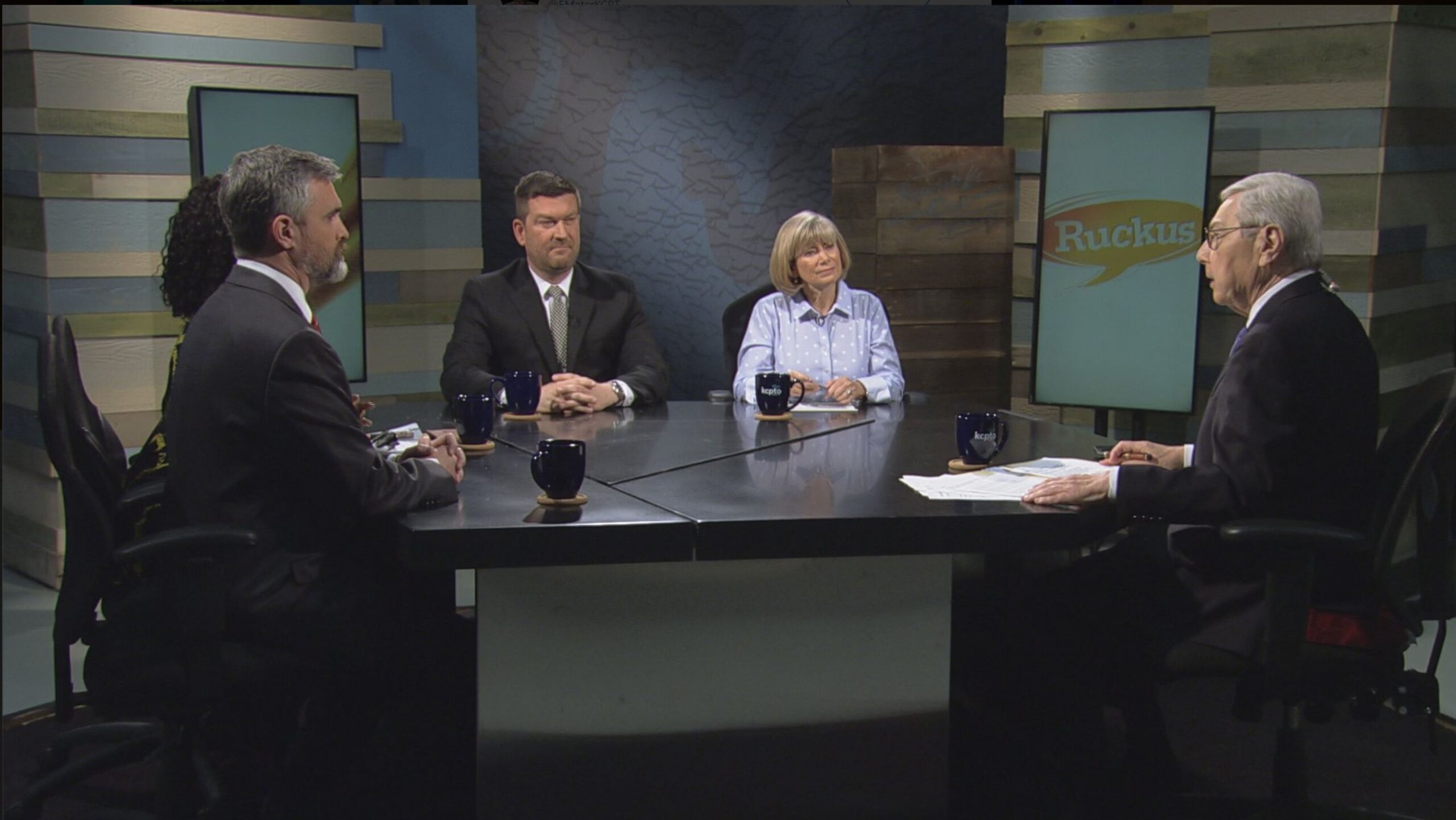
Patrick Tuohey Appears on KCPT’s Ruckus
On Thursday, January 18, the Show-Me Institute’s Patrick Tuohey appeared on KCPT’s Ruckus to discuss recent controversies surrounding government officials in Jefferson City and Jackson County, the economy, and other state and local issues.
Release the Amazon Bids!
Amazon has released a list of their top 20 contenders for their new headquarters. Neither Kansas City nor Saint Louis made the cut.
Previously, both cities refused to publicly release the details of their bids, including what tax incentives they were offering, claiming that Amazon required confidentiality. Some have questioned whether that is a legitimate claim. But regardless, both cities should, in the name of transparency, release the entirety of their proposals. Maintaining faith in government requires no less.
3:50 pm: CBS-St. Louis/KMOX News has posted St. Louis’ Amazon HQ2 proposal.
School Choice: Missouri’s Students and Parents Deserve More
It is one of the most important decisions for parents to make—where to send their children to school. Some parents even pick up and move to the school district they desire, but of course this is impossible for many middle and low-income families. This week is National School Choice Week, which celebrates programs that offer parents and students options and trust them to tailor their education to suit their needs. It stands as a stark reminder of how far Missouri lags behind other states in offering real educational choice to our families, many of whom live in poor urban neighborhoods or isolated rural communities.
There are nearly one million public school students in Missouri. And, with the exception of the 50,000 students who attend public charter schools or magnet schools, a vast majority of them have exactly one choice for where they will get their education. That “choice” is based on the address on their mailbox. Imagine if that were the case for every child’s medical care – a doctor assigned to them based on where they live.
Missouri does have charter schools—but only in two cities and as punishment for low test scores. In most states, charter schools can open wherever there are teachers, school leaders, parents or community organizers with an innovative vision and a willingness to be held accountable for results. Parents in these states can choose charter schools with unique approaches, from personalized learning to a focus on the classics, and many others in between. In a 2014 survey, 15 percent of Missouri parents responded that they would choose a charter school if they could select any type of school, including private schools. By comparison, charter schools in Missouri currently enroll less than two percent of our public school students.
Beyond charter schools, eighteen states have organizations that grant tax-credit funded scholarships for low-income students to attend private schools. Six states directly give parents a portion of their child’s state funding to purchase educational services, such as tuition or tutoring. And sixteen states provide scholarship money for parents to choose a private school. Missouri does not offer parents any of these choices.
Children are unique, and parents should be able to chart the right course for their children to reach their potential. This week there will be more than 32,000 celebrations of school choice across America. Isn’t it time for Missouri to step up and expand the options available to parents, so that our state has a real reason to celebrate?