Evidence of grade inflation continues to mount in K-12 education and at universities (e.g., see here and here). The rising grades reflect a degradation of academic standards. There is clear evidence that when expectations of students are lowered, they (intuitively) respond with less effort.
A recent example of a low-standards grading philosophy is equity-based grading. The philosophy, intended to promote equity by recognizing the varied circumstances and challenges students face, emphasizes measures of student engagement rather than results. However, by de-emphasizing important skills such as turning in assignments on time and demonstrating skills on assessments, it lowers academic standards, reducing effort for true mastery. Cory Koedel recently wrote in this space about how the San Francisco Unified School District (SFUSD) backed away from a “Grading for Equity” plan when too many community members complained.
A new low-standards philosophy, Labor-Based Grading (LBG), is also gaining traction in higher education. LBG is an alternative grading style in which students and teachers establish a grading contract that allows students to earn a default grade if all the work outlined in the contract is completed, no matter the quality of the work.
Notably, departments at prominent universities such as Penn State University and New York University have recently begun implementing LBG (mainly humanities departments—here and here). Practices at prominent universities often trickle down to less-prominent ones, and ultimately into K-12 classrooms as future educators who are exposed to these practices in college implement them in their own classrooms. LGB could come to a school near you, and sooner rather than later.
The key concern is that LBG does not set up students for success. In the real world, effort is not rewarded if it does not generate productive outcomes. In fact, it is a critical life skill to be able to apply effort in a productive manner. But LBG rewards effort for effort’s sake.
LBG exemplifies the continued push by some to lower academic standards. It is well intended, but this doesn’t make it any less harmful. It is important to remain vigilant and continue to advocate for rigor in a system where rigor is constantly under assault.
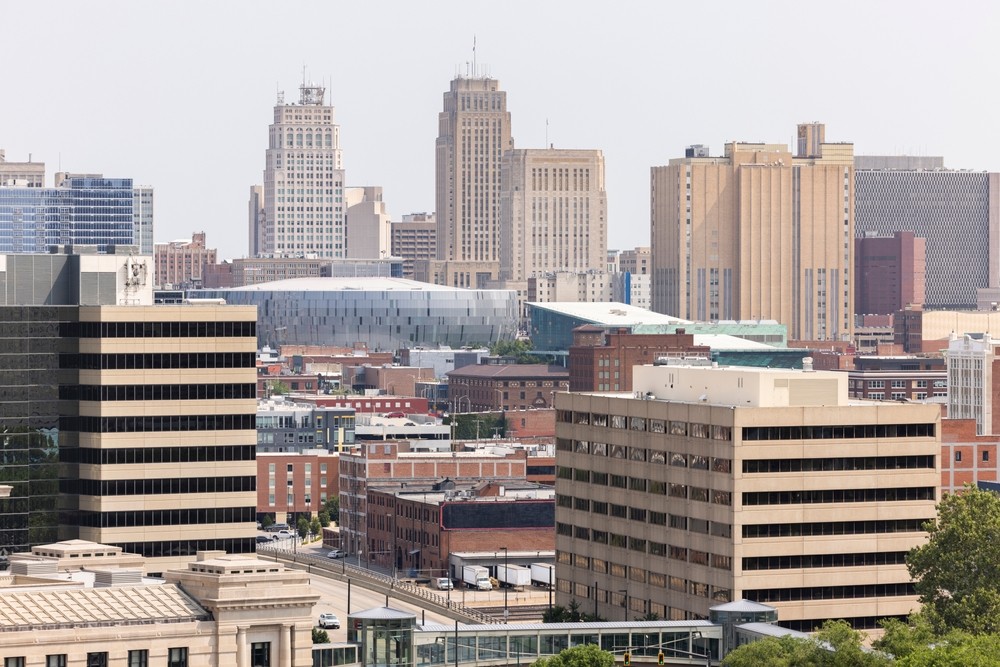
Thomas Friestad at the Kansas City Business Journal wrote recently that an engineering firm (Gannett Fleming TranSystems, formerly GFT) is moving its offices to the H&R Block building in downtown Kansas City.
Longtime Show-Me Institute readers will recognize H&R Block as a poster child for the false claims that economic development subsidies drive job creation. But this latest news only makes the point more relevant.
The TIF project was adopted in July 2006 and will last for 23 years, through 2029. For the duration of that time, all the additional property taxes and half the increase in sales and income (earnings) tax generated at the site are returned to the developer to offset the costs of developing the site. According to the latest report from the Missouri Auditor’s office, as of April 2023, this subsidy has redirected $23.5 million in property taxes and another $73.4 million in sales and earnings taxes away from the basic services they would have otherwise supported (schools, roads, libraries, etc.), instead sending the money back to the developer.
GFT moving into the H&R Block building means that a portion of the taxes it pays, most notably the 1% earnings taxes levied on each employee, will now also be redirected away from basic services to the developer to pay down the cost of the H&R Block building.
A lot of time is spent talking about how Kansas City loses revenue when businesses leave the city. We need to remember that due to our generous subsidy culture, we often lose revenue even when companies remain.
Side note: One can immediately imagine a scenario wherein developer landlords in TIF districts lower their rents because they know they will capture the additional tax revenue, thus undercutting properties that actually pay taxes. These deals are no way to run a city.
I attended the Missouri House Elementary and Secondary Education Committee hearing on Wednesday, January 28. The hearing covered two bills under current consideration—one on A–F letter grades for schools, and the other on literacy reform.
The committee is a diverse group with diverse views, as were the individuals giving testimony. I was expecting a lively debate and opinions from all different angles, and that’s what happened.
However, one thing I wasn’t expecting was the view expressed by several members of the committee that Missouri schools are doing just fine, or even excelling. Unfortunately, this is simply not true. Missouri schools are performing very poorly. The data on this point are publicly available and unambiguous.
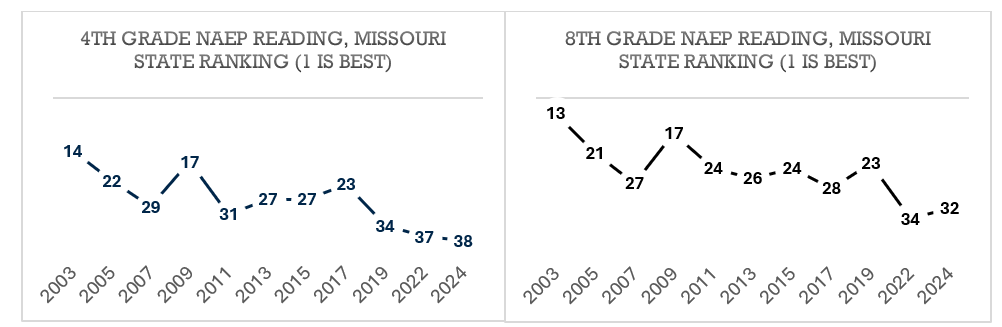
The best evidence comes from the National Assessment of Educational Progress, or NAEP, which is widely viewed as providing the most credible test data in the country. Here are charts showing the changes over time in Missouri’s national rank on NAEP, in 4th- and 8th-grade reading, since about the turn of the century:
(These graphs are courtesy of the Show-Me Institute’s Avery Frank.)
Our 4th-grade reading results are especially bleak—we rank 38th out of the 50 states as of 2024, whereas two decades earlier we ranked in the low twenties. Today, an alarming 42 percent of our 4th graders score Below Basic on NAEP.
Making matters worse, our ranking decline since about 2015 is in the context of generally declining test scores nationwide during this time. Our scores are declining faster than the rest of a declining nation.
The only reason not to be worried about this is if you don’t believe these tests tell us anything important. On this point, there is overwhelming evidence that NAEP—and standardized tests more broadly—are highly predictive of consequential long-term outcomes. There are hundreds—maybe thousands—of articles that show a link between standardized test performance and later life outcomes.
In fact, just last year a high-quality study on NAEP scores found the following: “More recent birth cohorts in states with large increases in NAEP math achievement enjoyed higher incomes, improved educational attainment, and declines in teen motherhood, incarceration, and arrest rates compared to those in states with smaller increases.” Whatever outcome you care about for our children, NAEP scores predict it. (If you’re interested in recent, related evidence from Missouri’s MAP test, see here.)
Our declining test scores should concern all of us. Whether the committee members recognize it or not, under their watch and the watches of their predecessors over the last decade plus, Missouri’s academic performance has been declining. An overwhelming body of research tells us the decline will have real consequences for our children, and ultimately this will have real consequences for the future of our state.
I recognize we won’t all agree on the solutions, but it became apparent during the hearing that we don’t even agree on the problem. I encourage skeptics of my message—especially members of the education committee, who have the power to make change—to look at the data themselves. Putting our heads in the sand will not make the consequences any less dire down the road.
(If you’d like to see specific examples to get a sense of the kinds of NAEP questions Missouri children can and cannot answer correctly, see an earlier post here.)
Yes, you are supposed to read the title like Jerry Seinfeld doing a bit. (I met Keith Hernandez at an event in St. Louis recently, so obviously Seinfeld is on my mind now.)
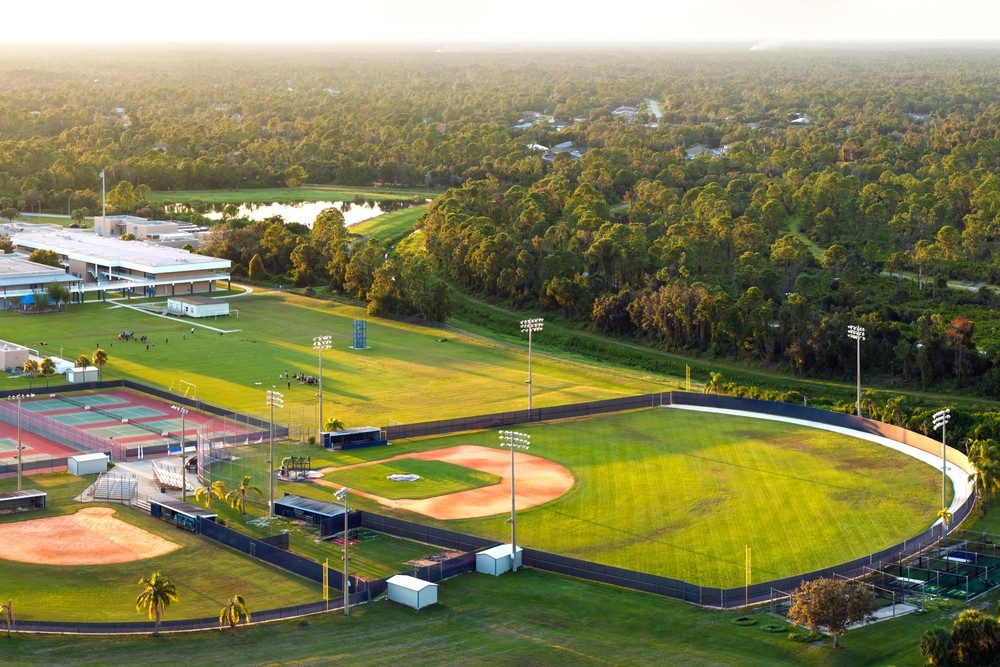
Youth sports centers have been exploding around Missouri for two decades and, unfortunately, tax subsidies seem to go hand-in-glove with them. Let’s make one thing clear at the start: these aren’t parks. These aren’t public facilities where any kid or family can go and play or picnic or fly a kite with a delightful, singing nanny. These are businesses aimed at youth travel sports clubs, which are private, expensive teams. I like club sports (if my kids’ coaches are reading this, please don’t bench them). I just don’t think they fit any definition of a public good. These private facilities have no business being subsidized by taxpayers; if there is a market for them (there is), then they will succeed on their own.
Here is a brief listing of some of the major youth sports facilities that received taxpayer funds of various types (grants, incentives, special sales taxes, etc.) by various governments:
O’Fallon just rejected subsidies for another complex (yeah!), but then turned around one week later and approved them (boo!).
This is just a short list. I am sure there are more. The first policy change we need is to remove the ability of cities to make these decisions. At a minimum, counties should make all of these tax subsidy decisions. County officials are at least answerable to the voters for their choices. Municipalities routinely grant tax subsidies to businesses where the immediate impact to the city is limited but the harm to the school district, library district, and other entities that rely on tax revenue is substantial. Yet voters in those other districts often don’t live within the municipality and can’t hold anyone responsible with their votes.
Beyond that, we need local municipal officials to better understand basic economics and think both long term and regionally. I am not holding my breath.
Susan Pendergrass speaks with Mike McShane, director of national research at EdChoice and contributor to the Informed Choice Substack, to discuss his piece, “The Six Words Driving the Education Debate in 2026.” They explore why the school choice conversation has shifted from whether it should exist to what it should look like, how debates over “transparency” and “accountability” are shaping political strategy, and why participation in choice programs changes over time. They also discuss the influence of “rage bait” on public perception, the emerging risks of AI-generated “slop” in schools, and how the “supply side” of education, from micro schools to new learning providers, may determine whether expanded choice truly meets families’ needs, and more.
Susan Pendergrass (00:00) Great. Mike McShane, EdChoice, always great to have you on the podcast. I read your Substack, Informed Choice. I know you do not write them all, but you write a lot of them, and I think they are super interesting. A month or so ago, there was a lot of “what’s out, what’s in,” closing down 2025 and starting 2026. I really liked your post about six words for 2026, but…
Mike McShane (00:03) Always great to be with you. Thanks for having me. I tried to.
Susan Pendergrass (00:28) I want to talk about that, but generally speaking, I have been having this feeling, and I think we have even talked about this on the podcast, that something has changed in K–12 education in the United States. Something seems different than it did. You track the number of kids in private school choice programs, which took forever to get to a million, and now it is like a million and a half, right? It just seems to have been growing so fast.
Mike McShane (00:52) Yeah. I think there has definitely been a shift. I have noticed that, with the start of the year and legislative sessions starting across the country, I am talking to journalists and other folks, and it seems like the normal conversation I would have had in the past was, “Are we going to have these programs, is there going to be choice, or what?” Now it is, “What is the shape of it going to be?”
So much of choice now is being taken as a given. I think we are even seeing that within public school districts. Even in states that might not have private school choice or robust charter schools, they are at least saying, “Parents are going to need to have choice, and maybe we can keep the genie in the bottle by just having it within public school districts, or in between public school districts.” But the idea that we are going to go back to residentially assigned public schools…
Susan Pendergrass (01:41) Like Kansas.
Mike McShane (01:50) …with the odd aberration here and there, it just seems like that shift has happened. Now it is a question of what it is going to look like, and it is going to look different in different states. It is not a “whether,” it is a “how.”
Susan Pendergrass (02:03) That’s right, because we have a whole bunch of second-generation choosers, right? We have parents of young kids whose parents chose it, so they are not, like you said, going to go backwards.
Another interesting outcome you have talked about over the years is that the Catholic school movement is growing again, right? Like in Florida, we are seeing a resurgence in Catholic schools, and in Iowa, because parents did not necessarily not want to send their kids to Catholic schools. Some got mad about the scandals…
Mike McShane (02:05) Yeah, for sure. Iowa, Florida, and probably other places when data comes out, for sure.
Susan Pendergrass (02:32) …or they did not want to pay tuition, and now they can. And certainly this survey you all have done for so long, on where parents would send their kids to school versus where they do send their kids to school, maybe we are going to see some sort of convergence where parents can actually send their kids to the school they want.
A couple of the words you said are going to be big in education in 2026, “participants,” is that right? Participants.
Mike McShane (02:34) Yeah. Totally, absolutely. “Participants” is one of them.
Susan Pendergrass (03:02) And “supply side.” What do you mean by “participants”?
Mike McShane (03:06) “Participants” is, there is this big debate now, and in the piece I started with very general words that are part of the broader conversation, and then I got very narrow into school choice research words. “Participants” is kind of a school choice research word, but not entirely. I think it is going to be part of broader debates about choice in general.
There is a big question out there, who uses these programs? Who is going to participate? There are competing theories. Skeptics say it is going to be all rich kids, or kids who are already in private schools. Stronger advocates say it will be low-income kids, or kids desperate for more options.
The answer is probably somewhere in the middle, and it will probably be different in different places at different times. Some of the emerging research suggests that when universal private school choice programs first start, for reasons that are perfectly predictable, students who are already in private schools are the first movers.
Susan Pendergrass (04:01) Sure.
Mike McShane (04:28) That is probably because private schools find out about these programs and have an audience. They can say, “Hey, you all know how you are paying to go here? Now you do not have to do that anymore.” And then over time, the circle expands outward.
Susan Pendergrass (04:33) They pass out a piece of paper in every backpack, yeah. “You should get this.”
Mike McShane (04:48) More and more, those families have neighbors, cousins, and people they play YMCA basketball with. The word gets out over time. A lot of traditional channels for educating people do not work as well. It is not like everyone watches the nightly news or reads the local newspaper.
Susan Pendergrass (05:08) “Put it on your website.” That’s a Missouri legislative mainstay, put it on your website.
Mike McShane (05:14) So a lot of this comes out via word of mouth or discussions. You could look at the same state and see participation change over time.
Because these programs are rolling out in different states at different times, there is not going to be one national answer to who is participating. It could be the first year in Mississippi, but the second year in Alabama, and the makeup of students will be different. Because of the nationalized nature of coverage, people will keep pushing for “the one answer,” but there isn’t one. Though, to be fair, some people will say there is. I do not think that will be true.
Susan Pendergrass (06:07) Yeah, I get a ton of questions around the rural issue. Either it is going to be the demise of our rural school system because we are all going to close, or rural families do not need it, which are opposites. It is opposites, right?
Mike McShane (06:09) Yeah. It cannot be both. And yet a frequent criticism is that it will be both of them.
Susan Pendergrass (06:25) But I get that a lot. “There are no private schools for them to go to,” and “it is going to cause rural schools to close.”
Certainly in Missouri, even our MOScholars program is quite small, and we do not really have charter schools outside of two districts, two very far away places. So I think for a lot of folks in Missouri, it is mysterious, who would do this, and why would anyone want it? And of course, “All the poor kids are going to go to the wealthy school districts.” Still a lot of talk about property taxes. It is almost like 2005 in Missouri, a lot of that going on.
But the reality is, in long-running programs, and now I am thinking open enrollment, anywhere you let parents pick, you get a lot of rural participation. They have the fewest choices, right? And you get a lot of urban participation, and some suburban participation. Like you said, I do not think you can…
Mike McShane (06:55) Yeah, right.
Susan Pendergrass (07:20) I have had so many parents over the years say, “We do not need that here because all our schools are good.” And I am like, I promise you there is a child who got on the bus with a stomach ache this morning because they did not want to go to school, for whatever reason. They think the teachers do not like them, or they are being bullied, whatever it is. I promise you there are families who would leave if they could easily do it.
Mike McShane (07:30) Yeah, for sure. Totally.
One thing that is going to be interesting, as we watch this play out, with questions about who is participating and who is leaving public schools, is that there are broader trends of public school enrollment decreasing. You hear in some states, “My gosh, all these public schools are closing because of choice programs.” But the state next door that does not have a choice program, their public schools are closing too, because there are just fewer kids than there were before.
So that is another thing we have to disentangle, the broader population trends. I was just seeing something earlier about how congressional seats and electoral college seats are going to change because of population shifts.
Susan Pendergrass (08:17) It’s huge.
Mike McShane (08:26) You look at states like New York and California losing large numbers of people, Florida and Texas increasing numbers of people. These are people in general, because that is how it all happens. We have to start with that baseline and then layer these other things on top, because I feel like school choice is going to get blamed for this, even in places where it does not exist.
Susan Pendergrass (08:36) Yeah. I cannot tell you how many times I have talked about this and shocked people. Every school district in St. Louis County, for example, has declining enrollment by large numbers. Clayton’s declining enrollment, Ladue declining enrollment, all declining enrollment. People are like, “Where are they going?” And I say, “They were not born.” They simply were not born.
We had our biggest kindergarten cohort in 2013. That moved through to senior year of high school like two years ago. It is just demographics. They just were not born.
Mike McShane (09:00) Right? Yeah.
Susan Pendergrass (09:20) We have net out-migration of some groups of people, people with bachelor’s degrees, but for sure, it is demographics. These kids were not born.
There is going to be this push and pull between five-to-seventeen-year-olds and retirees, basically, because we are getting more old people and fewer young people. Do we build a school or a nursing home? I think it is going to be a thing.
And we still have school districts getting bonds, 30-year bonds, to build schools and buy buses. I do not know if that is the right answer. At least the charter school sector, and probably similarly the private school sector, figured out how to not be in the real estate business, how to lease a building, or do different types of arrangements. They are going to benefit from this, while the public school system is still building schools. The kids are not being born, but we will see how that plays out.
Another thing you mentioned, one of your words I have been thinking about a lot, two of them, is “transparency.” I have wondered, can I start calling accountability transparency? Because accountability is kind of negative, but transparency, of course.
And you talk about “rage bait.” Sorry, I am rolling these into one, but with early media stories around some of these private school choice programs, like Arizona, people really jumped on what parents were spending their money on. As though they cannot be trusted to spend this money, in the way the public school system can be trusted with billions, I mean trillions, of dollars. Parents cannot be trusted with this $8,000, they will simply…
Mike McShane (10:52) Totally. This is the irony. The irony is kind of like the discussion earlier, how there are no places in rural America, and everyone will leave rural schools to go to these non-existent places. Both cannot be true at the same time.
We cannot say these programs are not transparent and then talk about all the individual purchases families are making. That has to be transparent for you to be able to make those arguments. It is kind of a shell game people are playing when they talk about transparency.
When you say, “Here are ways in which ESA programs are not transparent,” your research is a perfect example of the opposite. Transaction-level data, you have published papers that offer transaction-level data on every purchase in the ESA program.
Susan Pendergrass (11:59) Trust me, there are hundreds of thousands of records.
Mike McShane (12:00) Right, hundreds of thousands of records that are available for anybody to look at.
I think this is actually good. We need to have discussions about what should be included in these programs and what should not. It is an education savings account, not just a savings account, so we have to draw the borders around what is an educational purchase and what is not.
We live in a big, vibrant democracy, so we need to have these discussions. Should you be able to buy a trampoline, or a Lego set, or whatever? Let’s talk about it. That’s fine. Maybe we decide in some cases it is allowed, and in some cases it is not.
This is part of transparency and accountability. You are democratically accountable, we need to participate in this.
But I am still blown away by the number of people who claim these programs are not transparent, when what we know about what parents are doing is more granular and more detailed than any public school district, any charter school network, almost any institution you are going to see. You just do not get transaction-level data on anything.
We can debate whether those are good purchases or not good purchases, but to say they are not being transparent is wild to me.
Susan Pendergrass (13:09) No, I mean, my kids all went to public school. They certainly went to amusement parks. They certainly watched a lot of movies. They would not want anyone scrutinizing every, you know, you have 30 teachers buying 30 whiteboards. Decisions were made that were not the best.
I did not see anything in the transaction-level data that made me think, “This is outrageous.” And who am I to say woodworking is not an okay thing for your child to learn? Swimming lessons, I had to swim. I do not know.
I do not want to get into that conversation because I assume the best intentions for parents. I cannot understand why a parent would invest the time and effort to get into these programs to simply buy themselves a trampoline, and not really care if their kids are reading or not. I do not understand that, but that is what…
Mike McShane (14:04) Right.
Susan Pendergrass (14:15) …they are throwing mud at the wall to try to discredit. Clearly, it is what parents want.
I am baffled that, when you look at politics in the United States right now, those on the left just refuse to accept this fact. It is a fact. Parents want to choose their school.
There are certainly Democrats for education reform, and plenty of people working hard from the left, but the general approach feels very last century. The teachers’ union saying, “Nobody wants this, we have to stop it at all costs. We have to put a halt to this and put more money into the public school your address sends you to. We need to fund those fully first before we can ever let kids out.” That is such a failed argument to me.
Mike McShane (15:18) Look, this is why “accountability” and “transparency” are two of the words for 2026. Opponents to choice have figured out they cannot just go out hammer-and-tongs against it, or directly say, “We are against choice.” People do not learn lessons in politics, but they learn that one.
I was looking at the gubernatorial candidate just to Missouri’s north in Iowa. It was interesting. There was an interview with the Democratic candidate for governor, Rob Sand. He would not come out and condemn the ESA program outright. The interviewer perceptively drilled down and asked, “Are you saying you are not opposed to this program, you just want changes?” He never said yes to that. He has never said, “I am for this program.” If you read between the lines, he is saying, “I am not for this program, but I cannot come out and say it.”
His pivot was immediately, “I am just talking about accountability and transparency.” He wants private schools to follow every single one of the same rules that public schools do, and expects them to somehow do better.
Part of it is, these are folks working in red states who need to make arguments that appeal to conservatives. Accountability appeals to conservatives. Fiscal responsibility appeals to conservatives, not wanting to waste tax dollars. So it is smart strategy. People need to see what it is.
If this is a blue state, these exact same people are making arguments that appeal to progressives. But you are in a red state, so they are trying to make arguments that appeal to you. If you think about it for a little bit longer, what they are saying does not hold a lot of water.
Susan Pendergrass (17:41) Yeah, and with this federal tax credit program, even though every state has to decide whether or not they are going to take the money, it is going to be a weird shifting of resources. If I live in a state that says, “We are not going to take the money,” that is fine. I can give my $1,700 to a scholarship group in any state. I will just send my $1,700 to another state.
Some states, like Virginia, the governor, one of the last things he did when he left was opt in. Now the new governor is going to have to make this weird choice. Do I want to go against it? If you looked at any poll of parents, any poll, you would know they want to be able to choose where their kids go to school. Do you really want to be the person that withdraws?
Mike McShane (18:21) Yeah, when she seems to be in a perfect position to just say, “Oh, the last guy did this on the way out, so I guess we are going to do it.” Once they do it for a year and everybody is fine with it, it is just, “Oh well, whatever.”
Susan Pendergrass (18:33) I do not know. I did not do it.
I think it is going to be really interesting because, again, the way we started this, there is a groundswell. I do not think you are going to turn it back. If you stay on the side of saying it is better when kids can only go to their assigned public school, you are in quicksand. You are going to bury yourself.
Mike McShane (19:03) Yeah. The only thing I would say, and it was another one of my six words, is “rage bait.” It is always lingering in the background for me. I am seeing it more and more, all day, every day, stuff that shows up in your feed deliberately to upset you, terrify you, whatever.
Rage bait is unpredictable. You never know what is going to catch fire and cause a big shift. There is obviously potential for rage bait content, as we mentioned, we have crossed one and a half million, hundreds of thousands of people in various states, with lots of flexibility in what they can buy. People making bad decisions, people stealing things, it is totally possible that happens. Something egregious could happen.
With a large enough population, even very improbable events can happen. One fear I do have is that something rage-bait-y happens and people lose their minds over it.
But this is the key, if one parent in Arizona does something crazy, that does not mean the other 1,499,999 parents around the country should not have the right or opportunity to do this. We have to be able to say, “This is rage bait, this is not actually what is happening.”
Susan Pendergrass (20:51) Yeah, we have talked about this. Those of us who have pressed for school choice for so long have said, “We will do anything you want, take our arm. We will put all our data out there, we will be as transparent as possible.” And your colleague, Marty Lueken, had a Substack about this recently, like, “We will take half the money. We do not need all the money, half the money will be…”
Mike McShane (21:08) For sure.
Susan Pendergrass (21:19) …150 percent transparent. We will jump through all these hoops just to get this thing that everybody wants, and it is from that transparency that we are going to get those stories. We are going to pay for that.
Mike McShane (21:29) Yeah. It is important for people to be more attuned to the rage bait they are getting. People ask, “Have you seen this thing that happened in this place?” And I am like, okay, yeah, even if it did, what do you extrapolate?
A teacher in Sacramento did something crazy. There are north of a hundred thousand schools across America. There are north of three million public school teachers. At any given moment, someone is doing something dumb. I do not know what to extrapolate from that. It could just be one crazy person.
This is not just education. Across public policy, you point to one person in the military doing something terrible to delegitimize the military in general. Do not fall for this.
To be fair, sometimes we in the school choice movement, or education reform, have done rage bait of our own. People have used social media to point out, “My gosh, look at this assignment that a second-grade teacher in Poughkeepsie did, this is why we need school choice.” People have done that.
The measure with which you measure will be measured back to you. If you live by the sword, die by the sword.
Susan Pendergrass (22:54) John Oliver did a story on charter schools. Remember, it was the guy in Florida that was letting a charter school be a nightclub at night? There is no way that is representative of charter schools.
Mike McShane (22:58) Yeah, I remember that.
Susan Pendergrass (23:10) That was an example I found shocking, but it is not representative. And you are right, they will find those stories.
Mike McShane (23:13) Yeah, totally. We should all use less rage bait. We should not use rage bait to say just because one teacher in one place did something dumb, that is an indictment of public education in general. Nor should we allow the same thing to be done in reverse, which is, because one family did something crazy, we should not have choice at all.
Susan Pendergrass (23:49) That leads to another one of your words, “slop.” There is so much talk about AI in schools and what to do about it. Is one person going to figure this out for every school everywhere, or are we all going to figure it out individually?
Mike McShane (24:03) Yeah, I played out the scenario I am worried about. I do not know if it will happen in 2026, but it might.
We have heard a lot about AI in schools, students cheating, which is real and worrisome. But the specific scenario I have not heard as many people talking about is the prevalence of AI video, and the ability to create videos of things that did not happen.
How many, if you have a student in a classroom, after taking a picture or a short, unrelated video of their teacher, they can put it through a series of prompts, “Hey, have this teacher do,” and then insert whatever horrible thing, say something horrible, do something horrible.
Susan Pendergrass (24:34) Yeah.
Mike McShane (24:53) And if you are not savvy, and I will be the first to say I think I am a savvy consumer of the internet, I have been fooled or very close to fooled. AI videos of animals doing things, dogs protecting people from bears, or that one recently that went around with a bald eagle that had ice on its beak that someone knocked off, whatever.
Susan Pendergrass (24:58) It is like a parlor game, right? No dogs are going off diving boards, just to clarify. The rabbits on the trampoline, these are not happening. But you are right.
Mike McShane (25:20) People who are not as savvy, the thing I spelled out was, someone does that, and then suddenly the next PTA meeting is flooded with people because this viral thing went around. The superintendent or principal has to say, “This did not happen, it is not real.”
If you do not have the media literacy, it is like one person’s word versus another. “We saw it happen, it is on video.” “No, it did not happen, it is AI.” How we adjudicate those things, and how it could be weaponized by teenagers, or by bad actors, all of that stuff will happen. Whenever a new model is released, everyone tries to break it immediately, they are much more creative than I ever was.
I am worried for teachers, worried for schools, worried for school board meetings. It could be anything. It could be taking video at a football game and saying something happened that did not. Even if it all works out eventually, the time and energy wasted dealing with it…
Now, again, I am hoping more and more schools, this could be a real kick in the rear end to get phones out of schools and say, “We are not going to have phones in schools, because people are going to be making AI videos of their teachers.” That is one of a thousand reasons we should not have phones in schools.
But it is not the only place kids are interacting with one another, or with teachers. So we have to be really skeptical when we see that video of that teacher, or that student, or that principal doing something. Take a deep breath and ask, “Is this video real? Does this pass the smell test? Does this sound like something a teacher would actually do?” I am increasingly worried about that. There are many other things people worry about that I do not really worry about, but AI video in the context of schools, bad news bears.
Susan Pendergrass (27:53) Yeah, I think we are going to have to start adjusting our thinking to only believing things that happen in front of our face, things we can touch. The prevalence of, you know, Amazon ads now, they are… I mean, I went to get my haircut and somebody was holding up a picture, and she was like, “Okay, well, that is not a real person.” We are going to have to default to disbelief if it is on a phone or on a screen. If it is happening in front of you, you can touch it, you can believe it. But the rest of it, I think we are going to become extra skeptical, because I do not believe much stuff anymore.
Mike McShane (28:22) Totally. Are schools going to need CCTV cameras everywhere? Are we going to be oddly surveilled in a lot of different ways, just for CYA? “If people are going to be making up fake videos, we need the real video of what is going on.” I do not know how that is going to go, but…
That was the “rage bait” one, my plea to people, please do not fall victim to rage bait. It is pinging parts of our brains that we should not. I get wrapped up in it too. “My God, I cannot believe that is happening.” Then you take 10 seconds and you are like, “Wait, why am I fired up about this road rage incident in South Carolina?” Someone cut somebody off on the highway. Who cares? I am not there. It is not my deal.
I think this “slop” stuff is also something we are going to have to be really cautious about and thoughtful about, because it could cause lots of problems.
Susan Pendergrass (29:35) Yeah, but then people are like, “I am not going to allow AI, I am going to check it.” I think AI, we are going to have to accept, right? We have to live with it.
Mike McShane (29:41) Yeah, we are going to have to realize this is just part of it. There will be so many great things that come out of it, the creativity it will unleash.
In our own Substack, a bunch of the graphics we do are AI generated. I could not, I laugh, I have young kids, they are better drawers, I am horrible at it, but I can do this stuff with a couple of prompts in ChatGPT. “Hey, make me…” and they can be funny. You can do someone in the style of a famous painter and suddenly it is a Renaissance painting of me.
That is incredible productivity. The fact that I do not have to have a graphic designer, I can basically do it myself and put out essentially a small newspaper with some contributors and a bit of AI. That is an insane productivity increase, and it is incredible, but we have to be cautious of the downsides.
Susan Pendergrass (30:48) Finally, your last word, “supply side.” In Missouri, folks will say, “Well, we do not need private school choice in our rural areas, there are no private schools,” as though the supply of private schools is fixed. It is treated like a natural result of how much interest there is, the kind of people who live in the community, and what is there is there, without thinking that if parents suddenly had $7,000 or $8,000 to spend, maybe somebody would open a new school.
Or not even a new school. Maybe somebody would open a visual arts business, or a soccer academy, tutoring, dyslexia therapy, whatever it is they think parents want or need. You would be free to be an entrepreneur in that space. That piece is largely overlooked, because it is like, “We have this many private schools with this many seats, so we can only have this many scholarships.” It is like, no, that is not fixed. Do you think we are going to see a lot of changes in that area?
Mike McShane (32:00) Yeah, because another dimension where people think things are fixed is not only the number and locations, but the shape of what schools look like. “We are not going to have a private school in this small area because we cannot have a brick-and-mortar building with 30 rooms and 250 kids.” That is not what we are talking about.
If you can get 10 kids together at $8,000 apiece…
Susan Pendergrass (32:26) There are no buildings.
Mike McShane (32:36) …you can do a lot of interesting stuff. Especially if you can get space donated, leverage resources in the community, maybe some online stuff, and a local teacher. You could put together a heck of an education on $80,000 or $100,000.
It is happening. What makes it challenging to talk about is that it is happening across different dimensions. At the same time we are talking about Catholic schools growing and starting new schools in a traditional sense, two blocks away in some rented bungalow people are creating a Montessori micro school.
Because these things get spoken about in national terms and in a thousand-word news story, we struggle to discuss multiple dimensions. Existing schools are growing, new schools are emerging, and those new schools are going to look different. Some will grow, some will shrink, all these things can be happening at once.
Our job as researchers and observers is to do a lot of descriptive work, describe what is happening. There has been a push in earlier generations of school choice research toward causal results, horse-race comparisons, “Are they better than public schools?” “Is this type of private school better than that type?” But the only reason we were able to do that in 1998 is because, for a hundred years before, people did descriptive work to know, how many schools, what are they doing? Then you can talk about who is doing better, because you have to decide what they are doing, where they are, who is attending, are there differences.
It is almost like we are starting over.
Susan Pendergrass (34:39) Yeah.
Mike McShane (35:01) …doing that basic descriptive work. What is actually happening? What are people doing?
Susan Pendergrass (35:08) Yeah, I know somebody who started a school in a barn on their property, and the parents came and converted the empty barn to a school. I know somebody who started a mobile school, basically in a big van, so that the school came to their house one day a week. And I know someone who started one in a high-rise in Queens. It is only limited by people’s imagination, basically, right?
And a like-minded group of parents. There are more people homeschooling now than used to be, so you could do this individually, but there are many more opportunities to do it. Parents, what emerged from the pandemic, at least, is they want their kids home maybe two days or three days. That is popular, and people are finding that two days out of the house creates unique opportunities in that space.
I think it is limited by people’s imagination, and some curriculum standards, and perhaps some accountability. But if you can meet those, I think we are seeing this idea.
I am not trying to be anti-traditional public school, but I butted up against this when my kids were little. “We are the only ones who know how to do this, so you have to accept our way of doing it because it is tried and tested and comes out of our schools of education at the universities.” This is the one and only way you have to teach the number line in third grade. “This is how it has to be, we cannot vary it because we are the great equalizer of civic society in the United States.”
Your boss, Rob Enlow, really shut me down on this. It has not panned out. We only read and do math less well each year.
I cannot imagine that letting all these flowers bloom is going to have a worse result. If we fast forward 20 years and look at median earnings and educational attainment rates, and we let this thrive, I think the outcome would improve. I do not see how it goes down.
Mike McShane (37:23) That is the thing. You mentioned the interesting times we are living in now. So many of the “parade of horribles” choice opponents talked about forever, polarization, balkanization, people retreating to silos, it is like, hey guys, that already happened without choice. You cannot blame choice, because choice did not exist yet for that to happen.
Lots of people pushing each other in the streets went to public schools. Statistically, these are public school graduates having large problems with one another.
The conservative in me says things can always get worse. The fundamental progressive view is things can always get better, and the fundamental conservative view is things could always get worse. That strand in me says, yes, things could get worse. But across a lot of these dimensions, academic outcomes, civic outcomes, there is a lot of room for growth, and not nearly as much bottom end to fall out. So the risks associated with giving people more choices are not nearly as severe as proponents of the traditional public schooling system make it out to be.
Susan Pendergrass (38:58) Yeah. Well, in Missouri, 40 percent of our fourth graders are below the basic level in reading, which means they cannot read at all. They cannot read. They are illiterate.
Would 40 percent of parents, if given the money to spend on their child’s education, have a nine-year-old and say, “Turns out they cannot read. I tried and tried, we just did not get there. They just cannot read.” I do not think so.
I know this is not the perfect solution, that accountability through parental choice is the answer. I am not saying that. But I do not think that if parents were truly put in charge, four out of 10 would just say, “Gosh darn it, this kid is never going to read, there is probably a lot of opportunity in the service industry.” I do not think so. I think that would be a much better check on the system.
Interesting stuff. Thanks so much for joining us. I really appreciate it, always.
Mike McShane (39:42) Yep. Yeah. I agree with you. Agreed, 100 percent.
Susan Pendergrass (39:59) So great to talk to you. What is your Substack called?
Mike McShane (40:02) Informed Choice, so people can check that out. Informed Choice on Substack. Subscribe, it would be great.
Susan Pendergrass (40:05) Yeah, it is really interesting. Great. Thanks so much.
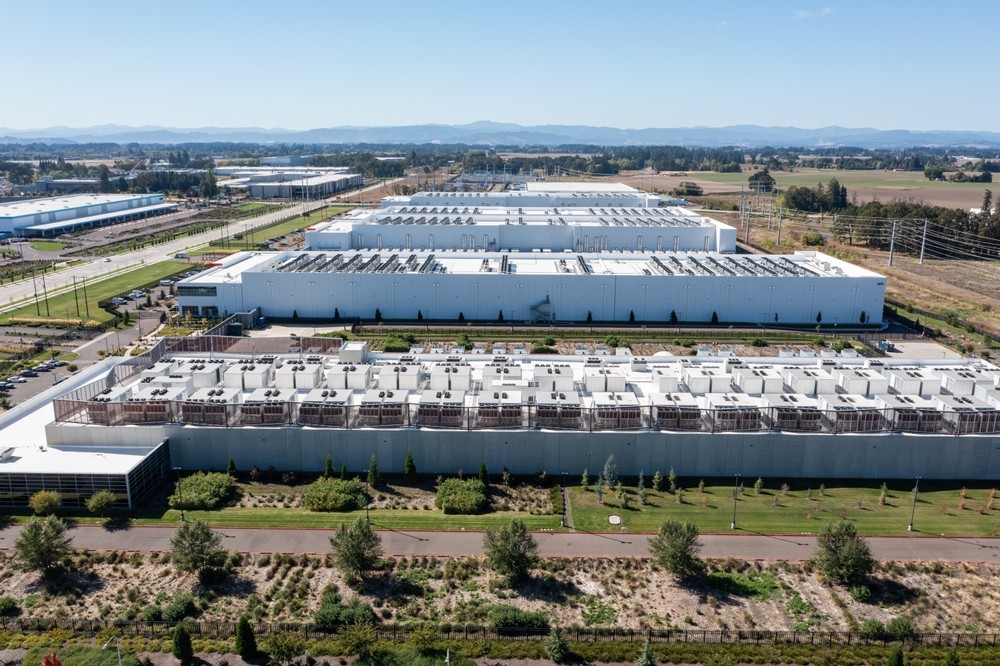
Data centers continue to be a hot topic in Missouri. In a recently signed executive order, the governor laid out a plan to formulate a pro-business and pro-consumer framework for data centers supporting artificial intelligence. In addition, the order called for the investigation and review of energy regulations and infrastructure planning due to growing demand.
The investigation and review are intended to protect ratepayers, assess Missouri’s future energy needs, and manage Missouri’s natural resources effectively. These are good objectives, but the hard question is finding a policy solution to match all those goals.
One option I have written about, consumer-regulated electricity (CRE), is worth considering. (If you’re unfamiliar with CRE, you can click the link to learn more.)
Instead of placing new data centers on the existing regulated grid, we could match data centers with an independent CRE utility (CREU). Furthermore, if electricity demand for these data centers falls short of its sky-high projections, then the excess capacity will have been a poor investment. This protects ratepayers by putting private companies on the hook for that risk instead.
There are benefits to data center developers as well. A CREU can be structured around the developer’s reliability needs and preferred energy resources. Projects could also require less transmission, as new generation facilities could be built near their customer base. CRE could be a reliable, economical, and sustainable energy solution to meet current and future energy needs.
Speed to operation is vital in today’s economy, and data center projects have experienced difficulties securing permissions from the various layers of government. While many hurdles would still remain (like local zoning), CRE projects would not require permissions from the Missouri Public Service Commission since they would not be connected to the regulated grid. At the federal level, Senator Tom Cotton recently introduced the DATA Act, which would exempt CREUs from federal regulations not designed for on-site, self-contained power systems. While still early, this legislation is worth monitoring and could further increase the speed to operation.
The governor has made it clear that he wants to meet growing energy demand in a way that protects ratepayers and addresses Missouri’s current and future energy needs. CRE is a policy approach that matches those objectives.
Open enrollment has been a hot topic for many years. Discussions on open enrollment typically revolve around its effects on traditional public schools.
But the effects of open enrollment on charter schools (also public schools) are discussed less frequently. While there are a number of potential effects, one is the expansion of a charter school’s “reach” or “market.” With open enrollment, charter schools would not only be able to serve more Missourians, but they could also become more innovative.
Charter schools are essentially limited to St. Louis City, Kansas City 33, Columbia, and any district that has been provisionally accredited for three consecutive years or is unaccredited. The reason they are limited to these districts is that in all other scenarios, the local school district has to approve a charter school to operate, which in Missouri has been a nonstarter.
At the time of this writing, there are 17 charter schools in the City of St Louis, 20 charters in Kansas City 33, and 1 in Normandy Schools Collaborative (through the accreditation mechanism).
Not only are charters limited in where they can operate, but they are further limited in the student base they can pull from. Unless a student’s family pays tuition to transfer in, each charter school is limited to students within its district’s boundaries. Not every state is like this.
Arizona has bolstered its charter schools by creating a robust open enrollment program. In Arizona, charter schools are not bound to a district-wide market.
This has permitted schools such as Arizona Autism Charter Schools (AACS) to thrive and serve a wide range of families in the state. If AACS were limited just to students in one district, it may not have been able to open or stay open due to a lack of demand. But open enrollment has enabled AACS to provide a specialized curriculum for parents commuting as far as 50 miles for their children’s education.
There are so many families with so many different needs, and open enrollment would allow for Missouri’s current and future charter schools to have a greater impact and greater opportunity to innovate.
Three pieces published on Friday tried and failed to find evidence for big claims about the economic impact of sporting events.
In a column for The Kansas City Star, I challenged the rosy claims of the alleged economic windfall from hosting the World Cup. Every group I contacted indicated they got the number from someone else. When I finally found the organization that generated the number, it did not respond.
That seems to be the standard procedure.
The Kansas City Business Journal tried to dig into how Kansas City’s tourism bureau concluded that 650,000 visitors would descend on the region. Thomas Friestad wrote: “Visit KC declined to share its specific methodology for estimating visitors, saying it is proprietary information.”
Blaise Mesa, writing for The Beacon, examined the economic impact claims being made by proponents of a new Chiefs stadium in Kansas. He ran into the same wall, writing, “The Beacon contacted the firm that calculated economic development data on the stadium, but they didn’t reply to requests for comment.”
It should be a red flag for even the most diehard supporters of these deals that those who promote the claims refuse to answer basic questions.
For years, I have argued that Missouri’s spending trajectory needed correction, and a new report from the state auditor confirms that conclusion.
Shortly before the end of last year, the auditor’s office released a report urging lawmakers to take “immediate action” to curb the trend of deficit spending before more drastic cuts become necessary. For longtime readers of the Show-Me Institute blog, this assessment will sound familiar. The report reinforces concerns that have been visible in Missouri’s budget data for more than half a decade.
Reviewing recent revenue and spending trends helps illustrate the problem. Between 2020 and 2025, Missouri’s general revenue collections increased by 45.8 percent, largely driven by income and sales tax growth. Over the same period, general revenue expenditures increased by 53.4 percent. That spending growth more than doubled the rate of inflation, which rose 24.5 percent during those years. Even strong revenue growth was not enough to keep pace.
This imbalance was made possible by a temporary windfall. Although Missouri operates under a constitutional balanced budget requirement, lawmakers were able to commit to higher spending because of a large influx of federal COVID relief funds, combined with stronger-than-expected tax collections. That surge produced a record general revenue balance of nearly $6 billion in 2023. Rather than treating those conditions as temporary, the state locked in higher ongoing spending through pay raises and program expansions, among other things. Since then, the surplus has been largely exhausted.
Looking ahead, fiscal pressures are likely to get worse. Governor Kehoe’s recent budget recommendations project a decline in expected revenues this fiscal year and only minimal growth in Fiscal Year 2027. The outlook deteriorates further when you consider the chance of an economic downturn. Using the worst three-year revenue decline Missouri experienced between 2003 and 2025, the auditor estimates the general revenue fund would be depleted by 2027. Under that scenario, the state would face a deficit exceeding $3.8 billion. And while Missouri’s Budget Reserve Fund (rainy day fund) holds approximately $950 million, as I’ve written before, constitutional restrictions sharply limit its usefulness in addressing an ongoing budget shortfall.
As the general assembly begins working on next year’s budget, the auditor’s report should remain front of mind. There’s still time to rein in the state’s out-of-control spending if Missouri’s lawmakers are willing to start making the tough decisions that right-sizing government entails. The question is no longer whether adjustment is needed, but instead how long until fiscal disaster strikes.
Support Us
The work of the Show-Me Institute would not be possible without the generous support of people who are inspired by the vision of liberty and free enterprise. We hope you will join our efforts and become a Show-Me Institute sponsor.