What Parents Want

The dust may be finally settling in public education, but not into a familiar pattern. EdChoice—a non-profit based in Indiana—has been conducting monthly polls of parents since last summer to see how they’re feeling about their children’s education. The latest round of responses (April 2021) indicate that parents are beginning to feel much better. Nearly two-thirds are now comfortable with their child returning to school—an 8 percent increase since March. And three-fourths of parents surveyed are planning on getting their child vaccinated against COVID-19.

By the start of the next school year, public education should finally be back to pre-COVID normal, right? Buses will be running and school buildings will be filled with students and teachers from 8 a.m. to 3 pm. Not so fast.

The most interesting (to me) takeaway from the April survey of parents is this. When asked “After (emphasis mine) the pandemic, if given the option, to what extent would you prefer schooling to be scheduled each week at home with a parent or tutor to provide the best education for your child?” just 47 percent of public school parents said they would prefer for their children to be educated “Completely outside the home.” Thirteen percent said “Completely at home.” The remaining parents want a combination of days in school and days at home—generally two of one and three of the other. Think about that—almost half of parents surveyed want a new normal.

Last spring, just about every parent with a school-age child was forced to try homeschooling. Clearly, many liked it and would like to continue. But the conundrum to me is what to do with the 4 out of 10 parents who want their kids home some of the time—say a couple of days a week. Should districts just ignore them? Should we assume that when that option goes away, those 20 million or so parents will just give in to reality?

Maybe it’s time to expand the definition of a public school. Could we have rotating in-person and at-home schedules? Could we let teachers form micro-schools with a few families from their school? Could we let the education hubs that have popped up to facilitate public education, like YMCA’s or Boys and Girls Clubs, get fast tracked as charter schools?

One thing I know for sure: The Missouri Department of Elementary and Secondary Education (DESE) is going to distribute state education funding to school districts based on the average daily attendance in their buildings a year or two ago. DESE is essentially going to pretend that it’s 2019 and every school-age child will be in a building full time. Reconsidering the definition of a public school would be a better way to have money follow children to the environment of their choice.


How to Put Missouri on a Faster Path to Recovery

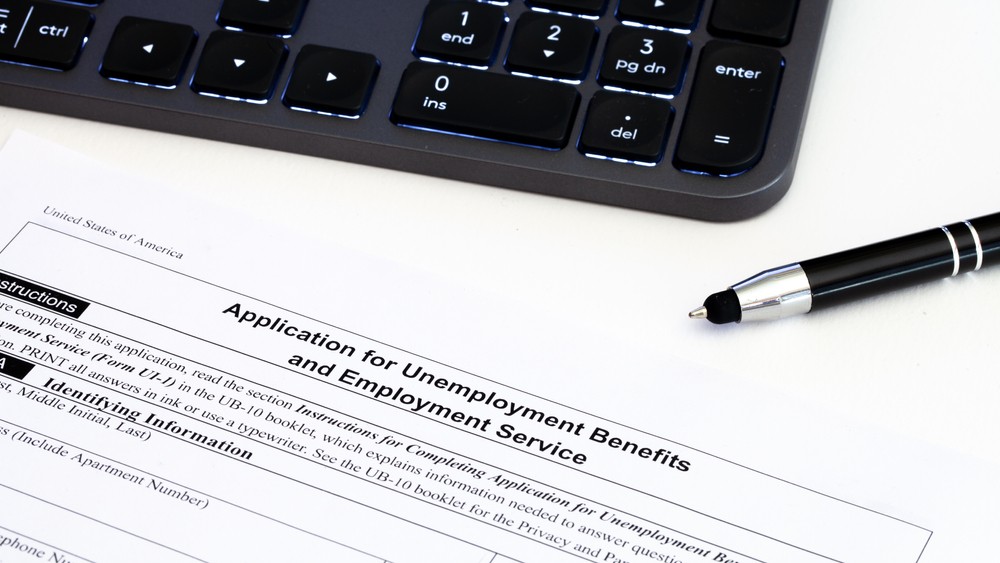
Hoping to prepare for a busy summer of reopening, several restaurants last week in St. Louis’s Central West End held a job fair in hopes of hiring over 100 workers. Only about a dozen prospective employees showed up. No isolated incident, this flop is emblematic of the disappointing jobs report last Friday, in which job creation nationwide came in over 70% below the heady expectations of Wall Street and other forecasters who were anticipating a blockbuster number that reflected the accelerating reopening of America. Against this backdrop, employers posted a record 8.1 million job openings in the latest data from March, and a record 44% of small businesses in the National Federation of Independent Businesses April survey reported openings they could not fill. Although childcare and schooling disruptions remain ongoing concerns, especially troubling is President Biden’s extension of enhanced unemployment benefits into the fall that are paying nearly half of jobless workers more to remain unemployed than they used to receive on the job and another fifth of workers more than 80% of their previous wages while saving them on commuting and other work expenses. Recognizing that Missouri need not wait for Washington, DC, to correct its mistakes, Governor Parson wisely announced that Missouri would be ending the unemployment benefit enhancements to encourage work and enable small businesses to hire. This action removes a significant headwind to recovery.

As things currently stand, the American Rescue Plan promises jobless workers $300 per week on top of the usual wage replacement rate of just under 50% all the way into September. For most of the workers who are receiving nearly the same or more to remain jobless, it is understandable that they might be reluctant to accept a pay cut just to go back to work. For small businesses struggling to reopen, these unemployment benefits represent anywhere from a short-term headache to an existential threat. Many of them operate on small profit margins and cannot afford to compete with the artificial compensation offered by a federal government with a nearly endless capacity to borrow. Tacitly acknowledging the role of unemployment benefits in the lackluster jobs numbers, President Biden is now exhorting workers that “if you’re receiving unemployment benefits and you’re offered a suitable job, you can’t refuse that job and just keep getting unemployment benefits.” He has also directed the Department of Labor to work with states to reinstate job search requirements, which in their current form are mostly window dressing that cannot effectively monitor or induce search effort. Instead of trying to fill the leaky bucket caused by bad policy, the federal government ought to plug the hole and stop erecting hurdles to small business hiring and reopening.

In Missouri, the economy sports what sounds like a healthy 4.2% unemployment rate, but here, too, many Missourians have exited the labor force, and there are over 114,000 fewer people working relative to back in February 2020. Missouri’s recently announced termination of enhanced unemployment benefits is one positive step toward addressing this jobs shortfall and returning its economy to pre-pandemic strength.

Excellent: Legislature Passes Bill Holding Local Governments Accountable

Congratulations to Rep. John Wiemann and others for passing House Bill 271, a now greatly expanded bill whose original language, carried by Rep. Wiemann, addressed a reform near and dear to my heart—local transparency. For the last few years, the Institute has been an active proponent of making state and local government checkbooks open to the public, and we’ve seen some progress with the creation of a great site that advances these ends in the Missouri State Treasurer’s office. House Bill 271 establishes a similar program in the Office of Administration, which takes us one step closer to the mandatory checkbook reporting we’ve long advocated. If local governments can take your money from you and spend it, they must report it, and if they can’t, well, that’s a problem. The bill moves us closer to fixing that problem.

The omnibus bill touches on other local government issues of interest to us, notably the manner and circumstances under which local governments can take away rights of association and commerce via pandemic “health orders” and lockdowns. Living in Chiefs Kingdom doesn’t make you Kansas City’s peasant, and the bill’s eminently reasonable restrictions on local governments’ ability to take draconian actions against Missouri residents were overdue. As with local checkbook transparency, the state has an obligation to ensure that local governments, which exist as a managerial convenience, are accountable for acts done in the state’s name. On health orders in particular, local governments far exceeded in the last year what the state should ever tolerate. Congratulations to Sen. Bob Onder for successfully attaching this limiting language to the bill and to Sen. Andrew Koenig, Rep. Jim Murphy, and others for adding fuel to the fire throughout the process.

House Bill 271 now moves on to the governor, who is expected to sign it. Congratulations to the legislators and advocates who achieved these objectives.

How Are We Recovering (Part 2)

As discussed in my previous post, our economy seems to be recovering quickly relative to other recessions, but employers are reporting increased hiring difficulties. This may be due to the changes in unemployment insurance (UI) and the effects on the labor market (the supply and demand of workers).

Generally, UI affects the labor market by changing job search behavior. UI decreases the gap in pay between working and not working. It creates an incentive for unemployed workers to take more time in their job searches, resulting in fewer job applications and longer jobless spells. On the other side of the labor market, the UI benefits that make it easier for workers to put off job searches and be more selective also make it more difficult and costly for businesses to hire, which reduces the incentive to post job openings. Ultimately, UI can damage both sides of the labor market.

Providing money to help someone between jobs isn’t inherently a bad thing, especially during difficult economic times. In fact, one justification for having an unemployment insurance system at all is that the added time spent searching for a job leads to the possibility of a higher-quality job fit, which has stabilizing effects on consumer spending. However, excessive generosity or duration of UI benefits can hamper the economic recovery following a recession.

Researchers have cited the extensions of unemployment benefits as playing a role in the slowest job recovery on record—the aftermath of the Great Recession—and other jobless recoveries. Similarly, eventual cuts to UI benefits after periods of extensions have led to large influxes of workers and decreases in unemployment levels.

All this research on the relationship between UI and the labor market makes me question whether our UI policy during this economic downturn has been optimal. The recent extension of unemployment benefits with the $300 weekly supplement may threaten to impede the pace of our current recovery as UI has in the past. Governor Parson has even decided to end Missouri’s participation in the federal pandemic unemployment benefits beginning on June 12th, saying that it’s time to get people back to work. The complicated topic of UI and our current recovery with be discussed in the next blog in this series.

The New Mayor Vetoes Two Tax Subsidies

In a welcome development, St. Louis Mayor Tishaura Jones vetoed two newly proposed tax subsidy bills. One is a small project and one is large, but what they have in common are generous tax subsidies for projects in areas that are doing just fine economically.

The main veto was for a new 300-unit apartment complex right by St. Louis University. The new apartments will be marketed toward students, of which there are many nearby because it is right next to a major university. The developers were asking for a 10-year, 95 percent tax abatement. A 95 percent tax abatement on an $80 million project is a lot of money for the developers, and that money will inevitably be offset by higher taxes on other residents and businesses. The idea that a development such as this at this location needs a huge tax subsidy is absurd. I commend Mayor Jones for these two vetoes and hope it sends a signal for the rest of her administration.

Don’t get me wrong. I think taxes in the City of St. Louis are too high. But if Mayor Jones and the new generation of city leaders can substantially reduce tax subsidies for the lucky few and expand the tax base by doing so, then we might be able to get a tax cut for everyone. If the taxes on commercial development are too high, then lower the commercial property tax surcharge for all businesses. Giving away generous tax abatements to some (who, shockingly, tend to be politically connected) is not the solution.

This is a positive step for Mayor Jones’ term.

Charter School Students Are Public School Students

Imagine two teenage siblings with jobs—a rarity these days. Their parents require them both to pay for their own transportation with their earnings. One only has to pay for gas and the occasional oil change. The rest of their paycheck can be spent on other things. The other has to cover a car payment, gas, tires, car insurance, and any other expense related to keeping their car moving down the road. You can debate if this is good parenting, but clearly one teen will have to stretch their paycheck a lot further. And it doesn’t seem quite fair.

That is essentially how funding for charter school students differs from funding for other public school students. Public school districts can fund buildings, buses, maintenance, and other long-term costs by issuing bonds. Capital projects are funded with dollars outside of the stream of revenue that is received from federal, state, and local sources each year to educate students. Charter schools, however, have to fund everything—buildings, new roofs, HVAC systems, buses, gyms, libraries—using the same annual funding that traditional public schools can dedicate to the classroom. It’s very difficult.

Finally, some Missouri charter schools will have access to state funds for capital improvements. The recently passed education budget bill, House Bill 2, includes $5 million from the General Revenue Fund “for deferred maintenance grants for charter school facilities, provided that the charter school has been operating, with students enrolled, for at least ten years, further provided the charter school maintains twenty percent (20 percent) reserves, further provided that the charter school not be a part of a for-profit charter management organization’s network, and further provided the charter school owns or is purchasing the building or is occupying a building owned by the local school district.”

It’s not a ton of money, considering that there are more than 70 charter schools in the state, but it’s a start. It’s good to see the Missouri Legislature begin to chip away at the systems that work against families and their educational needs.

Suggested Change to Missouri’s Nuclear Construction Bill

A new bill in the Missouri Legislature proposes easing regulations on nuclear and renewable power construction. House Bill 261 would allow utilities to charge ratepayers for the construction of nuclear and renewable power plants before they’re operational. However, this would only apply to plants with the capacity to generate more than 200 megawatts of electricity per year.

This exemption would favor large, traditional nuclear power plants at the expense of cutting-edge nuclear energy technology—small modular reactors (SMRs). Putting aside the merits of the current monopoly structure—customers in other states benefit from competitive electricity markets—does it even make sense for a bill to promote traditional nuclear over SMRs?

Let’s put this in perspective. Few large, traditional nuclear power plants have been built nationwide in the past few decades. In recent years, multi-billion dollar cost-overrun debacles for new traditional nuclear plants in South Carolina and Georgia have put a damper on constructing new large nuclear plants. So what’s so special about SMRs?

SMRs are much smaller than traditional nuclear power plants (generating fewer than 200 megawatts of electricity per year) and are also cheaper to construct on a per-megawatt basis than traditional nuclear plants. NuScale Power, which is on track to receive the U.S. Nuclear Regulatory Commission’s first construction approval of an SMR this August, expects its SMR to produce electricity for $65 per megawatt-hour. That price is competitive with electricity from natural gas plants, which are also “baseload” power providers. (Baseload power is reliable, around-the-clock power, as opposed to the intermittent power provided by solar and wind.)

SMRs are also safer than traditional nuclear plants. The traditional way of generating nuclear power is already the safest form of electricity production available, even when considering disasters like Chernobyl or Fukushima, but SMRs come with enhanced safety features. For instance, traditional nuclear power plants cool their reactors by circulating water via electricity, meaning that in the event of a natural disaster that removes all possibility of power (such as what happened in Fukushima in 2011), the reactor could malfunction. SMRs use natural circulation rather than power to cool the reactor, meaning that a disaster like Fukushima is even less likely to happen with SMRs, and it is already extraordinarily unlikely.

Their smaller size also means that SMRs may be deployed in places where it wouldn’t make sense to build an enormous, traditional nuclear power plant, such as in remote towns or industrial sites. SMRs can operate individually as well as being grouped together, again in contrast to traditional nuclear plants. This allows for more flexible operation and even expansion if population or industry requires it.

SMRs are nearing full approval by federal regulators and are already being built in several countries. Putting aside the concerns about the monopoly powers Missouri utilities currently have (which are not insignificant), wouldn’t Missouri be better off focusing on the future of nuclear energy technology rather than the past?

Support Us

The work of the Show-Me Institute would not be possible without the generous support of people who are inspired by the vision of liberty and free enterprise. We hope you will join our efforts and become a Show-Me Institute sponsor.

Donate
Man on Horse Charging