Kansas City Needs a Patron Saint of Tax Subsidy Reform

Telling powerful people and groups they can’t have what they want is hard. St. Thomas More learned this by telling England’s King Henry VIII that he couldn’t take a new wife and start a new Church. The King got his new wife and his new Church, and Thomas More lost his head (literally). Kansas City government needs someone with just a fraction of St. Thomas More’s bravery to stand up to the development industry as they try to increase the subsidies they receive by changing the rules of the Enhanced Enterprise Zone (EEZ) program to fit their interests.

It’s been said many times that there is nothing as permanent as a temporary government program. While it may be a partisan campaign remark, it contains a simple truth. Each new program generates its own newly entrenched bureaucracy and special interest groups that have an interest in expanding and perpetuating the program. We can see this with big, bold programs, but often that plan to maintain or expand power happens behind the scenes in ways the public never knows about. That is exactly what is happening now with the EEZ program before the Kansas City Economic Development Council, a city advisory committee that makes recommendations regarding tax subsidies.

Kansas City gives away enormous sums in tax subsidies—an estimated $175 million in 2018 alone. The development community and its allies in finance, law, and politics (hereafter the developer-subsidy complex) do not view these subsidies as a program to be used in occasional, necessary instances. Developers view them as their hereditary birthright, to be exploited with all the subtlety of King Henry “asking” if he could have another divorce.

Just as current Kansas City leadership is taking steps to place modest limits on tax subsidies—better known as corporate welfare—the developer community is taking steps to keep the spigot flowing. What steps has the city has taken? The city lowered the maximum property tax abatement developers can receive from 75% to 70% for 10 years, and from 37.5% to 30% for five more years. While this change is commendable, it is hardly a major decrease in subsidies. But try telling that to the developer-subsidy complex.

It’s latest maneuver regards EEZs, an all-too-common business incentive package that is tied to job creation aims. EEZ tax credits have always been focused on jobs and business activity—the explanatory language on Missouri’s website is clear on that—but the development community is now trying to argue that large apartment complexes should also quality for new tax subsidies through the EEZ program. While there is no evidence that EEZs work at growing the economy—the EEZ program was a major part of the failed Waddell and Reed downtown development—they do work (all too well) at shoveling tax dollars to influential developers.

It is important to note that major residential developments like apartment buildings already qualify for plenty of incentive programs: low-income housing tax credits, historic tax credits, the above-mentioned property tax abatements, tax-increment financing, and other programs. What they have not been able to access are EEZ tax subsidies. That, apparently, has to change.

Lawyers for housing developers have been quietly arguing with EDC officials for months that the tax credits and abatements previously reserved, as intended, for businesses that create jobs should also go to housing developments. The EDC officials have resisted, but the developers are now appealing to the city’s lawyers. If the lawyers change the interpretation of the law to include housing—which it has not previously been used for—then all of the progress, modest as it may have been, in reducing the use of tax subsidies in Kansas City will be undone.

No matter how the developer-subsidy complex tries to spin it, this is a naked attempt to take more money away from taxpayers and government bodies, like the school district, and put it into the private hands of developers and their advisors.

Hopefully, someone in Kansas City government will have the courage to say “No” to these demands by the developers. If that happens, we hope it works out better for them than it did for Thomas More.

Mask Mandate Lawsuit, Judge Rules on QuickTrip, Medicaid Update

Susan Pendergrass, David Stokes and Elias Tsapelas join Zach Lawhorn to discuss the lawsuit filed by Missouri Attorney General Eric Schmitt against school districts that have required masks for students and teachers, a judge’s decision to overturn The Creve Coeur City Council’s rejection of a plan to build a new QuickTrip and the latest on Medicaid expansion.

Listen on Apple Podcasts 

Listen on Sticher 

Listen on SoundCloud

The Loop Trolley and the Sunk Cost Fallacy

Are backers of the Loop Trolley asking the East West Gateway Council of Governments for another $1.3 million in federal funds because they say: A) people want to ride it, or B) a lot of effort has already been put into the trolley? If you guessed “both,” you would be right.

However, reality paints a different picture. For option A, the trolley shut down in December 2019 because hardly anybody wanted to ride it. Neither ridership nor ticket sales exceeded 10 percent of what the Loop Trolley Company predicted.

Option B is an example of what economists call the sunk cost fallacy. The sunk cost fallacy is when an individual keeps doing something that isn’t working just because he’s already invested time or money into it. It’s like buying a movie ticket, realizing that the movie is terrible after ten minutes, but deciding to stay anyway because you already bought the ticket. The money is a sunk cost. The movie will not magically get better just because you paid for the ticket.

Similarly, taxpayers have already spent $51 million on the trolley. The trolley made less than $33,000 in its one year of operation, meaning that for every dollar the trolley made, it received over $1,500 from taxpayers. It suffered numerous construction delays, routinely cut its operating hours, and its extended construction harmed the local businesses it was supposed to help.

It strains credulity to think another $1.2 million of taxpayer money will somehow make the Loop Trolley successful. It’s even less logical to think that this $1.2 million is necessary because of the first $51 million taxpayer dollars.

If backers of the trolley want to find private investors to support the trolley because investors think it’s a worthwhile idea, that’s one thing, but trying to make taxpayers the investors is a different story. Several members of the East West Gateway Council of Governments just recommended that the full body vote for approval of the $1.3 million in federal funds at their October 27 meeting. However, members of the East West Gateway Council of Governments should make sure to look at the big picture before committing any more taxpayer money to the Loop Trolley.

Ferguson, Missouri Will Not Be Improved by More Special Taxing Districts

Ferguson, a suburb of St. Louis County which you may have heard of, is launching a new community improvement district (CID). CIDs are special taxing districts that levy taxes to fund public improvements within a designated area. However, there are significant issues with CIDs, and, upon review, the one proposed for Ferguson seems to embody just about all those problems.

The Missouri State Auditor’s office has documented numerous flaws in CIDs. At the public meeting on the Ferguson CID last week, one of the speakers even encouraged the city council to review one of these audits to give the city guidance. (I would be surprised if the city did that, but I’d love to be wrong.) Among the many issues with CIDs: lack of transparency; improper oversight once established; failure to follow required rules for dealing with tax dollars, including lack of public bids and private use of tax funds; and erroneous tax collections. Perhaps the largest problem with CIDs is that they are frequently used to fund private entities with public tax dollars. Things such as private business parking lots should be—and until very recently were—considered private items to be funded by businesses, not taxpayers.

The proposed CID in Ferguson is a new tax for only one parcel of land that will authorize a sales tax for the new stores going into the development. Essentially, this project will use public tax dollars for private purposes. The board of the CID consists mainly of representatives of the developer, so the private interests of the developer will be their focus, not the proper use of tax dollars. (To be clear, two of the five members of the board are public representatives, but—despite being no math genius as best I can telltwo is less than half of five.) The developers claim that this parcel is blighted, which is highly questionable. It is adjacent to the very nice campus of Florissant Valley Community College. There is no public vote on this CID—it is a mail-in ballot voted by only the property owner(s), who will likely vote to support the new, surreptitious tax on their own customers that will be used to benefit the property owners.

This proposed CID will have no public vote, little public benefit, and very limited public oversight. This is not the way to go forward for Ferguson. CIDs like these should be stopped and the state should make substantial reforms to the CID rules.

Census Data Brings Bad News, Florida’s Plan For Schools, Saying No to $8 Million

David Stokes, Patrick Ishmael and Susan Pendergrass join Zach Lawhorn to discuss the recently released census data, Florida’s expansion of school choice and a Missouri school district said “no thank you” to millions in stimulus money.

Listen on Apple Podcasts 

Listen on Sticher 

Listen on SoundCloud

It’s Back to . . . Wait, What?

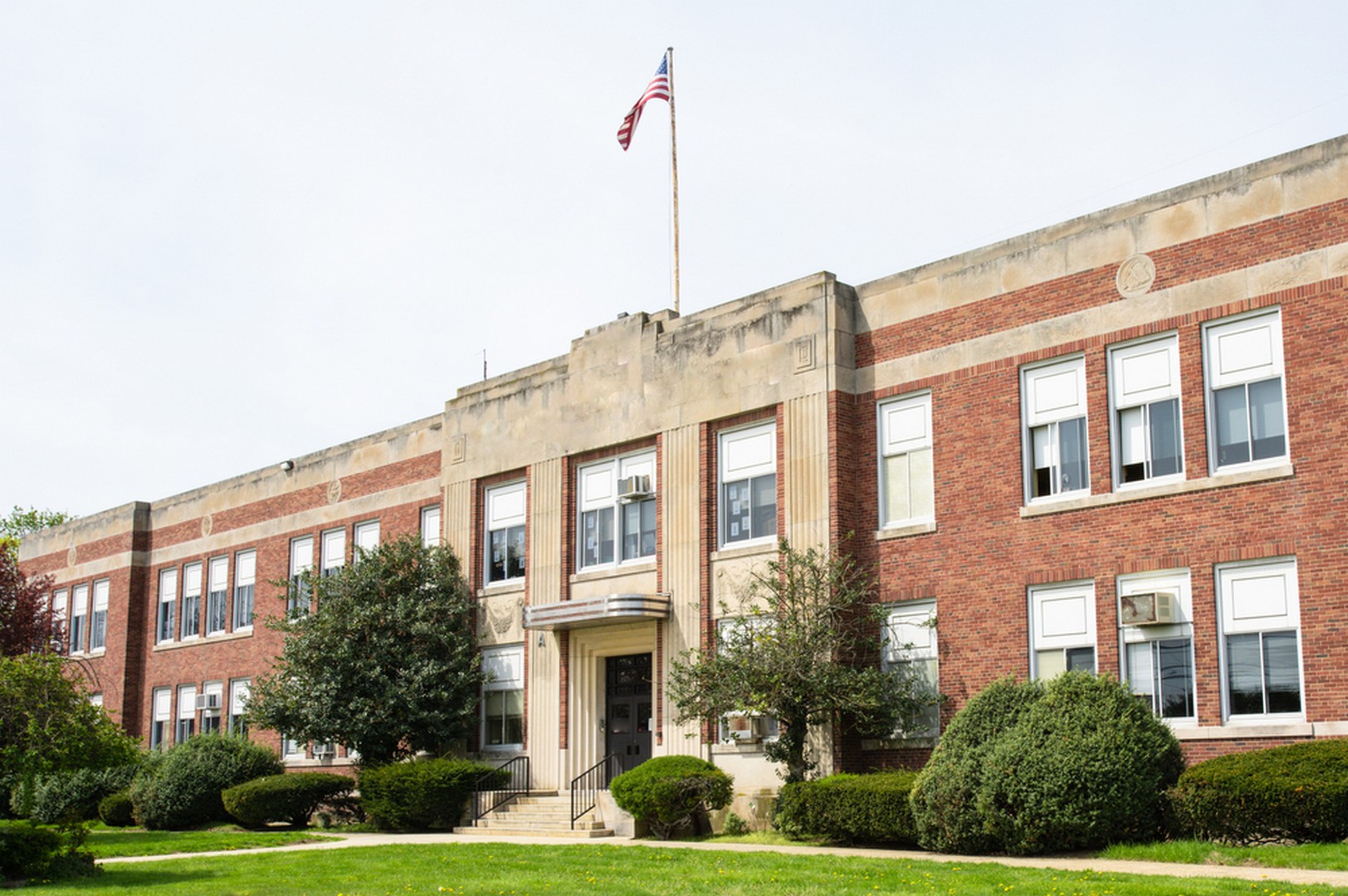
Mid-August is back to school time. Kids are getting new backpacks and school supplies. Teachers are decorating their rooms. A month ago, we were on a glide path back to some type of normal, and then the COVID-19 Delta variant hit. Instead of a fresh start in a critical year for so many children who lost ground educationally last year, it’s mayhem.

Once again, many, many parents are completely fed up with district leadership. In addition, teacher union leadership is whipsawing in what it does and doesn’t support for teacher safety. Most schools figured out how to safely provide in-person instruction by the end of the last school year. Now it seems like they’re scrambling for solutions. Last year districts were forced to create functional virtual education programming. This year they risk losing state funding if they bring it back.

Parents have been loudly expressing their frustration for at least a year and a half with having just one option for their children. Yet districts still think they can issue edicts (must mask/mask optional) that apply to each and every kid and expect that parents will just get in line? Those days, in my opinion, are over. Parents are suing. Parents are protesting. Parents are packing school board meetings.

One thing is clear: It is not only possible but also necessary to have a varied portfolio of schools from which parents can choose. It’s time to give parents access to public education funding to find a good solution for their families. That may be an education hub (or pod) at the YMCA. That may be a private school. That may be a neighboring school district with different policies. That may be homeschooling.

Florida is expanding its Hope Scholarship program to families who don’t want to send their children to schools that have mask mandates. At the end of August, Missouri will have a scholarship program for students with disabilities and low-income students. That program could be ramped up and publicly funded. Missouri’s Department of Elementary and Secondary Education (DESE) has received nearly $3.5 billion in federal stimulus funding. It’s time for real leadership.

The Start of a New School Year with Ray Domanico

Susan Pendergrass is joined by Ray Domanico to discuss the challenges that students, parents and schools face as the 2021 school year begins.

Ray is a senior fellow and director of education policy at the Manhattan Institute. His career has spanned the public and non-profit sectors, in research and advocacy roles. Most recently, Domanico was director of education research at New York City’s Independent Budget Office, where he led a team tasked with studying and reporting on the policies and progress of America’s largest public school system.

Listen on Apple Podcasts 

Listen on Sticher 

Listen on SoundCloud

We’re Not in Last Place—We’re Not Even in the Race

The release of the 2020 Census Bureau numbers brought bad news: The St. Louis Metropolitan Statistical Area (MSA) has dropped out of the top 20 largest MSAs in the country. We’ve been in a so-called “race to the bottom” for a long time, but now it feels like we’re not even in the race.

The growth of the St. Louis MSA, which contains 7 counties in Missouri and 8 counties in Illinois, has been stagnant for years, driven in no small part by poor population growth in St. Louis City. While some lawmakers were pleasantly surprised that our 2020 numbers weren’t worse, I’m disappointed at what has become of a once booming and prosperous Midwestern region.

What is it that keeps St. Louis out of the race?

Maybe it’s the sales tax rates that can be over 11 percent. Or the earnings tax in St. Louis City. Perhaps it’s the poor public schools and lack of school choice. Or the crime. It’s likely a mix of all these things and more; anything that makes St. Louis a less attractive place to live, work, or start a business has negative effects on population growth. You would think that years of stagnant growth would inspire lawmakers to take steps in the right direction, but we’ve seen little change. Maybe this fall from the top 20 will finally light a fire under lawmakers.

Support Us

The work of the Show-Me Institute would not be possible without the generous support of people who are inspired by the vision of liberty and free enterprise. We hope you will join our efforts and become a Show-Me Institute sponsor.

Donate
Man on Horse Charging