Regulatory Capture in Cosmetology Licensing Boards

I’ve previously written about the regulatory capture of occupational licensing boards, citing Missouri’s cosmetology board as an example. It seems I’m not the only one to recognize this problem. The Center for the Study of Economic Liberty at Arizona State University recently released a report that indexes and ranks the regulatory capture of each state’s cosmetology board—Missouri ranked 14th.

Regulatory capture occurs when special interests gain control of regulatory agencies governing their own industries—regulators making the rules for themselves. You may think that a captured licensing board would have lenient regulations (who wants to subject themselves to strict rules?) but it’s much more common to see stricter rules with a captured licensing board. This is because the licensed board members directly benefit from punishing competitors and making it harder for newcomers to enter the market.

According to the report, cosmetology is licensed in all 50 states and the District of Columbia. Cosmetology boards typically consist of members who currently hold a license (incumbent members), members who represent cosmetology schools, and members of the public. Boards that are dominated by members who currently hold a license are more captured than boards dominated by members of the public. Missouri’s cosmetology license board has 11 members: 7 incumbent members, 2 school owners or instructors, and 2 public members. It’s clear where the balance of power is on the Missouri board.

Regulatory capture is one reason lawmakers should implement a five-year sunset provision on occupational licenses and licensing boards. With this provision, legislators would review each board every five years, and legislators could implement changes to fix problems (such as regulatory capture).

Unfortunately, regulatory capture doesn’t only affect those in (or who want to be in) the industry. Limiting competition lowers the supply of cosmetologists and raises the cost of your haircut. Everyone loses—except those already holding the occupational license, of course.

Land Bank History Unsurprisingly Repeats Itself

The Kansas City land bank was supposed to be better than the St. Louis version. Policymakers were supposed to have learned from some of the lessons of the failures in St. Louis. The Kansas City land bank was supposed to have created a more responsive and user-friendly process. It didn’t.

Despite some attempts to aggressively put public properties back into private hands (which is the ostensible goal of a land bank), recent investigations of the Kansas City land bank have found an entity chock full of conflicts of interest, property hoarding, and operational failures. This may not come as a surprise to our longtime readers—Institute analysts have done extensive research on the failures of the St. Louis land bank. The St. Louis land bank accumulated and held numerous properties, often rejecting attempts by people to purchase them.

The supposed purpose of a land bank is to rapidly get property back into the ownership of private individuals. The leaders of Kansas City’s land bank made promises for programs to achieve that. But investigations by Kansas City-area reporters seem to indicate that the more things change, the more they stay the same.

It is not in the interest of bureaucracy to actually solve the problem it is created to address. That puts the people who work there out of a job. The natural interest of bureaucracy is to expand its influence and power. You don’t do that by keeping your agency small and making it smaller by getting rid of the very thing you’re managing. This is an important insight from public choice economics.

So, to no one’s surprise, it seems the flaws that have permeated the St. Louis land bank have become embedded in the Kansas City land bank. Those flaws will almost certainly emerge in the St. Joseph land bank, which was unfortunately created a few years ago. Springfield city officials, who want a land bank, should keep these repeated failures in mind and reconsider whether a land bank is truly needed.

How Do We Improve Municipal Elections in Missouri?

There is a proposal in St. Louis County to make the county-level offices (and campaigns) nonpartisan. The sponsor argues that because much of what local government does is generally not partisan (he is right about that), we should remove the party labels from local offices.

I think this is a very bad idea. In this specific example, St. Louis County Council districts are large (roughly 140,000 people) and the party label, like it or not, gives voters a significant cue as to which candidate suits their preferences. The idea behind nonpartisan elections seems to be that without a party label, voters will do additional research to determine their votes. This study convincingly argues that that idea is incorrect.

I didn’t agree with Proposition D in the City of St. Louis for the very same reasons.

I am not calling for every suburban city council or school board to suddenly become partisan. However, I think taking currently partisan races and making them nonpartisan (especially for races with many voters) is going to reduce voter information, not enhance it.  Nonpartisan campaigns can be captured by special interests just as easily as partisan races—perhaps even more so—as has frequently happened with fire districts in Missouri.

I understand the desire behind the suggestion here, but taking partisan races and making them nonpartisan will, in this instance and many others, make choices more difficult for the average voter. I believe that is the wrong direction to go in.

Trolley Grant Rejection Summed Up in One Question

The East-West Gateway Council of Governments rejected the Loop Trolley Company’s request for a $1.26 million grant last Wednesday. Trolley backers claimed the federal grant money was needed to get the cash-strapped trolley running again.

While members of the council had different reasons for rejecting the proposal, one question from the head of the council board summarized the objections nicely:

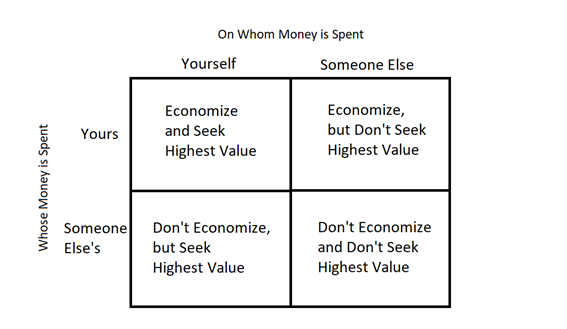
“Why is it always other people’s money?”

Other local officials were fine with the trolley receiving the grant, as long as no taxpayer money from their respective municipalities would be dedicated to the trolley and Bi-State Development assumed its operation. Others objected to the idea of Bi-State operating the trolley, arguing that its responsibility is to provide public transportation, not manage tourism projects.

Show-Me Institute analysts have argued for years that the Loop Trolly should not be subsidized by public tax dollars. It’s good to see regional leaders taking the same approach.

It’s unknown what comes next for the trolley. Trolley backers could seek out private funding, either from investors or from Loop businesses who see a benefit to having the trolley run. Whatever the trolley’s future, hopefully the next ask will be to private sector investors, not taxpayers.

The 2022 Blueprint for Missouri Virtual Town Hall

Please join the Show-Me Institute for a Virtual Town Hall on Wednesday, December 8 at 2 p.m. The presentation will outline our 2022 Blueprint for Missouri, which consists of free-market policy solutions to the challenges facing our state. You will hear from our expert policy directors and analysts about a broad range of issues including education, healthcare, tax policy, transportation, and government accountability. Register through Zoom to receive the event link. We hope you can join us.

Register

This event is sponsored by Show-Me Institute and Show-Me Opportunity.

Kirkwood Should Consider the Pros and Cons of All Transportation Funding Options

Kirkwood officials have placed a citywide transportation development district (TDD) on the ballot to raise money for road, sidewalk, gutter, and parking lot repair. The proposed TDD is funded by a 1 percent sales tax. This proposal appears to be better than most TDDs in Missouri, as it is subject to a citywide vote and was proposed by the city rather than a developer. Of course, Kirkwood residents should keep in mind all their transportation funding options.

There are ways to fund local road maintenance other than sales taxes. As the National Surface Transportation Infrastructure Financing Commission has noted, paying for road maintenance with taxes largely unrelated to road usage creates problems. If people aren’t charged for using roads directly, people will drive more, which in turn leads to higher road maintenance costs.

A local fuel tax is a good solution to the problem of paying for road maintenance—a fuel tax is directly related to driving. Additionally, local fuel tax revenue is constitutionally required to be spent on local road maintenance, decreasing the risk of financial misuse.

Seven Missouri cities already have local fuel taxes; none are higher than 2 cents per gallon. According to my calculations, Kirkwood could raise over $266,000 per year from a 2 cent per gallon local fuel tax on gasoline and diesel fuel. A downside of a local fuel tax is that you don’t collect any revenue from large trucks that may not stop to buy gas in Kirkwood, but still damage the roads when passing through.

No matter how Kirkwood residents and officials decide to raise money for local road maintenance, the city should carefully manage the money raised and ensure that all proper reporting, transparency, and auditing rules are observed. The proposed TDD has redeeming qualities and could be a viable option for funding needs. Nontheless, Kirkwood officials and residents should also consider other transportation policy options.

End of the Track for the Trolley, Election Preview and DST Ends Next Sunday

Corianna Baier, Jakob Puckett, and David Stokes join Zach Lawhorn to discuss the East-West Gateway Council of Governments’ decision to reject a federal grant to fund The Loop Trolley, the food truck debate in Ladue, preview next week’s elections, and more.

Listen on Apple Podcasts 

Listen on Sticher 

Listen on SoundCloud

Support Us

The work of the Show-Me Institute would not be possible without the generous support of people who are inspired by the vision of liberty and free enterprise. We hope you will join our efforts and become a Show-Me Institute sponsor.

Donate
Man on Horse Charging