Supreme Court Reins in Federal Bureaucracy in EPA Case

One of the first things most kids learn about American government is that it has three branches: the legislative, the executive, and the judicial. Generally speaking, the legislature writes the laws, the governor or president executes those laws, and courts resolve disputes over the laws. In recent decades, however, the power to write, execute, and litigate the “law” in the federal government has often fallen to a growing administrative state in the executive branch. Is American law whatever an alphabet soup of federal agencies says it is? Sometimes, yes, and in recent years increasingly so.

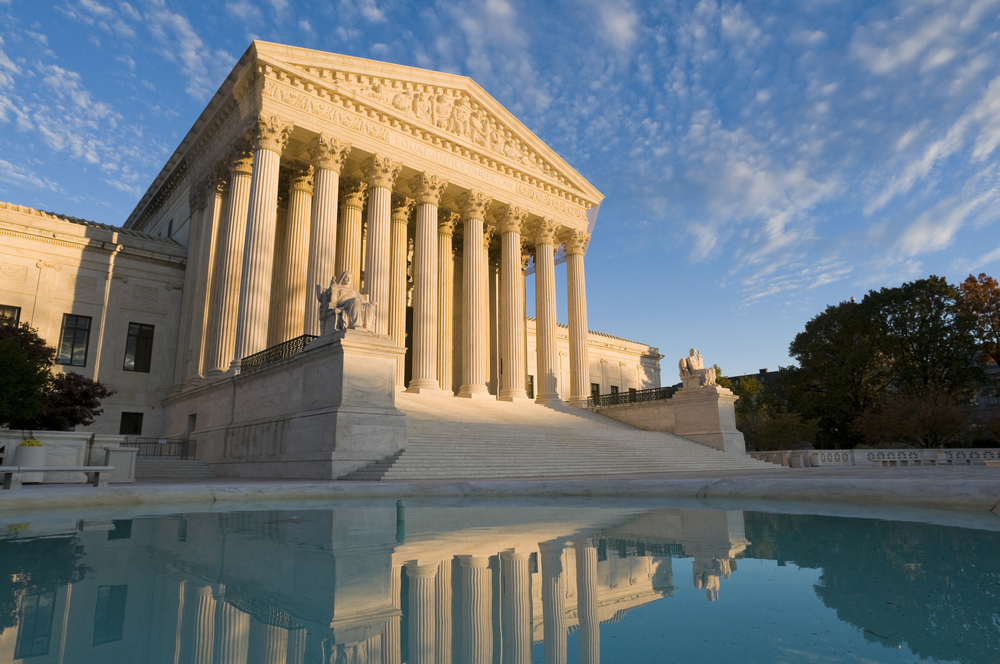
Well, buried at the end of an uneventful year for U.S. Supreme Court Rulings is a little case called West Virginia v. EPA. In 2015, the Environmental Protection Agency (EPA) under the Obama administration wanted to comprehensively regulate “greenhouse gases” at American power plants under the Clean Air Act, so it adopted what it called the “Clean Power Plan rule.” The rule put pressure on dirtier coal power plants to shutter and promoted alternative energy plants. The problem with that is the Clean Air Act had only ever been used to enable the regulation and oversight of individual power-generating facilities; Congress had not authorized the EPA to unilaterally reorganize all power-generating capacity of the United States at the grid level.

After seven years of legislative wrangling, constant litigation, and a couple of presidential administrations, the Supreme Court affirmed that the EPA had indeed exceeded its mandate under the Clean Air Act. The court found that when a “major question” like nationwide energy generation is to be decided, Congress must render its decision directly or clearly authorize an agency to act on its behalf, consistent with the law. Here, Congress had not spoken directly or made such a clear delegation to the EPA to give it such expansive powers, and because it had not, the EPA’s dramatic rulemaking was invalid.

To be clear, the court’s ruling doesn’t suggest that the federal government can’t regulate “greenhouse gases,” but it does make clear that if the federal government is going to regulate them, Congress needs to clearly authorize it. That’s a win for small and accountable government; this ruling preserves the constitutional norms of our republican form of government. Each of the three branches is constrained by the Constitution; new laws must be passed through Congress, not by bureaucratic fiat.

How do you stop out-of-control regulations like this? Ideally, by requiring some form of legislative action for them to continue. Regulatory reform is a dense and oftentimes boring policy area, but if I were to suggest one change consistent with state and federal constitutional divisions of power, I think it’d be appropriate for every regulation enacted by an agency to come with a sunset date. The sunset provision would wipe the regulation clean if not adopted and passed into law by Congress or a legislature. That way, every regulation would eventually have to get an up or down vote by the people’s representatives, or else disappear.

Regardless, the Supreme Court’s finding in West Virginia is an important one that hopefully will remind lawmakers that they alone should be making “the law”—and that they can, and should, be held accountable for both the laws they pass directly and any regulations that descend from the statutes they enact.

The Scooter Ban Revisited (Or Not)

When I wrote about the downtown Saint Louis ban on scooters a few weeks ago, city officials were planning to return them to the streets with new restrictions after about two weeks. That two-week deadline came and went on Monday, June 27. The ban is still in effect in mid-July, and there’s no news on if the aldermen plan to even address the scooter issue any time soon.

Although policy on scooters hasn’t changed in the last month, it has become clearer that scooters weren’t as much to blame for the Saint Louis crime spike as the Post-Dispatch suggested in the article that inspired my first scooter post. An article from the same source on June 27 quoted several downtown business owners and residents who all agreed that although teenagers on scooters may have been a traffic disturbance, the real danger wasn’t young riders disobeying the rules of the road.

The owners of the downtown Insomnia Cookies location have moved closing time to midnight from 3 a.m. and no longer accept cash because of robberies by armed youths. The owner of NAPPS Natural Hair Salon has seen an increase in crime among adults who come downtown to party. Some residents report seeing children who aren’t yet teenagers carrying guns near apartment buildings. Clearly, teens on scooters aren’t the biggest threat to public safety and commerce downtown. The ban on scooters for the last few weeks has been a band-aid solution to what is often literally a bullet-hole problem.

There are changes that should be seriously considered to improve the scooter situation, such as the rider age and speed limit restrictions suggested by rental companies, which I discussed in my prior post. But a complete ban on scooters seems to be putting the cart before the horse. Safety in downtown Saint Louis is a problem with no simple solutions, but aldermen should start by finding a solution to the scooter issue that doesn’t punish law-abiding residents and visitors instead of scapegoating a useful means of public transit.

Municipal Checkbook Project Returns

Four years ago, Show-Me Institute researchers sent Sunshine Law requests across Missouri, asking cities how they were spending their tax dollars. Some of the responses we received were startling, like a $35,000 bill from the city of Battlefield and $25,000 from Hollister to get their spending records. Meanwhile, much larger cities such as Springfield and much smaller cities such as Strafford gave us their records for free.

As it turns out, the ability to produce a city’s “checkbook register” isn’t dependent on city size. In fact, the willingness to share with the public how tax dollars are being spent seems far more likely to hinge on city culture than anything else.

And now with the benefit of some time having passed since our last inquiries of Missouri’s cities, we thought it was appropriate to check in and see how their cultures of transparency were holding up. The good news is spending records are already rolling in from cities across the state; the bad news is that once again, some cities are still giving us the runaround, if they respond at all.

If you don’t see your city yet on the online drive we’ve set up, there’s still the possibility it will appear there eventually; we are receiving new submissions all the time, so stand by for updates. And if you have concerns about how your municipal government is spending money in general, be sure to hit us up. My colleagues and I will be talking about both the positive and negative stories learned from this transparency project over the next few weeks, and if you have local knowledge that you think would be useful to that narrative, we’re all ears.

Missouri Supreme Court Takes Solid Step Toward Greater Transparency

The run-up to the July 4 holiday weekend featured a torrent of positive developments in Jefferson City. We’ve already talked about the planned adoption of a massive income tax reform by the state’s executive and legislative branches. But earlier that week, the state’s judicial branch also broke some good policy news. The public will have extensive access to documents filed in the state’s court system from their own personal electronic devices, starting next year. According to the state supreme court’s press release:

“With the assistance of Missouri’s Court Automation Committee, a statutory entity comprised of members from all three branches of government, the judiciary has been working toward this goal for a number of years,” Chief Justice Paul C. Wilson said. “Today’s orders will ensure court documents that are currently open to the public will be truly accessible to the public. These improvements will fundamentally change the way individuals access public court documents, while balancing the need to protect confidential information and ensure the overall security and reliability of our underlying case management system.”

The rule changes will not go into effect until July 1, 2023, partially due to the constitutionally required waiting period for certain court rules. The waiting period also gives the Court the opportunity to work with The Missouri Bar to educate attorneys, court staff, parties or anyone else offering documents for filing in any Missouri state court to keep unnecessary confidential information out of otherwise public documents and, when confidential information must be included, to redact that information to protect it from disclosure.

Giving the public access to the actual documents filed in Missouri courts may seem like a narrow transparency victory, and in some respects, it is. The average Missourian will probably only take advantage of the new document transparency system a handful of times in their lives; for example, they might want to closely monitor a local court case that may impact their own lives, but may not get the scrutiny or news coverage of higher-profile litigation.

Yet enabling robust oversight of government functions, even if used intermittently at the individual level, is a key good government reform. The purpose of transparency initiatives like this one isn’t to push every Missourian to constantly watch every function of government; ain’t nobody got time for that. But such reforms empower individuals and communities with the opportunity to oversee the governing system that serves them when they do have concerns.

In general, government should have to demonstrate why certain documents can’t automatically be made public rather than require the public to ask first, as is generally required under the state’s Sunshine Law. The state court system’s shift in policy is a positive step in this rethink of what government transparency should really look like.

The Missouri School Rankings Project

UPDATE as of March 12, 2025, MoSchoolRankings.org now has the latest 2023–2024 performance data for every Missouri school and district—plus updated spending data at the district level. See how your school is performing and find out where education dollars are going.

Missouri Has an Education Emergency

Missouri schools are failing to teach the core subjects of reading and math and the most recent test scores show that students are falling further behind.

Missouri’s Department of Secondary and Elementary (MO DESE) has not offered the level of transparency regarding student performance that is necessary to create an education system focused on higher standards, reducing achievement gaps, and results-based accountability.

The status quo is leaving thousands of students behind without the fundamental skills to pursue higher education or compete in the modern labor market.

About the Project

In response to DESE’s failure to perform one of its most basic functions, we launched The Missouri School Rankings Project and MoSchoolRankings.org.

The mission of The Missouri School Rankings Project is to make student performance data more transparent by providing parents, policymakers, educators, and taxpayers with access to easy-to-understand information about every Missouri school and school district in order to motivate actions that will result in dramatic reforms to Missouri’s education system.


Visit MoSchoolRankings.org

Why School-level Data Matters

Parents Need Information to Choose

Parents need accurate information to make informed decisions about which school will best serve their children. MoSchoolRankings.org provides a detailed picture of student performance for each school.

Comparison Reveals Problems and Solutions 

The MoSchoolRankings.org comparison tool allows users to compare student performance from up to 3 schools at a time.

By comparing schools that serve similar student populations, we can identify successful schools and learn from them.

The ability to compare individual schools also allows families who are relocating to make informed decisions about which districts or school boundaries to move into. The comparison tool also highlights that many Missouri families, who are not able to move, are trapped in low-performing schools and districts.

Public Rankings Increase Accountability

Accountability is vital to standards-based education reform. Publicly ranking schools make it more difficult to ignore poorly performing schools and schools whose performance is declining. This attention provides an incentive for all those connected with a school to focus on improving student performance and overall outcomes.

Spending Data

The public sector should make it easy for citizens to see how their money is being spent. The powers that be shouldn’t tailor spending numbers to include some things and exclude others. So we’re providing everything, and users can decide what they consider to be relevant. The entire data set of nearly 500 variables for each district available for download. And the DESE accounting manual can be accessed on the site. Now anyone can see how every dollar was spent in 2021, 2022 and 2023 in each of the 551 public school districts and charter school local education agencies in the state.

The Rankings

Each student performance metric is given a grade of A through F. The grades are combined to produce a grade point average, or GPA. Each school receives a GPA and is then ranked based on that GPA. Information on how grades, GPAs, and ranks are calculated can be found on the Grading Methodology page.

The performance rankings are based on data from the 2018-19 and 2020-2021 school year and are calculated using several performance metrics that measure student performance. These metrics are:

  • Student performance in ELA and mathematics
  • Low-income student performance in ELA and mathematics
  • Student growth in ELA and mathematics
  • A comparison of student performance in ELA and math to each school or district’s expected performance based on its enrollment of economically disadvantaged students
  • 4-year graduation rate
  • ACT scores

If multiple schools or districts had the lowest possible score for an item (for example, if 0 percent of their students scored Proficient or higher in math), then they would share a rank.

Key Terms

Definitions and further explanations of the terms used to determine rankings can be found in the glossary section.

Some key terms to understand while exploring the portal are:

Achievement Levels

  • Below Basic—the student has only a minimal understanding of the material.
  • Basic—the student has a partial understanding of the material.
  • Proficient—the student has an adequate understanding and is able to apply subject matter as defined by the Missouri Learning Standards.
  • Advanced—the student demonstrates a thorough understanding and ability to apply subject matter.

Academic Growth

A statistical model used to identify differences in student academic growth from one year to the next among schools or districts with similar baseline scores.

Adjusted Achievement 

For each school or district, the percentage of low-income enrollment was multiplied by the baseline rate and subtracted from the baseline. The result is the school’s (or district’s) predicted score. If a school’s (or district’s) expected score is higher than its actual score, it underperformed. If a school’s (or district’s) expected score is lower than its actual score, it overperformed.

Comprehensive Support and Improvement (CSI) and Targeted School Improvement (TSI)

Schools with these designations are low-performing schools. 

Additional Information About Districts and Schools Includes:

  • Percent of low-income students
  • Percent of students with disabilities
  • Full-Time Equivalent teachers
  • Average teacher salary
  • Total expenditures
  • Total expenditures per pupil

About the Research

The Missouri School Rankings Project is led by Show-Me Institute’s Director of Research and Education Policy Dr. Susan Pendergrass. Before joining the Show-Me Institute, Susan Pendergrass was Vice President of Research and Evaluation for the National Alliance for Public Charter Schools, where she oversaw data collection and analysis and carried out a rigorous research program. Susan earned a Bachelor of Science degree in Business, with a concentration in Finance, at the University of Colorado in 1983. She earned her Masters in Business Administration at George Washington University, with a concentration in Finance (1992) and a doctorate in public policy from George Mason University, with a concentration in social policy (2002). Susan began researching charter schools with her dissertation on the competitive effects of Massachusetts charter schools. Since then, she has conducted numerous studies on the fiscal impact of school choice legislation. Susan has also taught quantitative methods courses at the Paul H. Nitze School for Advanced International Studies, at Johns Hopkins University, and at the School of Public Policy at George Mason University. Prior to coming to the National Alliance, Susan was a senior policy advisor at the U.S. Department of Education during the Bush administration and a senior research scientist at the National Center for Education Statistics during the Obama administration.

Contact Us about the Project 

Hazelwood, Bankruptcy, and Special Laws

The City of Hazelwood has announced that it is cutting back on the services it provides its residents. In related news, Hazelwood had a starring role in my new paper on special laws in Missouri. Is that a coincidence? Well, no, it isn’t.

Hazelwood’s biggest issue is that it is being held at figurative gunpoint by Robertson Fire District, a taxing district here in St. Louis that could qualify as one of the most obscure taxing districts we have. Robertson Fire District probably should not exist. The City of Hazelwood’s municipal fire department should be providing fire protection services to the entire city, but can’t because of a special law in Missouri that limits the ability of cities in St. Louis County that annex unincorporated areas to provide fire services in those areas.

Cities must pay taxes for the fire district to provide the fire services, which they do less efficiently than municipal fire departments. And it is much easier for fireman’s unions to get control of a fire district than a city government (though they can do that, too.). Anyway, Robertson has significantly raised its property tax rate—a rate that the City of Hazelwood, not just the residents within the fire district, must pay. These expensive bills from the high-spending Robertson Fire District are the primary reason Hazelwood is making the cuts mentioned at the start of this piece, and considering filing bankruptcy. From a Post-Dispatch story on the topic:

Median employee pay in the [Robertson] district was $116,066 in 2021, according to district salary records.

In 2021, the city paid Robertson $4.5. million out of a total budget of $30 million, and that does not include the cost to fund the Hazelwood municipal fire department, which covers other parts of the city.

The Robertson contract requires the city pay any fire district tax exceeding 99 cents for each $100 of assessed value. That cost has ballooned over the years, Hazelwood City Manager Matt Zimmerman told the Post-Dispatch in April. [Author’s note: The current rate is $2.41, much higher than $0.99, although the district claims it is going to lower it.]

This story is an example of a special law that is harming Hazelwood, and other cities, too. Cities within St. Louis County that incorporate or annex new areas should be allowed to provide municipal fire services within those areas. Frankly, Chesterfield should be operating its own city fire department; it could save Chesterfield residents a lot of money.

There is another special law, however, where Hazelwood gets the better end of the deal and uses that special authority to stick it to taxpayers. This law relates to hotel taxes. Hotel taxes within St. Louis County are pooled and used to fund tourism promotion, the downtown dome, and a few other things. The tax rate paid on hotel rooms everywhere in St. Louis City and County is 7.25 percent, on top of the normal sales tax rate. But a few cities (four to be precise, most near Lambert Airport) are allowed to have a hotel tax on top of that rate, and the most egregious one is Hazelwood, with a rate of five percent. The combined sales and hotel tax rate in Hazelwood is over 20 percent, and that is unjustifiable. (The other three cities’ extra hotel tax rates are all under one percent.)

In other words, throughout St. Louis City and County hotel taxes of 7.25 percent fund regional items, but a special law allows Hazelwood to charge an extra five percent to just promote Hazelwood. That needs to be changed and excessive hotel taxes need to be disallowed.

Live by the sword, die by the sword. I fully agree that Hazelwood’s primary financial problem is derived from a harmful special law that needs to be removed (the fire district law), but the legislature also needs to address the hotel tax that benefits Hazelwood unfairly.

I look forward to the Mayor of Hazelwood supporting both changes, not just one of them.


Charter School Students Will Finally Stop Getting Shortchanged

Governor Parson has now signed House Bill (HB) 1552 into law. In signing HB 1552, the governor has acknowledged that some public school students are not worth less than others just because they have chosen a charter school instead of their assigned public school. The Missouri law that addresses charter school funding will no longer have the “glitch” of charter school student state funding being deducted from local school district state funding.

In Kansas City, a large number of students attend charter schools. But because charter school funding comes from the local district’s state funding pool, which is finite, there is effectively a cap. Once the local district ran out of state money, charter school students stopped receiving a full share. This has led to charter school leaders trying to negotiate with Kansas City Public Schools (KCPS) to please dip into their local education revenue to fully fund what charter school students should, by right, be getting in state funding. This will no longer be necessary, as state funding will cover the difference.

More importantly, by fixing this glitch, the legislature and the governor have removed the disincentive to open more charter schools in Kansas City or for existing charter schools to expand and try to move families off waiting lists. I truly believe—and the pandemic has only exacerbated this—that Missouri families want more education options, not fewer. The legislature has been slowly moving in the right direction with Empowerment Scholarship Accounts (ESAs), improving access to the Missouri Course Access (MOCAP) virtual program, and giving parents direct access to federal stimulus money in the form of Close the Gap scholarships. Let’s keep this momentum going.

Support Us

The work of the Show-Me Institute would not be possible without the generous support of people who are inspired by the vision of liberty and free enterprise. We hope you will join our efforts and become a Show-Me Institute sponsor.

Donate
Man on Horse Charging