Columbia Still Making Simple Things Complicated

Columbia city government is taking additional steps toward finally solving a problem of its own making. After rescinding the city’s absurd ban—yes, it really was a ban—on trash roll carts (The horror! A roll cart!) the council is now considering getting rid of the equally ridiculous requirement that residents only use city-approved trash bags with a city logo on them. Requiring the logo prevents you from simply buying trash bags when at the store like everyone else in America does. (Yes, I get that certain stores sold the special bags, but I mean, you know, any store. We’re talking trash bags here, not Rembrandts.)

If Columbia gets rid of the special logo-only trash bag rule (I can’t believe I just typed that phrase), Columbia will be well prepared to do an amazing thing: to collect trash just like most other cities in Missouri do, by having people put the roll cart out on the street once a week and go pick the trash up. It really is that simple. Recycling rules, weight limits on bags, and special days and fees for more/oversized trash can still apply, but watching Columbia make an overly complex mess of its trash system has been painful the past few years. Sure, it’s been a bountiful topic for think-tank pundits like me and radio talk show hosts, but that doesn’t mean it’s good for everyone.

Once it adopts roll carts, Columbia can take the next logical step and contract out the entire trash service to the private sector, just like many other cities already do. Then I can finally stop talking about this issue. (But I probably won’t; I like it too much.)

How Easy Is It to Commute KC without a Car?

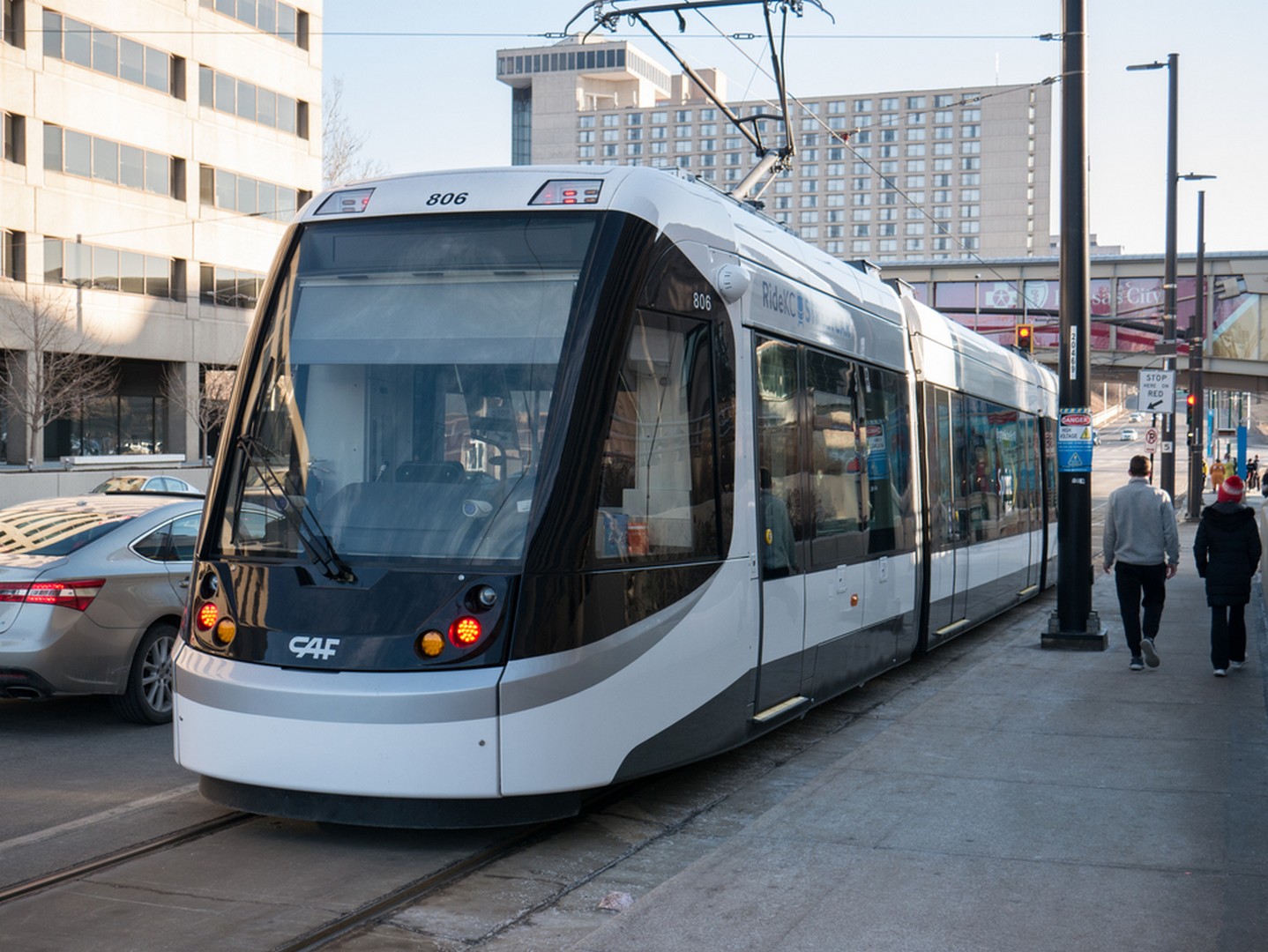
The Kansas City Star has an interesting article out today that looks at something called the “Green Commute Challenge,” a now-14-year-old program that encourages Kansas Citians to take six weeks to use alternative forms of transportation in an effort to be more environmentally conscious. That includes bikes and scooters, of course, but for a city like ours that is now entering the winter months, covered transportation like the city’s buses and streetcar are of the most interest to me. And assessments of the city’s public transit system by regular users present a mixed bag, at best.

In October, RideKC buses served just under one million riders, while the streetcar served around 142,000 riders, according to city data. Less than 3% of workers in Kansas City, and 1% in the metro, use the bus to commute. [Emphasis mine] Earlier this year, Kansas Citians told the Star that there was a lot they love about RideKC, but infrequent or unreliable service and too few routes can make the system difficult to count on.

“It’s really a 50/50 for me,” rider Aaron Griffin told the Star over the summer. “Sometimes it’s good and on time, other times it’s late or early and leaves before it should. Every day is different.”

The article has a lot of really interesting reactions from Challenge participants this fall, and as someone who used public transit heavily at different points in my life, I can relate to many of the cheers and jeers of their transit experiences shared with the Star. Of course, your mileage may vary on the purpose of a “green” initiative like this, but in practice, the challenge also serves as an insight into the challenges that Kansas City’s physical layout can present to people without their own motorized transportation.

From the perspective of affordable housing, which we’ve discussed previously, widely available public transportation can be a mitigating factor to rising apartment and home prices, bridging the space between Kansas Citians and their jobs, their families, and their friends if their affordable housing is comparatively distant. Notably, Kansas City has adopted a zero-fare initiative for its buses that will run through 2023, so one hopes that people on fixed or very limited incomes are able to take that factor into account as the look for housing that meets their financial needs.

But as the article teases out, unreliable transit that’s free is almost as good as no transit at all – especially if it means you can’t get to your place of employment reliably and on time. It goes without saying that if your poorest residents are reliant on a public system that could get them fired because it’s unreliable, that’s a system that needs to be dramatically improved to ensure the buses at least arrive and depart on time.

That also means there remains an economic incentive for even low income Kansas Citians to buy a car of some kind, “green” or not. For good reason: the City of Fountains was and is built around the automobile. Only two other cities in the country have lower traffic volume per lane mile as Kansas City, meaning residents who choose public transit don’t do it to avoid gridlock on the roads that could be caused by private vehicle ownership. That fact also undermines any traffic-busting reasoning around fixed rail projects like the city’s streetcar, which continues to be more of a tourist attraction and an oddity than a practical means of transit for locals.

Whatever the reason one might choose to use KC’s public transit system—whether it’s to “go green,” to save money relative to car ownership, or because it’s one’s only viable transportation option—there remains the question of whether it’s a reasonable option for most people here. While public transit serves as a backstop for poorer residents, it isn’t necessarily a very good one, and its appeal to other potential riders is meager. Indeed, the car is still king in Kansas City, and will be for the foreseeable future.

Welfare Reform or Welfare Expansion?

St. Louis City Mayor Tishaura O. Jones wants St. Louis to join a growing list of American cities that have started experimenting with “guaranteed basic income” programs. Her administration hopes to use $5 million from federal pandemic aid to establish this program and fulfill her promise to tackle poverty.

Welfare programs often create perverse incentives regarding work; recipients don’t look for jobs due to the risk of reaching a level of income that would cause them to lose access to the welfare program. Because of this problem, welfare programs can exacerbate the poverty problem they are intended to fix.

Politicians have floated the idea of a universal basic income (UBI) many times as an antidote to the incentive problems welfare programs tend to create. Andrew Yang made it a prominent plank in his 2020 presidential campaign, promising to give out $1,000 per month to every American adult if elected. Since UBI offers every single person (rich and poor alike) a certain amount of money per month, no strings attached, its proponents argue that it wouldn’t create an incentive against working.

Some free-market economists have argued that the replacement of welfare programs with UBI could reduce the bureaucratic power of government—the state would have less of a say over how people choose to live or spend their money. Charles Murray emphasized replacement as a key feature of UBI implementation:

The first rule is that the basic guaranteed income has to replace everything else — it’s not an add-on. So there’s no more food stamps; there’s no more Medicaid; you just go down the whole list. None of that’s left. The government gives money; other human needs are dealt with by other human beings in the neighborhood, in the community, in the organizations.

For UBI to serve as a tool that helps low-income individuals while increasing government transparency and decreasing state paternalism, it must be accompanied by a complete overhaul of how the welfare state currently functions.

The proposal put forward by the City of St. Louis disregards all of the wisdom stated above. First, the incentive problem that UBI tries to address is mostly ignored in the guaranteed basic income (GBI) program. Recipients of the “free” money must fall at or below a certain mark of the poverty level, which could create an incentive against working. Second, the proposed GBI program would not replace other social welfare programs. A spokesman for Mayor Jones expressed that one of the administration’s priorities is to ensure that the GBI program does not force its recipients off other government benefits, such as food stamps, for fear that it “might leave residents worse off.” In other words, Mayor Jones is not looking to reform the current welfare programs in St. Louis—she is hoping to establish another one.

Additionally, this proposal does not address concerns about the future sustainability of such a program. Mayor Jones proposes using money the city received from the federal government in pandemic aid to pay for the program. Once the $5 million is handed out, how does the city plan to keep funding this program?

If the mayor really wants to help low-income individuals, how about using the $5 million to improve the bus system that has seen massive service cuts in recent years? The reductions in bus lines have negatively affected many low-income individuals who rely on buses to get around St. Louis.

In any case, countless problems accompany the program Mayor Jones proposes. As tends to be the case in public policy, closer attention to incentives and to future financial viability could help the City of St. Louis craft proposals that would better serve the poor of St. Louis.

Hollywood Fever Hits Missouri

As movie and TV production has picked up again following the pandemic, are Missourians becoming sentimental and showing symptoms of Hollywood fever?

Perhaps people are upset that the hit Netflix show Ozark and the Oscar-nominated film Three Billboards Outside Ebbing, Missouri were filmed elsewhere in the United States. Whatever the reason, some Missourians are now deliriously calling for the reinstatement of film tax credits to draw filmmakers to the Show-Me State.

Film tax credits can be summarized as state governments paying a portion (usually about 25-40%) of a filmmaker’s costs in order to attract them to do business in the state. In theory, the economic activity generated by the film production will be enough to offset the cost of taxpayer dollars, providing a positive boost to the economy.

Missouri film credit advocates have repeatedly claimed that Gone Girl made $7.9 million off a $2.36 investment. But this is simply not the case. The $7.9 million was not profit or revenue for the state, but “economic activity” (salaries, hotel rooms, dining, etc.). But even that figure is exaggerated, as most of the newly created jobs funded out-of-state employees and all in-state workers were part-time (most work as extras). Out-of-state production companies like to retain their own workers; the number of Missouri editors, producers, actors, and directors actually declined over the Missouri film-credit era.

Additionally, opportunity cost cannot be ignored. Opportunity cost can be defined as the loss of benefits (time, enjoyment, profit) that could have been received from an alternative strategy. Therefore, when you read articles promoting economic tax credits, you shouldn’t compare supposed “boosts” in economic activity to $0, but to what the same millions of dollars could have produced instead, such as infrastructure, public safety, or tax rebates for Missouri citizens.

Film tax credits will not provide Missouri or its citizens with gains in the long run. Independent studies find that states typically recapture only 8 to 28 cents per dollar spent on film credits. Missouri terminated the film credit program partly due to its economic failures, as the Missouri Department of Economic Development found that the program allowed the government to recapture only 15 cents per dollar spent.

Be careful about the spread of Hollywood fever. Instead of paying for films to come to our state, why don’t we improve our state with those funds so filmmakers will have more reasons to come? That would make our state more attractive for all businesses and citizens, not just Hollywood accountants.

Can We Have Meaningful Dialogue on Pension Reform?

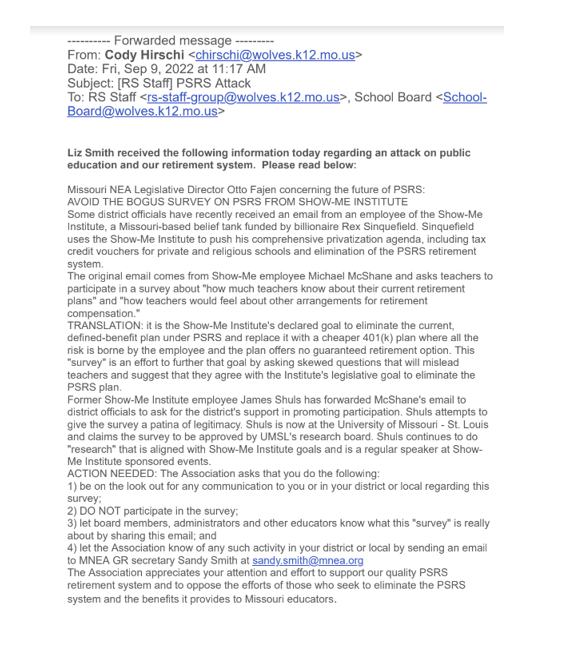
I recently published an op-ed about a curious incident that occurred in September. Out of nowhere, superintendents and educators throughout the state began sounding the alarm about a survey I was allegedly conducting with Mike McShane. The problem, as I wrote in the op-ed, was that the survey was conducted five years ago.

When you write an op-ed, you are often constrained by word count. Newspapers have limited space and often like guest editorials under 600 or 700 words. This means I couldn’t say all the things I wanted to say. In my op-ed, I focused on critical thinking and media literacy. Here, I would like to talk about civility and meaningful dialogue.

I have been writing for the Show-Me Institute for nearly a decade. I began writing about pensions early on. In all that time, I have been invited to debate or discuss ideas with Missouri’s educators exactly zero times. Instead, educators and the leadership of their organizations have attempted to shut down debate. They do this overtly, as in when they send out legislative alerts or emails from superintendents warning teachers to not take my survey, and they do this covertly with the language they use.

Instead of having a debate on the issues of pension reform or even school choice, they suggest I and the Show-Me Institute are enemies who want to “dismantle” the pension system and that we are “privatizers” who want to destroy public education. It’s smart really if the goal is to stifle debate. When you set someone up as your enemy who is out to destroy you, you have little incentive to engage them in a meaningful dialogue.

Dismissing our rivals by name calling and refusing to engage, however, is terrible if you believe the best way to the truth is by discussing and debating ideas.

Like it or not, there are some important policy discussions that we should wrestle with when it comes to Missouri’s teacher pension systems. What should we do about the three separate systems that place St. Louis and Kansas City at a competitive disadvantage? Should we be concerned about the large unfunded liabilities of these systems? Should we care that the systems are designed in a way that favors wealthy school districts and increases inequity?

We cannot have those conversations when one side simply wants to shut down the discussion.

I believe we should engage with the best arguments of our opponents. And I am more than willing to engage with any group of educators who would like to seriously discuss these issues.

Is the Purpose of Education to Prepare Students for Jobs?

What is the purpose of public education? If you agree with Missouri Lt. Governor Mike Kehoe, you’d say the purpose is vocational—to prepare students for the workforce. At a recent event with the Moberly Area Chamber of Commerce, Kehoe praised the local school district for implementing fabrication labs in elementary and middle schools. As reported by the Moberly Monitor, Kehoe claimed, “Workforce development begins in grade school . . . We’ve got to get really good at career counseling, find out where their heart is and let them follow it.”

Let’s forget the last part of that statement, which suggests that the job of adults is to find out where a student’s “heart is and let them follow it.” I might argue that the job of the adult is to steer children into a worthwhile pursuit, understanding that our passions can often lead us astray. Nevertheless, that is not the point I want to make here. The point is, Kehoe is promoting a very specific educational philosophy . . . and it is an educational philosophy that not everyone holds.

Noted professor and philosopher, Mortimer J. Adler, whom William F. Buckley described as “unquestionably the single most prolific educator in America” during the introduction to his 1970 Firing Line appearance, wrote in 1951, “Vocational training is learning for the sake of earning.” On the other hand, Adler also said “School is a place of learning for the sake of learning, not for the sake of earning.” Adler promoted what we call the “liberal” view of schooling. This view, not to be confused with the modern political conception, suggests that the purpose of schooling is to cultivate those skills which are common and necessary for the development of all people. The liberal arts are, according to Adler, “nothing but the skills of learning itself—the skills of reading, writing, speaking, listening, observing, calculating, and measuring.”

Many agree with Adler’s view of the purpose of education:

The aim of education is to cultivate the individual’s capacities for mental growth and moral development; to help him acquire the intellectual and moral virtues required for a good human life, spent publicly in political action or service and privately in noble or honorable use of free time for the creative pursuits of leisure, among which continued learning throughout life is preeminent.

But this view is in contrast with Kehoe’s vision. Learning how to use fabrication tools is itself a useful vocational skill; it is not, however, a universal skill that leads to continuous self-improvement in areas beyond the skill itself. It is vocational, not liberal.

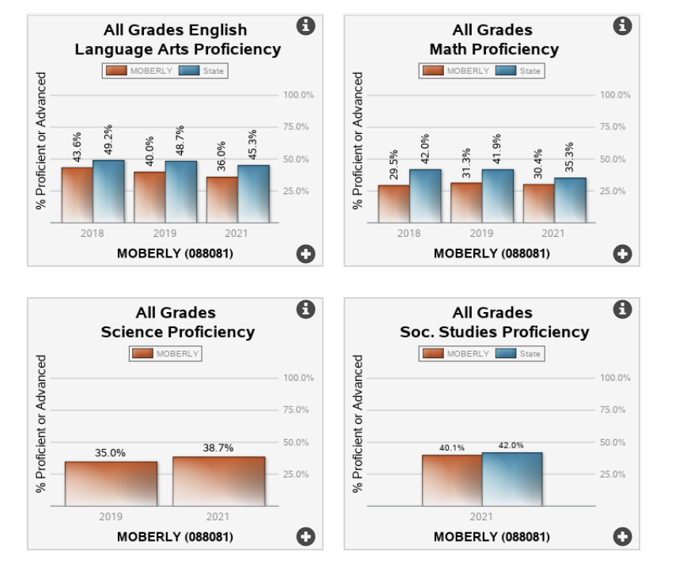
While the lieutenant governor praised the vocational programs in Moberly, the liberal programs do not appear to be going as well. In 2021, little more than one third of students in the Moberly school districts scored proficient or advanced on the state’s language arts exam and fewer than one third did in math. The average ACT score for Moberly students was 18.5, well below state and national averages.

So what do we do about this as a society? We have two very different, competing ideas for what our public schools should be doing. One suggests the purpose, as early as elementary school, is to prepare students for the workforce. The other suggests the purpose of schools is to inculcate those skills and dispositions that lead to a lifetime of learning.

We have two options. We can, as we have done throughout history, allow the ideas to battle it out in the public sphere where the winner takes all by setting the philosophy down in state statutes, standards, and testing regimes that control local public schools. Or we can allow individuals broader access to the schools that align with their vision of a quality education via school choice programs.

School choice programs allow schools that focus on vocational preparation to flourish alongside schools that focus on the liberal arts. These programs allow for minority voices, which may otherwise get shut out in the pugilistic, winner-take-all system, to have an opportunity for the schools they desire.

As someone who tends to subscribe to Adler’s view of education, I wish I could make everyone see the world the way I do. I wish people would realize, as Adler suggests, “Training in the liberal arts is indispensable to making free men out of children. It prepares them for the uses of freedom—the proper employment of free time and the exercise of political power. It prepares them for leisure and for citizenship.” Alas, I don’t have those powers of persuasion. So, in the meantime, I’ll settle for a school choice system that allows such schools to flourish.


The Fireman’s Union Never Stops Never Stopping

In the comedy film “Popstar,” Andy Samberg plays a naïve popstar who can’t accept the reality of his recent musical failures. Because of that naivety, he keeps trying to become a star again despite the odds, with predictable movie success at the end. Overall, it’s a funny movie worth watching.

Less funny are the continuing efforts by the St. Louis City fireman’s union to return to the extremely generous and biased-against-taxpayers pension system of the past. After years of political fighting, the Slay administration successfully revised the fireman’s pension system in 2012. The new plan put control of the fireman’s pension under a board of city appointees— under the old system, the pension was run by the fire department and the union itself. What was wrong with the old system? Well, nobody was watching out for the taxpayer’s interests, and they are the ones who paid for everything.

Ever since those changes were made, the union has been “never stopping” in its efforts to get the old system back. How generous was the old system? Well, the former director of the fireman’s pension system, Vicky Grass (who was subsequently elected to the board of aldermen), received a cash payout of $579,000 when she retired in 2015, on top of her monthly $4,870 monthly pension. That’s $579,000 in taxpayer dollars! What did Ms. Grass think of the changes to the new system?

“The new system is not as good as the one we had,” Grass said.

Well, I would think not if you were enjoying the benefits of the old system.

But the city and taxpayers are not being exploited by the union now, and firemen are still receiving the fair benefits and pension that we all agree they deserve. How much money has city government been able to save with the pension reform? This article from 2015 documents the savings the city experienced shortly after making the pension changes:

The city pays when there is a shortfall. In 2013, the city pumped $20 million into the system. Pension reforms have since reduced the city’s liability. Paul Payne, the city’s budget director, said the city paid $1 million into the system in 2015. And it’s not expected to pay anything in 2016.

Mayor Krewson vetoed the attempt last year to change the pension system back to the old system, and hopefully Mayor Jones will do the same if it comes to that. Honestly, it should not come to that at all, but this is a classic example of a special interest group carrying outsized influence with elected officials—in this case, members of the board of aldermen the union helped put into office in the first place. Controlling pension costs for public employee unions is a key responsibility of local government. The City of St. Louis deserves credit for the reforms it made, and those reforms need to be kept in place.

The School Choice Wave, Fire District Recalls and Saving Federalism

Zach Lawhorn is joined by David Stokes, James Shuls, and Elias Tsapelas to discuss midterm election outcomes, the school choice wave, and how federal spending affects Missouri’s budget.

Listen on Apple Podcasts 

Listen on Stitcher 

Listen on SoundCloud

Support Us

The work of the Show-Me Institute would not be possible without the generous support of people who are inspired by the vision of liberty and free enterprise. We hope you will join our efforts and become a Show-Me Institute sponsor.

Donate
Man on Horse Charging