Let’s Talk About Zoning

Zoning reform is generating a lot of interest around the nation. I think that is great. The debate is primarily being driven by those concerned about housing prices, particularly along our coasts. Not surprisingly, since Missouri has some of America’s most affordable housing, there is less demand for change in Missouri than elsewhere, but that doesn’t mean our state and cities wouldn’t benefit from zoning reforms.

Various ideas are being tried in other states, including eliminating single-family zoning, requiring the allowing of smaller units, and overriding the authority of local zoning boards.  

We have seen efforts to amend zoning recently in Missouri, though in different ways. State government actually took away the authority of local governments to address concentrated animal feeding operations through zoning. In Webster Groves, the city passed an ordinance allowing duplexes in most single-family zoning areas, but residents put that law up for a referendum and it was voted down. As I wrote at the time about the issue of zoning reform in Webster Groves (and elsewhere):

The rubber will meet the road in debates about equality in housing policy when people — including suburban liberals who claim to passionately support more diversity and inclusion — are forced to consider changes that could affect their own home values and community makeup.

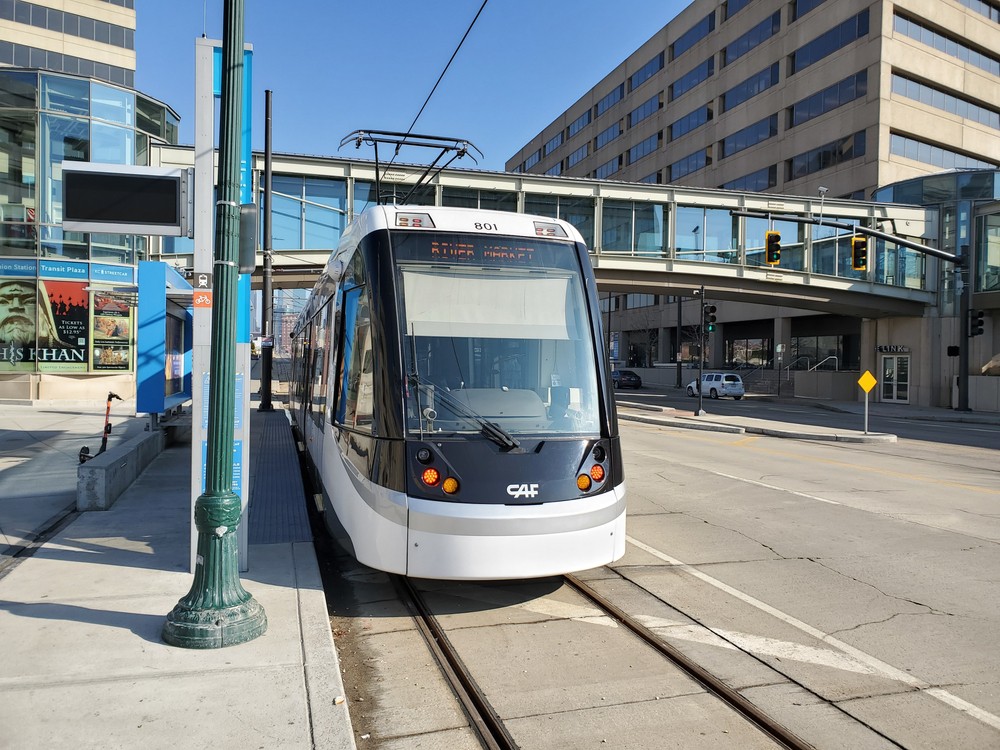
I think the larger questions of zoning reform will eventually come to St. Louis and Kansas City. Right now, our cities and suburbs aggressively mandate lot sizes, setbacks, parking requirements, family limits (homes versus duplexes versus apartments or condos), and much more. The revealed preference of suburban growth is that many people like those policies. I happen to think we should make some adjustments to them.

I understand homeowners’ objections to zoning changes. You make likely the largest investment of your life (your house) under a certain set of rules, and now people want to change the rules on you. I understand the frustration. But strict zoning rules limit people’s ability to use their own property as they see fit, and perhaps more importantly, may create housing shortages that squeeze lower-income residents out of certain markets and raise costs for everyone. That’s a serious tradeoff that homeowners ought to consider.

Until those larger debates happen, what are some zoning reforms Missouri cities and counties could benefit from now?

Those are three ideas worth acting on in St. Louis and Kansas City, and probably other parts of the state.

WATCH: Developer Seeking $60 Million TIF in Osage Beach, Missouri

The Osage Beach TIF Commission will meet on April 17, 2023 regarding the Oasis at Lakeport project. More information here.

Does Tax-Increment Financing Pass the But-For Test in Missouri? Read the full Policy Study: https://bit.ly/3mkuFw8

Nuclear Energy in Modern Missouri

Is nuclear power on the rise in Missouri? House Bill (HB) 225, which just passed through the House, would allow state utility companies to raise consumer rates to pay for the construction of small module nuclear reactors (SMRs). The goal of the bill appears to be spurring nuclear power in Missouri, which has largely been non-existent for decades.

So, what would the bill change?

HB 225 would modify a law passed in 1976 that prevents government-supported utility companies from raising rates to pay for construction of new projects. Specifically, HB 225 would allow only a “clean baseload plant  rated under 600,000 megawatts” to be exempt from the current law. The current ban on raising consumer rates to help pay for construction projects would still apply to traditional nuclear plants (which are rated at over 700,000 megawatts), non-baseload energy sources (such as windmills and solar panels), and fossil fuel plants (which are deemed unclean). A utility company would only be able to raise consumer rates to pay for the construction of (SMRs).

So, what are small modular reactors (SMRs)? How are they different?

SMRs are essentially a smaller, more compact version of a traditional nuclear plant. They are brand new, cutting-edge nuclear technology, and are beginning to be rolled out across the United States—including a new SMR project a stone’s throw away from my hometown in East Tennessee. Although they are less powerful, they improve upon some of the shortcomings of traditional nuclear power plants. First, they take up far less space—the SMR being constructed near my hometown will be the size of a football field. They are less expensive and can be assembled more quickly, as the major components of each SMR are prefabricated (constructed beforehand), meaning they can be manufactured in a factory offsite and shipped to the location. This differs from traditional plants which are much larger and have to be custom designed to fit certain landscapes. SMRs are very versatile—they can increase or decrease output to match energy demand and shore up weaknesses in the power grid. For example, if a huge concert comes to a town in Missouri, an SMR can ramp up energy output to assist the grid. Additionally, SMRs can be grouped together so that if energy demand exceeds the capability of one reactor, another can be paired with the current reactor.

Are these small modular reactors safe? Could they explode and create radioactive waste?

When thinking of nuclear energy, many conjure up images of Chernobyl—the Soviet Union nuclear plant and subject of a recent HBO series—or of nuclear bombs that loomed ominously during the Cold War. However, modern nuclear energy is clean, safe, and efficient. Nuclear fission does not produce greenhouse gas and misconceptions surround nuclear waste. Nuclear waste is reusable and there is only a small amount of it that has to be stored securely. If you took all the nuclear waste ever produced by the United States nuclear industry since the late 1950s, you could dig a ditch 10 yards deep under the dimensions of one football field and store it there. Additionally, a nuclear plant cannot blow up like a nuclear bomb; it is impossible. While a disaster like Fukushima is already unlikely, the design of an SMR (which does not require power to cool a reactor down) makes an accident even less likely.

HB 225 could expand nuclear energy in our state, providing Missourians with additional clean, safe, efficient, and reliable energy, and deserves serious consideration.

Learning From Wisconsin with Will Flanders

Susan Pendergrass speaks with Will Flanders about what Missouri can learn from Wisconsin’s educational choice programs.

Will Flanders is the Research Director at the Wisconsin Institute for Law & Liberty. Together with the education policy team, Dr. Flanders conducts econometric research on the application of WILL’s principles of freedom and liberty to the educational system in Wisconsin. Since joining WILL, he has authored or co-authored reports on the return on investment from charter schools, the effects of Act 10 on the teaching workforce, and the economic benefits of the Milwaukee Parental Choice Program.

Listen on Apple Podcasts 

Listen on Stitcher 

Listen on SoundCloud

Produced By Show-Me Opportunity

Missouri Charter Schools Top the Academic Growth Charts

The first report from the Missouri School Improvement Program 6 (MSIP 6) was released recently, providing data on how each school and district in Missouri performed. Evaluation systems, such as MSIP, typically measure performance and growth. Most of the public conversation is about performance, as we regularly see discussions about the percentage of students who are “proficient” or “advanced.” While performance is a really useful metric, growth is also important. And in the MSIP 6 results, the extremely high growth rates in both math and English/language arts (ELA) for charter school students were notable.

Before delving into the growth results, it is important to understand the applicable terminology. There are two different subgroups for comparing math and ELA scores: “all students” and “selected groups.” All students is self-explanatory, but selected groups are comprised of students that have been historically lower performing—low-income students, Black students, Hispanic students, students with disabilities, and English-language learners.

The latest MSIP 6 results display growth statistics for 1,672 different traditional and charter schools, with charters comprising 57 (or 3.4%) of the total. Despite being such a small percentage of the overall sample, charter schools held at least 20 percent of the top ten, twenty-five, and forty spots in each category.

*KIPP Wisdom Academy STL was #1 in ELA Growth for All and Selected Groups

**Four of the top six were charter schools

***The top three, and four of the top five, were charter schools

While charter schools are greatly overrepresented in the top scorers for all students, they are even more so in selected groups. In areas with historically lower-performing students, charter schools have narrowed some of the traditional gaps. Growth may also be a better measure than absolute performance in some of these areas that have struggled historically. It would be unreasonable to expect schools with many underperforming students to compete with high-performing districts overnight. But growth indicates that things are moving in the right direction and that the gap may eventually disappear.

Opponents of charter schools often point to their performance compared to state averages. Since Missouri’s charter schools predominantly serve higher percentages of disadvantaged students living in St. Louis and Kansas City, these comparisons are not very accurate indicators of charter school quality. In certain circumstances, growth can be a better measure. And, as we can see, charter schools seem to be getting something right on growth that traditional public schools can’t yet match. Charter schools have shown they certainly deserve a place (and an expanded one) in Missouri’s education sphere.


Myth vs. Fact with Ben DeGrow

Susan Pendergrass speaks with Ben DeGrow about some common myths about school choice, the state of education reform in several states, and more.

Ben DeGrow is the Policy Director of Education Choice for ExcelinEd.

Ben worked nearly two decades in state-based public policy, providing expert analysis in school choice, school finance and more. In his time at Colorado’s Independence Institute and Michigan’s Mackinac Center for Public Policy, he led dozens of studies and research project initiatives while also managing or supporting various coalitions to advance student opportunity through greater parental choice. Ben’s classroom experiences include service as a university graduate assistant, high school history teacher and a substitute in Michigan public schools. He earned a Bachelor of Arts degree in history from Hillsdale College, a Master of Arts degree from Penn State University and a Certificate in Education Finance from Georgetown University.

Listen on Apple Podcasts 

Listen on Stitcher 

Listen on SoundCloud

Produced by Show-Me Opportunity

The “Bruno Principle” of School Finance—Don’t Talk About Total Expenditures

What do the Missouri Department of Elementary and Secondary Education (DESE) and most newspaper reporters have in common? They follow the “Bruno Principle” when it comes to spending on debt and facilities for public education—they don’t talk about total expenditures.

Total expenditures include everything it costs to run a school district, from books and salaries to buildings and debt. It is exactly what it sounds like—total expenditures. Try to find this figure for the state on DESE’s website; I doubt you’ll have much luck.

DESE and the newspaper reporters regularly cite Missouri’s or an individual school district’s current expenditures per pupil. Current expenditures are operating expenses that do not include costs for facilities or debt. DESE readily displays these figures on its website and they are the figures you will see repeated in the media. (While you won’t find the total expenditure per pupil figure on DESE’s website, you can calculate  it yourself using DESE data—for 2022 it was $18,683.)

There are good reasons to report current expenditures. For starters, they tell you how much it costs to run the day-to-day business of educating kids in a school district. Moreover, they are more or less consistent over time. Total expenditures may fluctuate when a school district makes a big debt payment or decides to build a new building. Nevertheless, this does not make the total expenditure figure pointless.

Current and total expenditures are each relevant, but they answer different questions. Think of it like this. Can you tell the difference between these two questions:

-How much are your housing costs?

-How much does it cost to run your house?

The first question asks how much you are paying for your mortgage or rent and all of your utilities and incidental costs. The second drops the cost of the housing payment. If I want to know how efficient your home is, I might ask that second question. If you are on a budget and I’m trying to help you make sound financial decisions, I’m going to ask the first question.

In the public discussion about school spending, we are only told by DESE, public school officials, and the media about operating expenditures. Taxpayers care about this, but they want to know where all their dollars are going.

It is time to drop the Bruno Principle. It is time to tell Missourians exactly how much their school districts spend (in total) per pupil.

In the interest of promoting transparency, the Show-Me Institute has created a useful data tool: moschoolrankings.org. The site allows you to compare school districts academically. You can also toggle to look at school district finances. Here, you can see how each school district spends your taxpayer dollars.


DEI Statements, Biggest Budget Yet, and Pot Tax Vote Tuesday

Patrick Ishmael, David Stokes, and Elias Tsapelas join Zach Lawhorn to discuss recent changes to language used in University of Missouri System job listings, the progress of the state budget process, a preview of the upcoming election, and more.

Listen on Apple Podcasts 

Listen on Stitcher 

Listen on SoundCloud


Support Us

The work of the Show-Me Institute would not be possible without the generous support of people who are inspired by the vision of liberty and free enterprise. We hope you will join our efforts and become a Show-Me Institute sponsor.

Donate
Man on Horse Charging