20 Missouri Districts Get the Green Light to Try New Assessment System

New beginnings are in the air in Missouri. Some families are sending their children off to college for the first time. Some students will be starting at a new school very soon. Twenty* Missouri school districts are seeing changes too, as a new adaptive standardized testing system—the Demonstration Project—was just approved for these 20 districts by the State Board of Education effective this school year through the 2025–2026 school year.

*Affton, Branson, Center, Confluence Academies, Fayette, Lebanon, Lee’s Summit, Lewis County, Liberty, Lindbergh, Lonedell, Mehlville, Neosho, Ozark, Parkway, Pattonville, Raymore-Peculiar, Ritenour, Ste. Genevieve, and Shell Knob

The Demonstration Project is a formal trial implemented with the goal of determining whether the Missouri Assessment Project (MAP) (which tests at the end of the year) should be replaced with an individualized and continuous system. I have discussed the details, benefits, and concerns with this project in two previous posts. If this new system sees success, Missouri could try to incorporate it statewide.

What will change for students this year?

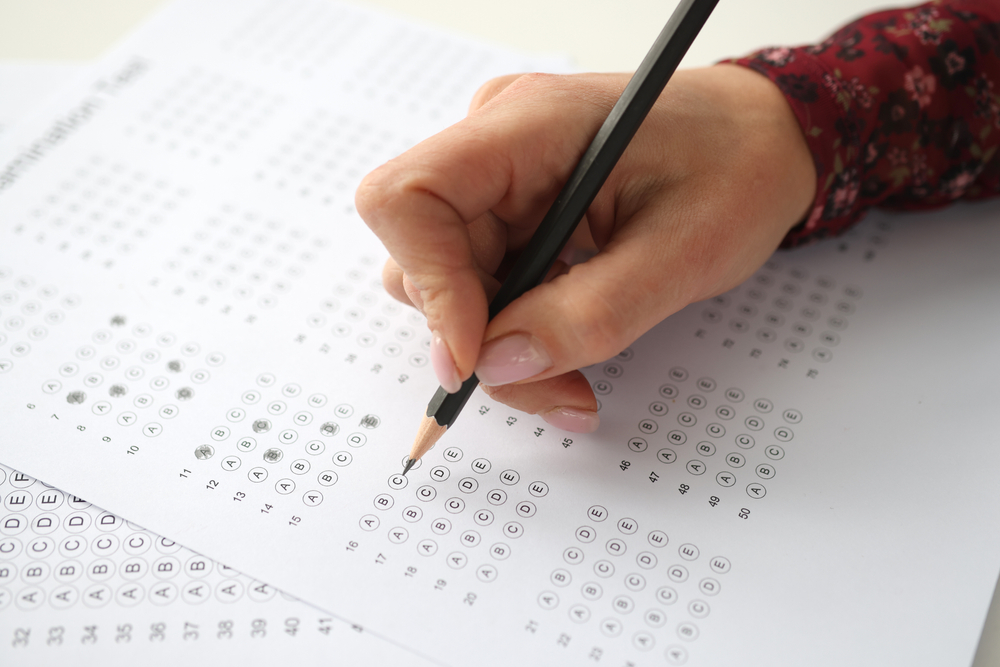
Students in these 20 districts will be tested more frequently—three times in English/language arts (ELA) and three times in math (45 minutes for each subject), and the assessments will be on a computer. Students should know that it is an adaptive test, meaning the test will change in real time based on the responses—if a student misses questions, the test offers easier questions and vice versa. For a test taker, this means one cannot afford to make any careless mistakes. On traditional tests, all questions are weighted equally, so if one accidentally marks bubble C instead of bubble B, it will count as one mistake. However, if one accidentally picks bubble C or carelessly forgets to flip the sign on a negative number, the adaptive test will count it wrong and think the student cannot do harder problems since one of the easier problems was missed. Therefore, students should double check their work, because a careless mistake on the wrong problem can tank their score.

Students in these 20 districts will also take the MAP this year. The federal government mandates that every district in a state participate in a uniform standardized test. The MAP is a federally approved and mandated test, so any exemption from taking the MAP would have to come directly from the federal government. These 20 districts have requested a federal waiver, and we will see whether it is accepted or not.

What will change for parents?

The results of these student assessments will return quickly via an online form, and there will be a detailed breakdown of each student’s strengths and weaknesses (here is an example of adaptive test results). A dashboard will also be designed to report annual performance targets and goals. Page 29 of this report shows a sample dashboard. A parent should be able to access information relating to their district via the dashboard.

Hopefully this new trial will yield success that can help us find better ways to teach and assess our students.

Podcast: Innovation, Education, and Homelessness

David Stokes, James Shuls, and Avery Frank join Zach Lawhorn to discuss “innovation waivers”, the school choice movement internationally, the search for a location for a homeless shelter in St. Louis, and more.

Listen on Apple Podcasts 

Listen on SoundCloud

Produced by Show-Me Opportunity

Pluralism in Education with Ashley Berner

Susan Pendergrass speaks with Ashley Berner about the importance of pluralism in education, how different countries think about pluralism in education, and more.

Dr. Ashley Berner is Director of the Johns Hopkins Institute for Education Policy and Associate Professor of Education. She served previously as the Deputy Director of the CUNY Institute for Education Policy and as an administrator at the Institute for Advanced Studies in Culture, University of Virginia.

Listen on Apple Podcasts 

Listen on SoundCloud

Produced by Show-Me Opportunity

Where Are the Students?

In addition to declining enrollment, public education in Missouri has another serious problem—chronic absenteeism. Schools have been reopened for two years, but many students have not returned to the classroom with consistency. As pointed out in a new study by Thomas Dee of Stanford University, this post-pandemic chronic absenteeism threatens post-pandemic academic recovery.

Chronic absenteeism in this case means missing 10 percent or more of the school year—about 18 days in Missouri. Dee reports that from the school year before the pandemic (2018–19) to the year after (2021–22), Missouri’s chronic absenteeism nearly doubled, from 13 percent to 24 percent. That means nearly one quarter of our students, or just under 200,000 students, missed a potentially damaging number of days of school.

While Dee’s study only includes those two time periods, DESE data indicate that chronic absenteeism had already been on the rise in Missouri.

It’s unclear why absenteeism has been growing in Missouri, but it’s a serious problem. Missing a significant number of days can impact math and reading achievement, social–emotional development, and discipline. It is also associated with an increase in risky behaviors outside of school. Missouri leaders should be addressing this problem as the crisis that it is.

So, What Exactly Should Missouri Do About Property Taxes and Assessments? Part Two

In my prior post about property assessments and taxes in Missouri, I highlighted a few things we can do immediately to address the situation of higher taxes resulting from higher assessments. We can end the Kansas City school district rollback exemptions, end the personal property tax rollback exemption, and require certificates of value everywhere, not just in the most populous counties.

When you freeze assessments (or implement a similar plan), you create distortions in the system that have their own economic consequences. For example, people not taking a job because it would require moving, and moving would result in higher property taxes on a new home. The best way to deal with the problem of trying to reduce tax increases on property owners without creating harmful market distortions is through tax rates. That is what the Hancock Amendment has done with some success over the years.

To start the discussion, If there is one number I would suggest changing, it is the maximum five percent inflation adjustment. That number could be lowered to, perhaps, three percent, to allow for local governments to still address inflation at least in part. Yes, during this period of recent high inflation, lowering the number from five to three percent could affect the bottom lines of taxing agencies (by limiting that portion of their tax rate calculation to below inflation levels), but my interest has never been ensuring that taxing agencies get as much money as they can. My interest is in ensuring that we have a property tax system that funds local government while encouraging economic growth.

Don’t believe this constant canard that we aren’t funding our school districts, cities, etc. Local governments have more money than they know what to do with right now thanks to the various federal stimulus programs and assessment increases. They can all live with a lower inflationary adjustment in their annual rate-setting process just fine this year. If they have to make some budget adjustments, then so be it.

Another thing we should do in the next few years is phase out the personal property tax. Property taxes work best when the thing being taxed is immobile. That means taxing land and buildings, but not taxing cars, boats, and livestock. (Yes, livestock really is taxed.) Missouri taxes personal property more than most other states. Moving property taxes in a revenue-neutral way more toward land and buildings and away from mobile items like cars will create a more stable tax base. Yes, it would shrink the tax base some, which I am generally against, but in this case I think there is strong evidence that it would be a beneficial change.

Next up, what are some of the bigger, more complicated changes we can make to our property tax and assessment system?

Education Finance is a Black Box with Chris Braunlich

Chris Braunlich is the former Co-President and CEO of the Thomas Jefferson Institute for Public Policy, Virginia’s non-partisan public policy foundation. He was appointed by Governor Bob McDonnell to the Virginia State Board of Education, where his colleagues elected him president of the Board.

Listen on Apple Podcasts 

Listen on SoundCloud

Produced by Show-Me Opportunity

Can Missouri Be a Leader in a Nuclear Energy Resurgence?

In my last post, I discussed the ADVANCE Act, which would lower barriers to the construction of advanced modular nuclear reactors across the country. But what about Missouri? While the potential for major changes still depends to some degree on action at the federal level, there are things that can be done closer to home.

First, policymakers here should understand what the future of nuclear power looks like. Even though Georgia just saw the completion of Vogtle Units 3 & 4 (which cost around $30 billion and over a decade to build), Vogtle may well be the swan song for traditional nuclear power plants. It simply is not feasible to construct such an immense project, and this points to the direction nuclear is going—toward advanced and small modular reactors, which I discuss in another post.

Even on a smaller scale, nuclear construction is still immensely costly, and utilities and private entities alike take on a huge financial risk largely due to the regulatory barriers. In Missouri, while we wait for needed federal reform, we should do what we can at the state level to reduce the risks involved with investment in nuclear power.

Does this mean we should hand out subsidies and tax credits like candy? No. But we need to signal our openness to nuclear expansion. Fortunately, our state already has some history with nuclear. The plant in Callaway has been reliably operating in our state since 1984. We also have a nationally known nuclear engineering school; in 2021, Missouri University of Science and Technology awarded the 11th most nuclear engineering degrees in the country. We have the potential to attract more nuclear developers to our state and should be partnering with them.

Seeking out private nuclear developers, forming a nuclear advisory board (which would focus solely on legislative and policy changes/opportunities to address nuclear workforce and education barriers, storage and waste practices, and coordination with federal agencies), and passing pro-nuclear legislation could all help bring more nuclear energy to Missouri. In a future post, I will discuss how Missouri could also lure developers by creating nuclear infrastructure through acquiring early-site permits on brownfield sites or failed construction projects.

In Tennessee, the Tennessee Valley Authority is partnering with GE Hitachi Nuclear Energy (USA), Ontario Power Generation (Canada), and Synthos Green Energy (Poland) to jointly invest $400 million into developing up to four small modular reactors. Advanced nuclear reactors are a new technology, and the fact they are reliable, versatile, clean, and powerful is drawing global interest. Missouri should be similarly proactive in looking for potential partners

Missouri should also improve the regulatory environment so that it does not discourage investment in nuclear power. State utilities cannot raise rates to help pay for construction projects in progress; they must wait until the development is fully operational and used in service. But power plants do not arise out of thin air; they are necessary infrastructure that benefit anyone who uses the energy they produce. My colleague David Stokes has discussed how this law was made by the anti-nuclear lobby in the 1970s to kill nuclear construction in the state—and it has succeeded thus far. Last session, Missouri, through HB 225, wisely sought to allow utilities to file with the Federal Energy Regulatory Commission (prior to the beginning of construction) in order to raise rates to pay (if needed) for small modular reactor projects only. If the newly requested rates are not “just and reasonable,” the commission can renegotiate or deny the proposed increase. This bill flew through the house but failed to gain traction in the Senate (where just about everything died). I understand the concerns with paying for a project that may never come to fruition, and I think adding a refund measure (if the project is cancelled) could help ease the concerns of ratepayers. A refund measure would also give utilities an additional incentive to finish what they started, which would further signal resolve to develop these reactors.

The emergence of small, modular nuclear reactors presents Missouri with a familiar choice: take the initiative or sit on the sidelines. Option B, which seems to be a traditional favorite among policymakers here, would be a costly error.

And Then There Was One

Of the 45 states with charter schools, Missouri is now the only one that doesn’t have suburban, small town, or rural charters. Nationally, over one million students attend suburban charter schools and over 500,000 attend charter schools in small towns and rural areas. In most states, charter schools have become part of the public school fabric, rather than a punishment or intervention for poor performance, as it is for the three urban districts in Missouri that have them. For example, Wisconsin has 90 urban charter schools, 41 suburban charters, and 105 in small towns or rural areas. Similarly, Arkansas has 47 urban, 11 suburban, and 35 small town and rural charters.

Missouri continues to be a holdout on bringing school choice to its 850,000 students. Families have a very limited ability to choose a public school in another district—it usually means having to pay tuition, and suburban and rural charter schools continue to be blocked. Missouri law allows charter schools in any district, but if the district is fully accredited then it must be sponsored by the district school board. This should not be a big deal. Over half of all charter schools nationally are sponsored by district school boards.

It’s surprising that there isn’t a suburban district in Missouri (I’m looking at you, Columbia) with a visionary school board that sees the benefit of bringing in a high-performing charter school to make the district more attractive. No school board has taken advantage of the national Charter School Program that provides planning and implementation seed money to those who want to open a charter school. Most districts in Missouri are experiencing declining enrollment. And yet no district has converted an existing shrinking school to a charter school in order to bring in enrollment from neighboring districts.

Missouri is the Show Me state, and dozens of other states have shown us what works. Why aren’t we doing anything about it?

Cherry-picked Data Can’t Hide the Truth about Missouri’s Workforce

A version of the following commentary appeared in the St. Louis Post-Dispatch.

A couple of weeks ago CNBC released its annual list of the Top States for Business 2023. Missouri was an unimpressive 32nd out of the 50 states plus the District of Columbia. Wondering what pulled us down? Well, this year CNBC decided that workforce quality would get the most weight of the 10 components of the index. And in that category, Missouri ranked 49th. We must not stack up too well against other states when it comes to the percentage of workers with college degrees or even industry credentials. Apparently, we also don’t compete well on the outmigration of educated workers, or on worker training programs, or on worker productivity.

So, imagine my surprise when the governor had a press conference just days later to announce a long list of Missouri’s “top” rankings. On some list we rank first in on-the-job-training. That would be for the number of participants, not quality or outcome, but still. There’s a list out there where we’re ranked second for apprenticeships and one where we are fourth for small-business jobs. The list of rankings is described as “incredible statistics that prove why Missouri is the Show-Me state.” Incredible indeed. Sadly, the governor’s list doesn’t include any source information, so we can’t tell who is saying all these complimentary things about our state.

As someone who follows the Missouri K-12 education system pretty closely, I’m not that surprised by the CNBC ranking. Education in the state is in a downward spiral. Last year, 70 percent of our fourth-graders scored below grade level on a nationally administered test. These children are moving on to the reading-to-learn years, and they haven’t learned to read. Middle school isn’t any more promising. Less than one-quarter of our eighth-graders can do math at grade level, according to the latest (2022) national assessments, and just 28 percent have grade-level reading skills.

When students start high school without having mastered the skills they need to succeed, the effects are predictable. Last year, just 60 percent of our 2022 high school graduates met the Missouri Department of Elementary and Secondary Education’s (DESE’s) criteria for being college or career ready. It’s hard not to feel sorry for the 40 percent who walked across the stage and were handed a diploma even though they were unprepared for the next stage of their lives. Since we’re looking at rankings, did you know that last year Missouri ranked 43rd for the percentage of high school students who took a college-level Advanced Placement (AP) test in high school? We’re not talking about passing an AP exam; only one in five high school students even took one. Also, less than 8 percent of graduating high school students completed the Career and Technical Ed (CTE) certificate program.

What are the consequences of the poor job we’re doing of preparing our students for life after high school? According to the St. Louis Federal Reserve, the percentage of Missourians with bachelor’s or master’s degrees has been declining in recent years. Not by much —just from 31.9 percent for bachelor’s to 31.7—but is that the direction we want it going? There’s a similar trend line for graduate degrees, which had been increasing every year until a couple of years ago, when they began to decline.

We seem to have a workforce problem, and it appears to be getting worse. Our K-12 enrollment has been declining since before the pandemic and will continue to decline based on the size of recent kindergarten classes. And within those smaller groups of students, the percentage of kids who are at grade level is declining. Smaller percentages of smaller high school graduating classes will be ready for the next stage in their lives. We need leaders who are ready to confront those facts and do something about them. The future of the state depends on it.

These leading indicators may signal what’s next for our work force, but it’s not too late to turn things around. States all around Missouri are letting parents pick where their children attend school—public or private—and having state education money follow them. Families in these states can tailor the education of each of their children, even when those needs differ within the same family. Neighboring states are implementing aggressive early literacy programs, with Mississippi being a standout, and rethinking high schools. Innovation and true accountability are happening . . . elsewhere. Meanwhile, Missourians are being handed a cherry-picked list of statistics that we’re supposed to get excited about.

Support Us

The work of the Show-Me Institute would not be possible without the generous support of people who are inspired by the vision of liberty and free enterprise. We hope you will join our efforts and become a Show-Me Institute sponsor.

Donate
Man on Horse Charging