Missouri Would Be a Good Home for a Charter School Incubator

Nashville’s mayor has announced the creation of a charter school incubator to train principals. The center will start out as a nonprofit financed by private donations.

Supporters hope the incubator will teach school leaders about the features of successful charters:

Ideas about common traits shared by good charter schools — longer school days, a strong school culture — have become important training tools as the number of schools expands.

Missouri, with two cities among the top 10 list of cities with highest charter school market share, is home to several charters that principals in training could learn from. Either St. Louis or Kansas City would afford ample opportunities for incubator participants, and would be a good site for an incubator like Nashville’s.

The diversity of Missouri’s charters could make this an especially attractive place to start an incubator. Future principals who want to learn about charter schools in general, rather than one particular “brand” of charter, would be able to study a wide range of schools. Charters here are a mix of elementary schools, middle schools, and high schools, so participants could observe charter classrooms at any grade level. And the Missouri charter market is not dominated by any particular chain of charters. Some charters belong to national chains and some belong to groups of affiliated schools, but there are also charters that stand alone. And still other charters combine common elements with a unique focus; one such charter that comes to mind is City Garden Montessori. This school employs the same educational approach as other Montessori charters, while concentrating on a small geographic area — which most charters don’t do.

If a charter school incubator is established in Missouri, I’m sure its proximity to a variety of excellent charters would be a key selling point. But Missouri’s less-successful charters might be instructive examples for participants, too. If a future principal who wanted to study charters came into a market where every charter was applauded, he might conclude that running a charter is always easy and glamorous. He would be in for a rude surprise if, once he had his own charter to manage, he encountered challenges or didn’t see drastic improvements in student achievement.

Missouri is already in a good position to welcome a charter school incubator, and a few improvements would make it the perfect choice. To be an even more favorable site for an incubator, Missouri could expand charter schooling in these areas:

  • Online charter schools. These would be essential in training anyone who intends to work for a virtual charter, of course. And future principals of brick-and-mortar schools could look to virtual schools for ideas about incorporating technology into the curriculum. They also might want to familiarize themselves with online education in case they eventually decide to expand their schools’ enrollment beyond the classroom walls, like these private schools did.
  • Single-sex charter schools. There are single-sex classrooms within charter schools in Missouri, but no all-girls’ or all-boys’ schools. Single-sex charters are growing more popular in larger markets like New York, and although Missouri probably couldn’t support a dozen of these schools, opening one or two would keep the state on the cutting edge of charter education.
  • Rural and suburban charter schools. Missouri law confines charters to Kansas City and St. Louis. As charters crop up in other states’ suburbs, and as rural districts convert to charters to attract students, educators may expect to find these kinds of schools in a well-rounded market.

State School Board Votes to Close Wellston

The Missouri State School Board voted today to close the Wellston School District. Wellston students will be Normandy students after this school year.

Normandy is only provisionally accredited; its student MAP scores are better than Wellston’s, but not by much. Normandy has shown admirable willingness to accept new students; however, it hasn’t demonstrated that it can provide a significantly better education than Wellston did.

If Wellston students were given a choice, some might wish to attend Normandy, and others would probably prefer other schools. It’s too bad that the board assigned everyone to a single district and did not allow the students and their families to make the decision.

Wellston students are left with one option besides Normandy: They can attend the St. Louis Public Schools’ Virtual School.

Mayor Slay Overestimates Economic Impact of Up in the Air

In this KMOX article from yesterday, Saint Louis Mayor Francis Slay comments about Missouri’s film tax credit program:

They (filmmakers) spent a lot of money, had about a $50-$60 million dollar economic impact on the St. Louis area.

Hold on — $50–$60 million? Where is he getting this figure? Allow me to crunch some numbers and demonstrate that an impact of this magnitude is unrealistic.

In the comment section of my recent post about film tax credits in Missouri, Econdiva provided an estimate that the producers of Up in the Air spent “just shy of $12 million” in the state. I will grant her estimate for the sake of argument, because she worked on the film and is more likely to know this information.

For an economic multiplier, I’ll reference a fiscal note from Louisiana regarding the estimated economic and fiscal impacts of film and video tax incentives (emphasis added):

[T]he current statewide economic multipliers, supplied by the Bureau of Economic Analysis of the U.S. Department of Commerce, for the motion picture and sound recording industries estimate that each dollar of expenditures in those industries generates about 40¢ of earnings throughout the entire economy (a final demand earnings multiplier of 0.3982).

Using this figure, an expenditure of $12 million for Up in the Air would generate only $4.8 million for Missouri’s economy.

Even if Mayor Slay used the January 2009 prediction of $30 million in the Saint Louis Business Journal, the amount generated for the state’s economy would only be $12 million.

Both numbers fall pretty far short of $50–$60 million. This is just wishful thinking.

Healthy Schools in Missouri and D.C.

There’s a bill before the D.C. Council that’s even worse than this one that was proposed during Missouri’s past legislative session. The D.C. bill would mandate 30 or 45 minutes of physical education per day, depending on grade level, and would order schools to buy “minimally-processed” food from local farmers. It would also establish a program to oversee and expand school gardens.

The Missouri bill was rife with nitty-gritty exercise and food regulations, too, but in some ways it wasn’t so bad. It was aimed solely at public school districts, whereas the D.C. bill would burden both districts and charter schools with new rules. And I can say this for the Missouri bill’s litany of caloric requirements: It stayed on the topic of student nutrition without straying off toward fads like school gardens and local food.

The sponsoring D.C. Council member takes a different point of view; she says that the local food her bill is preoccupied with should really be the bread and butter of the school day:

“You don’t work on math scores and say the heck with nutrition,” she said. “It’s not that these are fluff ideas. I don’t see this as something subordinate.”

It’s another case of a policymaker mistakenly assuming that local food and healthy food are one and the same. If a school says “no thanks” to local food preferences, that’s different from saying “to heck with nutrition.” It just means the school is open to buying nutritious food from wherever it’s grown.

Filling the Cavities in Missouri’s Dental Care

[Author’s Note: I incorrectly reported that the agreement with the ADA ended Alaska’s program; it is, in fact, still thriving, and the second class graduated this past week. Thanks to Fiona Brosnan of the ANTHC for this correction. — Caitlin Hartsell]

Oral health is a huge public health issue in Missouri: The state is 47th in the nation for the percentage of the population that visited a dentist last year. The St. Louis Post-Dispatch recently ran an article highlighting the lack of dentists in rural Missouri and its effect upon dental health.

Alaska had a similar dental problem in the tribal areas, which had the worst rates of oral health in the country. Alaskan dental therapists — trained to do most basic dental work, except for oral surgery — became a much-needed solution to the problem. The New York Times ran a story last year about that program:

After two years of training in a program unique to Alaska, Ms. Johnson performs basic dental work like drilling and filling cavities. Some dentists who specialize in public health, noting that 100 million Americans cannot afford adequate dental care, say such training programs should be offered nationwide. But professional dental groups disagree, saying that only dentists, with four years of postcollegiate education, should do work like Ms. Johnson’s.

The American Dental Association (ADA) sued the Alaskan Native Tribal Health Consortium (ANTHC), and they ultimately reached an agreement that essentially ended the program. The ADA argued that dental therapists cannot adequately provide health care. Some groups have argued that there are too many dentists already; this site features a quote from a dentist in Missouri who argues that a dentist is at most an hour from all rural areas.

But, if dentists are so accessible, why are Missouri’s oral health outcomes so low? Cost and access are both issues; even if a person can get to a dentist, they may deem dental services to be too expensive when money is tight. Dental therapists, because they need only two years of training rather than four post-college, are able to provide comparable care at a more affordable rate. Anyone who needs more than basic drilling and cleaning can then be referred to a professional dentist.

Dental therapists have been successful in England, Canada, and Australia at providing quality dental care. Dental therapists in Australia are proving their worth beyond just basic oral health care. A recent study found that 95 percent of restorations done by dental therapists were successful, and patients were satisfied.

Dental therapists provide more than just quality, affordable health care. They also provide jobs, especially in depressed economies in rural areas that have trouble attracting professional dentists on a permanent basis. Unemployment in Missouri, while lower than the national average, is still higher than 9 percent. A change in the law would benefit both those newly employed therapists and their patients, who would have significantly better access to dental care.

The health care reform debate has focused primarily on health insurance. The majority of people who have health insurance, though, still do not have dental coverage. The best way to improve the dental health of Missourians is to lower the cost in order to improve access. Dental therapists provide an economical way to combat tooth decay, and plans to implement training programs in the United States have already been suggested. The only obstacle to their introduction in Missouri — and to subsequent improvement in the oral health of Missourians — is the regulatory barrier of professional licensing.

Obstructing the Will of the People

Here at Show-Me Daily, we have long documented the efforts of the Missouri Municipal League to prevent this state’s citizens from voting on constitutional amendments that would severely limit abuses of eminent domain in this state. For years now, the league (its leadership is made up of elected officials from across the state) has successfully persuaded cities to use your taxpayer dollars in order to help support their effort. Part of that effort has included litigation that the filers claimed to be an attempt to get a “fair” ballot title — but, in reality, it was intended to keep the measure off the ballot entirely by so delaying the signature-gathering process that it would be impossible to collect the necessary number within the limited time available.

Up until a few weeks ago, advocates of eminent domain reform had no real proof that the Municipal League’s lawsuits had this suspected insidious purpose. On Nov. 20, however, at a meeting of the Missouri Bar Association’s Eminent Domain Committee, a managing partner in the law firm representing the Municipal League was asked to give an update on the litigation. She had this to say (audio transcript; emphasis added):

It’s not a real big update, but … um … from the standpoint of the initiative petition, uh, we did partially win, uh, in the … at the trial court level, and it’s on expedited appeal for the western district, um, which will be argued in December, with the main objective being to delay the gathering of signatures and, um, hopefully we’re … we’re accomplishing that.

Missouri Citizens for Property rights, the group spearheading the petition effort, has asked the court for permission to supplement the record with the audio evidence of the attorney’s statement, and should hear today whether the court will agree. If the court chooses to take her statement seriously, it could assign sanctions against her firm for violating the ethical rules (yes, attorneys are supposed to understand ethics) governing the legal profession.

The story has started to gain interest nationwide — as it should. It is yet another example of powerful people trying to prevent ordinary citizens from having their own say on important issues. The AP article has so far been run by media outlets in Atlanta, Phoenix, Washington, D.C., Seattle, Miami, Philadelphia, Minneapolis, and Dayton, Ohio. Here in Missouri, the story has been reported in Kansas City, Springfield, Columbia, Jefferson City, Joplin, Cape Girardeau, and St. Louis — although it is interesting to note that the Ost-Pay Ispatch-Day, for some reason, has not yet covered this story.

Even More on Missouri Film Tax Credits

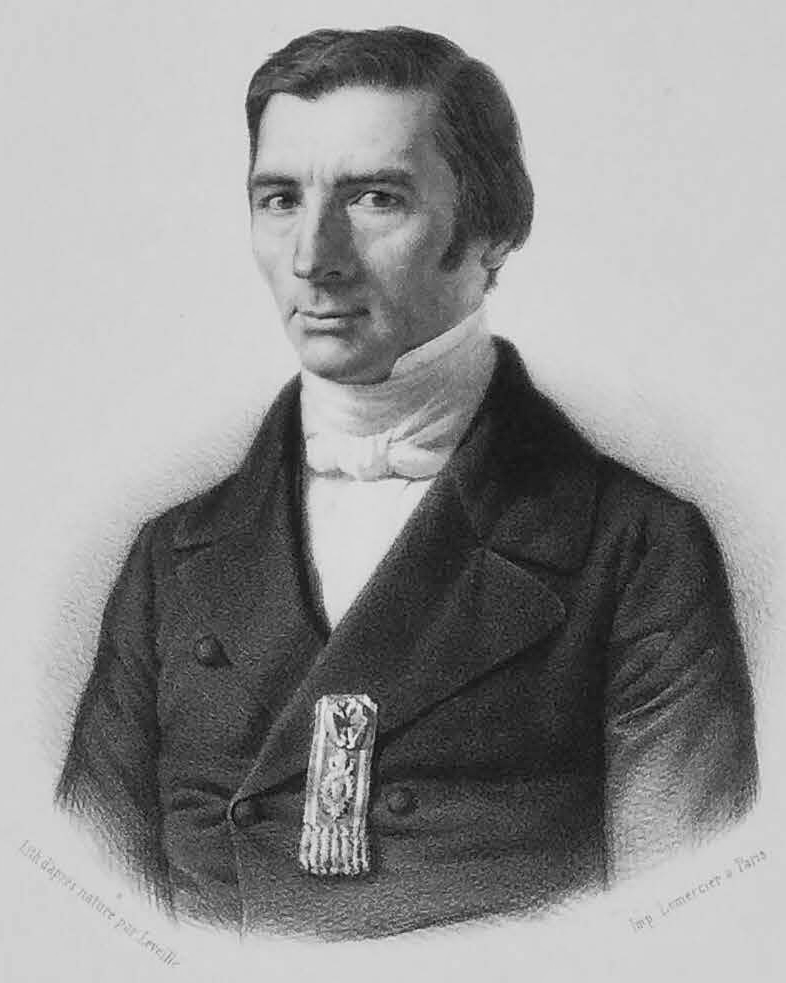
Frédéric Bastiat
Frédéric Bastiat

My recent op-ed against film tax credits was published as a guest commentary in the Columbia Missourian today! As regular readers of this blog will know, it was also discussed by Steve Walsh on MissouriNet and by David Nicklaus on Mound City Money last week.

Over the weekend, I thought a lot about the arguments that were raised in favor of the film tax credit program. I’d like to take this opportunity to respond to them.

(1) The debate over the appropriateness of film tax credits is a natural application of the general principle of the parable of “The Broken Window” by Frédéric Bastiat (1850), which was later developed in Economics in One Lesson by Henry Hazlitt (1946).

I am impressed with the sheer amount of commentary generated by my recent blog posts arguing against film tax credits in Missouri. I have heard from people who worked on the Up In the Air set, professors of film, and representatives of the Missouri Film Commission, among others. In his book Economics in One Lesson, Hazlitt explicitly warns that this will happen (emphasis mine):

The group that would benefit by such policies, having such a direct interest in them, will argue for them plausibly and persistently. It will hire the best buyable minds to devote their whole time to presenting its case. And it will finally either convince the general public that its case is sound, or so befuddle it that clear thinking on the subject becomes next to impossible.

To paraphrase Bastiat and Hazlitt, government should consider ce qu’il voit et ce qu’il ne voit pas au même temps when it is deciding policy. In plain English, this means that it should consider “the big picture” instead of only one group of people when forming policy that affects everyone. Hazlitt thinks that this concept is so important that this is his “one lesson,” further reduced to a single sentence (emphasis mine):

The art of economics consists in looking not merely at the immediate but at the longer effects of any act or policy; it consists in tracing the consequences of that policy not merely for one group but for all groups.

Here’s how this relates to the film tax credit program. If we only consider that which we see, ce qu’on voit, then the tax credit programs are considered to benefit everyone. The recipients of the tax credits do assuredly benefit, as they testify in their commentary (Econdiva provided an estimate that the producers of Up in the Air spent nearly $12 million in the state). Bastiat and Hazlitt warn that it is dangerous to ignore the hidden costs, ce qu’il ne voit pas, that affect everybody. Missouri should not focus solely on the benefits of bringing filmmakers to Missouri and ignore the cost of the program to taxpayers.

While certain public policies would in the long run benefit everybody (e.g., eliminating the earnings tax or commercial property tax surcharges), other policies would benefit one group only at the expense of other groups. Film tax credit programs fall into the latter category. When tax revenue is spent on film productions, taxpayers cannot spend that money in alternative ways, such as education or infrastructure; they face an opportunity cost that is equal to the amount of the subsidy.

(2) There is not enough demand in Missouri for the film industry to exist in Missouri without a considerable level of government assistance.

In their comments, both Cat Cacciatore and Dave Rutherford provided proof of this point — they both travel out of state because there isn’t enough demand for film production work in Missouri (even in today’s status quo, in which we offer a $4.5 million tax credit). If an individual decides to live in a location in which there is not enough demand for him to work full-time, why should the taxpayer have to subsidize his employment?

Let’s say that I am a trained lobster farmer and I choose to relocate to Missouri, which is at a competitive disadvantage for lobster farming because it is very far from the ocean. I have two options: (1) I can petition the government to subsidize my employment; or, (2) I can transfer my knowledge, skills, and abilities to an industry for which there is demand. I believe that the second option is better because it does not burden taxpayers.

Most Missourians work in industries that don’t have targeted tax credits. Their jobs exist because there is enough demand for them. The demand for bakers, babysitters, yoga instructors, doctors, lawyers, and free-market research analysts in Missouri is high enough so that their employers choose to pay for their jobs without government assistance.

Furthermore, if the state stops subsidizing these jobs, then it has more workers available to do other kinds of work. In the comments, Josh Smith notes that:

There is not some fixed “pool of jobs” which can only be expanded by spending tax dollars in the right way. There are many different types and amounts of work that can be done to earn a wage, specialization and trade tend to lead to a more efficient economy.

(3) The $4.5 million applies to state tax revenues, not total expenditures.

I realize that there is some confusion here, and I admit that I should have stated this more clearly in my op-ed. State tax revenues and total expenditures are different numbers. To an out-of-state production crew like Reitman’s, Missouri issues a tax credit to for up to 30 percent of the amount that they spend in state. This means that they get $3 million back if they spend $10 million in Missouri (which they can turn around and sell, because these tax credits are fungible). Given the low multiplier for the film industry (described herein), there is no way that the state would be able to recover that amount of money, whether it be through sales taxes (4.225 percent) or personal income taxes.

(4) These programs do not result in permanent economic activity.

As Sarah Brodsky points out, the purchases cited are single-time expenses (e.g., $30,000 for ice, $185,000 for set dressing items). Few permanent jobs, if any, are created when a filmmaker comes in to the state, works on a film for a finite period of time, and then goes back to California.

Additionally, according to “The Economic Impact of the UK Film Industry,” a 2007 study by Oxford Economics, the film industry has a multiplier of only 2.0. This is lower than the multiplier for the economy average, and indicates that the indirect impacts on employment and output from the film industry are not very far-reaching.

(5) Missouri should leave filmmaking to states that have a comparative advantage in it.

Why is it important that Missouri try to compete in the national or global marketplace in filmmaking? I disagree that states like Missouri should focus on developing industries for which they are at a competitive disadvantage. Missouri would be better off if it focused on the products and services that it produces best (e.g., Budweiser beer, hog farming, mining limestone, manufacturing) and then traded with other states. I agree with Josh Smith that the statement “Other states are doing it, so Missouri should too” is an insufficient reason. He observes:

If other states want to spend their residents’ tax dollars to attract filmmakers, and the result is that Missourians (1) are still able to get the benefits of the product by paying to see the movie (perhaps more cheaply if the tax credits are spent in making the film more affordable, whatever that might mean) and (2) don’t have to spend our tax money to entice the film’s production to locate here then we have a few obvious benefits.

Also, the Michigan economy is in terrible shape! Why would Missouri want to model its tax policies after Michigan’s, even when legislators there are already discussing discontinuing the program? Right now, Michigan has a unemployment rate of 15.3 percent, which is the highest in the country. (By comparison, Missouri’s current unemployment rate is 9.5 percent, which is below the national average of 10 percent). Even before the recession sharpened, Michigan had the highest rate; in September 2008, it was 8.9 percent.

As its comparative advantage, California has more sunlight than the Midwest, which allows for longer shooting hours, as well a variety of landscape types within driving distance, which can stand in for locales around the world. (Remember how Austin Powers remarked, “You know what’s remarkable? That England looks in no way like Southern California!” while driving on an “English” country road in Austin Powers: The Spy Who Shagged Me?)

(6) Subsidized industries have difficulty weaning themselves off government assistance.

When a state coddles an industry that does not have a competitive advantage (a so-called “infant industry”), the industry tends to remain dependent on that aid. Industries that are subsidized are not subject to the same competitive pressures as those that are unsubsidized, and they consequently do not have an incentive to innovate. In “The Case For Free Trade,” Milton and Rose Friedman describe some additional negative implications of these infant industries.

The infant industry argument is a smoke screen. The so-called infants never grow up. Once imposed, tariffs are seldom eliminated. Moreover, the argument is seldom used on behalf of true unborn infants that might conceivably be born and survive if given temporary protection; they have no spokesmen. It is used to justify tariffs for rather aged infants that can mount political pressure.


“I Come From a Country That Raises Corn and Cotton”

Kevin Horrigan confirms my suspicion that the idea for a state dog was thought up by some schoolchildren. Several of Missouri’s symbols had their start as class projects, and the Newfoundland proposal continues that trend.

Besides serving as convenient research topics for fourth graders, state symbols appeal to people in general because of the shared experiences they represent. Politicians have known this for a while. Congressman William D. Vandiver mentioned some features of the state to elicit listeners’ sympathy in his famous speech:

I come from a country that raises corn and cotton, cockleburs and Democrats; and frothy eloquence neither convinces nor satisfies me. I’m from Missouri, and you have got to show me.

Vandiver apparently thought that people would associate those things with the state back in 1899. Clearly, such associations change over time. Cotton is no longer the first thing that comes to mind when people think of Missouri, and our state flower is the white hawthorn, not the cocklebur. Legislators might be more cautious about approving new symbols if they considered how obsolete the symbols may become. Just as no one would call out the cocklebur in a speech today, future fourth graders may laugh about our state invertebrate or dessert.

Support Us

The work of the Show-Me Institute would not be possible without the generous support of people who are inspired by the vision of liberty and free enterprise. We hope you will join our efforts and become a Show-Me Institute sponsor.

Donate
Man on Horse Charging