Missouri’s Film Tax Credit Should Remain Gone

Many Missourians—including myself—took pride in watching Gone Girl on the silver screen. Now with an Oscar nomination to add to the DVD cover, some Missouri lawmakers are attempting to reinstate the film tax credit in an effort to bring even more Oscar-worthy productions to the state.

However, we should not be over-eager in offering handouts to Hollywood. Other than pride, we get little in return. As we have written before, the film tax credit has been ineffective in spurring economic development and leaves Missouri taxpayers to pick up the bill for mega-million-dollar moguls.

The intent of the film tax credit program is to provide initial seed money in an effort to create a sustainable film industry. Yet, despite the fact that Missouri offered a film tax credit for nearly 15 years, the state never became a major hub for film production. In light of this, Missouri’s own Tax Credit Review Commission wrote in their 2010 report that the film tax credit should be cut because it “serves too narrow of an industry and fails to provide a positive return on investment to the state.”

The failure of this program comes from the nature of Hollywood productions. Since nearly 40 states offer similar programs, Hollywood studios can simply wait and see which state will offer the most money for their production. With scarce resources and tight budget constraints, Missouri should not go head to head with states like New York and California on who can hand out more wasteful tax credits.

The success of Gone Girl should not overshadow the fact that the film tax credit program is bad policy for Missouri. If lawmakers are truly determined to bring more economic development to the state, then they should lower taxes for all businesses instead of offering handouts to billion-dollar industries.

For Charter Schools, SLPS Is Marie Antoinette

In Missouri, charter schools do not get money for facilities or transportation. A recent study by researchers from the School Choice Demonstration Project at the University of Arkansas found that, on average, charter schools in Missouri receive $4,682 less per pupil than their district counterparts. Yet, when charter schools seek access to district facilities, they are often told to go eat cake. That is, they are often given unreasonable prices for vacant school buildings.

Marie_Antoinette_by_Joseph_DucreuxRecently, Missouri lawmakers have sought to improve charter school access to school buildings by inserting a provision into a bill that would require school districts to convey unused school buildings to charter schools for a fair-market-value price. This suggestion was immediately scoffed at by the districts, who said they already sell buildings to charter schools.

Today, there are 26 different charter schools in Saint Louis (although some may share a building). Yet, only a few have purchased a building from SLPS. Gateway Science Academies, for example, purchased the Gardenville school. Of course, Gateway had to counter three times and ended up paying asking price, but SLPS did sell the building.

According to records obtained by a Show-Me Institute summer intern, SLPS has 35 empty school buildings, 22 of which are listed for sale. (Look for more on empty school buildings in an upcoming Show-Me Institute essay.)

It is true that in recent years St. Louis Public School officials have eased their opposition to selling school buildings to charter schools. Of course, they had an official policy that forbade the sale of properties to charter schools.

It is clear that charter schools are here to stay. The charter sector has been growing since its inception, and now 29 percent of all public school students in Saint Louis attend charter schools. Allowing public school buildings to remain vacant by making it onerous for charter schools to obtain facilities, while not giving them facilities funding, is simply bad for taxpayers.

So why should public school districts be required to sell, at a reasonable price, public school buildings to public charter schools? Because the taxpayers own the buildings.


The Big Bad Bet

People of goodwill can debate some of the proper functions of government, but I think most of us can agree that gambling with taxpayer money is not one of them. Yet that’s what is happening with this Rams stadium situation. Public officials are betting that a new stadium will be a winner for the region and for taxpayers.

Yesterday, Gov. Nixon announced that Ameren and Terminal Railroad have agreed to make adjustments to their assets (moving power lines and rail lines) so that the proposed new stadium on the riverfront can be built. I guess he thinks that’s good news, and it would be if it was the only thing standing in the way of a private developer wanting to build a new stadium on the riverfront, but that’s not the only thing.

The key ingredient to this project moving forward is that we are going to have to cough up more of our money ($405 million to be exact) to help finance this thing. Now it’s possible that such an investment could be worth the price tag if it will lead to redevelopment of the surrounding area. That’s what the governor believes. What’s the evidence that there will be redevelopment? It didn’t happen when we financed construction of the Edward Jones Dome. Why is this time different?

Gov. Nixon also stressed that if we did nothing, the city and state would lose out on millions in income tax revenue. It’s true, players do pay earnings taxes, but how much more money will we have to spend in order to make sure we still get those income taxes? Overall, will taxpayers see more in added tax revenue than the amount they had to pay in subsidies? It’s possible, but it’s also equally (if not more) likely that taxpayers would lose money. That’s why this whole thing feels like gambling, but at least at the casino you know the odds before you play. That’s not the case here. How much will players’ salaries grow (which influence income tax revenue)? How many people from out of state will visit the region to watch the Rams (this affects how much new sales taxes we get)? These questions and many more will affect the amount of added revenue the region will receive. It’s an awfully big risk to be taking with public money, and honestly we shouldn’t be giving a billionaire (Rams owner Stan Kroenke) taxpayer money on the hope that we MIGHT see a positive return.

Yesterday’s press conference was supposed to be an encouraging sign for those who want to keep the Rams here in Saint Louis. For me, it looked like someone was putting down a big marker on the roulette table with our money on the line. No matter if the project lands in the red or the black, in the end Stan Kroenke is going to be getting green.

Teacher Pensions: Let’s Not Become Illinois

When talking about pension reform, it’s easy to lose sight of the real, human consequences of the decisions policymakers make.

Jessica Canale is an art teacher in North Saint Louis City. She commutes every day from O’Fallon, Illinois. While it might seem like a trivial decision to choose between working on the east or west side of the Mississippi, in actuality, when it comes to the money that will be available when she retires, it matters a great deal.

In January, Dick Ingram, executive director of the Illinois Teachers Retirement System (TRS) explained just how bad Illinois’ fiscal position has become. In order to deliver promised benefits, the state has divided teachers into two categories—Tier I and Tier II.

Tier I teachers will enjoy promised benefits, while Tier II teachers, those hired after 2010, will receive greatly reduced benefits. According to Ingram, “Tier II is designed to help solve the financial problems faced by TRS and the other systems by reducing pension benefits for these new members. Lower pensions means reduced long-term costs for the state.”

But “reducing pension benefits” is an understatement. In order to pay for Tier I pensions, Tier II teachers and administrators will have to contribute 9.4 percent of their salary while only receiving 7 percent toward their retirement. No wonder Jessica would rather commute to Saint Louis than give 2.4 percent of her compensation to older teachers.

But Missouri is not much better. According to the National Council on Teacher Quality, Missouri’s pension plan earned a grade of D-.

In his 2013 policy study on public employee pensions, AEI resident scholar Andrew Biggs called the situation in Missouri a “looming crisis.” Luckily, he offered several suggestions:

  • Promote better accounting, which will show the extent to which plans are underfunded.
  • Attract and retain quality public employees like Jessica by changing existing plan structures to either a defined contribution or a cash balance approach.
  • Give employees more freedom to choose the retirement plan that works for them.

As Show-Me Institute analysts have continuously argued, there are solutions to Missouri’s pension problems. For teachers like Jessica, Missouri has to do better.

How to Ensure Springfield Teachers’ Voices Are Heard

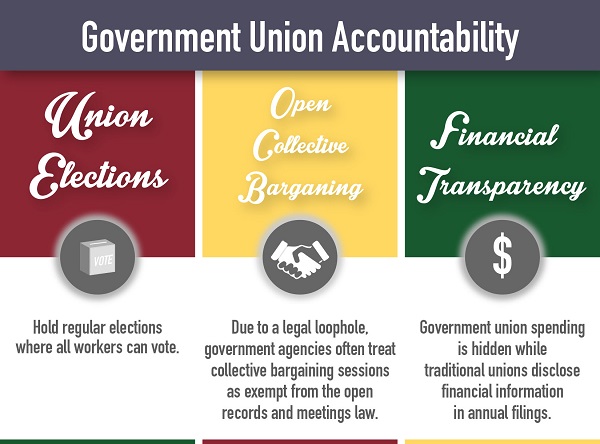
In many school districts, teachers are left out of the collective bargaining process simply because they do not belong to the right teachers association. Recertification elections can give these teachers a voice by requiring an association that acts as the exclusive representative to periodically run for reelection in order to maintain this privileged status.

A good illustration of this problem can be found in Springfield, Missouri. Springfield School District has long had teachers represented by both the Missouri State Teachers Association (MSTA) and the Missouri National Education Association (MNEA). In 2010, MNEA won an election awarding it the privilege to be the exclusive representative for teachers in collective bargaining sessions with the district. This meant that MNEA, and only MNEA, could negotiate with the district on behalf of the teachers.

Your_Vote_Counts_BadgeWhen MNEA excluded nonmembers from discussions on whether to ratify the new union contract, MSTA sued. And lost. As the exclusive representative, MNEA is free to represent workers the way it sees fit. It does not have to include members of a rival union in its deliberation process.

Still, this may not seem very fair to a longtime MSTA member who only recently lost her ability to participate in internal school district politics because of the exclusive representative election. But with recertification elections, her voice can be heard even if her teachers association is not currently the exclusive representative.

With recertification elections, in order for an association to continue to act as the only association able to negotiate on behalf of employees, that association must be re-elected every couple of years. This would prevent an association from winning an election once, and then representing employees for years after the association has lost most of its supporters. It also would empower employees who belong to another association, because the exclusive representative would either have to do a good job of representing everyone’s interests or risk being voted out of office and replaced with a competitor.

Recertification elections are a lot like American democracy where a new party can be put in control of Congress every two years. Congress is by no means a perfect institution, but by requiring our representatives to stand for regular elections, we ensure some level of accountability. Teachers who feel that they don’t have a say in negotiations with their employer, such as MSTA members in Springfield, should clamor for recertification elections. It may be one of the best policy reforms we have that preserves existing rights while empowering workers to hold their representatives accountable.

Show-Me Study Featured in New Book

Tax subsidies for economic development were designed to go to poor areas that actually needed development. But that is not how they are used in Kansas City, Missouri. My colleague Patrick Tuohey and I showed that, in regards to Tax Increment Financing (TIF) in Kansas City, the vast majority of TIFs and other economic development subsidies went to wealthier areas such as Country Club Plaza and the Power & Light District.

resizedimage600395-sobkcfINAL

The folks of the Urban League of Greater Kansas City have included our essay in their new book, Picture of Health: 2015 State of Black Kansas City. They are having a book release party at the Kansas City Public Library-Downtown Central on February 12 at 5:30 p.m. The event promises guest speakers and authors discussing topics such as racial equality. If you’re in the area, consider going. If not, I encourage you to get a copy of the book.

A Tale Full of Power & Light, Signifying Nothing

PowerLight_KCPL

Kansas City leaders want to point to downtown as a great monument to government planning. Look at the revitalization, they say. But given the high cost of the investment and the low return in jobs and businesses, taxpayers should be wary of this so-called success.

We’ve written recently on the premise underlying the investment of downtown and found it lacking. The very notion that those sought-after millennials are moving to urban areas is contested. That they are doing so in Kansas City in any fashion worthy of public cost is demonstrably false. That the city is seeing any financial benefit to the development is likewise risible.

Even the Kansas City Star, which has championed the profligate spending downtown, had to report on the failure:

Nick Benjamin of Cordish, executive director of the Power & Light District, thinks the debt shouldn’t overshadow all the positives, and in other ways the city’s investment has more than paid for itself.

“The point of Power & Light and the city’s investment wasn’t solely for Power & Light,” he said. “It was to revitalize downtown. It’s hard to argue that’s not happening.”

It’s happening? Certainly, the city has paid for very expensive buildings that weren’t there before, but what about this “revitalization”? We wondered if there was any way to justify the expenditures for the Power & Light District based on the number of entertainment venues or jobs or the tax revenue they generated. Given that the city is on the hook for $15 million each year to cover business losses, any increase would have to be substantial. Unfortunately, there appears to be no growth in any of our measures.

According to the city’s Comprehensive Annual Financial Report (CAFR), tax revenue from hotels and restaurants grew 16.56 percent, from 2006 to 2014. According to the inflation calculator at the Federal Reserve Bank of Minneapolis, inflation for that same period was 17 percent—meaning revenue growth from Kansas City hotel and restaurant tax was exactly flat.

In response to a Sunshine Request to the Regulated Industries Division in Kansas City, we learned that from 2007 to 2014 the number of businesses possessing licenses to sell liquor dropped over 13 percent from 870 to 769. Likewise, the number of employee liquor permits, such as those required of bartenders, dropped 7.5 percent from 11,767 to 10,937. In both cases these declines were slow and steady over time.

Kansas City did not get a hockey team or a basketball team out of the downtown development. It did not get a concert venue that it didn’t already have in Kemper. It did not see a net gain in jobs or businesses. It did not see an increase in tax revenue. However, it did get more debt to be paid out of city coffers—meaning less money for roads, parks, and public safety. And the city will be paying that debt for a long time. According to the same Star piece:

Even with a double-digit bump in sales, it’s not nearly what was anticipated in 2004, when consultants projected that new city and state tax revenues paid by the district’s residents and businesses would be able to cover the debt.

“I don’t think there will be a point at any time in the foreseeable future, probably the next 20 years, where it actually pays for itself,” acknowledged City Manager Troy Schulte.

Back in April 2006, the Kansas City Star quoted then-Mayor Kay Barnes:

“We’re going to look like geniuses” in five or 10 years, Barnes said. The city is paying low interest rates for projects that are capable of paying off the debt, she added.

Whoops! If this is genius and the downtown development is a success, it is the sort of genius and success that Kansas City cannot afford.

Illinois Makes Union Fees Voluntary for Government Workers

illYesterday, the governor of Illinois signed an executive order making union fees voluntary for government employees. Government unions are likely to challenge the order, but it is a significant gain for workers who do not want to pay for representation by an association to which they do not belong.

Why doesn’t Missouri follow suit? In our state, government workers, such as police and firefighters, are often required to pay for union activity, whether or not they want to be a member of a union. Many police and firefighters in this situation gladly accept representation by their union and would be happy to pay voluntarily. However, the government should not force workers to pay for services they don’t want.

Sometimes workers end up paying for two unions at the same time. In Saint Louis, the St. Louis Police Officers Association (SLPOA) has mostly represented white police officers, while the Ethical Society of Police has historically acted for African-American police. Recently, SLPOA won a union contract that allowed it to force payments from all rank-and-file officers. This action forced members of the Ethical Society to choose between leaving the employee association that they wanted to represent them or paying dues to two unions at once.

Illinois’ new order is a serious gain for liberty. Missouri could enact similar reforms. Indeed, doing so would protect the rights of police and firefighters who do not want to be forced into paying for the services of a group that they haven’t voted for and don’t want as representatives. For those government workers who protect us, it’s the least we can do.

Tennessee, Wyoming Reject Obamacare’s Medicaid Expansion (Again)

Medicaid is back in the news as pushes to implement Obamacare’s expansion in Tennessee and Wyoming came to a head last week—with both states rejecting the expansion.

First, Tennessee:

Tennessee was widely seen as the next Republican state that could expand Medicaid under Obamacare, with Haslam negotiating with federal officials for months on an approach that included conservative policy elements. But Insure Tennessee always faced significant obstacles in getting legislative approval, and it was killed even though hospitals had agreed to cover the state’s share of the costs.

The 7-4 vote against the plan by the state Senate Health and Welfare Committee came after impassioned testimony on both sides of the debate. The plan has little chance of being revived during the regular legislative session.

The “hospitals will cover the cost” proposal is becoming a common sleight of hand in the realm of conservative Obamacare apologetics. Those costs would be passed on to customers, either directly through their bills or indirectly through their taxes. It’s not free money.

And then there’s Wyoming:

Several senators said Friday they don’t trust federal promises to keep paying. Some said they don’t want to contribute to the national debt by accepting more federal dollars in any case.

“Make no doubt about it, this saddles more debt upon your children and your grandchildren,” said Sen. Larry Hicks, R-Baggs, who voted against the bill.

[Sen. Michael] Von Flatern said that Friday’s vote could make it harder to get expansion in the future because the bill to the state will be higher.

Mr. Hicks is exactly right that the expansion is being funded out of debt, and Mr. Von Flatern is similarly right that the direct costs of the expansion are on the way and will make later expansion fights tougher for Obamacare proponents. Right now supporters are relying on the “no money down” provisions of Medicaid expansion; once that’s gone, then the question of how a state actually pays for the program comes into sharper focus.

Missouri should continue rejecting bad policy like the expansion. It certainly isn’t alone in doing so.

Support Us

The work of the Show-Me Institute would not be possible without the generous support of people who are inspired by the vision of liberty and free enterprise. We hope you will join our efforts and become a Show-Me Institute sponsor.

Donate
Man on Horse Charging