It’s Groundhog Day for the KC Convention Center

Kansas Citians are being told that if we don’t hurry up and subsidize the construction of a new 800-room convention hotel, we will lose out on millions of dollars of convention business. For voters who lived here in 2002, it must seem like the movie Groundhog Day.

2001-Bartle-Hall-expansion-flyer2In 2002, residents of Kansas City were told that if they did not approve a measure to build a 130,000-square-foot addition to Bartle Hall the city would lose millions in convention business. The campaign featured statements from convention managers who said they may have to leave Kansas City. One mailer, available here, included two such statements:

“Ace Hardware will no longer be able to host conventions in Kansas City until the Convention Center is expanded . . .” Ace Hardware Conventions Manager

Taxpayers did vote to expand Bartle Hall, but Ace Hardware’s convention never returned to Kansas City. A second quote in the mailer makes the same point:

“We understand that a 40,000 sq. foot ballroom is being consideredthe city needs to solidify its plans and begin construction as soon as possible to continue meeting our needs. Our continued commitment to Kansas City depends on the City’s plans for expansion . . .” Associate Executive Director, Vocational Industrial Clubs of America (VICA)

A representative for VICA, also known as SkillsUSA, recently told Amy Hawley at KSHB that it left Kansas City last year because of insufficient “hotel space and convention space.” Building a convention hotel now will not meet its needs; the company won’t be back regardless of what the city does with a hotel.

In fact, the 2002 mailer starts off with a statement that is almost identical to the argument being made today:

Current bookings for future conventions is the best indicator of convention and tourism business in Kansas City five to ten years from now. Our future bookings are down dramatically and the reason is clear—without a new ballroom/general assembly meeting room, companies and organizations will continue to pass over Kansas City.

Replace “ballroom/general assembly meeting room” with “convention hotel” and nothing has changed in 13 years. The Bartle Hall expansion failed to be the boon that was hoped for. There is no real reason to expect that a new hotel will increase convention business in Kansas City, especially when it likely will make us one of the most expensive convention cities in the country.

Bad Data In, Bad Policy Out

The Public Policy Research Center at the University of Missouri-St. Louis recently released the report, “An Equity Assessment of the St. Louis Region.” The report concludes that reducing trends in inequality will “build a strong, competitive economy in the decades to come.” This goal is laudable; the narrow approach advocated by the center’s report, however, is suspect. There are numerous aspects of the report’s use of data that are questionable. I will address only a few in this limited space. “Racial and economic inclusion,” states the report, “are the drivers of robust economic growth.” Actually, the preponderance of evidence from years of research shows that education drives economic growth. Education, especially educational attainment and not just years in school, is the single most important empirical factor explaining differences in economic growth across states and countries. In a recent Show-Me Institute essay, I show that Missouri ranks in the lower echelon of states when it comes to educating its children, and it is one of the slowest growing states in the union. If the report were to argue that better education leads to racial and economic inclusion, then I would totally agree. But a policy to reduce inequality by simply imposing greater inclusion is very different than one aimed at increasing educational attainment to achieve the same end. The report asserts that erasing racial income inequality in the Saint Louis region would improve economic output and raise incomes. They estimate that in 2012 the economy would have been over $13 billion larger if there were no racial inequality. But this is tautological. If I earn $20 and you earn $10, doubling your income by definition increases our joint income. The gnarly problem is how to increase your income, and mine as well. If higher income for you is mandated by the government regardless of your skills, this will only redistribute the current economic pie and not improve economic growth in the region. The movement to raise the minimum wage is based on such sophistry. Proponents of raising entry-level wages see only those lucky individuals whose incomes increase while they ignore the workers left behind because their skills are not worth the higher cost to employers. Mandating reduced wage inequality without concern for such harmful distributional outcomes is bad policy. The report measures income inequality using the Gini coefficient, a popular statistical measure of inequality. A Gini of one indicates complete inequality; zero indicates complete equality. The Gini for the Saint Louis region, 0.45, is slightly below the national average, and in the middle when ranked among other metropolitan areas. So, according to this measure, income inequality isn’t that bad in the region. The problem is that the Gini coefficient is well-known to have many flaws. Based on what is reported, the center’s report apparently relies on a Gini coefficient that does not account for the “income” generated by social assistance programs. By not properly accounting for programs that raise the income of lower-income groups, the Gini coefficient is misleading. Moreover, Gini coefficients can change dramatically depending on whether pre- or post-tax income is used in the calculation. Using Gini coefficients that account for these concerns would likely show that income inequality is less pronounced in the Saint Louis region than that indicated in the report. Everyone agrees that economic inequality is an important issue. Before we embark on a series of policy decisions to deal with inequality, however, better analysis than that provided in the UMSL report is needed.

Golden Parachutes for Bureaucrats

NAS PensacolaJoplin Superintendent C. J. Huff announced his retirement last month despite his contract expiring in 2018. A sunshine request from the Joplin Globe revealed the details of the separation agreement.

Superintendent Huff has been credited with helping rebuild the Joplin community after 2011’s devastating tornado. He was the 2013 Missouri Superintendent of the Year and a finalist for National Superintendent of the Year.

That said, the agreement still has some big numbers. Huff will continue to earn his regular paycheck until he retires on June 30. From July 1, 2015, to December 31, 2016, Joplin will pay Huff a total of $262,912.50 in additional compensation. According to the Kansas City Star, “the agreement requires Huff and the district not to criticize each other, and bars Huff from suing the district.” Huff will also receive $50,000 to “assist the new superintendent,” starting in June 2016.

According to the salary schedule for the Joplin Public Schools, a teacher would have to earn a master’s degree and make it to the 26th pay step in order to make $50,000 a year. That is some expensive advice.

This revelation raises a lot of questions. The first, of course, asks, Is this the best use of district funds? Clearly Superintendent Huff was a talented leader, but those 312,000-plus dollars could hire nine new teachers at the starting point on the district’s salary scale.

More than anything, this signals a need for public school finance transparency. A sunshine request from an intrepid reporter shouldn’t be necessary to get these facts into the open. How can taxpayers hold school boards accountable when they don’t even know how their tax dollars are being spent? Watch this video to hear how one legislator feels about public school spending and transparency.


Missouri Stadium Funding Plan Is Bad Policy, Possibly Illegal

Screen shot 2015-05-18 at 1.11.50 PM

In a quest to build a new riverfront stadium to keep the Rams in Saint Louis, some state and local leaders are trying their very hardest to make sure that virtually no one has a vote on the matter. At the state level, the governor plans to issue new debt without any legislative approval. At the local level, the St. Louis Regional Convention and Sports Complex Authority (RSA), which owns the dome, wants to extend city bonds without a public vote. They have sued to overturn an ordinance requiring such a vote.

We’ve already discussed the RSA’s unconvincing arguments against the ordinance requiring a public vote in the city. Summing up the matter:

The lawsuit’s proponents argue that the city’s ordinance is broad and vague, prevents the city from participating in planning and site preparation, and contradicts state statutes. In fact, the ordinance is doing precisely what it is designed to do: prevent the city from using every trick in the book to fund a new stadium without a vote.

At the state level, a group of legislators have sued to prevent the governor from unilaterally extending bonds. They essentially argue that the bonds in question were passed with the express purpose of funding the Edward Jones Dome, not a riverfront stadium. Whatever the courts decide on the issue, a reading of the original statutes certainly makes it seem like they have a case.

Stadium proponents argue that the failure of the state legislature to pass a clarifying law in the last session means this suit is without merit. That argument makes little sense; existing laws do not lose effect when more specific guidelines fail to pass. But stadium proponents go further, impugning the motives of the legislators who filed the suit, essentially claiming they did not care about Saint Louis. Gov. Nixon publicly joked that they hatched the plan at a Chiefs game. And of course, the stadium backers continue to argue what a boon a new stadium will be to Saint Louis. In doing so, they contradict nearly every economist who has ever studied stadium subsidies.

Whatever position one takes on the plan, spending $400 million of public money on an NFL stadium is certainly controversial. It seems only right that Saint Louisans should get to vote on the spending of  the money, as they were promised. It seems only right that the legislature should have to approve more state spending. As to those who are willing to circumvent any democratic roadblock to keep the Rams, perhaps one senator put it best when he said:

What I’m amazed at is that people’s passion for football exceeds their passion for our constitutional form of government and the rule of law. And how they would place their desire to root for their football team above their desire to have government function properly.

The Future of I-70: “Not a Plan, But a Big Idea”

This week in Kansas City, Missouri’s transportation leaders held a meeting concerning the future of I-70. As we’ve discussed many times before, the Missouri Department of Transportation (MoDOT) claims that I-70 will have to rebuild from the ground up, a multibillion-dollar project. Far from having the necessary funds for such an undertaking, MoDOT is in fact facing a funding crisis that might see it cut back on basic highway maintenance.

i-701However, instead of delivering a concrete plan or slate of options for what might be done to improve I-70, Missouri State Highway Commissioner Stephen Miller outlined a grand vision for making I-70 the state’s first smart highway. He expressed a desire to coordinate with the private sector, so as to take advantage of innovative approaches to constructing and funding a new I-70.

Getting private companies and fresh thinking into the MoDOT planning and financing is an excellent idea. The commissioner correctly pointed out that MoDOT’s past experience with planning reform, such as the introduction of design-build contracts, has seen impressive projects come in under budget. And there are many exciting opportunities for adding value to a new I-70 and making efficiencies in its construction. Improved information technology and perhaps even designing a highway with self-driving vehicles in mind might propel I-70 to the forefront of highway design.

However, when it comes to funding highways, Missouri, far from reaching for the future, has been and continues to be a laggard. Open road tolling allows significant value capture from highways, creating a revenue stream for public private partnerships (PPPs) to not only design and build, but also to finance, operate, and maintain modern freeways. These types of toll roads already exist in many states (15 states are already part of one integrated system), including Missouri’s neighbors, but not in Missouri. In fact, Missouri does not even have the enabling legislation for PPPs to rebuild highways. High-occupancy toll (HOT) lanes create revenue streams for the expansion of highways in other states, but not Missouri. Mileage based user fees (MBUFs), another innovative revenue source, is rolling out in Oregon; Missouri has yet to study the possibility.

In redesigning I-70, MoDOT is right to think the private sector can help build a better highway more efficiently. However, Missouri should not lose sight of the fact that modern funding mechanisms already exist in other states and around the world. While having a “smart highway,” whatever that turns out to be, may be great for Missouri, the state does not need to wait on futuristic solutions to fund a much-improved I-70. It really just needs to get with the times.

Another Go at Raising the Minimum Wage?

Mayor Slay of Saint Louis announced that his administration will back a proposal to increase the city’s minimum wage. The proposal is to immediately raise the city’s minimum wage to $10 an hour, a 31 percent increase over the current state minimum of $7.65. Then the wage would be increased by annual increments of $1.25 until it reaches $15 in 2020.

Scholars and analysts at the Show-Me Institute have written extensively on this topic, arguing that raising the minimum wage is not good policy. That is still the case, since the fundamentals of economic theory have not changed.

Instead of reading another installment from me, I’ll defer to Christina Romer, former chair of President Obama’s Council of Economic Advisers. Here is what she wrote in the New York Times about her former boss’s proposal to raise the federal minimum wage back in early 2013.

There is a belief that the lack of competition fosters a lower wage. Romer writes, “I suspect that few people, including economists, find this argument compelling today. Company towns are a thing of the past.” In the end, “Robust competition is a powerful force to ensure that workers are paid what they contribute to their employer’s bottom line.”

Some see using the minimum wage as an anti-poverty tool. “Most arguments for instituting or raising a minimum wage are based on fairness and redistribution,” she notes. But contrary to this view she rightly observes that “It’s precisely because the redistributive effects of a minimum wage are complicated that most economists prefer other ways to help low-income families.” Instead, like anyone else committed to really helping the poor, Romer advocates using the existing tax system. The earned-income tax credit “is very well targeted—the subsidy goes only to poor families—and could easily be made more generous.”

“So where does all this leave us?” she asks. Her reply is that “the economics of the minimum wage are complicated and it is far from obvious what an increase would accomplish.”

What Romer believed in 2013 is still true today, and it applies whether one is talking about federal or city minimum wages. Imposing minimum wages is just bad economics and misguided policy that does not help the most needy.

KC Convention Hotel Estimates Are Notoriously Wrong

Right now, leaders in Kansas City, Missouri, are eager to build a convention hotel downtown. But there is precious little information available. We know that the city has been negotiating for years with developers to build a $300 million 800-room hotel. It appears to be a 50-50 split, with $150 million coming from private investors and the remaining half will be supported by city outlays, tax abatements, and other subsides.

While we wait for hotel cost estimates and earnings projections, it is worth reflecting on previous convention hotel efforts in and around downtown. Hotel consultants have provided inflated estimates in the past.

Overland Park: Projections for their convention hotel were off by about 40 percent. A June 2010 issue of The Pitch published:

Original projections called for Overland Park’s convention hotel to earn more than $110 per available room. Actual number: $67.50.

Kansas City, MO: In 2009, when Kansas City was considering a convention hotel, the hired consultant, HVS, estimated that the average daily rate (ADR) for hotels in Kansas City in 2016 was going to be $162.72. Today it is $121.37, far short of the projection.

Kansas City, KS: The Pitch also reported on the money pit that is the Hilton Garden Inn:

The [Unified Government] hired a consultant to project how much money the hotel would make when it applied for the HUD loan in 1999. The consultant predicted that by 2005 the Hilton Garden Inn would hit $3 million from room revenues alone. Actual financial records show that the hotel has stooped below that $3 million figure. In 2006, the hotel reported only $2.2 million in room revenues. The hotel itself has always operated at a loss, and every independent audit of the hotel project since 2006 has sounded the same warning: The Hilton Garden Inn is a money loser and can’t stay afloat without subsidies from its owners.

It appears earnings projections run about 25-40 percent higher than reality. That is quite a margin of error. As we consider a downtown convention hotel, we must keep in mind that projections are rarely met.

Minimum Wage Increases Not Effective at Fighting Poverty

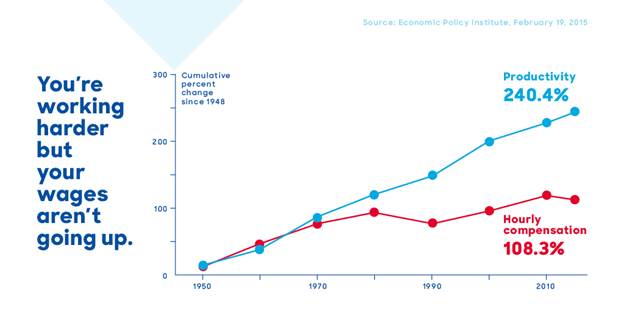
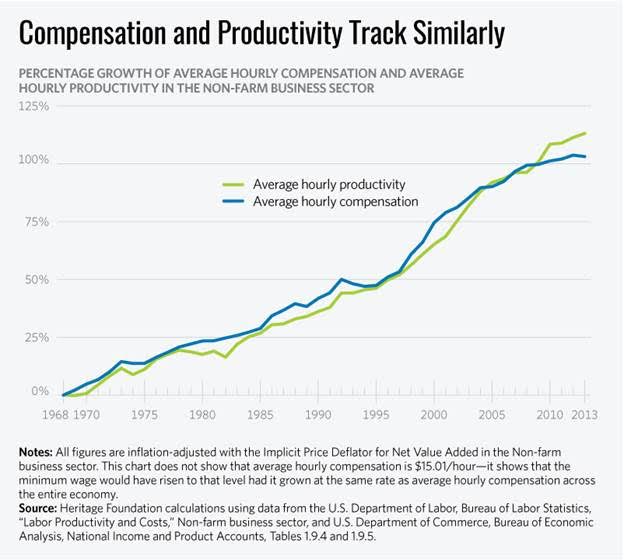
Should Kansas City double the minimum wage from $7.50 to $15 an hour? Local politicians all seem to think so. Councilman Jermaine Reed introduced an ordinance to that effect, and Mayor Sly James has attended a rally in support of the higher wages. Though so far, there is no plan to actually vote on the matter. This is an important issue, and it’s reasonable to look at the likely impacts of the policy before jumping in.

Despite intentions, increases to the minimum wage do not necessarily help the poor. Even Christina Romer, who led President Obama’s Council of Economic Advisors, openly conceded there were questions about “whether a higher minimum wage will achieve better outcomes for the economy and reduce poverty.”

The reasons why are simple. First, most minimum wage earners don’t actually live in poverty. Two-thirds come from households making at or above 150 percent of the poverty line; 44 percent live in households whose income is three times the poverty level. From the viewpoint of earners, raising the minimum wage is a clumsy tool and is more likely to benefit the non-poor than the poor.

Second, the number of people paid the minimum is not especially high. Today, less than 5 percent of hourly workers are paid minimum wage. Among all U.S. workers, minimum wage employees constitute just 3 percent of the American workforce. Not only are relatively few people being paid the minimum technically living in poverty, but relatively few people are being paid the minimum at all. Targeting low-wage workers is not the same as helping low-income families.

Third, and most important, there is a wealth of economic analysis that shows minimum wage laws punish the very people they are supposed to help—making it harder for people with few skills or work experience to find entry-level jobs. The Congressional Budget Office estimated that a national minimum wage increase to $10 per hour would reduce available jobs by 500,000. Doubling the minimum wage in Kansas City from $7.50 to $15 would have even more dramatic results here. The reason for this is simple: As labor costs rise, employers may turn to cheaper technological substitutes, cut employees, or have employees work fewer hours. This trend is already occurring in grocery stores and restaurants.

As workers have to compete for fewer entry-level jobs, those with the fewest skills are left behind. A study by the University of California, San Diego found that increasing the minimum wage reduced the earnings potential of low-skilled workers whom the higher minimum wage was meant to help by limiting job opportunities. These workers need entry-level jobs that enable them to develop skills and gain experience.

As a compassionate people, we are eager to promote policies that help alleviate poverty. We do not succeed by making jobs more scarce, which is what would happen if Kansas City enacted a “living wage.”


Highway Funding: “When You Start Talking $160 Million, There’s an Incentive to Do Something”

State Senators Bob Onder and Joseph Keaveny discussed the results of the 2015 legislative session at a recent Show-Me Institute Policy Breakfast. Highway funding in Missouri was a major topic. The senators expressed a couple of views that are fortunately becoming more and more the consensus among policymakers: 1. Something will have to be done soon, and probably next year; 2. The solution will likely be some type of fuel tax increase or tolling.

Watch the senators handle questions on transportation funding in the video below:

Support Us

The work of the Show-Me Institute would not be possible without the generous support of people who are inspired by the vision of liberty and free enterprise. We hope you will join our efforts and become a Show-Me Institute sponsor.

Donate
Man on Horse Charging