Use This Money: To Build a New Stadium

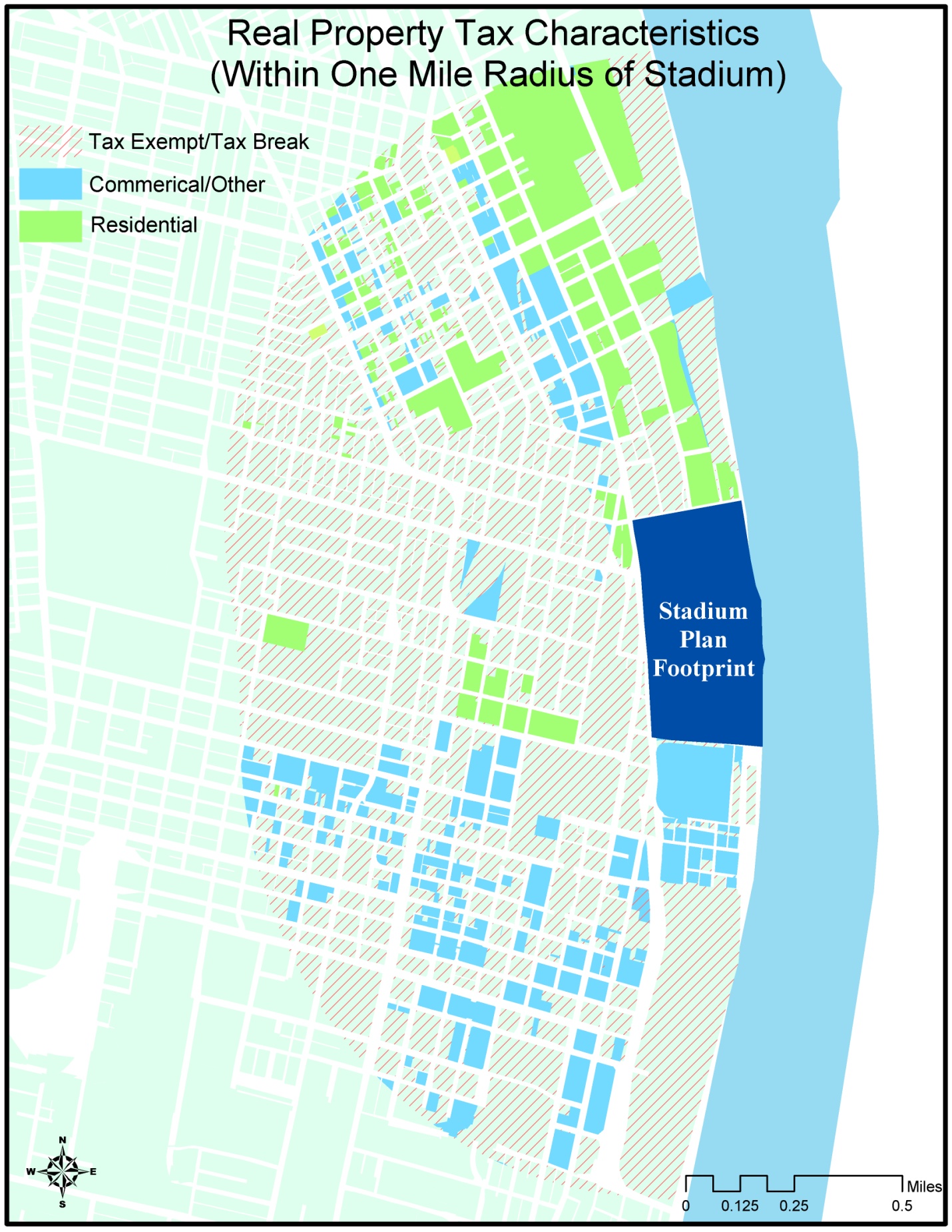
There has been a lot of back and forth about building a new riverfront stadium in Saint Louis. Putting aside for a moment the merits (or lack thereof) of publicly financing a new football stadium, there hasn’t been much said (if anything) on what it would take to privately finance a new stadium. A new report from the NFL can give some idea of how much someone would have to pay.

The NFL report analyzes the market conditions in Saint Louis and its ability to support an NFL franchise. Despite the report finding that Saint Louis fares poorly compared to other cities when it comes to attendance and ability to generate additional support for the team, it still had the ability to generate significant revenues for the team through Personal Seat Licenses and ticket sales. In fact, the report estimates that the sale of Personal Seat Licenses can generate a little over $200 million in revenue.

That’s not nearly enough to finance construction of a new stadium, but it is a start. Whether private investors can receive returns to justify spending a further $700-$800 million is an open question. However, if no private individual or group can find a way to make a profit off a new stadium, why should policymakers think that a new stadium would generate a net gain for taxpayers? Likewise, if the stadium was such a great investment, why bother with any private investment? Let taxpayers reap the whirlwind (if it exists).

This new report from the NFL indicates that there is at least some private money available to build a new stadium. Instead of working on ways to spend even more taxpayer money on stadiums, maybe policymakers should work on convincing private individuals to build a new stadium with their own money.

And the Beat Goes On . . .

The Bureau of Economic Analysis (BEA) recently released its annual report on personal income growth and prices at the state level. The good news is that personal income in Missouri in 2013, the most recent year for which data are available, increased faster than the national average. Unfortunately, a substantial portion of that increase was eaten up by rising prices. Adjusted for inflation, personal income in Missouri increased slower than the national average.

Can’t we just enjoy the fact that income rose? Increases in income unadjusted for price changes—what economists call nominal income—can give a false signal of prosperity. Think of it this way: If your wage doubles, are you better off? If the prices of things you buy haven’t changed, then, yes, you are. But if the prices of goods and services also doubled, your higher wage buys no more than it did before your raise. So we really should compare changes in real personal income—the equivalent to your wage relative to what it can buy—to see if we actually are better off.

The table below reports the 2013 growth rates in real personal income, nominal income, and inflation for the United States, Missouri, and its neighboring states. The percentage change in real income is equal to the difference between nominal income and the rate of inflation. How did Missouri fare when comparing growth in real personal income?

Real personal income in Missouri increased at a 0.5 percent rate in 2013. This reflects the fact that even though nominal income increased at a healthy 2.2 percent rate, prices increased at a 1.7 percent rate. Though Missouri’s nominal income growth exceeded the national average (2.2 vs. 2.0 percent), the fact that the rate of inflation in Missouri was higher than the U.S. average (1.7 vs. 1.2 percent) explains why real personal income in Missouri rose slower than the national average (0.8 percent). This combination of income growth and inflation also explains why Missouri’s increase in real personal income was slower than in four neighboring states, about as fast as in two, and exceeded that for two others. Among the neighboring states, Nebraska was the clear winner, with Kentucky trailing the pack.

The story from the latest data is that while Missouri’s economy continues to grow, the pace of improvement lags the national average and many of its neighbors.

table

The Smallest District in Missouri Has Disappeared

Readers of the Show-Me Institute’s blog may remember me highlighting the tiny school district of Gorin R-III. With just 19 students, Gorin was the smallest district in Missouri and spent more per pupil than any other school district in the state, $26,821. Gorin will no longer have either of these titles in the 2015–16 school year, because the district no longer exists.

Unbeknownst to me until yesterday, voters in the Gorin School District approved a plan to be annexed by the Scotland County R-I School District. The vote was 49 in favor, 13 against. (Those are the actual votes, not percentages.)

Gorin voters made the right move, and they will immediately see the benefits. For starters, the property tax levy for schools in Gorin was $4.3744 per $100 of assessed valuation. Residents will now be taxed at the $3.36 rate of the Scotland County School District. Undoubtedly, students will receive a wider variety of educational options than before.

While I applaud the move by the voters of the Gorin School District, Missouri still has a glut of small school districts. 

2014-15 Student Enrollment Number of Districts
Fewer than 100 46
100 – 199 59
200 – 350 86
   
Total with 350 or fewer students 191


Of these, just 50 raised more than half of their funding through local sources. By and large, small school districts are expensive to operate and require a lot of financial support from the state.

Previously on the blog, I’ve asked, “Is school consolidation an issue of local control?” Whether you believe that it is or you believe that small schools should be consolidated by the state, maybe we can agree on one thing—state taxpayers should not be forced to pay extra for the decisions of small school districts. Currently, school districts with fewer than 350 students are guaranteed a specific amount of money. Remove this hold-harmless provision and chances are we’d see more districts like Gorin making a wise decision to consolidate. 

Governor Signs SB 5 into Law

On Thursday, the governor signed Senate Bill 5 into law, reducing the extent to which municipalities can rely on fines and fees to fund themselves. The bill would:

…within two years, bring down the total amount of general revenue a city could receive from fines and fees to 10 percent, excluding smaller cities outside of populous counties like Saint Louis. The bill makes it clear that any amended traffic fines would count toward that percentage. Furthermore, fines collected on Missouri interstates in excess of 5 percent of general revenue would also not be able to be collected by municipalities. As for enforcement, the bill makes it clear that municipalities have to provide an annual addendum to the state auditor regarding its compliance with the measure. Failure to comply triggers a vote for municipal disincorporation…

As we’ve argued before, these measures will disincentivize the use of local police and courts as tax collection agencies. They will also encourage limited government and inter-city service coordination. That’s good news for Saint Louis County and the state as whole. 

McKee Wants to Flip Northside Properties at Taxpayers’ Expense

As we discussed recently, the city of Saint Louis is looking to buy back land it sold to Paul McKee’s Northside Redevelopment Corporation a few years ago. The city sold publicly owned property cheap (and the state reimbursed much of the cost of private land), with the hope that Northside would follow through on an extensive redevelopment of North Saint Louis City. No such redevelopment has taken place, and the city now wants to buy back the land to give to the National Geospatial-Intelligence Agency, with the hopes of keeping the agency within city limits.

When we discussed the buyback plans last week, we asked whether the city would be able to buy back the land at the price they sold it for, or whether McKee would profit. Now, shockingly, we are learning that McKee indeed intends to profit. The developer expects to receive $17 million for land that he bought for $3 million. That’s a gain of more than 400 percent.

There’s nothing wrong with a developer buying land from the city and selling it back for a profit if the city decides it needs the property back. But in this case, Northside did not just buy land at a fair price; the city sold it a large number of properties at fire sale prices, and the state reimbursed most of the cost of the private land McKee bought. Northside then failed to pay property taxes on nearly all that land. All this special treatment and public support was supposed to come in exchange for new property and business developments, none of which have happened. Far from a property owner getting lucky from a change in government policy, McKee is expecting to profit from a city policy he helped create and for whose failure he is responsible.

The city has not yet decided whether it will pay the price McKee is asking. If it does, I think state taxpayers should be asking if they get back the $3.5 million in state tax credits McKee received to buy those properties. As for the city, I’d sarcastically ask where eminent domain is when you need it. 

An $11 Minimum Wage Will Still Cost Jobs

Many sci-fi fans would be familiar with one of the key parts of the British science fiction show Dr. Who, regeneration. Whenever the actor playing the Doctor decides to leave the show, the producers have the Doctor regenerate so a new actor can step in and play the role. However, no matter how many times the Doctor regenerates, it’s still the same character. Looking at the proposal to raise the minimum wage in Saint Louis, a Whovian can get a sense of déjà vu.

On Thursday, Mayor Slay announced his support for a compromise proposal. This new proposal would raise the minimum wage to $11 per hour by 2020 instead of $15. Like the original proposal, it exempts small businesses, but it also exempts in-home health care workers and nursing home workers whose services are paid for by Medicare and Medicaid.

While $11 an hour is less than $15 an hour, it will still cost jobs. The Congressional Budget Office (CBO) studied the effects of an increase in the federal minimum wage to $9.00 an hour and $10.10 an hour. In both scenarios, the CBO found that increasing the minimum wage would cost jobs. An $11 minimum wage in 2020 is slightly less harmful than a $10.10 minimum wage today and more harmful than what $9.00 an hour is now. That means this proposal will still harm employment. This harm especially would be felt in Saint Louis City, since businesses can hop across the county line to avoid having to pay the higher wage.

Seeking higher wages for low-income workers is a noble sentiment, but government mandates are not the way to go about it. This proposal, while less harmful than before, will still EXTERMINATE jobs and hurt those it means to help.

How the Convention Hotel Could Drain the General Fund

The Kansas City Business Journal recently published a piece about the proposed catering contract with the Hyatt Convention Hotel. In the story, Brownie Simpson of Kansas City Catering and Steve Shalit of the Westin and Sheraton hotels at Crown Center spoke about the deal.

The pair also expressed concern that the revenue generated from the catering rights arrangement wouldn’t meet the city’s projection of $30 million a year. Even if lack of competition increases prices, Shalit said, the two areas may generate only $17 million in revenue. The Business Journal reported that if gross revenue generated from the catering rights agreement is insufficient to make the scheduled fee payment, the city will have to pay the shortfall from “any legally available” city funds.

This matches other reporting which claims that Kansas City would have to almost double their convention business in order to make the proposed convention hotel work financially.

Right now, caterers pay a fee of 18 percent of their revenue to Bartle Hall for the right to be able to work at the convention center. That amounts to $2.2 million a year and is used to pay off Bartle Hall’s bonds, plus maintenance, operations, and the like.

In the proposed deal being considered by city leaders, Kansas City has guaranteed payments to Hyatt of just over $62 million for 15 years, or about $4.1 million a year. Here’s how that would work: The Hyatt will still pay a catering fee of about 18 percent to Bartle Hall. Bartle Hall will keep 4 percent to service their bonds and provide maintenance, etc., and return 14 percent to the Hyatt to cover the city’s 15-year, $62 million catering commitment.

In order for the project to generate the $4.1 million, Hyatt would have to conduct $30 million in catering each year. (Fourteen percent of $30 million is $4.1 million.) In any year that Hyatt does not reach $30 million in catering, the city would have to make up the difference. Currently, the catering business for Bartle Hall is about $12-15 million each year. If it were to remain at that level, under the new agreement the city would be paying Hyatt $2 million a year to make up the difference, as 14 percent of $15 million is $2.1 million$2 million under the $4.1 million commitment.

The city’s argument that a convention hotel and catering agreement won’t drain the general fund assumes that catering business will double. If it doesn’t double, the general fund will have to support not only the catering agreement with Hyatt, but probably Bartle Hall, as it’s unlikely that their portion of the catering fee is sufficient to service bonds and maintain the property. (The agreement with Hyatt also states, “City will maintain the existing Convention Center to its current standards.”)

“City will maintain the existing Convention Center to its current standards – See more at: https://showmeinstitute.org/blog/local-government/convention-hotels-tax-breaks-and-gimmes#sthash.iTyZkjY2.dpuf
The “City will maintain the existing Convention Center to its current standards. . . .” Isn’t this exactly what the city failed to do with Kemper Arena? – See more at: https://showmeinstitute.org/blog/local-government/convention-hotels-tax-breaks-and-gimmes#sthash.iTyZkjY2.dpuf

No one is promising that building a new 800-room hotel will double business, either in room nights or catering. They would be laughed out of the room if they did. (The deal might actually cost Kansas City business.) But all the financing models make the assumption that business will double. Taxpayers and city leaders have to decide if that is a reasonable gamble.

Half-Million-Dollar Cash Payout Shows Why Public Pension Reforms Are Necessary

The former director of Saint Louis City’s firefighters’ pension system, Vicky Grass, took home a $579,210 payment this summer when she retired at the age of 63. This is in addition to the regular $4,870 pension check she will be receiving each month. While this is no doubt good news for her and her family, it’s an illustration of the sort of excess we often find in public pension systems.

Retirement packages like this are unheard of in the private sector. This is because the market usually will not allow for them. Looking at Grass’s windfall, it’s important to remember a few things:

  1. Grass is cashing in on a system put in place by elected officials. We may feel that Grass is personally ripping us off, but the system was set up through the political process. Grass is simply one lucky beneficiary of a system put in place years ago.
  2. Public pension obligations pose a serious threat to Missouri government finances. The Show-Me Institute’s study on Missouri’s pension systems shows that these systems are often seriously underfunded. Day-to-day government waste is a problem, but when you see municipal bankruptcies, like in Stockton and San Bernardino, the bloated pension systems are usually the key factor in the city’s insolvency.
  3. As the Show-Me Institute’s recent study on the legal options for reforming Missouri pensions shows, once the public is on the hook for retirement obligations like this, it can be very difficult to fix things. Courts often treat pension obligations as contractual obligations protected by the U.S. Constitution. As a taxpayer, this means you can be stuck paying for a sweetheart deal agreed to years before you could even vote.

In order to avoid unfair and unsustainable public compensation schemes, we must vigilantly watch over the agreements entered into by public officials. We need to insist on transparency in public affairs and demand public retirement systems that do not unfairly burden the taxpayer.

Support Us

The work of the Show-Me Institute would not be possible without the generous support of people who are inspired by the vision of liberty and free enterprise. We hope you will join our efforts and become a Show-Me Institute sponsor.

Donate
Man on Horse Charging