
No Child Left Behind the Times

Technology has given us some amazing things over the years, but you don’t see people using VHS and cassette tapes today. Times are changing, and if something better is available, why should we be stuck in the past? Much like cassette tapes, the federal government’s role in education needs an update.

Last month, Missouri’s No Child Left Behind (NCLB) waiver was extended to the 2017-18 school year. In exchange for adopting administration-favored policies such as teacher equity plans, Missouri will receive relief from the accountability decree, “All children will be proficient by 2014.”

In 2012 the Education Department began issuing waivers as more and more states failed to hit the “adequate yearly progress” targets set forth in NCLB. Since then, 42 states, the District of Columbia, and Puerto Rico have received waivers.

Until Congress passes a new law, NCLB will ensure that students remain victims of the federal government’s failing status quo. The School Superintendents Association represented more than 10,000 school administrators across the United States saying the law contained federal overreach and unworkable mandates and requirements.

When more than 80 percent of the participants of the program are granted explicit permission to waive penalties, there must be some call for change.

In April, the Senate Education Committee voted unanimously in favor of a bill to revise NCLB.

This bill, the Every Child Achieves Act (ECAA), would:

1.       Eliminate Adequate Yearly Progress targets and all of the sanctions that come along with them. Standardized testing would be required as informational for parents and taxpayers, not as part of a federally imposed accountability system.

2.       Allow statewide annual performance tests to be broken up into smaller portions. This would allow many districts to eliminate additional tests they used to measure performance throughout the school year and increase efficiency.

3.       Prohibit any federal official from mandating or incentivizing states to adopt or maintain any particular set of standards (including Common Core, which is explicitly named).

4.       Allow states to set up their own accountability systems and to develop their own turnaround strategies for low-performing schools to be implemented at the local level.

All in all, the ECAA represents the federal government taking a big step back from NCLB waivers. Whether this bill will become law is another question entirely, but for now it is promising that a bipartisan group of senators can see that the federal government overreached and it is time for a course correction.

Saint Louis County Would Be Safer With a Rational Policy for Hiring Firefighters

The St. Louis Post-Dispatch recently called for reform to the hiring practices for firefighters in Saint Louis County. The Post argued that forcing county firefighters to go through the Saint Louis County Fire Academy has a disparate impact on African-American firefighters, effectively preventing these firefighters from getting jobs in the county. Regardless of whether race is a factor here, Saint Louis County would benefit from reforming its hiring practices. Hiring only from the county academy prevents fire departments from hiring perfectly qualified firefighters. Unnecessarily limiting the pool of qualified firefighters can harm public safety and drive up the cost of public services.

Suppose you’re a firefighter in the Kansas City region. You’ve worked there a number of years and have done a good job. One day your spouse gets a job offer in Saint Louis County and you consider moving your family across the state. If you want to continue in your profession when you get to the county, you’re going to need to go back to school first; Saint Louis County only allows fire departments to hire firefighters who have been through the Saint Louis County Fire Academy.

The  academy only accepts about 40 applicants each session. Applicants who do not already have a job lined up are selected by lottery. This ensures that it’s very hard to become a county firefighter unless you already have a connection to the county fire industry.

Fire departments outside of Saint Louis County do not share this problem. The Saint Louis Fire Department and fire departments in Saint Charles and Jefferson counties hire firefighters who have been through any state-certified fire academy.

Other academies, such as Saint Louis City’s fire academy, also typically have more applicants than they can accept. Rather than give preference to some applicants and send the rest through a lottery, the city academy accepts students based on an entrance exam.

At very least, Saint Louis County fire departments should be able to hire firefighters who already work in Missouri without forcing them to pay for and attend another fire training program. The best solution would be to end the Saint Louis County Fire Academy’s monopoly on fire training and allow fire departments to hire firefighters who have attended any state-certified training program.

Blaine Amendments: Plaguing State Constitutions Since the 1800s

Douglas County School District in Castle Rock, Colorado, was dealt a tough blow Monday. The Colorado Supreme Court ruled Douglas County’s educational voucher program unconstitutional. Unlike other cases where public school districts fight school choice programs tooth and nail, Douglas County is defending its parents’ right to choose. The Choice Scholarship Pilot Program provided students who had attended Douglas County for one year with a voucher worth 75 percent of per pupil public funding. Funds could be directed toward private schools, including religious schools.

The program was challenged in 2011, because, like Missouri, Colorado has a Blaine Amendment. “This stark constitutional provision makes one thing clear: A school district may not aid religious schools,” the ruling stated.

Blaine Amendments prevent states from directing public funds toward religious schools. Thirty-seven state constitutions have them.

Douglas County School District officials said they will likely ask the U.S. Supreme Court to review the case. In 2002, the Supreme Court found Ohio’s voucher program did not conflict with the Establishment Clause of the Constitution. The Court found the program was neutral toward religion as it was created to provide educational assistance to poor children, not to divert funds solely toward religious schools.  

In 2004, though, the Supreme Court ruled in favor of a state’s Blaine Amendment. The Supreme Court upheld the constitutionality of Washington’s scholarship program, which excluded theology majors from receiving public funds. Still, the majority of rulings concerning voucher programs and Blaine Amendments have favored school choice programs.

It is unclear how the school district will proceed, but it is clear by the 500 students who opted to participate in the program that parents want a choice in how their children are educated. I will be rooting for this innovative school district, and I hope that, ultimately, #choicewins. 

It’s Time to Disband the Metropolitan Taxicab Commission

The Metropolitan Taxicab Commission (MTC) regulates all for-hire (and I guess now not for-hire?) vehicles in Saint Louis City and County. We’ve long been critical of the organization for overregulating the taxi market and blocking ridesharing companies from coming to Saint Louis. We’ve pointed out that having four of the nine commissioners represent the taxi industry is a clear conflict of interest. However, recent events call into question not just the MTC’s policies, but the policy of having the MTC at all.

Earlier this week, Uber announced that it would provide free UberX rides in Saint Louis for the Fourth of July weekend. That seemed like a huge benefit for the city, as the holiday week is notorious for drunk driving accidents. Free ridesharing has been a promotion many other cities, including Kansas City, allowed while policymakers worked out regulatory hurdles. But despite support from just about everyone, including Mayor Slay, the MTC said thanks but no thanks.

That action was bad enough, but subsequent statements by the MTC’s chair are downright embarrassing for that commission and the Saint Louis region as a whole. The chair of the commission wrote that complaints about Uber were down to “white privilege,” despite all the evidence that the entire Saint Louis community would benefit from ridesharing. The commissioner also openly insulted Chris Sommers, a more pro-ridesharing commissioner, for criticizing the MTC’s decision. Aside from calling on Sommers to resign and “work 4Uber,” the chair used extremely inappropriate language to disparage Sommers over twitter, completely unbecoming of a public official.

To sum things up, we have a commission with a chairman who is publicly insulting another commissioner and using race-baiting language to attack Uber. We have another commissioner who, last week, intonated that we should regulate just about every job that exists and said that Uber is a want, not a need in Saint Louis. Worse yet, those two individuals are among those commissioners who don’t represent the taxi industry. How can we expect this body to come up with efficient, modern for-hire vehicle regulations? Might it be better at this point just to dissolve the commission and start fresh? 

The Lake Loves Local Subsidies

It seems you win some, you lose some. Just as soon as I was about to pop open a bottle of champagne concerning the halt to a proposed minimum wage hike in Saint Louis, bad news from the Lake of the Ozarks burst my bubble.

Last Wednesday, the Osage Beach TIF Commission approved Tax Increment Financing for the redevelopment of the Dogwood Hills Golf Resort. The total cost of the subsidy package is $55 million. The proposal now goes to the city Board of Aldermen for approval. There’s a chance the board could reject the proposal, but I’m not getting my hopes up.

It’s too bad that the TIF Commission voted to approve these subsidies. I submitted testimony that pointed out granting a TIF for this project would be bad policy. Not only does TIF not lead to economic growth, it can end up harming other entities (like school districts) who rely on growth in future tax revenue to finance themselves. Instead, counties and municipalities should let the free market work and decide which development, if any, should happen on the property. If Osage Beach believes that taxes are too high for development to occur at Dogwood Hills, why not grant a small tax cut to everybody? Why should one developer get special treatment?

As officials in Osage Beach toast to the prospect of a new development in their city, other cities should not follow their example. Development can occur without TIF. I hope more policymakers will realize that.

Group Pushes for Higher Downtown Taxes

Last week, multiple news outlets reported that representatives of Downtown STL, a taxpayer-funded organization, wants to set up a transportation development district (TDD) downtown. That TDD would charge a 0.5 percent sales tax (on top of existing taxes) from the river to Compton Avenue. While this taxing district would raise almost $3 million annually, the plan for how the money would be spent amounts to little more than a “trust us” from an unelected body.

TDDs are small taxing districts that collect property or sales taxes and spend that money on transportation-related projects. We’ve been largely critical of TDDs in the past, because:

. . . TDDs are ad-hoc specially created taxing districts with idiosyncratic boundaries. They are created through what is not a normal democratic procedure (see “qualified voters” and flexible district boundaries), with boards that are not elected in the normal sense.

Most TDDs opt to collect sales tax dollars instead of property taxes, allowing the micro-districts to export taxation. However, as TDDs proliferate, it becomes increasingly difficult for a resident to know how much they are getting taxed and where that money is going, even in their own city.

There are situations where using TDDs or other small taxing districts may be appropriate. For instance, we wrote favorably about the use of a Community Improvement District (very similar to a TDD) to build a causeway in the Lake of the Ozarks. In that instance, the district had: 1. A clearly defined and much needed improvement (a causeway); and 2. Virtual unanimity among those who would be taxed.

As things stand, the downtown TDD fails to meet these criteria. What critical transportation improvement requires the TDD? According the chief executive of Downtown STL, “We don’t have a definite proposal but we know what the needs are. . . .” Reportedly, projects could include pedestrian improvements, security cameras, and/or supporting a “development spine” to Midtown. In addition, Downtown STL has long pushed for a streetcar; setting up a TDD is a common first step toward that goal.

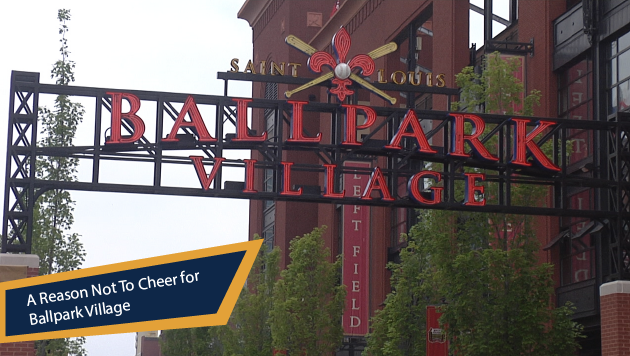
Because the TDD will charge sales taxes, unanimity among taxpayers is already out of the question. City/county residents from outside the TDD who come downtown for a Cardinals game or Ball Park Village (both of which city and state taxpayers subsidize) will have no vote on the matter. But even within the district, business owners are not all on board. Cardinals ownership is opposed, and hotel representatives point out that they already have a very high tax rate—17 percent—and visitors’ complaints are mostly about safety, not transportation.

When it comes to downtown Saint Louis, there are plenty of taxes in place to pay for necessary street improvements. There are also elected representatives who are empowered to manage those resources. Residents should think twice about giving an unelected group what amounts to a $4.5 million taxpayer budget without that group articulating a clear, non-controversial plan. 

Taxicab Commission Goes Rogue, Blocks Free Uber Rides on July 4th

Recently, Uber announced plans to offer free rides for all Saint Louisans for the Fourth of July weekend. The free rides would have promoted UberX, which Uber is currently attempting to launch in Saint Louis. Free rides on a day when drunk driving rates are at their highest and when it can be hard to find a cab seems like it should be a big win for the city. Who could be against that?

The Metropolitan Taxicab Commission (MTC), that’s who.

The MTC regulates all for-hire vehicle services in the city of Saint Louis, including ridesharing. Problematically, half of its members represent the existing taxi industry, with vested interests in keeping out new competitors and new business models. As we’ve written before, their onerous and outdated taxi regulations are the reason Saint Louis has fallen behind the rest of the nation in getting ridesharing companies to set up in the city. In response to Uber’s petition to allow free rides in Saint Louis on the Fourth, the MTC said they would only allow it if all Uber drivers had gone through the MTC’s background checks (including finger printing) and drug tests. That stipulation effectively scuttles the promotion.

There is some question as to whether the MTC has any legal authority to ban free Uber rides, as the company is not technically offering a paid service. But the commission believes it does have the authority, and it has decided to use it to the detriment of Saint Louis. Moreover, the commission’s decision is in direct opposition to the position of Mayor Slay, who tweeted out on the promotion:

Uber has offered a free trial of its X service for the long holiday weekend. It is a positive gesture that we welcome.

With the MTC now swimming against both the tide of public opinion and the Mayor’s Office (which has hinted that they would not pressure police to enforce the MTC’s decision), it may be time to ask whom exactly this regulatory commission works for, Saint Louis residents or itself? 

Top Misconceptions About the Riverfront Stadium Plan

As the fight over funding a new riverfront stadium, designed to keep the Rams in Saint Louis, plays out in the courts, many misconceptions about the plan have been allowed to take root. This blog post will try to set a few of them straight.

Myth 1: Professional sports teams generate development and boost regional economies.

The consensus among economists is that this is not the case. Nearly every study on stadiums finds no tangible impact on job creation or economic activity. As for redevelopment, economists Dennis Coates of the University of Maryland and Brad Humphreys of West Virginia University wrote:

“. . . strategically placed stadiums and arenas can sometimes ride existing redevelopment trends, but they are never the cause of these trends.”

Myth 2: A riverfront stadium plan will pay for itself.

Total subsidies to the riverfront stadium in Saint Louis will likely exceed $400 million, no small sum. Even so, public officials and respected news outlets like the Post-Dispatch claim that the stadium will pay for itself through increased tax revenue. The mass of scholarly literature rebuts this assumption. Most economists find that sports stadiums have very little impact on tax revenue and do not recoup large public subsidies.

A review of the literature suggests that the optimistic assumptions of stadium backers and local newspapers tend to rest on overestimated direct tax revenue from sports teams and underestimated opportunity costs for government expenditures. However they go wrong, when politicians claim an NFL stadium will pay for itself, they are ignoring clear economic evidence to the contrary.

Myth 3: The stadium will be built with no new taxes.

First, extending bonds (and the taxes that back those bonds) is an increase in taxation when those taxes would otherwise expire. Beyond that, the existing stadium plan does not account for the following costs:

1. New stadium maintenance

2. Renovations to the Edward Jones Dome

3. $150 million in state tax credits

Someone will pay for these policies, and it’s unlikely to be the Rams. Furthermore, according to the lawsuit the Regional Convention and Sports Complex Authority (RSA) filed against the city, officials plan to use other methods of funding that will result in more taxpayer dollars getting spent (or diverted). These include using public dollars to purchase land (which is already underway), setting up new downtown taxing districts (more TDDs and CIDs), and tax increment financing.

Missouri residents should understand that if they subsidize a stadium, they may get an NFL team, but they aren’t likely to make their money back. There also isn’t any reason to think that it will create significant economic benefits for the region. The plan’s high costs and limited public benefit should make some sort of public approval a necessity. Unfortunately, depending on how the courts rule, public involvement might be sidestepped altogether.

Support Us

The work of the Show-Me Institute would not be possible without the generous support of people who are inspired by the vision of liberty and free enterprise. We hope you will join our efforts and become a Show-Me Institute sponsor.

Donate
Man on Horse Charging